
Namibia’s Diamond Industry Shines: Production Soars Amidst Global Challenges
Namibia, a prominent player in the global diamond market, experienced a significant surge in its rough diamond production during 2023, showcasing remarkable resilience and strategic growth within its vital mining sector. The nation’s total output reached an impressive 2.33 million carats, marking a substantial 9 percent increase compared to the previous year. This robust performance underscores Namibia’s crucial role as a consistent supplier of high-quality diamonds to the international market and highlights the effectiveness of its sophisticated mining operations.
Record-Breaking Growth in Namibia’s Diamond Sector
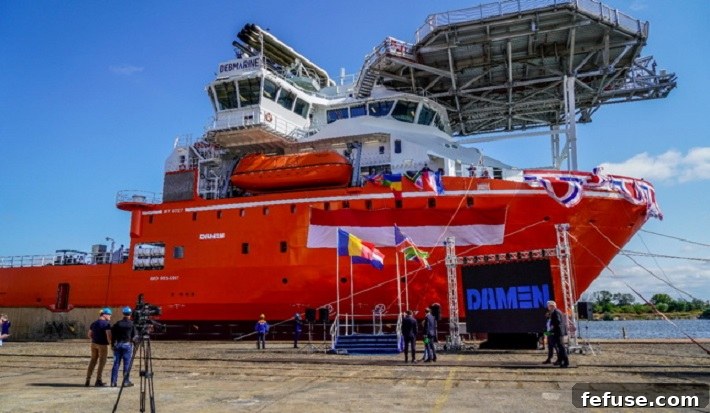
The impressive growth in 2023 was largely propelled by the country’s unique and highly efficient marine diamond mining operations. Accounting for the majority of Namibia’s total output, marine diamonds saw an 8 percent increase, reaching 1.86 million carats. These figures, released by Debmarine Namibia, a 50/50 joint venture between the Government of the Republic of Namibia and De Beers, demonstrate the sustained success and technological prowess involved in recovering diamonds from the seabed. Marine diamond mining is a complex and capital-intensive endeavor, requiring advanced technology and specialized vessels to extract these precious gems from the ocean floor, often in challenging deep-water environments. The steady increase in production from this sector is a testament to continuous innovation and operational excellence.
Complementing the strong performance of marine operations, land-based diamond production also registered a significant uptick. Overseen by Namdeb, another joint venture between the Namibian government and De Beers, land-based output climbed by an impressive 14 percent, contributing 468,000 carats to the national total. This growth indicates healthy performance across both key mining methodologies employed in the country, showcasing a balanced and diversified approach to diamond extraction. The combined efforts of both marine and land operations firmly position Namibia as a reliable and expanding source of rough diamonds globally.
Despite the overall annual triumph, the fourth quarter of 2023 presented a slight dip in combined land and marine diamond output, which slipped by 4 percent to 590,000 carats. This quarterly fluctuation is not uncommon in the mining industry and can be attributed to various factors such as scheduled maintenance, weather conditions affecting marine operations, or shifts in market demand. However, it did not diminish the overarching positive trajectory of the entire year, which clearly demonstrated a powerful upward trend for Namibia’s diamond production capacity.
Navigating Geopolitical Tides: The Impact of G7 Sanctions on Russia
As the world’s eighth-largest diamond-producing country, Namibia closely monitors global geopolitical developments that could influence its robust diamond industry. The nation has openly voiced its concerns regarding the new G7 sanctions imposed on rough diamonds originating from Russia. While these sanctions aim to restrict Russia’s revenue from diamond sales, they introduce potential complexities and additional costs for non-Russian diamond producers like Namibia.
The core of Namibia’s apprehension lies in the proposed traceability mechanisms and certification requirements associated with these sanctions. Ensuring that Namibian diamonds, known for their ethical and conflict-free sourcing, are clearly distinguishable from those originating from Russia could involve intricate administrative processes, advanced tracking technologies, and rigorous auditing systems. These new layers of compliance might add significant operational costs, potentially affecting profit margins and the efficiency of the supply chain. Furthermore, there is concern that overly broad or complicated implementation of these sanctions could inadvertently create bottlenecks in the global diamond trade, impacting market access for all producers, including those with impeccable ethical credentials such as Namibia.
Namibia prides itself on its transparent and responsible diamond mining practices, which contribute significantly to the national economy and benefit local communities. The country’s commitment to the Kimberley Process, ensuring conflict-free diamonds, is unwavering. Therefore, the concern is not about compliance with ethical sourcing but rather about the practical implications and potential market distortions that new, extensive, and complex sanction regimes might introduce for legitimate producers. The global diamond market thrives on clarity and efficiency, and any measures that introduce ambiguity or undue burden could have ripple effects throughout the industry.
Forging a New Partnership: The Future of De Beers-Namibia Relations
A pivotal development on Namibia’s horizon involves its longstanding and strategic partnership with De Beers. The nation anticipates securing an increased share of diamonds from its current deal with the global diamond giant. Namdia, the state-owned diamond company established to market and sell a portion of Namibia’s rough diamond production, is slated to review its current 10-year sales agreement with De Beers in 2026. This review represents a critical juncture for Namibia to potentially enhance its economic benefits from its precious natural resources.
Currently, Namdia receives 15 percent of the diamonds produced by Namdeb, the 50/50 joint venture that has successfully managed Namibia’s land and marine diamond resources for decades. This arrangement allows the government a direct stake in the sales and marketing of a portion of the rough diamonds, providing valuable revenue streams and fostering local expertise in the diamond value chain. However, as Namibia’s diamond industry matures and its capacity grows, there is a strong national aspiration to increase its share, thereby maximizing the economic returns for its citizens. A larger allocation would empower Namdia to expand its global marketing footprint, potentially leading to greater value addition within the country through local beneficiation initiatives such as cutting, polishing, and jewelry manufacturing.
The upcoming 2026 review is expected to be a robust negotiation, reflecting Namibia’s growing confidence in its diamond sector and its desire for greater economic sovereignty. An enhanced share would not only boost national revenue but also strengthen Namibia’s position in the global diamond trade, allowing it to exert greater influence over the marketing and distribution of its unique gemstones. Such a move would align with the government’s broader economic development goals, which prioritize the local beneficiation of natural resources to create jobs, transfer skills, and diversify the economy. The outcome of this negotiation will significantly shape the future landscape of Namibia’s diamond industry and its strategic partnership with De Beers for years to come.
Namibia’s Vision for a Sustainable and Prosperous Diamond Industry
Namibia’s strategic approach to its diamond industry extends beyond mere extraction; it encompasses a comprehensive vision for sustainable development, ethical practices, and maximizing national benefit. The focus on both marine and land-based mining operations demonstrates a diversified strategy to resource utilization, ensuring long-term viability. The advanced technology deployed in marine mining, for instance, not only ensures efficient recovery but also minimizes environmental impact, reflecting a commitment to responsible resource management.
The increasing production figures are a testament to Namibia’s consistent investment in exploration, technological advancements, and human capital development within the diamond sector. This growth is crucial for the national economy, providing significant contributions to GDP, foreign exchange earnings, and employment opportunities. Furthermore, the revenue generated from diamond sales is vital for funding public services, infrastructure development, and various social programs, thereby directly impacting the quality of life for Namibian citizens.
Looking ahead, Namibia aims to solidify its position as a global leader in ethical and high-quality diamond production. The government’s proactive stance on reviewing agreements like the De Beers deal signifies a strong commitment to ensuring that the benefits of its natural wealth are equitably shared and contribute significantly to national prosperity. As the global diamond market continues to evolve, influenced by consumer preferences for responsibly sourced gems and new geopolitical realities, Namibia is well-positioned to adapt and thrive, leveraging its strong foundations, strategic partnerships, and unwavering commitment to excellence.