
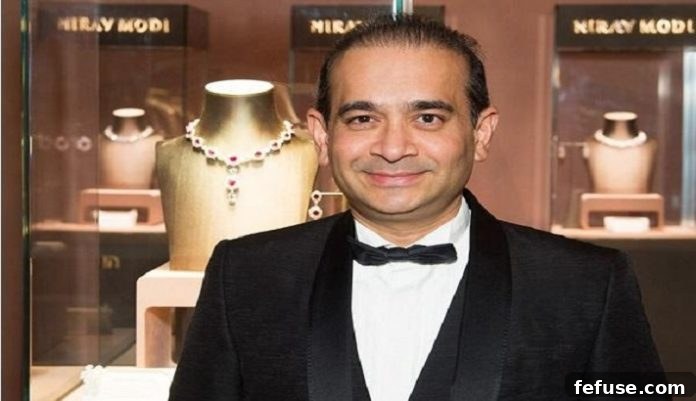
Nirav Modi’s Firestar Diamond International Assets Head to E-Auction: A Landmark Sale Amidst Legal Battles
The highly anticipated e-auction of exquisite gold, platinum, and diamond jewelry from Nirav Modi’s infamous Firestar Diamond International is set to take place next month in Mumbai, India. This significant event marks a crucial step in the ongoing efforts to recover funds defrauded from the Punjab National Bank (PNB) and underscores the serious legal repercussions faced by the fugitive jeweler. The sale offers a rare opportunity for buyers to acquire meticulously crafted pieces and valuable stones, all certified, while also symbolizing a pivotal moment in one of India’s most high-profile financial crime cases.
The Jewel in the Crown: Details of the Upcoming E-Auction
Liquidators Santanu T. Ray have announced that the comprehensive inventory, listed simply as “Entire inventory consisting of finished jewellery, loose diamonds and color stones, semi-finished jewellery, gold, platinum and silver,” will be offered for sale. Each item boasts certification from the prestigious Gemological Institute of India (GII), assuring prospective buyers of their authenticity and quality. While a specific reserve price for the entire lot is yet to be disclosed, bidding is slated to commence at a substantial $337,000. The auction is scheduled for March 25th, promising a competitive environment for collectors, investors, and industry professionals alike seeking to acquire a piece of this unique collection.
This e-auction represents more than just a sale of luxury goods; it is a tangible outcome of extensive legal and investigative processes. The transparency of the GII certification adds immense value and trust, especially given the controversial origin of these assets. The process aims to maximize recovery for creditors, primarily the Punjab National Bank, which suffered immense losses due to the alleged fraudulent activities. The digital format of the auction ensures broad participation, making these high-value assets accessible to a global audience, thus potentially driving up their final sale price. This also highlights a strategic approach to asset recovery, utilizing modern platforms to achieve optimal results in challenging circumstances.
The Fall of a Diamond Mogul: Unpacking the PNB Fraud
At the heart of this asset sale lies the complex and scandalous narrative of Nirav Modi, once a celebrated figure in the global diamond industry. The 51-year-old jeweler stands accused of orchestrating an elaborate $1.85 billion fraud against the Punjab National Bank (PNB), one of India’s largest public sector banks. The modus operandi involved the illicit use of “Letters of Undertaking” (LoUs), which are essentially guarantees issued by banks to facilitate international trade. Modi’s companies allegedly obtained these LoUs fraudulently, often without sufficient collateral or through unauthorized channels, and then used them to secure short-term credit from overseas branches of other Indian banks.
These fraudulent LoUs allowed Modi’s enterprises, including Firestar Diamond International, to raise billions in foreign currency loans that PNB was then liable for. The scheme went undetected for several years, relying on a lack of proper checks and balances within the bank and alleged collusion from some PNB employees. When the fraud finally came to light in early 2018, it sent shockwaves through India’s financial sector, exposing systemic vulnerabilities and leading to a significant crisis of confidence in public sector banks. The sheer scale of the deception highlighted the urgent need for stricter regulatory oversight and enhanced internal controls within financial institutions to prevent such high-value scams from recurring.
The PNB scam became a symbol of corporate malfeasance and the challenges faced by Indian authorities in tackling large-scale economic offenses. It prompted intense scrutiny of banking practices and spurred a series of reforms aimed at bolstering financial integrity across the nation. The public outcry was immense, demanding swift justice and the recovery of stolen funds. For many, the auction of Modi’s lavish possessions is not just a financial transaction but a symbolic act of accountability, demonstrating that even the most powerful individuals are not beyond the reach of the law and that justice, however delayed, will ultimately prevail.
The Long Arm of Justice: Nirav Modi’s Extradition Battle
Following the unmasking of the fraud, Nirav Modi fled India, becoming one of the country’s most wanted fugitives. He was eventually located and arrested in London in March 2019, initiating a protracted legal battle to resist extradition back to India. The Indian authorities, including the Central Bureau of Investigation (CBI) and the Enforcement Directorate (ED), presented a compelling case to the UK courts, detailing charges of money laundering, criminal conspiracy, and fraud. Modi, meanwhile, fought hard to challenge his extradition, citing various grounds including alleged political motivations, concerns over prison conditions in India, and mental health issues, all designed to prolong the legal process.
The extradition proceedings were closely watched, not just in India but globally, as they tested the resolve of international cooperation in combating financial crime. After a series of hearings and appeals through different levels of the UK judicial system, Modi finally lost his last-ditch battle against extradition in November of last year. This pivotal ruling by the UK courts paved the way for his eventual return to India to face the charges. While the exact timeline for his physical transfer remains subject to administrative processes between the two nations, the major legal hurdles have largely been cleared, marking a significant victory for Indian investigative agencies and their unwavering commitment to bringing fugitives to justice.
Modi’s continued incarceration in a British prison since his arrest serves as a stark reminder of the global nature of financial crime and the collaborative efforts required to counter it effectively. His extradition will not only allow the Indian judicial system to proceed with his trial but also send a powerful message to other economic offenders contemplating escape: that international borders offer no permanent sanctuary. This development instills greater public trust in the justice system’s ability to hold powerful individuals accountable, irrespective of their wealth or influence, reinforcing the principle that no one is above the law.
Beyond Jewelry: The Broader Asset Recovery Efforts
The sale of Firestar Diamond International’s jewelry is part of a much larger, multi-faceted strategy to recover assets linked to Nirav Modi and his associates. In a series of six other auctions, which commenced last July, various luxury properties belonging to the fugitive jeweler have also been put up for sale. These include a string of high-end apartments with a total reserve price estimated at $50 million, reflecting the lavish lifestyle financed by the fraudulent gains. The continuous liquidation of these assets demonstrates the relentless pursuit by Indian agencies to reclaim every possible penny for the defrauded banks and affected parties, ensuring comprehensive restitution.
These ongoing recovery efforts are crucial for several reasons. Financially, they aim to mitigate the substantial losses incurred by PNB and other involved banks, helping to stabilize their balance sheets and restore financial health. Symbolically, they reinforce the principle that ill-gotten gains will be seized and returned, preventing criminals from enjoying the fruits of their illegal activities and dismantling their financial empires. The methodical process of identifying, attaching, and auctioning these diverse assets—from precious jewelry to sprawling real estate—underscores the complexity and dedication involved in unraveling such extensive financial networks and ensuring legal accountability across the board.
What This Auction Means for the Market and Justice
For the luxury goods market, particularly in diamonds and high-end jewelry, this auction presents a unique scenario. Buyers have the opportunity to acquire certified, high-quality pieces that carry a distinct, albeit controversial, history. While some might be drawn to the investment potential of such items, considering their intrinsic value and rarity, others might be interested in the narrative attached to them, making them a collector’s item with a story. The transparency and certification provided by GII will be vital in attracting serious bidders, ensuring that the intrinsic value of the pieces is recognized, separate from their tumultuous origin, and driving fair market prices.
From a justice standpoint, the auction is a tangible manifestation of consequences. It’s a clear signal that financial crimes, however complex and far-reaching, will be met with decisive action, including the forfeiture of assets acquired through illegal means. This reinforces the rule of law and serves as a powerful deterrent against future fraudulent activities, sending a message to potential offenders that such acts will not go unpunished. The funds generated will contribute directly to compensating those who suffered losses, bringing a measure of closure and redressal in a case that has deeply affected India’s financial landscape and its public trust.
As the e-auction date of March 25th approaches, all eyes will be on Mumbai, watching the sale of Nirav Modi’s Firestar Diamond International jewelry. This event is not merely an opportunity to purchase luxurious items; it is a critical juncture in a sprawling saga of financial crime, international pursuit, and the unwavering quest for justice. The successful liquidation of these assets will not only aid in the financial recovery for the Punjab National Bank but also stand as a powerful testament to the global commitment to combating fraud and ensuring accountability at the highest levels. This auction is a profound reminder that justice, though sometimes slow, is ultimately resolute and will pursue those who seek to evade it.