
Skydiamond’s Appeal Against ASA Ruling: A Deep Dive into Diamond Terminology
The burgeoning world of lab-grown diamonds is sparking a significant debate over terminology, with British company Skydiamond at the heart of a high-profile dispute. Its founder, Dale Vince, is challenging a ruling by advertising watchdogs that insists his unique products must be described using terms like “synthetic,” “laboratory-grown,” or “laboratory-created.” Vince, who champions Skydiamond as “the world’s first and only diamond made entirely from the sky” – leveraging solar and wind energy, rain, and atmospheric carbon – contends that such qualifiers are not only inaccurate but also undermine the distinctiveness of his innovative process.
This disagreement highlights a critical juncture for both the traditional diamond industry and the rapidly expanding market for diamonds cultivated in a controlled environment. As consumers become more discerning about the origins and environmental impact of their purchases, the language used to describe these precious stones carries immense weight, influencing perception, trust, and market share. The outcome of Skydiamond’s appeal could set a precedent for how environmentally conscious and technologically advanced diamond alternatives are presented to the public, impacting consumer choices and regulatory frameworks globally.
The ASA’s Ruling: Mandating Clarity in Diamond Descriptions
The UK’s Advertising Standards Authority (ASA) issued a definitive ruling against Skydiamond in April, following a complaint lodged by the Natural Diamond Council (NDC). This decision stems from a broader effort to ensure transparency and prevent misleading advertising within the luxury goods sector, particularly as new technologies introduce products that mimic traditional ones. The ASA’s primary concern is consumer protection, aiming to eliminate ambiguity that could lead shoppers to believe they are purchasing one type of diamond when, in fact, it is another. The watchdogs believe that without clear qualifiers, consumers might confuse Skydiamond’s offerings with naturally occurring diamonds, which have a distinct geological origin and market value.
Specifically, the ASA ruled that Skydiamond must not use terms such as “diamonds,” “diamonds made entirely from the sky,” or “Skydiamond” in isolation to describe their products. Instead, these descriptions must be accompanied by “a clear and prominent qualifier,” explicitly suggesting terms like “synthetic,” “laboratory-grown,” or “laboratory-created.” Furthermore, the ruling strictly prohibits the use of the term “real diamonds” by Skydiamond, reserving this description for diamonds of natural origin. This prohibition aims to prevent any implication that lab-grown diamonds are somehow less “real” or authentic, an ongoing point of contention in the industry.
Dale Vince expressed his disappointment with the ASA’s handling of the complaint, noting its origin from a competitor. “We are disappointed with the way the ASA even began this,” Vince told the Financial Times. “It was clearly a competitor complaint and there is a different process for that.” This comment underscores the intense competition and vested interests at play as lab-grown diamonds carve out a significant segment of the global market. Skydiamond’s immediate response to the ruling indicates their intent to resist the mandated terminology, opting for “man-made diamonds” for the time being – a descriptor not officially endorsed by the ASA, signalling an ongoing defiance and a prolonged battle over linguistic control.
Skydiamond’s Unique Proposition and Grounds for Appeal
Skydiamond’s core argument against the ASA’s decision rests on the innovative nature of its production process. Dale Vince passionately states that his diamonds are not merely “lab-grown” in the conventional sense. Instead, they are an unprecedented creation derived entirely from atmospheric elements – captured carbon, harnessed solar energy, wind power, and rain. This unique methodology, he argues, differentiates Skydiamond from other lab-grown diamonds, which typically rely on more conventional industrial processes, albeit in a controlled laboratory setting. Vince views his process as a form of “mining the sky,” a positive intervention that removes harmful atmospheric carbon rather than extracting resources from the earth.
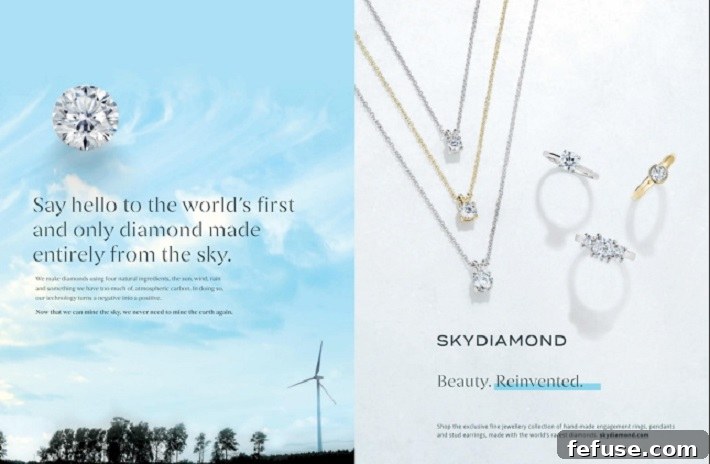
The company’s advertising campaign, including double-page newspaper ads in February 2023, boldly declared: “Say hello to the world’s first and only diamond made entirely from the sky.” Smaller print elaborated: “We make diamonds using four natural ingredients, the sun, the wind, rain and something we have too much of, atmospheric carbon. In doing so, our technology turns a negative into a positive. Now that we can mine the sky, we never need to mine the earth again.” This messaging directly challenges the traditional narrative of diamond sourcing, proposing an environmentally restorative alternative. For Vince, terms like “synthetic” or “laboratory-grown” fail to capture this crucial environmental benefit and the pioneering spirit of his invention. He believes such labels diminish the unique value proposition and could mislead environmentally conscious consumers who specifically seek out products with a positive ecological footprint.
Skydiamond plans to appeal the ASA decision, and Vince is prepared to take the matter to judicial review, challenging the very manner in which the ASA exercised its powers as a public body. This legal route suggests a deep conviction in the merits of their claims and the potential long-term implications for brand identity and market positioning. The term “man-made diamonds,” which Skydiamond intends to use in the interim, subtly pushes back against the ASA’s preferred qualifiers, suggesting a human-engineered product without necessarily implying “synthetic” or merely “lab-grown” status. This choice reflects a strategic attempt to maintain a degree of descriptive autonomy while navigating regulatory demands, emphasizing the human ingenuity behind their creation rather than solely focusing on the location of its origin.
The Natural Diamond Council’s Stance and Industry Dynamics
The complaint against Skydiamond originated from the Natural Diamond Council (NDC), an organization dedicated to promoting the integrity and value of natural diamonds. The NDC’s intervention underscores the intense competition and defensive strategies employed by the traditional diamond industry in the face of the rapidly growing lab-grown diamond market. For the NDC, maintaining clear distinctions between natural and lab-grown diamonds is paramount to preserving the perceived rarity, heritage, and investment value associated with mined diamonds. Their efforts are largely focused on ensuring that consumers fully understand the difference in origin, and therefore the difference in market value and symbolism, between a gem formed over billions of years beneath the earth and one created in a matter of weeks in a controlled environment.
The NDC’s stance is rooted in the belief that terms such as “synthetic” or “laboratory-created” accurately convey the manufactured nature of lab-grown diamonds, preventing any potential confusion with the geological origins of natural stones. They argue that any ambiguity in marketing language could erode consumer trust and unfairly diminish the unique appeal of natural diamonds. This approach is consistent with broader industry efforts by the natural diamond sector to differentiate its product through narratives of natural wonder, rarity, and historical significance, often emphasizing their role in local economies and conservation efforts where applicable. The conflict with Skydiamond, therefore, is not merely about a single company but represents a microcosm of the larger battle for market dominance and narrative control within the global diamond industry.
Understanding Lab-Grown Diamonds and the Nuance of Terminology
Lab-grown diamonds, often referred to as cultivated, engineered, or synthetic diamonds, are chemically, physically, and optically identical to natural diamonds. The key difference lies in their origin. Natural diamonds form deep within the Earth’s mantle under immense pressure and heat over billions of years. Lab-grown diamonds, conversely, are created in laboratories using advanced technological processes that replicate these natural conditions. The two primary methods are High-Pressure/High-Temperature (HPHT) and Chemical Vapor Deposition (CVD).
The HPHT method involves placing a small diamond seed in a growth chamber with carbon, then subjecting it to incredibly high pressures and temperatures, mimicking the Earth’s natural diamond-forming environment. The CVD method involves introducing carbon-rich gases into a vacuum chamber containing a diamond seed. Under high temperatures, these gases break down, and the carbon atoms crystallize onto the seed, growing layer by layer. Skydiamond’s process, by capturing atmospheric carbon, adds an innovative layer to the CVD methodology, making it distinctively “sky-made” or “carbon-negative” in its raw material sourcing, rather than drawing carbon from traditional industrial sources.
The debate over terminology is not unique to the UK. Regulatory bodies worldwide, such as the Federal Trade Commission (FTC) in the United States, have also weighed in on how lab-grown diamonds should be described. The FTC, for instance, revised its guidelines to state that a diamond is a diamond regardless of its origin, but mandates clear disclosure of its manufactured nature. The contentious term “synthetic” is often viewed negatively by lab-grown diamond producers because it can imply imitation or inferiority, despite the fact that these diamonds possess identical properties to their natural counterparts. Proponents of lab-grown diamonds prefer terms like “cultivated” or “grown” to emphasize their authenticity and technological advancement, rather than suggesting they are artificial fakes. Conversely, the natural diamond industry often insists on “synthetic” to underscore the distinction and protect the perceived value of rarity and natural origin.
Consumer Perception, Market Impact, and Environmental Claims
The language used to describe diamonds profoundly impacts consumer perception and purchasing decisions. Terms like “sky-made” resonate strongly with a growing segment of environmentally conscious consumers who prioritize sustainability and ethical sourcing. Skydiamond’s claims of “turning a negative into a positive” and eliminating the need to “mine the earth again” tap into a powerful narrative of ecological responsibility and innovation. This positions them favorably against the backdrop of historical concerns regarding environmental damage and ethical labor practices associated with traditional diamond mining, even though the natural diamond industry has made significant strides in these areas.
The lab-grown diamond market is experiencing rapid growth, driven by factors such as lower prices compared to natural diamonds, ethical considerations, and a desire for transparency regarding origin. Consumers are increasingly sophisticated, seeking detailed information about product provenance and environmental footprints. For Skydiamond, being forced to use “synthetic” or “lab-grown” might dilute their unique environmental message and place them in a broader category that doesn’t fully capture their distinct carbon capture technology. This isn’t just a semantic battle; it’s a fight for brand identity and market differentiation in a crowded and evolving luxury landscape.
Furthermore, the environmental claims made by Skydiamond bring the broader sustainability debate within the diamond industry into sharp focus. While lab-grown diamonds generally boast a smaller carbon footprint than mined diamonds, Skydiamond’s commitment to using atmospheric carbon and renewable energy pushes the boundaries of eco-friendly production. The appeal process will likely scrutinize the verifiability of these claims, as regulatory bodies and consumers demand robust evidence for environmental benefits. The ongoing discussion surrounding “greenwashing” means that companies must be exceptionally transparent and accurate in their sustainability messaging, which further complicates the choice of descriptive language.
The Future of Diamond Descriptors and Industry Transparency
The Skydiamond vs. ASA dispute is emblematic of the challenges faced by industries undergoing rapid technological and ethical transformations. As new production methods emerge, conventional descriptive terms often prove inadequate or contentious. The battle over “synthetic” versus “sky-made” is more than just semantics; it reflects a fundamental struggle for legitimacy, market share, and the power to define a product category. For consumers, the outcome will shape how they understand and trust the information provided by diamond retailers, influencing billions of dollars in purchasing decisions annually.
Ultimately, regulatory bodies like the ASA are tasked with balancing innovation with consumer protection. While Skydiamond seeks to highlight its unique environmental process, the ASA’s priority is to ensure that consumers are not misled about the fundamental origin of the product. The judicial review sought by Dale Vince underscores the high stakes involved, promising a prolonged legal battle that could redefine the regulatory landscape for lab-grown diamonds. As the industry continues to innovate, finding universally accepted and transparent terminology that serves both producers and consumers will remain a critical challenge, paving the way for a more clearly defined and ethically accountable luxury market.