
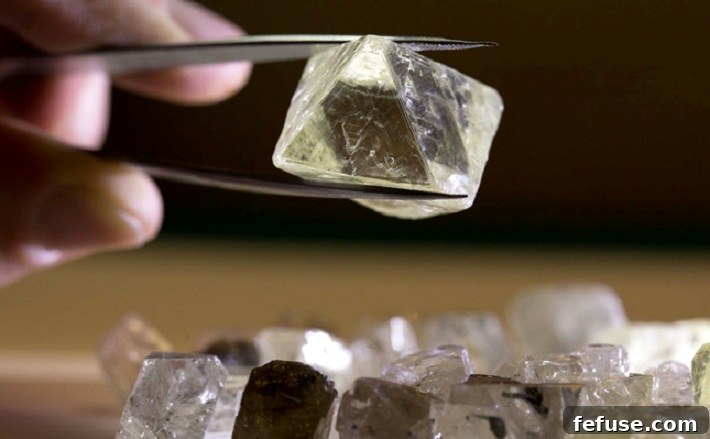
G7 Sanctions on Russian Diamonds: A Geopolitical Showdown Threatening the Global Market
The global diamond industry, a sector often admired for its sparkle and luxury, is currently grappling with unprecedented geopolitical tensions. At the heart of this disruption are the ambitious plans by the Group of Seven (G7) nations to impose sweeping sanctions on Russian diamonds. This move, driven by the ongoing conflict in Ukraine, aims to curtail a significant revenue stream for the Kremlin. However, Russia’s finance ministry has vehemently pushed back, issuing a strongly-worded critique that not only condemns the G7’s intentions but also warns of severe consequences for the existing Kimberley Process (KP) and the stability of the global rough diamond market. This article delves into the intricacies of these proposed sanctions, Russia’s forceful opposition, and the potential far-reaching implications for an industry already navigating complex ethical and logistical challenges.
The G7’s Unwavering Stance: Targeting Russia’s Diamond Revenue
The G7, comprising some of the world’s leading economies – Canada, France, Germany, Italy, Japan, the United Kingdom, and the United States – has been a vocal opponent of Russia’s actions in Ukraine. Following previous rounds of sanctions targeting various sectors of the Russian economy, the focus has now shifted to diamonds. Russia is a dominant player in the global rough diamond market, with its state-owned mining giant, Alrosa, accounting for a substantial portion of worldwide supply. By targeting this lucrative commodity, the G7 seeks to further cripple Russia’s financial capacity to sustain its military efforts.
Currently, the G7 nations, which collectively represent an estimated 70 percent of global diamond sales, are in the final stages of considering four distinct traceability options. These proposals aim to establish a robust mechanism for identifying and blocking Russian-origin diamonds from entering their markets. While the specifics of these options have not been fully disclosed, they are expected to leverage advanced technologies and stringent certification processes. A key aspect of these discussions involves the potential integration of blockchain technology. This distributed ledger system could create an immutable record of a diamond’s journey from mine to market, making it significantly harder to obscure its origin and bypass sanctions. The announcement of their favored proposal is anticipated imminently, setting the stage for a new era of diamond trade regulation.
Russia’s Fierce Rebuke: A Challenge to Multilateralism and Market Stability
Russia’s response to the G7’s plans has been swift and uncompromising. Its finance ministry has characterized the proposed sanctions as a direct assault on the integrity and legitimacy of the Kimberley Process Certification Scheme (KPCS). In a letter addressed to KP members ahead of their plenary session in Zimbabwe, Deputy Finance Minister Alexei Moiseyev articulated Russia’s deep concerns. He contends that Western countries, including the G7 and the EU, are deliberately attempting to distort the global rough diamond market by implementing their unilateral regulations, which he warns could “lead to increased social unrest and insurgency in certain regions.”
Undermining the Kimberley Process
At the core of Russia’s argument is the claim that the G7’s actions will “discredit and undermine” the existing Kimberley Process. The KP, established in 2003, is an international certification scheme designed to prevent the flow of “conflict diamonds” – rough diamonds used to finance wars against legitimate governments – from entering the mainstream market. Russia argues that by bypassing the KP’s multilateral framework and imposing their own rules, the G7 is not only violating the spirit of consensus and equality upon which the KP was founded but also creating a dangerous precedent. This, Russia suggests, could erode the KP’s authority and effectiveness in preventing the trade of illicit diamonds, potentially allowing a broader range of illicit stones to proliferate.
Market Distortion and Social Unrest
Moiseyev’s warning about market distortion is not to be taken lightly. Should the G7 implement its own regulations outside the KP framework, it could create parallel supply chains, drive up prices for non-Russian diamonds, and potentially foster a black market for sanctioned stones. This fragmentation could destabilize the entire industry, impacting not only major players but also artisanal miners and diamond-dependent communities in various African nations. The warning of “increased social unrest and insurgency” underscores the potential for severe economic disruption in regions heavily reliant on the legitimate diamond trade, should their products face new, potentially arbitrary, barriers to market access or see their value artificially depressed due to market imbalances.
Accusations of “Exceptionalism and Civilizational Supremacy”
Beyond economic and institutional concerns, Russia’s letter also leveled strong political accusations. Moiseyev asserted that “any attempts to accuse Russia of non-compliance with the requirements of the Kimberley Process Certification Scheme are completely groundless.” He went further, accusing Western countries of “blatantly proclaiming their own exceptionalism and civilizational supremacy.” This rhetoric suggests that Russia views the G7’s actions as an imposition of Western values and geopolitical interests onto a global industry, rather than a genuine effort to uphold ethical standards. Moiseyev’s letter concluded by stating that Western nations “consider it untenable for themselves to accept the existence of a multilateral mechanism that truly operates on the principles of pluralism, consensus, equality of participants and does not serve their geopolitical interests.” This reflects Russia’s broader critique of what it perceives as Western attempts to dictate global norms and circumvent truly multilateral institutions.
The Global Diamond Market at a Crossroads: Loophole Closures and Shifting Dynamics
The current landscape of the global diamond trade already presents complexities regarding Russian diamonds. Despite previous US sanctions, Alrosa has, to a significant extent, managed to maintain its rough diamond sales due to a notable loophole. US sanctions primarily target rough diamonds, but a substantial portion of these stones are processed and polished in other countries, most notably India, which accounts for over 90 percent of the world’s diamond cutting and polishing. Once polished, these diamonds are often no longer classified by their country of origin in the same way, allowing them to enter markets, including the US, without direct violation of existing sanctions. This intricate supply chain has allowed Russian diamonds to continue reaching global consumers indirectly.
However, the G7’s proposed sanctions are designed to be far more comprehensive. By focusing on robust traceability and potentially leveraging blockchain, these new measures aim to close such loopholes effectively. If successfully implemented, these sanctions are “likely to have a real impact” on Alrosa’s sales and Russia’s diamond revenues. This could force a significant re-evaluation of global diamond sourcing, impacting major industry players, polishing centers, and retailers worldwide.
Implications for Key Stakeholders
- India: As the world’s largest diamond polishing hub, India faces a critical juncture. It will need to navigate the new regulations carefully, potentially diversifying its rough diamond sourcing or developing new verification systems to ensure its polished exports meet G7 standards.
- African Diamond Producers: Countries like Botswana, Namibia, and South Africa could see increased demand for their non-Russian rough diamonds. However, they might also face pressure to adopt more stringent traceability protocols to distinguish their stones from potentially sanctioned ones, or grapple with market volatility if global demand shifts.
- Retailers and Consumers: Diamond retailers, particularly those in G7 nations, will need to adapt their supply chains to ensure compliance. Consumers, increasingly conscious of ethical sourcing, may find themselves with clearer assurances regarding the origin of their diamonds, but potentially at a higher price point due to reduced supply and increased compliance costs.
The Future of the Kimberley Process: Redefinition or Marginalization?
The G7’s unilateral actions outside the Kimberley Process raise profound questions about the future relevance and efficacy of the KPCS. While the KP has been instrumental in combating conflict diamonds, it has faced criticism for its narrow definition of “conflict diamonds” – specifically excluding diamonds associated with state-sponsored violence or human rights abuses within legitimate governments. Russia’s argument that G7 actions undermine the KP could be seen as a defensive maneuver to maintain the status quo, but it also highlights a genuine dilemma for the institution.
The upcoming KP plenary in Zimbabwe, scheduled to begin on November 6, will be a crucial forum. It is here that members will debate the G7 proposals and Russia’s counter-arguments. The outcome could lead to several scenarios:
- The KP could itself adopt stricter, broader traceability standards, potentially incorporating elements of the G7’s proposals to maintain its central role.
- The G7 could proceed with its own independent certification scheme, effectively creating a parallel system that marginalizes the KP for a significant portion of the global market.
- A compromise could be sought, though this seems challenging given the current geopolitical climate.
The debate will likely reignite discussions about expanding the KP’s mandate to include a wider range of ethical concerns, a move that some member states and civil society organizations have long advocated for.
Challenges and the Road Ahead
Implementing effective sanctions on diamonds is fraught with challenges. The industry’s complex and often opaque supply chains, coupled with the fungible nature of diamonds (making individual stones hard to trace without specific technology), create ample opportunities for circumvention. While blockchain offers a promising solution, its widespread adoption and integration across the entire supply chain will require significant coordination and investment. Moreover, the economic consequences for Russia are uncertain; while sanctions will undoubtedly inflict pain, Russia may seek alternative markets, potentially leading to a bifurcated global diamond trade. The geopolitical ramifications extend beyond economics, potentially contributing to further isolation of Russia and fostering new alliances in the global resource trade.
In conclusion, the G7’s push for sanctions on Russian diamonds represents a significant escalation in economic warfare, with far-reaching implications for the global diamond industry and international trade norms. Russia’s fierce opposition, rooted in concerns over multilateralism and market stability, underscores the high stakes involved. As the world awaits the G7’s final announcement and observes the proceedings of the Kimberley Process plenary, the diamond industry finds itself at a pivotal moment, poised for transformations that could redefine its ethical landscape and supply chain dynamics for years to come. The delicate balance between geopolitical objectives and maintaining a stable, equitable global market will be the ultimate test for all stakeholders involved.