
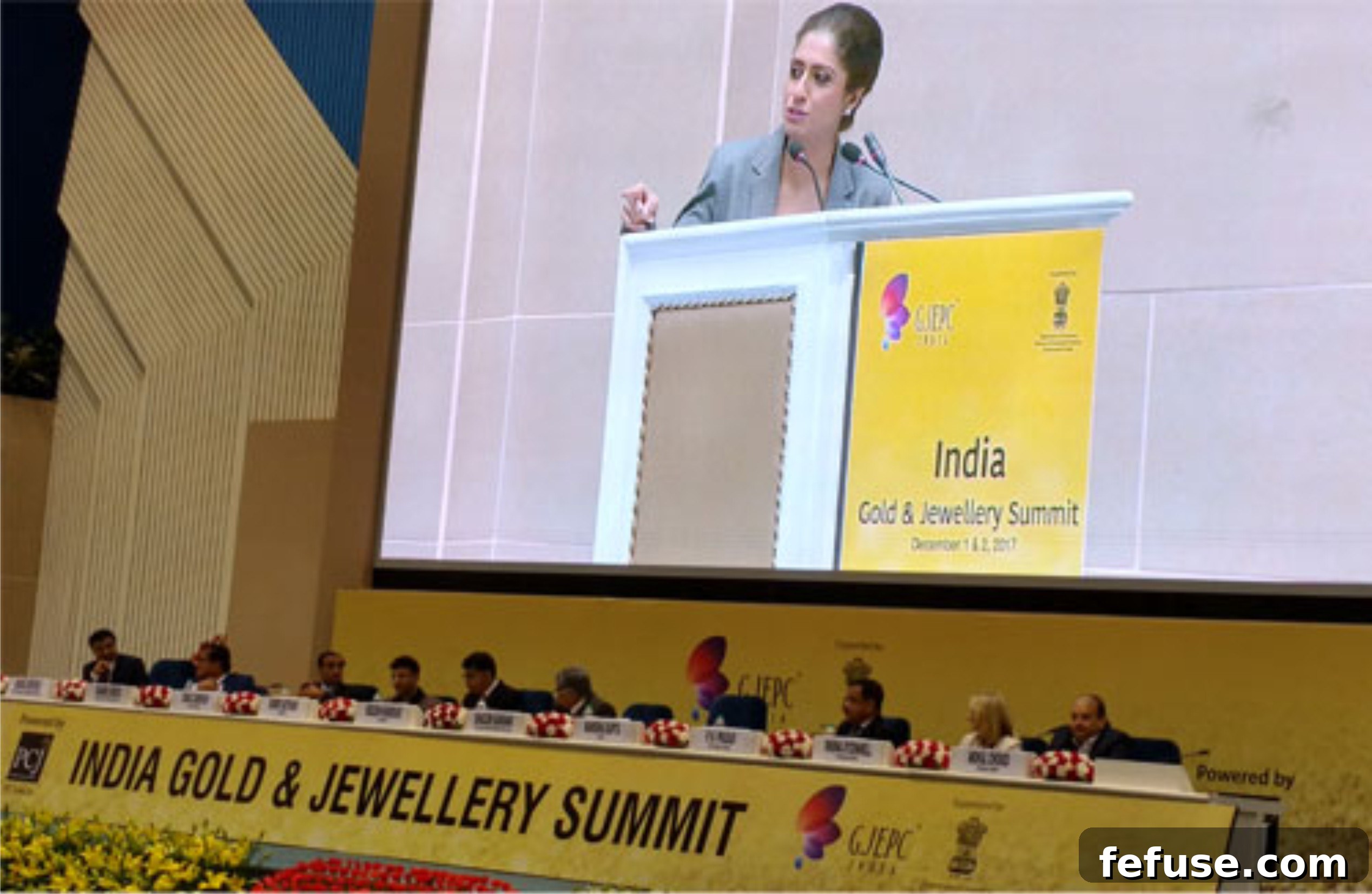
Driving Growth and Innovation: Key Insights from the Gold & Jewellery Summit
The recent Gold & Jewellery Summit served as a crucial platform for industry leaders to confront the pivotal challenges and explore the expansive opportunities within the sector. The latter half of the summit’s inaugural day was specifically dedicated to dissecting strategic imperatives aimed at significantly bolstering jewellery manufacturing capabilities across India. Discussions revolved around enhancing the nation’s export potential, fostering greater value addition in production, and establishing stringent codes of conduct for responsible sourcing practices. These comprehensive deliberations spanned a wide array of topics, from dynamic market trends and evolving consumer engagement strategies to the critical adoption of advanced technology and ensuring robust supply chain integrity—all deemed indispensable for charting a prosperous and sustainable future for the industry.
Navigating Global Shifts: Understanding Industry Challenges and Opportunities
A highlight of the summit was a compelling presentation by Neelesh Hundekari, Partner Asia-Pacific at A.T. Kearney, who provided a profound overview of the jewellery industry’s current landscape and the formidable challenges it is grappling with. Hundekari pointed out a concerning trend: the industry’s diminishing share in global GDP. This decline signals an urgent call for a strategic paradigm shift, moving beyond conventional approaches to embrace innovation and market adaptation. He proposed a vital twin-focus strategy to counteract this trend effectively.
Firstly, there’s an imperative for an aggressive, concerted push to render the entire jewellery category more appealing and relevant, particularly to the burgeoning demographic of millennials. This generation, with its distinct values and purchasing habits, represents a significant growth segment that demands unique engagement strategies. Secondly, a focused strategy is needed to substantially grow India’s market share in the global jewellery arena. This involves leveraging India’s inherent strengths while addressing its competitive weaknesses.
Hundekari strongly emphasized that achieving these goals necessitates a fresh, forward-thinking approach, complemented by an intensified and more sophisticated spend on marketing and branding initiatives. In today’s competitive global market, it is no longer sufficient to simply produce exquisite pieces. Brands must tell compelling stories, forge emotional connections with consumers, and communicate their values effectively. Enhanced investment in strategic branding and targeted marketing campaigns is crucial to captivate the attention and loyalty of modern consumers, who seek authenticity, personalization, and ethical considerations in their purchasing decisions.
Paving the Way for Growth: Strategic Pillars for the Indian Jewellery Sector
Throughout the summit, panellists consistently highlighted the foundational importance of branding, marketing, and product development as essential components of any successful growth strategy. Beyond these core areas, the discussions brought to light several other critical factors deemed indispensable for the industry’s long-term health and expansion. These strategic pillars are designed to build a resilient, competitive, and forward-looking jewellery sector in India.
Policy Stability and Trade Facilitation
A recurring and significant concern raised was the urgent need for a more stable and predictable policy regime. Frequent alterations in government policies, particularly those pertaining to trade, taxation, and manufacturing regulations, inevitably create an environment of uncertainty. Such instability discourages long-term investments, hinders strategic planning, and impacts the ease of doing business for manufacturers and exporters. A consistent, transparent, and supportive policy framework is paramount for fostering confidence among investors and enabling businesses to operate efficiently and plan for sustained growth.
Furthermore, ensuring a steady and assured supply of gold to jewellery exporters emerged as a critical requirement. Volatility in gold availability and pricing can severely disrupt production schedules, inflate operational costs, and compromise India’s ability to meet international orders promptly and competitively. Implementing mechanisms to guarantee reliable access to raw materials at stable and competitive prices is fundamental to maintaining India’s strong position in the global jewellery export market.
Global Market Understanding and Innovation
To truly excel on the international stage, Indian jewellers must cultivate a much deeper and more nuanced understanding of evolving global jewellery trends and diverse consumer preferences. This calls for rigorous market research, proactive trend forecasting, and an agile approach to design and production that can swiftly adapt to the specific tastes and cultural nuances of various international markets. Moving beyond a generalized approach to product development towards highly targeted, consumer-centric designs will be key to unlocking new export opportunities and strengthening India’s global brand presence.
Fostering Collaboration and Technological Advancement
The summit emphasized the immense potential of enhanced collaboration, both within the jewellery industry itself and across different sectors. Intra-industry collaboration, for instance, through shared access to expensive machinery and advanced technology, can democratize innovation. This model allows smaller and medium-sized enterprises to utilize cutting-edge equipment like advanced CAD/CAM software, 3D printers, and laser cutting machines without prohibitive individual capital expenditure, thereby elevating overall manufacturing standards, improving efficiency, and fostering a culture of shared progress.
Equally vital is cross-industry synergy, particularly with the rapidly evolving IT sector. Discussions explored the immense benefits of joint programs with the IT industry to address the jewellery sector’s burgeoning software needs. This could involve developing specialized software solutions for intricate CAD/CAM design, sophisticated inventory management, optimized supply chain tracking, robust e-commerce platforms, and advanced customer relationship management systems. Such collaborations would drive significant digital transformation, streamline operations, enhance customer experience, and open up new avenues for sales and marketing in a digital-first world.
Maximizing Potential: Strategies for Enhanced Value Addition in Manufacturing
The conversation pivoted significantly to the critical topic of value addition in jewellery manufacturing, exploring a comprehensive array of measures designed to elevate the intrinsic worth and perceived value of Indian jewellery products. The initial discourse encompassed several innovative proposals aimed at modernizing production and empowering the workforce.
Incentivizing Technology Adoption and Artisan Empowerment
Proposals included measures such as duty exemptions on imported manufacturing technology or the establishment of common facility centers. These initiatives are designed to encourage the widespread adoption of cutting-edge technologies within the industry. Such technologies could include advanced precision casting equipment, state-of-the-art stone setting tools, specialized polishing machinery, and automation solutions that significantly enhance product quality, reduce production time, and allow for more intricate and complex designs. By making these technologies more accessible, the industry can boost its efficiency and competitiveness on a global scale.
A significant paradigm shift was advocated in the perception and engagement of artisans. Instead of merely being viewed as skilled labour, artisans should be recognized as indispensable partners in the manufacturing process. Providing them with superior facilities, access to modern tools, continuous training, and skill development programs can not only enhance their productivity and the quality of their craftsmanship but also improve their working conditions and livelihood. Furthermore, actively drawing upon their invaluable expertise in key decision-making areas, particularly concerning design innovation, material selection, and intricate craftsmanship techniques, can lead to more authentic, unique, and high-value creations, deeply rooted in India’s rich heritage of artistry.
Rethinking Bullion Sales and Emphasizing Design
The traditional practice of selling bullion (raw gold) through jewellery shops came under scrutiny. While it remains a common practice, it often inadvertently detracts from the focus on finished jewellery products and the significant value added through design, craftsmanship, and branding. A strategic shift towards prioritizing the sale of finely crafted, designer jewellery pieces over raw materials could significantly boost the industry’s overall value proposition and elevate its image as a creator of exquisite art rather than merely a commodity trader.
Design as a Key Differentiator and Evolving Pricing Strategies
Subsequently, considerable attention was dedicated to the pivotal role of design and the prevailing pricing strategies adopted by Indian jewellers. There was a general consensus that design holds immense potential as a primary differentiator in an increasingly saturated global market. This is particularly pertinent today when creating jewellery for millennials, a demographic that prioritizes unique expression, personalization, ethical considerations, and compelling narratives over mere material value. Designs that are innovative, contemporary, and culturally resonant can command a premium and establish a distinct market identity.
However, a critical challenge identified was the industry’s entrenched reliance on a traditional pricing model, primarily based on raw material costs augmented by making charges. This method, while simple, frequently fails to adequately recognize and compensate for the intellectual property, artistic creativity, and intricate craftsmanship invested in a unique design. By not giving design and designers their rightful due, this approach inadvertently devalues innovation and tends to incentivize mass production over bespoke artistry and unique aesthetic contributions.
To truly flourish and enhance its global standing, the Indian jewellery industry needs to transition towards a value-based pricing strategy. This approach would reflect the intricate design complexity, the brand equity, the unique storytelling, and the emotional connection a piece creates, rather than just its material weight. Such a shift is essential not only to attract and retain top design talent but also to elevate the perceived value of Indian jewellery on the global stage, allowing it to compete effectively with international luxury brands.
Building Unwavering Trust: Responsible Sourcing and Assuring Consumer Confidence
The final and perhaps most crucial session of the day was intensely focused on the critical imperatives of responsible sourcing and safeguarding consumer confidence. Esteemed representatives from globally recognized bodies such as the LBMA (London Bullion Market Association), OECD (Organisation for Economic Co-operation and Development), and Signet Jewellers, alongside distinguished experts from India’s BIS (Bureau of Indian Standards) and Birmingham’s Assay Office, unanimously underscored the growing indispensability of hallmarking in the modern jewellery industry.
Hallmarking, a robust system for certifying the purity and fineness of precious metals, is increasingly recognized as an essential mechanism for maintaining unwavering consumer trust in jewellery products. It provides a tangible assurance of quality, authenticity, and ethical provenance, effectively mitigating risks of fraud, misrepresentation, and undisclosed material composition. This certification builds a crucial foundation of confidence, allowing consumers to make purchases with greater peace of mind, knowing the product meets specified standards.
However, the experts stressed that while hallmarking serves as a vital foundational step, it alone is insufficient to guarantee complete product integrity and responsible practices throughout the entire supply chain. The consensus was clear: comprehensive initiatives for ethical practices, absolute transparency, and sustainable operations must be embraced and rigorously implemented at an industry-wide level. Individual efforts, no matter how commendable or well-intentioned, can unfortunately be undermined and tainted by even a single instance of malpractice, unethical sourcing, or an exception within the broader ecosystem.
Therefore, collective action and unified commitment are paramount. This encompasses establishing and adhering to robust codes of conduct for responsible sourcing, ensuring meticulous traceability of materials from their origin (mine) to the final market, actively addressing and mitigating environmental impacts throughout the production process, and consistently upholding fair labour practices and human rights across the supply chain. Such a unified commitment not only protects consumers by ensuring product integrity and ethical sourcing but also significantly enhances the global reputation, market credibility, and long-term sustainability of the entire gold and jewellery sector, positioning it for enduring success in an increasingly conscious marketplace.