
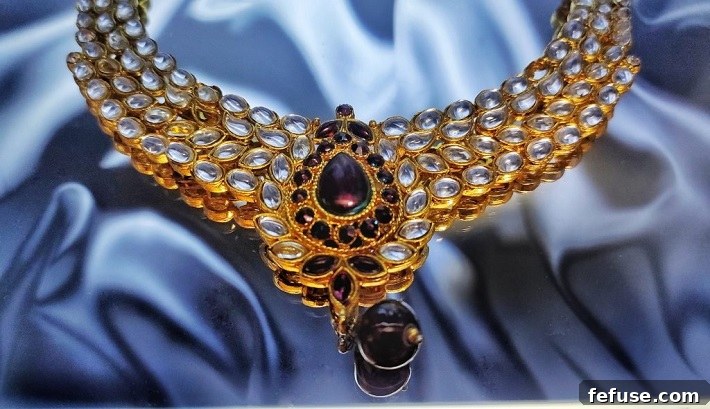
Jadau jewelry represents a profound confluence of history, artistry, and cultural significance, offering a timeless piece of Indian heritage that continues to captivate hearts in the contemporary world. More than just an adornment, it embodies deep cultural meaning, often cherished as an heirloom, passed down through generations, each piece telling a unique story of legacy and love. Despite its widespread appreciation, the intricate art form of Jadau and the distinctive characteristics that set it apart often remain a mystery to many. This article delves into the enchanting universe of Jadau jewelry, unraveling its origins, meticulous creation process, intrinsic value, and essential care.
Unveiling Jadau Jewelry: A Definition of Elegance
At its core, Jadau jewelry is defined by an ancient and highly specialized technique where uncut diamonds (often referred to as Polki), precious gemstones like rubies, emeralds, and sapphires, and lustrous pearls are intricately embedded into a frame of pure gold. The name “Jadau” itself is derived from the colloquial Hindi term ‘jadd,’ meaning ‘to embed’ or ‘to set.’ What makes this technique truly unique is the ingenious absence of external adhesives. Instead, skilled artisans manipulate heated gold, making it pliable enough to encase and secure the stones, which then become firmly sealed within the metal as it cools. This method creates a seamless and organic bond, allowing the natural brilliance of each stone to shine through without the distraction of visible settings or prongs found in more modern jewelry techniques. The result is a breathtaking mosaic of stones, intimately integrated into their golden embrace.
A Journey Through Time: The Rich History and Origins of Jadau
The art of Jadau making arrived in India with the opulent Mughal emperors, who brought with them a profound appreciation for intricate craftsmanship and lavish adornment from Persia. During the glorious Mughal era, Jadau was not exclusively limited to jewelry; it was a revered technique used to embellish an array of exquisite items, including designer furniture, ornate boxes, and revered idols, transforming everyday objects into works of art. As the Mughal influence spread, this intricate art form flourished, particularly in the royal courts of Rajasthan, where local craftsmen, renowned for their unparalleled skill and dedication, adopted and perfected the technique. Cities like Jaipur, Bikaner, and Hyderabad emerged as significant centers for Jadau craftsmanship, evolving the art to incorporate indigenous aesthetics and motifs. Today, Jadau jewelry stands as a testament to this rich historical legacy, deeply intertwined with India’s cultural fabric, and can be found adorning individuals across the subcontinent and beyond. It is also important to note that other popular Indian jewelry styles, such as Polki (referring to the uncut diamonds used) and Kundan (a specific type of foil-backed gemstone setting technique often incorporated within the broader Jadau framework), trace their foundational techniques back to the master artistry of Jadau.
The Art of Creation: Meticulous Craftsmanship Behind Jadau Jewelry
The creation of Jadau jewelry is a painstaking process that demands not only an exceptional eye for detail but also the collaborative expertise of a team of highly specialized artisans, each contributing their unique skill to bring a piece to life. This ancient art form follows a multi-stage process that has been refined over centuries:
- Designing the Blueprint (Chiterias): The journey begins with the ‘Chiterias,’ the master designers and framers. These artisans meticulously conceptualize the intricate designs, drawing inspiration from nature, traditional motifs, and royal patterns. They then delicately create the skeletal gold framework for the jewelry piece, ensuring it perfectly complements the intended stones and overall aesthetic. This initial framework is critical, as it dictates the eventual shape and layout of the embedded gems.
- The Art of Embedding (Ghaarias): Once the Chiterias have prepared the gold frame, it is passed to the ‘Ghaarias,’ who are the expert stone setters. The core of the Jadau technique lies here: the gold framework is carefully heated to a specific temperature, making the metal incredibly pliable. With immense precision, the uncut diamonds, precious gemstones, and pearls are then carefully arranged and pressed into the softened gold. As the framework gradually cools, the gold naturally contracts and hardens, creating a secure, adhesive-free seal around each stone. This process requires incredible dexterity and patience, as each stone must be perfectly aligned and set to ensure maximum brilliance and longevity.
- The Enameling Touch (Meenakari): A distinguishing feature of much Jadau jewelry is the application of ‘Meenakari’ – the art of enameling – on the reverse side of the ornament. Once the stones are set, the piece is handed over to the ‘Meenakars.’ Using vibrant colors derived from mineral oxides, these artisans meticulously hand-paint intricate patterns and designs onto the gold surface. This not only adds a hidden layer of exquisite beauty and artistic value but also protects the delicate gold and gemstones from wear and tear. The Meenakari often features traditional motifs such as flora, fauna, and geometric patterns, making each piece a reversible work of art.
- Finishing and Polishing: Finally, the piece undergoes a series of finishing touches, including polishing to enhance the luster of the gold and the sparkle of the stones, and sometimes the addition of delicate beads or strings of pearls to complete the design. Each step is a testament to the dedication and artistry that transforms raw materials into a magnificent Jadau ornament.
The Enduring Allure: What Makes Jadau Jewelry So Special?
Jadau jewelry has garnered immense popularity and reverence not merely for its aesthetic appeal but for a blend of factors that contribute to its unique charm:
- Regal Appearance and Opulence: Its opulent and majestic aesthetic is undeniable. The use of uncut diamonds and vibrant gemstones, set closely together, creates a rich, textured surface that exudes an old-world charm reminiscent of royal patronage. Each piece feels inherently grand and luxurious.
- Bridal & Ceremonial Significance: Jadau holds a paramount position in Indian weddings and festive celebrations. Brides-to-be often embark on journeys to western Rajasthan and Gujarat, particularly to iconic cities like Bikaner and Jaipur, renowned for their generational Jadau ateliers, seeking the perfect, often elaborate, pieces for their special day. These ornaments are not just accessories but symbols of prosperity, tradition, and marital bliss.
- Versatility in Design: While deeply rooted in tradition, contemporary Jadau designers continually innovate, offering a diverse array of designs. From grand statement necklaces and intricate chokers to elegant earrings, bangles, and rings, there is a Jadau piece suitable for every occasion and outfit, seamlessly blending with both traditional Indian attire and modern ensembles.
- Heirloom Quality: Beyond its beauty, Jadau jewelry is often considered an investment and an heirloom. Its robust construction, using high-karat gold and natural stones, ensures its longevity, making it a precious asset to be treasured and passed down through generations, accumulating sentimental value with each wearer.
- Cultural Heritage: Owning a piece of Jadau jewelry is akin to possessing a tangible piece of Indian history and cultural heritage. It represents centuries of skilled craftsmanship, artistic evolution, and the enduring legacy of royal splendor.
Investing Wisely: Price, Evaluation, and Purchasing Tips for Jadau Jewelry
Considering the exquisite craftsmanship, the substantial amount of high-purity gold, and the significant number of precious and semi-precious stones that go into creating each Jadau ornament, these pieces can represent a considerable investment. For first-time buyers, navigating the market can be daunting, and it’s crucial to be well-informed to ensure a wise purchase. Here are essential pointers to guide you:
- Gold Purity and Weight: Always inquire about the weight and purity of the gold used. Authentic Jadau jewelry typically employs high-karat gold, usually between 22 to 24 karats. This higher purity gold is softer and more malleable, making it ideal for the intricate embedding technique. The casing itself should ideally be no less than 22k gold. Ensure the weight quoted is for the gold content only, separate from the stones.
- Quality and Composition of Stones: The price is significantly influenced by the quality, type, and composition of the stones used. Uncut diamonds (Polki), emeralds, rubies, sapphires, and pearls are common.
- Stone Value Assessment: The individual value of each stone varies based on several critical factors:
- Rarity: How rare is the particular gemstone?
- Clarity: For uncut diamonds, while not as precise as cut diamonds, the clarity still impacts value. For other gemstones, look for minimal inclusions.
- Color: The vibrancy and saturation of color are paramount for colored gemstones.
- Weight: Stones are measured in carats. Understand the individual carat weight of significant stones, not just the gross value.
- Natural vs. Treated Stones: Always opt for ornaments made with natural, untreated stones. Certain treatments, while improving appearance, can significantly reduce the long-term value and life of precious stones. Be aware of the distinction between precious (like diamonds, emeralds, rubies, sapphires) and semi-precious stones (like garnets, amethysts) used in the piece.
- Craftsmanship: Examine the quality of the setting. The stones should be tightly embedded with no gaps, and the overall finish should be smooth and refined. Intricate Meenakari work on the reverse side also adds to the value and indicates superior craftsmanship.
- Documentation and Guarantee: A trustworthy and reputable jeweler will always provide a detailed ‘pucca’ receipt (a formal, comprehensive bill) outlining the gold weight, stone weight, purity, and making charges. Additionally, inquire about a guarantee or certification for the authenticity of the gold and gemstones. This documentation is crucial for future valuation or resale.
Preserving Your Treasure: Essential Care Tips for Jadau Jewelry
Jadau jewelry, with its delicate craftsmanship and precious materials, requires utmost care to maintain its timeless beauty and ensure its longevity as an heirloom. Following these essential care tips will help preserve your cherished pieces for generations:
- Proper Storage is Key: Always store your Jadau ornaments in individual, soft, padded cloth or leather boxes. These specialized containers help minimize their exposure to moisture, dust, and other airborne pollutants that can tarnish gold or dull the sparkle of gemstones. Storing pieces separately also prevents them from scratching each other. Ideally, keep jewelry in a cool, dry place away from direct sunlight.
- Avoid Bending and Folding: Due to their intricate construction and the embedded nature of the stones, Jadau necklaces and bracelets should never be kept bent or folded for extended periods. This can put undue stress on the gold framework and the settings, potentially causing the gold to warp or stones to loosen and fall out. Store them flat or gently draped in their designated boxes.
- Gentle Cleaning Rituals: Before storing your jewelry after wear, gently wipe it with a soft, dry, lint-free cloth. This removes any accumulated dust, body oils, or residue from cosmetics. Never use harsh chemicals, abrasive cleaners, or ultrasonic cleaning devices on Jadau jewelry, as these can damage the delicate gold, loosen stone settings, or harm the Meenakari work. Avoid soaking your jewelry in water.
- Protect from Chemicals and Cosmetics: Perfumes, hairsprays, lotions, and other cosmetic products contain chemicals that can react with the gold and precious stones, causing discoloration, loss of shine, or even irreparable damage. Always apply your perfumes and cosmetics first, allow them to dry, and then put on your Jadau jewelry as the final touch. Similarly, remove your jewelry before engaging in household chores or swimming.
- Professional Inspection: Consider having your Jadau jewelry professionally inspected and cleaned by a trusted jeweler every few years. They can check the security of the settings, assess for any minor damage, and perform a gentle, specialized cleaning that preserves its integrity.
Embrace the Legacy: Your Journey into Jadau
Understanding Jadau jewelry might seem complex initially, but with a little research and careful consideration, you will be well-equipped to appreciate its quality, authenticity, and profound artistry. This isn’t just about buying a piece of jewelry; it’s about investing in a legacy, a wearable piece of art that bridges centuries of tradition with modern elegance. Before making your purchase, it is highly advisable to set a clear budget and explore various options from reputable jewelers to find a piece that truly resonates with you. Jadau jewelry is more than an accessory; it is a celebration of heritage, craftsmanship, and enduring beauty, destined to be cherished for lifetimes. Should you wish to delve deeper into the fascinating world of Jadau or other exquisite forms of Indian jewelry, please do not hesitate to reach out. We are always delighted to share our knowledge and passion with you!
Author Bio:
Niyati Shah is a dedicated content specialist with Aurus Jewels, where she plays a pivotal role in crafting unique, engaging, and highly informative lifestyle content for their digital platforms. Her expertise spans across the diverse and vibrant landscape of fine Indian jewelry, encompassing everything from modern and traditional designs to rare antique pieces. Niyati also thoughtfully addresses topics that empower and guide women, particularly brides, through the journey of selecting meaningful adornments. With a solid background in design and fashion, coupled with her profound passion for jewelry, she consistently delivers insightful and valuable perspectives to her readership, enriching their understanding and appreciation of this exquisite art form.