
GJEPC Banking Summit 2019: Illuminating the Path for India’s Gem & Jewellery Exports
The Gem & Jewellery Export Promotion Council’s (GJEPC) Banking Summit 2019 served as a pivotal platform for industry leaders, financial experts, and policymakers to converge and deliberate on the critical issues shaping India’s vibrant gem and jewellery sector. Following an impactful inaugural session, the summit continued with a series of insightful panel discussions, delving deep into the multifaceted challenges and immense opportunities that define the industry’s landscape. These discussions aimed to foster a collaborative environment, seeking tangible solutions to bolster the sector’s growth and maintain its formidable position in global trade.
The summit’s agenda was meticulously designed to address pressing concerns ranging from financing mechanisms and market volatility to policy frameworks and sustainable growth strategies. The expertise brought forth by the distinguished panelists offered a comprehensive view, shedding light on both immediate operational hurdles and long-term strategic imperatives. The insights shared during these sessions are instrumental in guiding the industry’s trajectory, ensuring its resilience and continued contribution to India’s export economy.
Key Discussions at the Forefront: State of the Industry
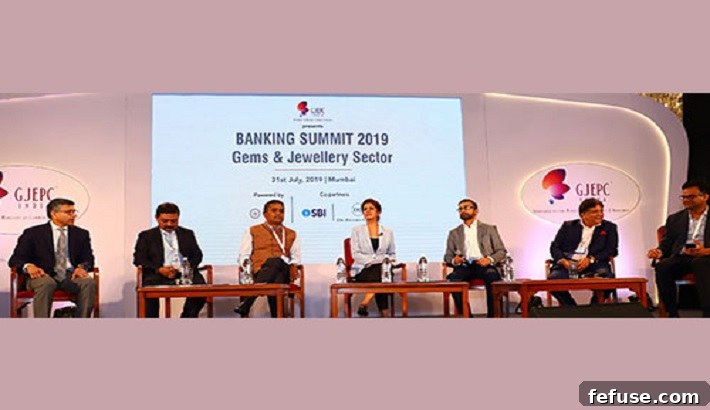
A central pillar of the GJEPC Banking Summit 2019 was the engaging panel discussion titled “State of the Industry.” This session brought together a formidable line-up of experts whose collective experience spanned the entire value chain of the gem and jewellery sector. The panelists included Nimesh Patel, CFO of De Beers; Ajesh Mehta, a prominent Member-Trade; Dilip Shah, Co-Convener of BITC, GJEPC; Manish Jivani, Convener of MSME, GJEPC; Ghanshyambhai Dholakia, another esteemed Member-Trade; and Sabyasachi Ray, Executive Director of GJEPC. Guiding this esteemed panel was Manisha Gupta, Editor – Commodities and Currencies at CNBC-TV18, whose astute moderation ensured a dynamic and incisive exchange of views.
Manisha Gupta initiated the discourse by immediately addressing the prevailing market conditions, particularly the recent surge in gold prices. With the highly anticipated India International Jewellery Show (IIJS) on the horizon, her opening remarks posed a critical question: how would these market dynamics influence the show’s success, and what was the overarching sentiment within the industry? This probing inquiry set the stage for an in-depth examination of the various aspects currently impacting the Indian gem and jewellery trade.
Insights from Industry Stalwarts
Sabyasachi Ray on Market Dynamics and Policy Impacts
Sabyasachi Ray began by noting an interesting historical trend: the price of gold often experiences an upward trajectory just before the IIJS. Despite this, he conveyed a strong sense of optimism regarding the upcoming show, highlighting the exceptional pre-registration numbers with over 30,000 visitors already confirmed. This robust interest, he believed, indicated a promising outlook for order bookings and overall business volume at the event, underscoring the IIJS’s enduring significance as a premier trade platform.
Ray further elaborated on the challenging policy environment, specifically addressing the recent increase in gold import duty from 10% to 12.5%. This hike, he asserted, was inflicting additional burdens on an industry already grappling with tight margins. Moreover, he pointed out structural issues within the financing ecosystem, particularly concerning gold loans and bank guarantees, which led to significant amounts of working capital being unnecessarily locked up. Recognizing the gravity of these issues, Ray confirmed that the GJEPC was actively engaged in dialogues with relevant authorities to explore potential solutions and ameliorative measures, aiming to ease the financial strain on the industry stakeholders.
Ajesh Mehta on Industry Evolution and Liquidity Challenges
Ajesh Mehta provided a perspective on the evolving structure of the industry. He observed that, in earlier times, companies were generally smaller, which inherently allowed for greater agility and adaptability in responding to market shifts. However, the modern landscape is characterized by the rise of larger enterprises, often involving substantial capital expenditure. While this signifies growth, it can paradoxically lead to a reduction in operational flexibility. Mehta highlighted a critical issue that emerged in the preceding year: both miners and retailers had implemented corrective measures in response to market conditions, which inadvertently created significant liquidity challenges for the crucial midstream segment of the supply chain. He acknowledged that the gem and jewellery manufacturing industry had been somewhat delayed in fully grasping the severity of this situation but emphasized that proactive steps were now being taken to address these imbalances. With a hopeful outlook, Mehta projected that the supply-demand dynamics would likely achieve a more stable equilibrium by the Diwali festival season, bringing much-needed relief to the market.
Manish Jivani on Empowering MSMEs and Global Access
Manish Jivani’s contribution focused squarely on the Micro, Small, and Medium Enterprises (MSMEs) within the diamond sector. He underscored their immense potential for growth and innovation but also drew attention to the systemic obstacles they face. A primary concern was the difficulty MSMEs encounter in procuring rough diamonds and participating effectively in large-scale tenders, which are often dominated by larger players. To level the playing field, Jivani passionately advocated for the implementation of a ‘sight system’ specifically tailored for MSMEs by the major mining companies, ensuring a more equitable access to raw materials.
Shifting to the jewellery segment, Jivani highlighted India’s unique strength: each region boasts its own specialized craftsmanship and design ethos, positioning them uniquely to cater to diverse jewellery markets. Despite this rich heritage and capability, MSME manufacturers often struggle to access global markets due to a lack of resources and knowledge regarding international trade procedures. While acknowledging the government’s various supportive initiatives, Jivani pointed out that many MSMEs are unable to leverage these schemes effectively, primarily due to insufficient awareness or the absence of robust mechanisms to navigate complex bureaucratic formalities. He strongly recommended that the GJEPC develop targeted schemes to facilitate these companies, noting that preliminary steps, such as widespread seminars providing crucial information and popularizing available options, were already underway, marking a positive start in empowering these vital enterprises.
Ghanshyambhai Dholakia on Domestic Market Potential and Trust Building
Ghanshyambhai Dholakia presented a compelling argument regarding India’s underutilized domestic market. He starkly contrasted India’s demographic footprint—accounting for 18% of the world’s population—with its relatively modest consumption of diamond jewellery, which stands at a mere 6% globally. This disparity, he argued, represented a vast untapped potential that could be unlocked if the largely unorganized retail sector could be effectively streamlined and formalized. Dholakia also expressed deep concern over a perceived erosion of faith and trust within the industry, emphasizing the urgent need to rebuild confidence among all stakeholders, from manufacturers to retailers and consumers. While acknowledging that some of the larger, more established companies were experiencing growth, he issued a cautionary note: the industry as a whole was not demonstrating commensurate expansion, indicating a broader need for systemic improvements and renewed collaborative spirit.
Nimesh Patel (De Beers) on Cyclical Challenges and External Factors
Nimesh Patel from De Beers offered a seasoned perspective, characterizing the industry’s current predicament not as novel but as a recurring cyclical phenomenon. He drew parallels to past downturns, specifically recalling the experiences of 2008 and 2016, to underscore the resilience of the sector. Patel expressed firm confidence that, much like in previous instances, the industry would successfully navigate and overcome the present challenges. He articulated that the fundamental health and appeal of the diamond industry remained robust, citing the encouraging trend of Millennials demonstrating a higher propensity to purchase diamond jewellery than any preceding generation. This suggested that internal demand drivers were strong.
Instead, Patel attributed the prevailing market difficulties primarily to a confluence of external economic factors. He enumerated several significant global events: the US Government shutdown just ten days before the crucial Christmas buying season in 2018, contributing to consumer uncertainty; persistent stock market volatility affecting investment sentiment; the escalating US-China trade tensions, which disrupted global supply chains and confidence; the prolonged political unrest in Hong Kong, a key hub for the gem and jewellery trade; and a noticeable weakening of the market in the Gulf region. As a leading player, De Beers had proactively implemented supportive measures for the industry, including strategically reducing production levels and offering greater flexibility to its clients, demonstrating a commitment to fostering stability during turbulent times.
Dilip Shah on Market Expansion and Export Strategies
Dilip Shah focused his contribution on strategies for promotions and market expansion, particularly targeting key international destinations. He identified the United States as the single largest market for gem and jewellery products and proposed that the GJEPC actively explore the feasibility of organizing a dedicated exhibition there. This initiative would serve to strengthen India’s presence and market share in this crucial region. Shah lauded the success of the GJEPC’s Buyer-Seller Meet (BSM) model, which has consistently proven effective in fostering direct business relationships. Building on this success, he indicated that the organization planned to conduct more BSMs with various countries, thereby diversifying market access and enhancing export opportunities for Indian manufacturers.
However, Shah also highlighted a significant hurdle for Indian exporters in the US market: the prevalent ‘memo system,’ which often involves goods being supplied on consignment rather than outright purchase. This system poses considerable financial risk and working capital challenges for exporters, particularly smaller companies, leading many to shy away from engaging with this potentially lucrative market. Despite a notably quiet period during the months of April, May, and June, Shah expressed an optimistic outlook, anticipating a significant market pickup in the near future, fueled by renewed demand and strategic promotional efforts.
Addressing Price Discrepancies: Rough vs. Polished
The panel discussion also touched upon a perennially debated issue within the diamond industry: the noticeable anomaly between the prices of rough diamonds and polished diamonds. There was a general sentiment among the panelists and attendees that rough prices needed to be re-evaluated and potentially lowered to ensure healthier margins and greater sustainability for the polishing sector. This imbalance often squeezes the profits of manufacturers and can impact the competitiveness of polished diamond exports. Rectifying this discrepancy is crucial for maintaining the economic viability of the entire diamond pipeline, from sourcing to final sale.
The Road Ahead: Building Resilience and Global Leadership
The GJEPC Banking Summit 2019 underscored the dynamic nature of India’s gem and jewellery industry, a sector that constantly navigates complex global economic currents and evolving consumer preferences. The insights gleaned from the “State of the Industry” panel discussion highlighted a blend of pressing challenges—including gold import duties, working capital constraints, MSME access to resources, and the need for renewed industry trust—and significant opportunities, particularly in leveraging India’s vast domestic market and expanding its global export footprint through strategic initiatives.
The discussions reaffirmed the critical role of organizations like the GJEPC in advocating for favorable policies, facilitating market access, and bridging knowledge gaps for smaller enterprises. The resilience displayed by the industry in weathering cyclical downturns, as noted by Nimesh Patel, offers a strong foundation for future growth. By addressing the structural issues in financing, promoting transparent practices, and actively pursuing market diversification through effective platforms like BSMs and potential international exhibitions, India’s gem and jewellery sector is poised to consolidate its position as a global leader.
The commitment shown by industry leaders and policymakers during the summit signals a collective resolve to foster an environment conducive to sustainable growth, innovation, and enhanced competitiveness. As the industry continues to adapt to external economic shifts and internal structural changes, the collaborative spirit fostered at events like the GJEPC Banking Summit will be instrumental in carving a bright and prosperous future for India’s treasured gem and jewellery exports, ensuring its continued sparkle on the world stage.
News Source: gjepc