
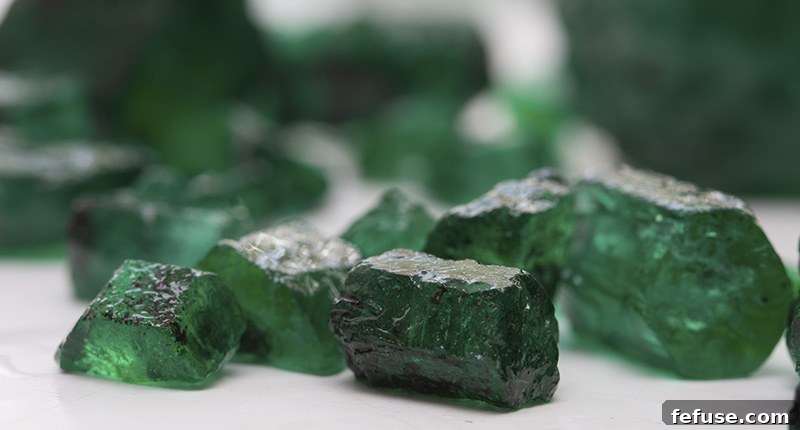
London – Gemfields, a world-leading supplier of ethically sourced rare gemstones, has announced the strategic postponement of its highly anticipated auction of predominantly higher quality emeralds. These exquisite emeralds originate from the renowned Kagem mine in Zambia, a source celebrated globally for producing some of the finest emeralds available. Originally scheduled for this month, the auction has been moved to February, a direct consequence of India’s recent demonetization policy, which has sent significant ripples through the global precious stone market.
The decision underscores the intricate and often sensitive interconnectedness of international commodity markets, particularly for high-value items like rare gemstones. Gemfields, known for its commitment to transparency and ethical practices in the mining and marketing of colored gemstones, meticulously plans its auctions to ensure optimal market conditions and fair value for its extraordinary offerings. The unforeseen economic upheaval in India necessitated a re-evaluation of these conditions.
In a surprise move in early November, Indian Prime Minister Narendra Modi implemented a sweeping demonetization policy, effectively banning 500 and 1,000 rupee notes. This bold initiative was launched with the stated aim of tackling pervasive corruption, curbing the financing of terrorism, and eliminating “black money”—unaccounted-for or untaxed cash holdings—while also targeting counterfeit currency circulating within the economy. The policy immediately rendered approximately 86% of India’s currency invalid, plunging the nation into a period of intense financial uncertainty and liquidity crunch.
The scale of the demonetization was unprecedented, impacting nearly every facet of daily life and commerce in India. As reported by The New York Times and other international media outlets, the two banned denominations represented the vast majority of all currency in circulation, leading to widespread chaos as citizens scrambled to exchange their old notes for new ones or deposit them into banks. The government provided a deadline until the end of the year for citizens to exchange these high-value notes, creating immense pressure on the banking system and generating considerable economic disruption across various sectors.
For Gemfields, the impact was particularly acute due to the critical role India plays in the global gemstone trade. Ian Harebottle, CEO of Gemfields at the time, explicitly stated that a significant majority of the company’s rough emerald buyers hail from India. India has long served as a vital hub for the cutting, polishing, and trading of colored gemstones, with its skilled artisans and robust domestic market driving a substantial portion of global demand. This deep dependence meant that any significant economic turbulence in India would inevitably affect Gemfields’ sales dynamics for Zambian emeralds.
Harebottle elaborated on the rationale behind the postponement, acknowledging the widespread media coverage of India’s demonetization program. He noted, “As has been widely covered in the international media, the new demonetization program will require an adjustment period to allow industries and stakeholders to adapt to the new policies.” This “adjustment period” is crucial for an industry heavily reliant on liquidity and confidence. High-value international auctions demand robust participation from buyers who are not only financially capable but also operating within a stable economic environment, free from immediate domestic financial pressures.
The sudden and drastic reduction in available cash, coupled with the focus on managing personal and business finances through the transition, rendered many Indian buyers unable or unwilling to participate in a high-stakes emerald auction. The uncertainty surrounding future payment mechanisms and the broader economic outlook made it impractical for Gemfields to proceed with the sale as planned. By postponing, Gemfields aims to allow its key Indian client base ample time to navigate the new financial landscape, thereby ensuring that when the auction does take place, it can achieve optimal results and reflect the true market value of the exceptional Kagem emeralds.
Interestingly, not all of Gemfields’ auctions were affected by India’s demonetization. The company’s auction of predominantly mixed quality rubies from its Montepuez mine in Mozambique was slated to proceed in Singapore in December, as originally scheduled. This distinction highlights the diversified customer base for different gemstone types and origins. The ruby market, while global, draws a substantial number of buyers from other regions such as Thailand, Sri Lanka, Myanmar, and China. These markets were not directly impacted by India’s internal financial policies to the same extent, allowing the ruby auction to move forward without disruption.
The Montepuez mine in Mozambique is a leading source of high-quality rubies, and its auctions are equally significant in establishing benchmark prices and driving trade for this vibrant red gemstone. The ability for the ruby auction to proceed underscores Gemfields’ global reach and its strategic positioning in different segments of the colored gemstone market. This diversification offers a degree of resilience against localized economic shocks, even as the interconnectedness of the industry remains a defining characteristic.
Despite the temporary setback with the emerald auction, Gemfields provided a reassuring update regarding its overall financial outlook. The mining company confirmed that there had been no change to its revenue guidance for the 2016 financial year. This steadfast forecast suggests confidence in the company’s long-term strategy, the intrinsic value of its gemstone assets, and its ability to weather short-term market fluctuations. The postponement is viewed as a tactical delay rather than a fundamental threat to the company’s profitability or market standing.
The Kagem mine in Zambia is not just any emerald source; it is the world’s single largest emerald mine, responsible for a significant portion of global emerald supply. Its consistent production of fine-quality emeralds, from commercial grades to rare museum-quality specimens, makes Gemfields’ auctions of Kagem emeralds pivotal events for the entire trade. Securing the best possible market conditions for these sales is paramount for Gemfields, its shareholders, and indeed, for setting accurate price benchmarks across the industry.
Looking ahead to February, the gemstone market will be keenly watching the rescheduled Gemfields emerald auction. The expectation is that by then, the initial shockwaves of India’s demonetization will have largely subsided, allowing for a more stable and predictable economic environment. Indian buyers, having adapted to the new financial norms and with greater clarity on liquidity, are anticipated to return to the auction with renewed confidence. The success of this postponed auction will not only be crucial for Gemfields but will also serve as a barometer for the broader recovery and adaptation of the Indian gemstone sector in the wake of such significant policy changes.
Ultimately, Gemfields’ decision to postpone its Zambian emerald auction is a testament to its market sensitivity and strategic acumen. It highlights how even a global leader in the luxury goods sector must remain agile and responsive to major geopolitical and economic shifts. The intricate dance between supply, demand, and market conditions, especially in a sector as specialized and globally integrated as precious gemstones, means that policy decisions in one country can send reverberations across continents, influencing major sales events and the livelihoods of countless stakeholders worldwide. This incident serves as a salient reminder of the delicate balance within international trade and the importance of an “adjustment period” for industries to navigate profound economic transformations.