
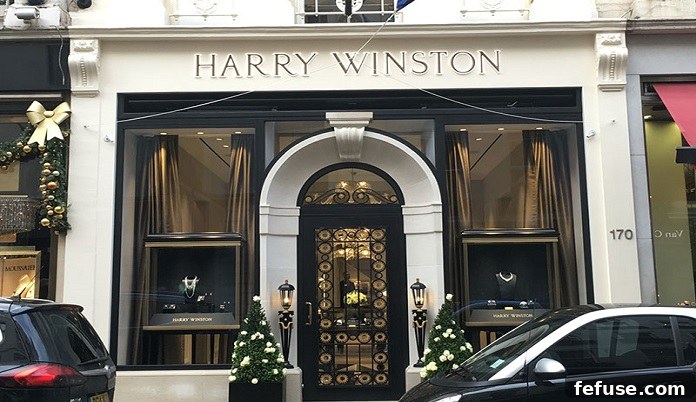
The esteemed luxury jewelry house, Harry Winston UK, demonstrated remarkable financial resilience in 2018, successfully transitioning from a notable loss to a significant profit despite experiencing a 20% dip in turnover. This strategic turnaround, detailed in newly published accounts on Companies House, offers valuable insights into the dynamic nature of the high-end jewelry market and the brand’s proactive approach to navigating its inherent challenges. While sales figures saw a reduction, the company’s astute management and robust strategy paved the way for a return to profitability, reinforcing Harry Winston’s enduring position at the pinnacle of the luxury sector.
Harry Winston UK’s Resilient Performance: Navigating Market Shifts to Achieve Profitability
In the competitive and often volatile world of luxury retail, financial reports frequently tell a complex story. For Harry Winston UK, the 52 weeks ending December 31, 2018, were marked by both significant hurdles and commendable triumphs. While turnover experienced a notable contraction, falling by 20% from £21.9 million to £17.5 million, the company’s ability to pivot its operational strategy allowed it to escape a previous year’s deficit and achieve a robust profit. This performance underscores a profound understanding of market dynamics and a commitment to strategic execution that defines true luxury leadership.
A Closer Look at the 2018 Financial Landscape: Sales Dip vs. Profit Surge
The reported 20% decrease in turnover for Harry Winston UK in 2018, bringing total sales down to £17.5 million from the prior year’s £21.9 million, was primarily attributed by the firm to “reduced sales activity in the high-end jewellery product offering.” This specific detail highlights the sensitivity of the ultra-luxury segment to various economic factors, consumer sentiment, and discretionary spending trends. High-value purchases, by their very nature, are often more susceptible to external pressures than mass-market consumer goods, making strategic adaptation crucial for sustained success.
However, what truly distinguishes Harry Winston UK’s 2018 performance is its remarkable turnaround in profitability. Against the backdrop of declining sales, the company surged from a substantial loss of £934,000 in the previous financial year to register a healthy profit of £495,000. This impressive swing into the black, amounting to an improvement of over £1.4 million, demonstrates not merely cost-cutting measures, but likely a more efficient operational model, optimized inventory management, and a sharper focus on profitable sales channels. It speaks volumes about the agility and financial discipline embedded within the brand’s UK operations, proving that revenue dips do not necessarily dictate overall financial health when strategic management is at play.
Unpacking the Challenges: The Unpredictable Nature of High-End Jewelry
The directors’ candid remark regarding the “unpredictable nature” of high-end jewelry sales is a critical insight into the luxury market. Unlike other retail segments, the sale of bespoke or exceptionally valuable pieces is not driven by consistent demand but rather by a discerning clientele often influenced by global economic stability, personal wealth fluctuations, and the timing of significant life events. Such purchases are often considered investments, emotionally charged milestones, or statements of personal achievement, making their frequency and timing less predictable than routine consumer goods.
Factors contributing to this unpredictability can include global economic slowdowns impacting ultra-high-net-worth individuals, geopolitical uncertainties affecting travel and tourism (a significant driver for luxury purchases in key cities like London), and shifts in luxury consumer preferences. Furthermore, the bespoke nature of many high-end pieces means longer sales cycles, requiring significant client engagement and customization, which can lead to extended periods between major transactions. Harry Winston’s acknowledgment of this inherent volatility underlines a realistic and mature understanding of its operational environment, informing a proactive strategic response designed to build greater revenue stability.
Strategic Adaptation: Harry Winston’s Path to Sustainable Growth
In response to the acknowledged unpredictability, Harry Winston’s senior management and directors are pursuing a strategy centered on innovation and diversification. Their confidence in this approach stems from a clear focus on “introducing new design collections and product assortments.” This proactive strategy aims to mitigate the reliance on sporadic high-value transactions by broadening the brand’s appeal and creating more consistent touchpoints with its affluent customer base. By regularly unveiling fresh designs, Harry Winston can generate renewed interest, cater to evolving aesthetic preferences, and provide more frequent reasons for clients to engage with the brand.
The introduction of diverse product assortments also implies a potential widening of price points within the luxury spectrum, allowing the brand to capture a broader range of high-end consumers, potentially including those making aspirational luxury purchases in addition to established collectors. This diversification is not about diluting the brand’s exclusive image but rather about expanding its accessible luxury offerings while maintaining its core identity of unparalleled craftsmanship and exceptional gemstones. The goal is clear: to cultivate a more “predictable revenue stream” by fostering ongoing engagement and providing a continuous flow of desirable, exquisitely crafted pieces that resonate with modern luxury connoisseurs.
The UK Retail Footprint: Flagship Presence and Strategic Concessions
Harry Winston maintains a focused and highly strategic retail presence in the UK, operating two key locations that serve distinct yet complementary roles in its brand building and sales efforts. The flagship store on New Bond Street stands as a monumental pillar of the brand’s identity. New Bond Street is globally renowned as one of the world’s premier luxury shopping destinations, synonymous with prestige, exclusivity, and heritage. A presence here is not merely about sales; it is a powerful statement of brand positioning, offering an immersive brand experience that encapsulates Harry Winston’s legacy of “King of Diamonds” and “Jeweler to the Stars.” The flagship serves as a grand showcase for its most magnificent creations, attracting a sophisticated international clientele and solidifying its iconic status.
Complementing this flagship is the brand’s highly successful concession within Harrods Fine Jewellery Room. Harrods, a venerable institution and an international shopping magnet, particularly for global tourists and high-net-worth individuals, provides an invaluable platform for brand visibility and accessibility. The concession model within a prestigious department store like Harrods allows Harry Winston to tap into an existing flow of luxury shoppers who are actively seeking premium goods, often across multiple categories. This strategic location proves “instrumental in building brand awareness,” exposing the brand to a diverse, affluent audience who may be exploring various luxury houses within a single, curated environment. The continued strong performance of the Harrods concession underscores the effectiveness of this multi-pronged retail strategy, leveraging both standalone exclusivity and high-traffic luxury retail hubs.
The Swatch Group Advantage: Fueling Global Ambitions
A significant enabler of Harry Winston’s sustained success and future growth trajectory is the steadfast support from its parent company, the Swatch Group. As a global titan in watchmaking and jewelry, the Swatch Group provides Harry Winston with substantial “financial and human resources.” This backing is invaluable in an industry that demands considerable investment in raw materials (rare diamonds and gemstones), craftsmanship, global marketing, and retail expansion. The financial stability offered by a conglomerate like Swatch Group allows Harry Winston to make long-term strategic decisions, invest in product development, and expand its global footprint without the immediate financial pressures that independent luxury brands might face.
Furthermore, the Swatch Group’s extensive global network and expertise in luxury brand management offer Harry Winston an unparalleled advantage. This partnership empowers the brand to “capitalise on global luxury spending from both traditional and emerging markets.” Traditional markets, such as North America, Europe, and Japan, remain crucial for their established luxury consumer bases and high purchasing power. However, the burgeoning wealth in emerging markets, particularly across Asia and the Middle East, presents enormous opportunities for growth. The Swatch Group’s insights and infrastructure in these regions can facilitate Harry Winston’s expansion, ensuring it reaches new generations of luxury consumers and solidifies its presence in high-growth economies. This symbiotic relationship ensures that Harry Winston remains well-positioned to leverage shifting global economic landscapes and evolving luxury consumer demographics.
Outlook and Future Prospects: Navigating the Evolving Luxury Landscape
Looking ahead, Harry Winston’s directors and senior management express “confidence” in their current strategy to yield positive results. This optimism is likely founded on the proven resilience demonstrated in 2018, coupled with a clear understanding of market dynamics and a proactive strategic framework. The luxury jewelry market continues to evolve, influenced by factors such as the increasing importance of ethical sourcing, the rise of digital engagement, and changing consumer values that prioritize sustainability and authenticity alongside exclusivity and craftsmanship.
Harry Winston’s focus on introducing new design collections and product assortments is intrinsically linked to staying relevant in this ever-changing landscape. By continuously innovating, the brand can maintain its appeal to existing loyal clients while attracting new ones who seek both timeless elegance and contemporary flair. The consistent performance of its strategic retail locations, particularly the Harrods concession, indicates a strong foundation for customer acquisition and brand reinforcement. With the unwavering support of the Swatch Group, providing the necessary resources for global expansion and market penetration, Harry Winston is well-equipped to navigate future market shifts and capitalize on growth opportunities in both established and nascent luxury markets.
Conclusion: Harry Winston UK’s Enduring Legacy
Harry Winston UK’s financial performance in 2018 stands as a testament to its strategic acumen and operational fortitude. Despite a significant dip in turnover driven by the unpredictable nature of high-end jewelry sales, the brand executed a remarkable turnaround, moving from a substantial loss to a healthy profit. This resilience was underpinned by a clear strategy of product innovation, leveraging its prestigious UK retail presence, and capitalizing on the formidable support provided by the Swatch Group. As the luxury market continues to transform, Harry Winston’s commitment to exquisite design, strategic retail, and global ambition ensures its enduring legacy as a world leader in high-end jewelry, prepared to meet the demands of discerning clients worldwide.
News Source: professionaljeweller