
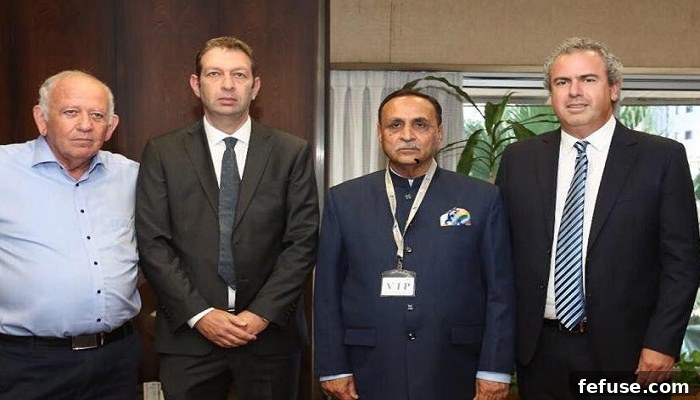
The global diamond industry, a fascinating nexus of craftsmanship, commerce, and international relations, thrives on robust partnerships and seamless trade. At its heart lie two pivotal nations: India, renowned as the world’s largest diamond cutting and polishing hub, and Israel, a leading center for rough and polished diamond trading. Understanding the intricate dance between these giants is crucial for the industry’s sustained growth. It was against this backdrop that a significant diplomatic and trade visit unfolded last week, underscoring the enduring importance of India-Israel cooperation in the diamond sector.
Shri Vijay Rupani, the Hon’ble Chief Minister of Gujarat, a state that proudly houses the epicenter of India’s diamond industry in Surat, led a high-level delegation on a pivotal six-day official visit to Israel. The primary objective of this strategic tour was to bolster bilateral ties, explore new avenues for collaboration, and address existing challenges, particularly within the lucrative diamond trade. Among the most anticipated engagements was the delegation’s interaction with the esteemed Israel Diamond Exchange (IDE) community, a meeting poised to shape future trade policies and strengthen economic bonds between the two nations.
Fostering Bilateral Synergy: Discussions at the Israel Diamond Exchange
The visit to the Israel Diamond Exchange (IDE) marked a cornerstone of Chief Minister Rupani’s itinerary, providing a direct platform for dialogue between key stakeholders from both diamond powerhouses. Accompanied by a formidable delegation comprising state ministers and senior officials, CM Rupani engaged in extensive discussions with Israeli diamantaires. The Israeli side was notably represented by a delegation led by IDE President Yoram Dvash, a respected figure in the international diamond community, ensuring that the dialogue encompassed the broadest perspectives and deepest insights from the sector.
During the robust exchanges, Chief Minister Rupani emphasized the profound and historical connection shared by the diamond communities of India and Israel. He eloquently articulated how this synergistic relationship has been a catalyst for remarkable growth and prosperity on both sides, transforming raw stones into glittering treasures and sustaining countless livelihoods. The CM’s address highlighted not just the commercial aspect but also the deep-seated trust and mutual respect that underpin these ties. He reiterated Gujarat’s commitment to further enhancing these bonds, exploring innovative ways to deepen collaboration for the mutual benefit of both economies, and positioning India as a reliable and indispensable partner in the global diamond supply chain.
Addressing the Elephant in the Room: India’s Polished Diamond Tax
While celebrating the many positives and the historical success of India-Israel diamond trade, IDE President Yoram Dvash candidly brought to the forefront a significant impediment hindering smoother commercial flow: the 6% import tax levied by India on polished diamonds. Dvash articulated, with palpable concern, the adverse impact of this tax, stating, “The tax makes it very difficult for Indian diamantaires who buy polished goods in Israel and for Israeli diamantaires who wish to trade with their Indian counterparts.” This levy, he explained, adds an additional layer of cost and complexity, thereby eroding profit margins and making cross-border transactions less attractive for both buyers and sellers.
The imposition of this 6% tax acts as a disincentive, creating an artificial barrier in what should ideally be a free-flowing market. For Indian diamantaires who rely on Israel’s robust trading hub for a diverse range of polished goods, the tax directly translates into higher acquisition costs, subsequently affecting their competitiveness in the global market. Similarly, Israeli traders, who view India as a massive and vital market for their polished inventory, find their export potential constrained by this tariff. The tax also complicates inventory management and cash flow for businesses on both ends, leading to reduced transaction volumes and, ultimately, stifling the natural growth trajectory of bilateral trade.
Dvash further underscored the widespread sentiment regarding this issue, revealing that his discussions with leaders from the Indian bourse consistently indicated that the reduction or elimination of this tax is a shared and pressing interest for diamantaires across both nations. This collective desire for tax reform highlights not just a parochial concern but a strategic imperative for the long-term health and vitality of the India-Israel diamond trade. The consensus among industry stakeholders emphasizes that removing such fiscal hurdles would unlock immense potential, fostering greater efficiency, transparency, and profitability for all participants in the value chain.
A Promise for Progress: CM Rupani’s Commitment
In response to the concerns raised by President Dvash and the broader Israeli diamond community, Chief Minister Rupani acknowledged the critical importance of unhindered, free trade between the two industries. He concurred that such an environment is paramount for sustaining and accelerating the economic growth and mutual prosperity that has characterized the India-Israel diamond relationship for decades. Recognizing the validity and urgency of the issue, CM Rupani made a significant commitment: he promised to personally look into the matter. This pledge signifies a potential turning point, indicating that the concerns of the diamond industry have been heard at the highest levels of governance in Gujarat.
The Chief Minister’s commitment extends beyond a mere promise; it implies a proactive engagement with the issue upon his return to India. This would likely involve comprehensive internal discussions within the Gujarat state administration, advocating for the industry’s interests with the central government, and exploring various policy options to address the import duty. Potential solutions could range from seeking a complete waiver of the tax on polished diamonds to negotiating a significant reduction, or even exploring special trade agreements that could mitigate its impact. Such a move, if successful, would not only alleviate a major burden on diamantaires but also send a powerful message of support for the industry from the Indian government.
The potential implications of resolving the 6% tax issue are far-reaching. It could lead to a significant surge in trade volumes between India and Israel, fostering a more dynamic and competitive market. Reduced costs for Indian buyers would enhance their global market presence, while Israeli sellers would find an expanded and more accessible market in India. Moreover, addressing this tax barrier could catalyze further investments, foster technological exchange, and strengthen the overall framework of bilateral economic cooperation. This commitment by CM Rupani is therefore seen as a crucial step towards creating a more conducive environment for diamond businesses, benefiting countless individuals and enterprises across both nations.
Distinguished Presence and a Vision for the Future
The gravity and strategic importance of the meeting at the Israel Diamond Exchange were further underscored by the distinguished lineup of attendees from both sides. Chief Minister Rupani’s delegation included several key ministers from the State of Gujarat, whose presence highlighted the comprehensive governmental support for strengthening international trade ties. India’s Deputy Chief of Mission (DCM) and Head of the Commercial Wing, Dr. Anju Kumar, also participated, signifying the broader diplomatic importance of the visit and India’s commitment to fostering robust economic partnerships.
On the Israeli side, the meeting was graced by a host of influential figures, each playing a vital role in the nation’s diamond industry ecosystem. Israel Diamond Controller Danny Tal, responsible for regulatory oversight and ensuring ethical practices, provided an authoritative presence. He was joined by Israel Diamond Institute Chairman Boaz Moldawsky, whose organization focuses on promotion, marketing, and technological advancement within the sector. Israel Diamond Manufacturers Association Chairman Jacob Korn also attended, representing the interests of the manufacturing segment. The collective presence of these senior Israeli and Indian diamantaires, alongside government officials, ensured that discussions were comprehensive, well-informed, and reflective of the diverse perspectives within the industry. This high-level attendance truly demonstrated the mutual recognition of the significance of this meeting for the future trajectory of the global diamond trade.
The visit by Chief Minister Rupani and his delegation to the Israel Diamond Exchange stands as a testament to the enduring and evolving partnership between India and Israel, particularly in the diamond sector. Beyond addressing specific trade barriers like the import tax, such high-level dialogues pave the way for broader cooperation, including technology transfer, skill development, ethical sourcing practices, and joint marketing initiatives. As India continues to solidify its position as a global manufacturing hub and Israel maintains its status as a vital trading center, the continued synergy between these two nations is indispensable for the sustainable growth and prosperity of the international diamond industry. The promise to review and address the polished diamond tax is a hopeful indicator of a future where trade flows more freely, fostering even greater collaboration and shared success.
News Source: gjepc.org