
Optimizing Precious Metal Supply: GJEPC’s Strategic Dialogue with ICBC Standard Bank to Empower Small-Scale Exporters
In a pivotal move aimed at bolstering the Indian gem and jewellery export sector, the Gem and Jewellery Export Promotion Council (GJEPC) recently engaged in a high-level strategic meeting with senior officials from ICBC Standard Bank, London. This crucial dialogue, held to address persistent challenges related to the consistent and duty-free supply of essential precious metals – gold and silver – particularly for small-scale exporters operating in regional, off-city locations, underscores the industry’s commitment to inclusive growth and enhanced global competitiveness. The meeting brought together key stakeholders from both organizations, fostering an environment conducive to finding practical solutions and strengthening long-standing partnerships within the vital supply chain of precious metals.
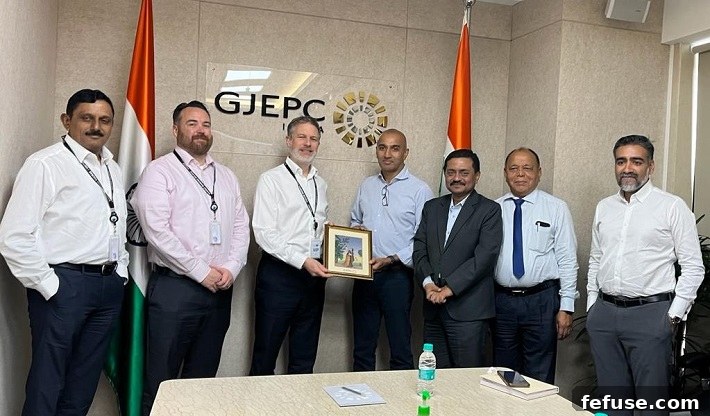
The esteemed delegation from ICBC Standard Bank London included Mr. Tom Kendall, Managing Director, and Mr. Ian Harris, Head of Physical Precious Metals, both bringing extensive expertise in global commodities and financial markets, critical for understanding international supply dynamics. They were joined by Mr. Avadhani Sanagaram from Resource Banking Consulting, whose insights contribute significantly to optimizing resource allocation and banking strategies for the sector. Welcoming these distinguished guests from the GJEPC side were Mr. Saunak Parikh, Convener of the Banking Insurance & Taxation Sub-committee, who played a central role in articulating the industry’s needs. He was ably supported by Mr. Milan Chokshi, Director of Diamond India Ltd. (DIL), Mr. Nirakar Chand, CEO of DIL, and Mr. Sabyasachi Ray, Executive Director of GJEPC. This assembly of leaders highlighted the comprehensive and collaborative approach being taken to tackle issues critical to the sustained prosperity and outreach of India’s gem and jewellery exports, aiming for solutions that cater to the entire ecosystem.
Fostering Growth: The Imperative for Accessible Precious Metals
The Indian gem and jewellery industry stands as a cornerstone of the nation’s economy, renowned globally for its exquisite craftsmanship, innovative designs, and substantial contribution to merchandise exports. This vibrant sector not only generates significant foreign exchange earnings but also employs millions, ranging from skilled artisans and designers to marketing and logistical professionals. However, its continued growth and ability to compete effectively on the international stage are intrinsically linked to the seamless availability of raw materials, primarily gold and silver. For the multitude of small-scale exporters, who constitute a significant portion of the industry’s workforce and creative output, access to these precious metals at competitive prices and convenient locations is not merely a logistical matter but a fundamental prerequisite for their survival, expansion, and ability to fulfill international orders. The recent meeting specifically aimed to iron out the complexities surrounding the steady supply of duty-free gold and silver, recognizing that any friction or inefficiency in this critical supply chain can severely impede the sector’s overall performance and hinder India’s ambitious export potential.
One of the most pressing concerns articulated by the GJEPC revolves around ensuring equitable access for exporters situated away from major metropolitan hubs. While major cities often benefit from robust banking infrastructure and established supply channels for precious metals, smaller towns and regional centers, despite housing a vibrant community of skilled artisans and entrepreneurial talent, frequently face significant disadvantages. These challenges include higher transportation costs, increased security risks associated with transporting high-value goods over long distances, and sometimes, a lack of consistent supply, which collectively inflate operational expenses and erode profit margins for regional players. The “duty-free” aspect is equally critical; these provisions are strategically designed to enhance the competitiveness of Indian exports by allowing raw materials to be imported without tariffs, provided the final product is subsequently exported. Disruptions or inefficiencies in accessing these crucial duty-free supplies directly translate into higher input costs, making Indian products less attractive in the global marketplace compared to competitors who might benefit from more streamlined domestic supply chains or lower raw material costs due to different national policies or geographical advantages.
The Industry’s Vision and Critical Challenges
Mr. Sabyasachi Ray, Executive Director of GJEPC, delivered a comprehensive presentation during the meeting, meticulously detailing the Indian gem and jewellery industry’s colossal scale, its ambitious growth trajectory, and the intrinsic link between its aspirations and the assured availability of crucial raw materials. He emphasized that the sector’s long-term sustainability and ability to meet global demand hinges on proactive measures to address current bottlenecks, particularly concerning precious metal supplies. The industry’s vision extends beyond mere volume growth; it encompasses diversifying product portfolios, investing in advanced manufacturing technologies, enhancing design innovation, and strengthening marketing efforts in key international markets to capture a larger share of the global luxury segment. These ambitious plans, however, are constantly confronted by a persistent challenge: the scarcity and inconsistent supply of precious metals, which can arise from various factors including global market fluctuations, geopolitical tensions affecting supply chains, and domestic logistical hurdles that impede efficient distribution across India.
The GJEPC’s expectations from nominated agencies and banking partners like ICBC Standard Bank are therefore very high, focusing on their capacity to ensure a stable, reliable, and cost-effective flow of gold and silver to all segments of the industry, irrespective of their geographical location within India. Two specific issues were brought to the forefront as major impediments to export competitiveness and sustainable growth:
- Addressing High Premiums on Gold: Mr. Ray explicitly highlighted that the high premiums often charged on gold significantly inflate the cost of raw materials for Indian exporters. These premiums, which can be influenced by domestic demand-supply gaps, local market dynamics, and other market inefficiencies, make the final products less price-competitive in the global arena. When compared to manufacturers in other countries who might have access to gold at international benchmark prices or even slight discounts, Indian exporters find themselves at a distinct disadvantage. This situation directly impacts profit margins, particularly for small-scale businesses with limited capital, and discourages them from expanding their operations or venturing into new export markets, thereby stifling overall industry growth and innovation. Mitigating these premiums is paramount for enhancing global price parity.
- Expanding Supply Reach to Off-City and Regional Exporters: The second critical point underscored was the imperative for steady duty-free gold and silver supplies to be made readily available to exporters located in “far-flung locations” – areas outside the primary metropolitan cities. The current concentration of nominated agency operations and banking facilities predominantly in metros creates a distinct geographical disparity. Exporters in smaller towns and regional production clusters, despite their significant contribution to traditional craftsmanship and specialized products, frequently face delays, higher logistics costs, and often, an inability to procure precious metals in the required quantities and at the right time. This not only adds to their operational burden but also restricts their ability to meet urgent international orders, ultimately hindering India’s broader export targets and undermining efforts for inclusive economic development.
GJEPC’s Concrete Proposals for Streamlined Operations
To effectively mitigate these formidable challenges and foster a more equitable, efficient, and robust supply chain for precious metals, the GJEPC presented specific, actionable recommendations to ICBC Standard Bank and other nominated agencies. These proposals are meticulously crafted to align with the existing Foreign Trade Policy (FTP) of India and are designed with the explicit aim of empowering small-scale exporters, who frequently serve as the backbone of regional economies and specialized craftsmanship. The focus is on practical adjustments that can yield significant positive impacts across the industry.
Key Recommendations for Nominated Agencies and Banks
- Standardized Release Multiples for Greater Accessibility: One of the primary and most impactful recommendations put forth by Mr. Ray was for nominated agencies and banks to release gold in standardized multiples of 100 grams and silver in standardized multiples of 10 kilograms to exporters. This seemingly technical adjustment has profound practical implications, especially for small-scale exporters. Currently, varying release quantities or higher minimum thresholds can pose a significant challenge, leading to either overstocking, which ties up valuable working capital, or under-procurement, which consequently hampers production schedules and order fulfillment. By standardizing these multiples, in clear alignment with the Foreign Trade Policy, smaller businesses can significantly improve their inventory management, optimize their working capital utilization, and streamline their procurement processes. This makes it considerably easier for them to plan production cycles and fulfill export orders without undue financial strain. This strategic move would effectively democratize access, ensuring that even the smallest enterprises can procure raw materials in manageable, economically viable, and predictable quantities, fostering stability and growth.
- Sustained Availability in Diverse Geographies Beyond Metros: Beyond the mere quantity of precious metals, the GJEPC stressed the paramount importance of consistency and geographical spread of supply. The Council urged nominated agencies to ensure a steady, uninterrupted flow of duty-free gold and silver not just within the major metropolitan areas, but crucially, to all regional production centers and “far-flung locations” across India. Achieving this requires a comprehensive re-evaluation and potential restructuring of current distribution networks, which might involve the establishment of more local collection and distribution points, or the implementation of enhanced logistical support and last-mile delivery mechanisms to remote areas. The overarching objective is to eliminate the geographical disadvantage faced by many exporters, enabling them to access raw materials with the same ease, predictability, and cost-effectiveness as their counterparts operating in larger cities. Such a measure would not only provide a significant boost to regional exports but also foster broader economic development and create additional employment opportunities in underserved areas, aligning seamlessly with broader national goals of inclusive growth and regional empowerment.
- Enhancing Export Competitiveness through Cost Optimization: Fundamentally, all these well-considered proposals converge on the overarching goal of significantly enhancing the export competitiveness of the Indian gem and jewellery sector on the global stage. By comprehensively addressing high premiums, ensuring consistent, duty-free supplies, and implementing standardized release multiples across all operational locations, the GJEPC aims to substantially reduce input costs for exporters. Lower input costs directly translate into more competitive pricing for finished products in discerning international markets, thereby giving Indian products a crucial edge against global rivals who might otherwise benefit from lower raw material procurement costs. This strategic intervention is expected to not only increase export volumes and market penetration but also encourage diversification into higher value-added products and sophisticated designs, ultimately elevating India’s position in the global gem and jewellery value chain from a manufacturing hub to a leader in innovation and design.
ICBC Standard Bank and DIL: A Decade of Partnership in Supporting the Sector
The meeting also served as a significant opportunity for the GJEPC to formally acknowledge and express its profound appreciation for the instrumental role played by ICBC Standard Bank in consistently supporting the Indian gem and jewellery industry. This was particularly highlighted through its enduring, decade-long association with Diamond India Ltd. (DIL). This robust partnership is a resounding testament to ICBC Standard Bank’s unwavering commitment to facilitating international trade, enabling sustainable growth, and providing crucial financial and logistical infrastructure within a key sector of the Indian economy. As a global leader in precious metals, ICBC Standard Bank brings unparalleled expertise in sourcing, refining, and distributing these vital commodities on an international scale, making them an indispensable and trusted partner for DIL and, by extension, for hundreds of Indian exporters who rely on this crucial supply chain.
The Role of Diamond India Ltd (DIL) in the Ecosystem
Diamond India Ltd. (DIL) holds a unique and profoundly critical position within the intricate Indian gem and jewellery ecosystem. Established as a nominated agency by the GJEPC, DIL’s primary mandate is to efficiently procure and distribute raw materials, including duty-free gold and silver, to bonafide exporters across the nation. It effectively acts as a crucial intermediary, bridging the gap between large international suppliers like ICBC Standard Bank and the multitude of small and medium-sized enterprises (SMEs) that form the essential backbone of India’s manufacturing prowess and artisanal heritage. The GJEPC specifically highlighted that DIL caters to approximately 800 small and medium-sized exporters, a significant number that powerfully underscores its pivotal role in empowering and sustaining this vital segment of the industry. The decade-long, consistent support from ICBC Standard Bank has been fundamental in enabling DIL to consistently fulfill its mandate, ensuring a relatively stable and predictable supply chain for its numerous members and thereby contributing significantly to their operational continuity, ability to meet deadlines, and ultimately, their export success. This enduring collaboration exemplifies how strategic and sustained partnerships between global financial institutions and local industry bodies can effectively address complex supply chain challenges, mitigate risks, and foster sustainable, inclusive growth across an entire industry.
Broader Economic Impact and Future Outlook
The outcomes of such high-level strategic dialogues extend far beyond mere logistical adjustments; their positive ramifications resonate throughout the broader Indian economy. A more efficient, equitable, and stable precious metal supply chain directly translates into enhanced export performance for the gem and jewellery sector. This, in turn, contributes positively and significantly to India’s balance of trade, strengthens crucial foreign exchange reserves, and projects an image of reliability, quality, and competitiveness for Indian manufactured goods on the global stage. The sector is a major employer, providing stable livelihoods to millions of highly skilled artisans, innovative designers, and dedicated ancillary workers across the country, especially in traditional craft clusters. Improved access to raw materials and increased competitiveness will inevitably lead to further job creation, advanced skill development through training initiatives, and overall economic upliftment, particularly in the regional clusters that are heavily reliant on this vibrant industry for their prosperity and sustenance.
Strengthening India’s Global Position and Sustainable Growth
Furthermore, these proactive initiatives align seamlessly with broader national economic policies aimed at boosting domestic manufacturing and escalating exports, such as the flagship ‘Make in India’ program. By making it significantly easier and more cost-effective for small and medium-sized enterprises to operate, innovate, and export, India reinforces its undisputed position as a global manufacturing and design hub for gems and jewellery. It also actively encourages higher value addition within the country, as exporters are empowered to invest more readily in better designs, superior craftsmanship, advanced technologies, and innovative marketing strategies, rather than being perpetually constrained by raw material availability or prohibitive costs. The robust collaboration between GJEPC and ICBC Standard Bank sets a powerful precedent for how effective public-private partnerships can strategically address complex, industry-specific challenges, fostering an environment where Indian businesses can not only thrive but also compete robustly and sustainably on a global scale. This forward-thinking and proactive approach ensures that the Indian gem and jewellery industry is not only resilient in the face of global challenges but is also exceptionally well-poised for significant future growth, adapting deftly to evolving market dynamics and securing an even more prominent and influential place in the international luxury goods market for decades to come.
Conclusion: A Collaborative Path Towards Sustainable Export Growth
The strategic meeting between the Gem and Jewellery Export Promotion Council (GJEPC) and ICBC Standard Bank London represents a crucial and highly progressive step forward in addressing the intricate and multifaceted challenges faced by India’s dynamic gem and jewellery sector. By focusing intensely on the steady, duty-free supply of gold and silver, particularly for the vital segment of small-scale exporters operating in off-city locations, and by proposing practical, impactful solutions like standardized release multiples, the industry is paving a clear path towards a more inclusive, efficient, and robust export ecosystem. The acknowledgment of ICBC Standard Bank’s enduring and invaluable support to Diamond India Ltd (DIL) further highlights the transformative power of sustained, collaborative partnerships in effectively overcoming complex logistical and financial hurdles that might otherwise impede growth. The strong collaborative spirit and shared vision demonstrated by all parties involved in this critical dialogue signal an unwavering commitment to strengthening India’s undisputed position as a global leader in gem and jewellery manufacturing and exports, ultimately ensuring that the extensive benefits of this vibrant and culturally rich industry are shared equitably across all segments and diverse regions of the nation, fostering enduring prosperity and innovation.