
India’s Gems & Jewellery Sector: GJEPC Leadership Meets Commerce Minister for Strategic Growth
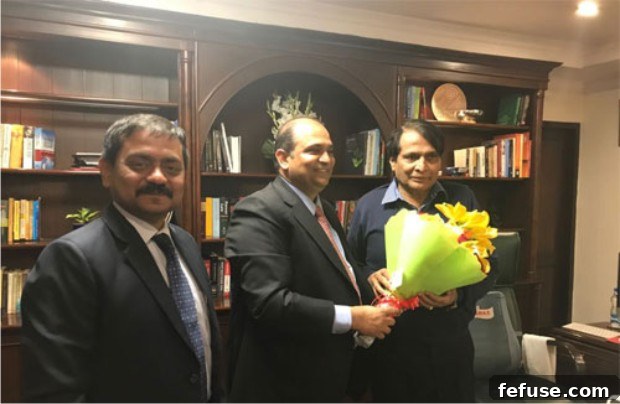
The Indian gems and jewellery industry, a cornerstone of the nation’s economy and a significant contributor to its export basket, recently witnessed a pivotal meeting between its newly elected leadership and the Union Minister for Commerce & Industry. Pramod Agarwal, taking the helm as the Chairman of The Gem & Jewellery Export Promotion Council (GJEPC), paid a significant courtesy call on the Hon’ble Union Minister, Shri Suresh Prabhu, signaling a renewed commitment to collaboration and progress for the sector. Agarwal was accompanied by the Chief Executive Director (CED) of the GJEPC, Sabyasachi Ray, underscoring the collective representation of the industry’s apex body.
GJEPC’s Mandate and the Vision of New Leadership
The Gem & Jewellery Export Promotion Council (GJEPC) stands as the principal guardian and promoter of India’s vibrant gems and jewellery trade. Established in 1966, under the aegis of the Ministry of Commerce & Industry, Government of India, GJEPC plays a crucial role in facilitating exports, promoting design innovation, skill development, and ensuring ethical business practices across the entire value chain—from rough diamonds and coloured gemstones to polished diamonds, gold jewellery, and costume jewellery. Its mission is to make India the world’s leading hub for gems and jewellery, driving growth and maintaining international competitiveness.
Pramod Agarwal’s appointment as Chairman marks a new chapter for the Council. With extensive experience within the industry, his leadership is expected to bring fresh perspectives and renewed vigour to GJEPC’s objectives. His initial engagement with the Commerce Minister highlights a proactive approach to addressing both existing challenges and future opportunities, setting a clear tone for his tenure. The industry, which employs millions and contributes substantially to foreign exchange earnings, looks to his leadership for strategic direction in an increasingly dynamic global market.
Minister Prabhu Outlines Ambitious Agenda: A One-Year Action Plan for Export Growth
During the constructive meeting, Hon’ble Minister Suresh Prabhu articulated a clear and ambitious agenda for the gems and jewellery sector, beginning with a directive for GJEPC to formulate a comprehensive “one-year Action Plan” specifically aimed at accelerating export growth. This request underscores the government’s recognition of the industry’s immense potential and its importance in achieving national economic targets. A well-defined action plan is critical for navigating global trade complexities, enhancing competitiveness, and unlocking new market opportunities.
Such an action plan would likely encompass several key pillars. Firstly, it would focus on market diversification, seeking to reduce over-reliance on traditional markets by actively exploring emerging economies and underserved regions. This would involve detailed market research, targeted trade promotions, and strategic partnerships. Secondly, emphasis would be placed on product innovation and value addition, encouraging manufacturers to move up the value chain through advanced design, technology integration, and branding initiatives. Thirdly, the plan would need to address infrastructure and logistical improvements, streamlining customs procedures, and enhancing supply chain efficiencies to ensure smooth and timely delivery of products.
Furthermore, a robust action plan would tackle critical issues such as skill development and technology adoption. Investing in training programs for artisans, designers, and technicians would ensure a steady supply of skilled labour capable of meeting global standards. Similarly, encouraging the adoption of cutting-edge technologies like automation, 3D printing, and artificial intelligence in manufacturing processes could significantly boost productivity and quality. Finally, the plan would advocate for favourable government policies, including taxation reforms, easier access to finance, and robust intellectual property protection, all crucial for fostering a conducive business environment and sustaining long-term growth.
Paving the Way for a Dedicated Gold Board
Another significant point of discussion during the meeting revolved around the formation of a dedicated “Gold Board.” This initiative, which had been a key topic at the recently concluded Gold Summit in New Delhi, aims to bring greater structure, transparency, and policy coherence to India’s vast gold sector. India is one of the world’s largest consumers and importers of gold, and its market dynamics have a profound impact on global prices and trade. The establishment of a specialized board is seen as a crucial step towards harnessing this potential more effectively.
The proposed Gold Board would serve multiple functions. It could act as a central coordinating body for various stakeholders, including miners, refiners, manufacturers, jewellers, and consumers, facilitating dialogue and consensus-building on industry-wide issues. Its mandate could include developing comprehensive policies for gold mining, refining, recycling, and trade, ensuring sustainable practices and promoting ethical sourcing. Moreover, the Board could be instrumental in standardizing quality, promoting hallmarking, and enhancing consumer confidence, thereby formalizing aspects of the market that have traditionally been fragmented.
Discussions at the Gold Summit likely highlighted the need for improved data collection and analysis to inform policy decisions, better integration of the formal and informal gold economies, and strategies to position India as a global leader not just in consumption but also in refining and value-added gold products. Minister Prabhu’s call for expeditious suggestions from GJEPC on this matter signals the government’s intent to move forward swiftly with this transformative initiative, recognizing its potential to unlock significant economic value and streamline regulatory frameworks within the gold industry.
Strategic Market Diversification: China and Latin American Prospects
In a proactive move to broaden India’s export horizons, Shri Prabhu also mooted the idea of sending exploratory trade delegations to key international markets. Specifically, he suggested an industry delegation be dispatched to China and another to various Latin American countries. This strategic initiative underscores the government’s commitment to market diversification and aggressive export promotion, vital for insulating the industry from regional economic fluctuations and maximizing global reach.
China represents a colossal market with a rapidly growing middle class and evolving consumer preferences. An exploratory delegation to China would aim to understand the nuances of the Chinese jewellery market, identify specific product segments with high demand (e.g., fine jewellery, diamond-studded pieces, unique Indian designs), and explore potential partnerships for distribution and retail. Given China’s significant manufacturing capabilities, the delegation could also seek collaborations in design, technology, and sourcing, fostering a mutually beneficial trade relationship. The goal would be to showcase the craftsmanship and quality of Indian gems and jewellery, creating new inroads into one of the world’s largest consumer markets.
Concurrently, the proposal to send a delegation to Latin American countries signifies a deliberate move towards exploring untapped territories. Markets like Brazil, Mexico, Colombia, and Chile offer significant potential for Indian gems and jewellery exports, driven by rising disposable incomes and an appreciation for unique, handcrafted items. A delegation to this region would focus on understanding local tastes, assessing market demand for specific gemstone types or jewellery styles, and establishing direct connections with local distributors, retailers, and design houses. This initiative is geared towards building new trade corridors and establishing India as a preferred supplier in a region that has traditionally looked towards other markets, thereby significantly expanding the global footprint of Indian jewellery products.
Addressing Industry Concerns: The Angadia Matter
Beyond the strategic growth initiatives, the meeting also provided an important platform for GJEPC to represent critical industry concerns. Pramod Agarwal brought to the Minister’s attention the issue of the “seizure of stocks of the angadias in Mumbai.” Angadias are traditional couriers and financiers who play a crucial, albeit often informal, role in the logistics and financing of the diamond and jewellery trade, particularly in the movement of goods and cash between manufacturing hubs and trading centres within India.
The seizure of their stocks can have significant repercussions across the value chain, leading to disruptions in supply, liquidity challenges for businesses, and a general sense of unease within the trade. Such actions often arise from regulatory scrutiny related to financial transactions, taxation, or security protocols. GJEPC, as the industry’s voice, played a vital role in articulating the operational challenges faced by the sector due to such incidents and highlighting the need for a balanced approach that ensures compliance without unduly hindering legitimate business operations.
Hon’ble Minister Suresh Prabhu, on his part, provided a much-needed assurance to the GJEPC representatives, stating that he would “look into the matter.” This commitment from the Commerce Minister is crucial for restoring confidence within the trade, signaling that the government acknowledges the concerns and is willing to engage in a dialogue to find pragmatic solutions. It underscores the importance of a collaborative relationship between the government and industry to resolve operational bottlenecks and ensure a stable and predictable business environment.
A Collaborative Path to Global Leadership
The meeting between Chairman Pramod Agarwal of GJEPC and Hon’ble Union Minister Suresh Prabhu marks a significant step forward for India’s gems and jewellery sector. It effectively laid the groundwork for a period of dynamic growth, strategic market expansion, and enhanced regulatory clarity. The directives from the Minister for an aggressive one-year Action Plan and the formation of a Gold Board demonstrate a clear vision for the industry’s future, while the proactive suggestion for trade delegations to China and Latin America highlights an outward-looking approach to global trade.
Equally important was the Minister’s assurance regarding pressing operational issues like the angadia stock seizures, which reinforces the government’s commitment to supporting the industry through its challenges. This collaborative spirit between the GJEPC leadership and the Ministry of Commerce & Industry is essential for navigating the complexities of the global market and ensuring that India not only maintains but significantly enhances its position as a world leader in the gems and jewellery trade. The industry now stands poised for a phase of concerted efforts aimed at innovation, diversification, and sustainable growth, charting a course towards greater global prominence.
Pic Cap: Hon’ble Minister for Commerce & Industry Shri Suresh Prabhu (extreme right) seen with Chairman GJEPC Pramod Agarwal (centre) and CED GJEPC, Sabyasachi Ray.