
GJEPC Spearheads Skill Development, Welfare, and Export Promotion in India’s Gem & Jewellery Sector
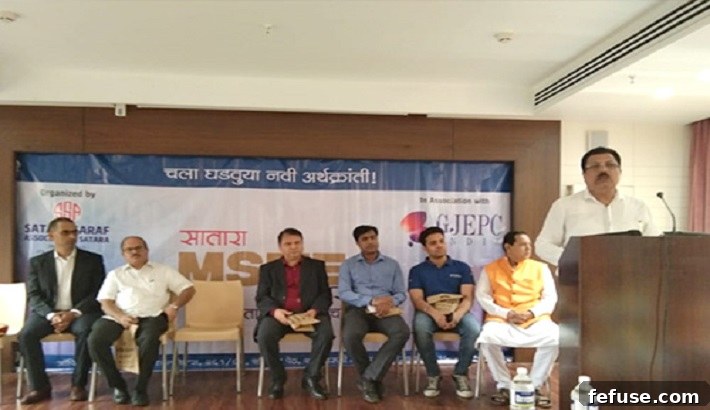
The Gem & Jewellery Export Promotion Council (GJEPC), a premier organization dedicated to fostering the growth and development of India’s gem and jewellery industry, continues its impactful outreach through a series of crucial seminars. One such highly successful event, aimed at empowering artisans (karigars) within the sector, took place on December 28, 2019, in Satara. Hosted in close collaboration with the Satara RC Sarafa Association, this seminar garnered an overwhelmingly positive response, drawing over 100 dedicated karigars eager to enhance their skills, understand government initiatives, and explore avenues for growth.
These initiatives underscore GJEPC’s unwavering commitment to not only bolstering India’s position as a global leader in gem and jewellery exports but also to nurturing the grassroots talent that forms the very backbone of this vibrant industry. By focusing on skill enhancement, financial literacy, welfare schemes, and market access, GJEPC is actively shaping a more robust, resilient, and inclusive future for thousands of individuals dependent on this sector.
Empowering Artisans: A Deep Dive into GJEPC’s Comprehensive Initiatives
The seminar commenced with a comprehensive introduction to the GJEPC, delivered by Mr. Mithilesh Pandey, Director, Membership, GJEPC. He provided a detailed overview of the Council’s extensive activities, highlighting its pivotal role in facilitating trade, promoting exports, and advocating for the industry’s interests at national and international forums. A significant portion of his presentation focused on key welfare schemes designed specifically for artisans, demonstrating GJEPC’s commitment to their well-being and professional identity.
Among the crucial initiatives discussed were the GJEPC’s ‘Parichay Card’ and the ‘Swasthya Ratna’ and ‘Swasthya Kosh’ schemes. The Parichay Card serves as a vital identity document for artisans, formalizing their presence within the industry and granting them access to various benefits and support programs. The Swasthya Ratna and Swasthya Kosh schemes, on the other hand, represent GJEPC’s pioneering efforts in providing essential health insurance and medical assistance to karigars. In a sector where many workers operate in informal settings, these schemes offer a critical safety net, ensuring access to quality healthcare and financial security during medical exigencies. Later in the session, Mrunali Elle, a distinguished Council representative, further elaborated on broader governmental support mechanisms, offering detailed insights into the Mudra Yojana and the Prime Minister’s Employment Yojana, both designed to foster entrepreneurship and create employment opportunities across various sectors, including handicrafts.
Financial Acumen and Skill Enhancement: Paving the Way for Growth
Understanding the critical role of financial literacy and access to credit for small businesses and individual artisans, GJEPC Consultant Mr. Ajit Shah delivered an insightful presentation on banking and finance. He meticulously detailed the various types of loans and financial products available to artisans and small jewellers, demystifying the application processes and highlighting how prudent financial management can unlock significant growth potential. This session was particularly valuable for attendees seeking to expand their operations, invest in new equipment, or manage working capital more effectively.
Following this, Mr. Praveen More, a representative from the Gem & Jewellery Skill Council of India (GJSCI), shed light on the Government’s impactful Skill Development Programmes. GJSCI plays a crucial role in standardizing training and certifying skills within the industry. Mr. More focused on two cornerstone initiatives: Recognition of Prior Learning (RPL) and Short Term Training programs. He passionately explained how RPL allows experienced artisans, often with years of practical knowledge but no formal certification, to gain recognized qualifications, thereby enhancing their employability and market value. A significant incentive associated with the RPL training is the provision of free Accident Insurance cover up to Rs. two lakh for a period of three years, coupled with a direct transfer of Rs. 500 into their bank accounts upon successful completion. This demonstrates a holistic approach to skill development, combining certification with tangible welfare benefits.
Elevating Standards: The Importance of Hallmarking and Quality Assurance
A dedicated and highly anticipated session on Hallmarking was conducted by Mr. Hemant Aade of the Bureau of Indian Standards (BIS). Hallmarking is a crucial aspect of consumer protection and ensuring the purity of precious metals. Mr. Aade provided an exhaustive explanation of the entire hallmarking system, covering its history, the meticulous procedures involved, the locations of various hallmarking centres across the country, and the associated costs. This session was vital for both artisans and jewellers, as it emphasized the importance of maintaining ethical business practices, building consumer trust, and adhering to national and international quality standards. Understanding hallmarking is not merely a regulatory compliance but a fundamental step towards enhancing the credibility and value of Indian jewellery in both domestic and global markets.
Broadening Horizons: MSME Support and Export Opportunities
In a subsequent session, Mr. Mithilesh Pandey of GJEPC returned to delve deeper into the various schemes offered by the Ministry of Micro, Small & Medium Enterprises (MSME). He outlined a spectrum of beneficial programs, including Interest Subvention, Technology Upgradation, Common Facility Centres (CFCs), Skill Development, and the Lean Manufacturing Competitiveness Scheme. These schemes are designed to foster innovation, improve productivity, reduce operational costs, and make MSMEs more competitive. Mr. Pandey also highlighted the National Small Industries Corporation (NSIC) scheme, which provides crucial financial assistance for MSMEs to participate in trade exhibitions organized both within India and internationally, thereby opening doors to new markets and export opportunities.
Further enriching the session, Council representative Ms. Mrunali Elle offered detailed information on additional governmental schemes vital for small businesses, such as the Pradhan Mantri Rojgar Yojana, the Credit Guarantee Fund Trust Scheme, and the Credit Link Subsidy Scheme. These initiatives provide crucial support in terms of employment generation, access to collateral-free credit, and interest subsidies, significantly easing the financial burden on aspiring entrepreneurs and existing small enterprises in the jewellery sector.
A key focus of the seminars was to encourage jewellers to initiate export activities directly from the district level. This strategic push aims to decentralize export efforts and tap into the potential of regional manufacturing hubs. The large number of attendees were also informed about the impending introduction of a new Rs. 1,000 membership category within GJEPC, an initiative designed to make Council membership more accessible to a wider base of small-scale jewellers and artisans, further integrating them into the national export ecosystem.
Global Connectivity, Security, and Holistic Welfare: A Comprehensive Outlook
The drive towards global market integration was significantly bolstered by a detailed presentation from Mr. Amar Pratap Singh and his team members from Dun & Bradstreet (D&B). Their session illuminated how MSMEs could effectively connect themselves to the global economy, leverage international business intelligence, and strategically grow their business on a worldwide scale. Complementing this, consultant Mr. Ajit Shah provided complete and practical information on the intricate process of commencing exports, offering step-by-step guidance to budding exporters. Mr. Praveen More further enriched the discussion, again representing GJSCI and its ongoing commitment to nurturing skilled talent for global competitiveness.
Recognizing the paramount importance of security in the high-value gem and jewellery industry, Mr. Ratan Thapa, an official from Godrej, delivered an informative presentation on the company’s state-of-the-art security systems and safes. His insights into robust security solutions were invaluable for jewellers looking to protect their assets and ensure operational safety. Finally, an official from Edelweiss revisited the GJEPC-backed Swasthya Ratna and Swasthya Kosh schemes, providing further clarification and encouraging greater enrolment among the attendees, reiterating the critical importance of health and welfare support for the artisan community.
Community Engagement and Future Impact
These dual seminars—one specifically for artisans and another for the broader jeweller community—highlight GJEPC’s multi-pronged approach to industry development. By bringing together experts from various fields, including finance, skill development, quality assurance, export promotion, and security, GJEPC successfully created a holistic learning and networking platform. The positive reception from both karigars and jewellers in Satara underscores the immense value and necessity of such targeted outreach programs.
As a gesture of appreciation and to aid their professional pursuits, all participants in both seminars received a complimentary bag containing a writing pad and pens. This thoughtful sponsorship by Kailash Jewellers further exemplified the collaborative spirit within the industry and the collective effort to uplift and support the gem and jewellery community in Satara.
These successful events in Satara serve as a powerful testament to GJEPC’s enduring commitment to empowering every segment of the Indian gem and jewellery sector. By fostering skill development, promoting welfare, and opening doors to new market opportunities, GJEPC is not just driving economic growth but also ensuring the sustainable future and prosperity of India’s precious artisan heritage on the global stage.
News Source: gjepc