
Indo-Russian Diamond Alliance: A New Era for the Global Gemstone Industry
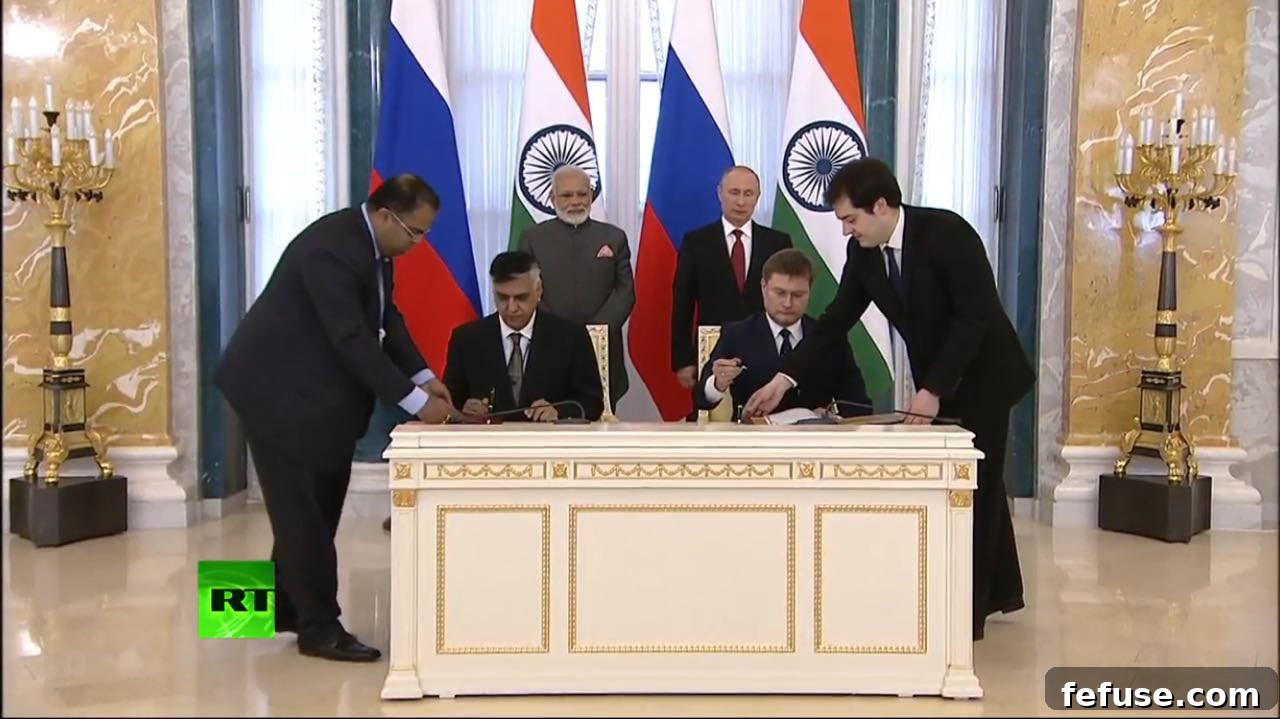
A landmark Memorandum of Co-operation (MoC) has been signed between The Gem & Jewellery Export Promotion Council (GJEPC) of India and ALROSA, the world’s largest diamond mining company from Russia. This historic agreement, forged on the sidelines of the prestigious St. Petersburg International Economic Forum (SPIEF), signifies a monumental leap forward for Indo-Russian ties in the diamond sector. The signing ceremony itself carried immense geopolitical weight, taking place in the distinguished presence of India’s Hon’ble Prime Minister Shri Narendra Modi and Russian President Vladimir Putin, underscoring the strategic importance both nations place on this burgeoning partnership.
The MoC was formally inked by Mr. Praveenshankar Pandya, Chairman of the GJEPC, representing India’s vibrant gem and jewellery export trade, and Mr. Sergey Ivanov, President of ALROSA, on behalf of the Russian diamond giant. This high-level endorsement from both sides sets a powerful precedent for future collaborations and solidifies a shared vision for the sustainable growth and integrity of the global diamond industry.
Forging a Partnership Between Diamond Giants
This collaboration represents a convergence of two titans within the international diamond industry, each holding unparalleled influence in their respective domains. India stands as the undisputed global leader in diamond cutting and polishing, processing an astounding volume and value of rough diamonds annually. Its skilled workforce and advanced manufacturing capabilities are the bedrock of the world’s finished diamond supply. On the other side, PJSC ALROSA dominates the rough diamond production landscape, supplying a significant portion of the world’s raw material for this intricate process. The synergy between India’s processing prowess and Russia’s abundant natural resources creates a formidable alliance, poised to reshape the dynamics of the global diamond trade.
The symbolic presence of two heads of state, Prime Minister Modi and President Putin, elevated the MoC beyond a mere commercial agreement, transforming it into a testament to the robust diplomatic and economic relations between India and Russia. This high-level political backing lends considerable impetus and credibility to the outlined initiatives, signalling a strong governmental commitment to fostering a more integrated and transparent diamond supply chain between the two nations.
The scope of this co-operation is broad and ambitious, encompassing critical areas from trade development and market enhancement to the crucial challenge of synthetic diamond detection and generic marketing. Experts anticipate that the comprehensive nature of these joint efforts will have a transformative, game-changing impact on the international diamond industry, setting new standards for collaboration, transparency, and consumer confidence.
Key Pillars of Co-operation: Driving Industry Transformation
The Memorandum of Co-operation meticulously outlines several significant areas of joint action, each designed to address key challenges and unlock new opportunities within the diamond sector.
1. Enhancing Trade Development and Direct Sourcing
A cornerstone of this MoC is the focus on revolutionizing trade development, particularly through the establishment and optimization of direct sourcing channels. This initiative traces its roots back to the World Diamond Conference held in New Delhi in 2014, where President Putin and Hon’ble PM Modi jointly addressed the industry. It was during this pivotal event that PM Modi announced the Government of India’s visionary decision to establish a Special Notification Zone (SNZ).
Today, the first SNZ is fully operational within the complex of the Bharat Diamond Bourse (BDB) in Mumbai, facilitating the viewing of rough diamonds directly from international mining companies. This crucial development aims to streamline the supply chain, reduce intermediaries, and provide Indian manufacturers with direct access to high-quality rough diamonds, thereby enhancing efficiency and cost-effectiveness.
The MoC further articulates GJEPC’s resolute intention to advocate for a special tax regime within India. Such a framework is vital to enable direct rough diamond sales to be conducted efficiently and competitively out of the India Diamond Trading Centre (IDTC). This move is expected to significantly bolster India’s position as a global diamond trading hub, attracting more international business and fostering greater liquidity in the market.
Complementing this, ALROSA has committed to exploring avenues for establishing a representative office within the BDB, with the strategic potential to evolve into a full-fledged sales office. This step is a direct response to the long-standing demand from the Indian diamond industry for direct access to rough diamond supplies from ALROSA, promising greater supply stability, improved transparency in pricing, and closer collaboration between the producer and the world’s largest manufacturing centre. Furthermore, the MoC mandates a greater exchange of vital trade figures and technological advancements between GJEPC and ALROSA, promoting mutual understanding and fostering innovation across the supply chain.
2. Revitalizing Generic Promotion of Diamonds
Both ALROSA and GJEPC have unequivocally reaffirmed their steadfast commitment to the generic marketing of diamonds. This critical endeavor aims to uphold and elevate diamond consumer equity, a fundamental pillar for the sustainable growth and enduring appeal of the diamond market. In an era where luxury goods compete fiercely for consumer attention, a unified, global message about the intrinsic value, rarity, and emotional significance of diamonds is more important than ever.
To this end, GJEPC will play a crucial role by sharing invaluable insights into the specific nuances of consumer demand for diamonds within the dynamic Indian market. This detailed market intelligence will be instrumental in informing and refining ALROSA’s international efforts, particularly through its active participation in the Diamond Producers Association (DPA). By combining GJEPC’s ground-level understanding of consumer preferences with DPA’s global marketing reach, the joint initiative seeks to craft more impactful and resonant generic marketing campaigns that will inspire a new generation of diamond consumers worldwide.
3. Upholding Integrity Through Synthetic Diamond Detection
Recognizing one of the most pressing challenges facing the modern diamond industry, ALROSA and GJEPC have expressed a firm resolve to implement stringent measures aimed at maintaining separate and verifiable pipelines for natural and synthetic diamonds. The undisclosed mixing of synthetic diamonds with natural ones poses a significant threat to consumer confidence and the perceived value of natural diamonds, a concern that both entities are determined to mitigate proactively.
Co-operation in this vital area encompasses several key actions: facilitating the exchange of information on reported cases of mixing, which will aid in identifying problematic sources and enforcing compliance; actively promoting the introduction of robust legislation for mandatory disclosure of synthetics, ensuring transparency at every stage of the supply chain; GJEPC encouraging the widespread use of ALROSA’s sophisticated detection devices within the Indian market, empowering manufacturers to verify diamond authenticity; and critically, ALROSA’s decision to join India’s Natural Diamond Monitoring Committee (NDMC). ALROSA’s membership in the NDMC signifies a powerful unified front against undisclosed synthetics, leveraging the combined expertise and resources of both organizations to protect the integrity of the natural diamond industry.
Leadership Vision: Shaping the Future of Diamonds
GJEPC Chairman Mr. Praveenshankar Pandya eloquently articulated the profound significance of this Memorandum of Co-operation, highlighting its multi-faceted impact on the Indian and global diamond landscape. “The signing of this MoC is extremely significant due to several reasons,” Mr. Pandya stated. “Most importantly, it advances the aspirations of the Indian diamond industry, which is deeply aligned with the vision of our Hon’ble Prime Minister to develop India as an international Diamond Trading Hub.” He emphasized GJEPC’s serious endeavour to establish a policy framework on taxation for the SNZs, a critical step towards unlocking India’s full potential as a direct trading centre.
Mr. Pandya also underscored the direct implications for supply chain efficiency: “It is also the first step towards ALROSA setting up a rough diamond representative office within the country. For long, GJEPC has been encouraging diamond mining companies to sell rough diamonds directly to the Indian market, and the MoC may well be the first step to realising this crucial goal.” This direct access is expected to provide greater stability and transparency for Indian manufacturers, fostering a more robust and competitive market.
Addressing the complex issue of undisclosed synthetics, Mr. Pandya reiterated the industry’s commitment: “The mixing of synthetic diamonds with natural diamonds, and the consequent threat to consumer confidence, is one of the biggest challenges facing the diamond industry worldwide.” He proudly acknowledged GJEPC’s proactive leadership through the Natural Diamond Monitoring Committee (NDMC), which has been performing stellar work in this regard. “Now, if the two most important and largest entities combine their efforts in a focussed manner, this will no doubt have a tremendous impact on the entire diamond industry,” he added, expressing optimism about the joint fight to safeguard consumer trust.
Furthermore, the GJEPC Chairman highlighted the collective recognition within the industry regarding the imperative for generic marketing. “The need for generic marketing of diamonds has been felt by the industry for some time now,” he noted. “For many years, the GJEPC has been making endeavours to galvanise the entire world trade to take concerted and cohesive action for diamond promotions. In this area too, the joint efforts of GJEPC and ALROSA will have an extremely beneficial impact at an international level,” Mr. Pandya concluded, envisioning a renewed global appreciation for natural diamonds.
A Strategic Alliance for a Sustainable Future
The MoC between GJEPC and ALROSA, witnessed by the highest political echelons of both India and Russia, is more than just a business agreement; it is a strategic declaration of intent. It solidifies a profound partnership that leverages the strengths of both nations—Russia’s immense rough diamond resources and India’s unparalleled manufacturing expertise—to foster a more transparent, efficient, and consumer-centric global diamond industry. By addressing key areas such as direct trade, generic promotion, and synthetic detection, this Indo-Russian alliance is poised to usher in a new era of growth, trust, and sustainability, ensuring the enduring allure of natural diamonds for generations to come.
Pic Cap: Chairman of GJEPC Praveenshankar Pandya (seated left) and President of ALROSA, Sergey Ivanov (seated right) seen signing the agreement looked upon by Hon’ble Prime Minister of India Shri Narendra Modi (standing left) and President of Russia Vladimir Putin (standing right)
News Source: gjepc.org