
Centuries of Opulence: A GIA Exhibition Unveils India’s Dazzling Jewelry Legacy
The Gemological Institute of America (GIA), a globally recognized authority in gemology, hosted an extraordinary exhibition that captivated audiences with the intricate beauty and profound history of Indian jewelry. Entitled “Centuries of Opulence: Jewels of India,” this unique display ran from October 13, 2017, to March 1, 2018, at the GIA’s world headquarters in Carlsbad, California. The exhibition offered a rare glimpse into 300 years of adornment, showcasing a collection that spans from the opulent 17th century through to the early 20th century, with a particular emphasis on pieces from the illustrious Mughal Empire (1526–1857).
A Deep Dive into India’s Rich Gemological History
This remarkable exhibition brought together 50 lavish historical jewelry pieces and ornate objects, all generously loaned from a private collection. Each piece served as a tangible link to India’s past, illustrating not only the exceptional craftsmanship of the era but also the deep cultural and religious significance embedded within these treasures. The GIA’s curatorial team meticulously explored the often intricate routes that diamonds, rubies, emeralds, sapphires, and other precious gems traveled from their global sources to adorn the royalty and nobility of India.
The Global Allure of Indian Gemstones: A Tapestry of Trade and Discovery
India’s historical relationship with gemstones is unparalleled, long considered the fount of some of the world’s most coveted diamonds, notably from its famous Golconda region. This ancient land became a melting pot for precious stones, drawing in emeralds from distant Colombia, rubies from Burma, and lustrous pearls from the Persian Gulf. The exhibition highlighted how these global connections fueled a vibrant trade network, bringing together the finest materials from across continents to create breathtaking works of art. As Terri Ottaway, curator of the GIA museum, eloquently stated, “The wealth of gems in each piece gives us a tantalizing look at the lavishness of the royal courts of India from centuries past.”
The quest for the very best gems knew no bounds. No mine was deemed too remote to access, and no ocean was considered too wide to cross in this pursuit. This relentless search for perfection underscored the immense value placed on gemstones, not merely for their aesthetic appeal but for their intrinsic worth as symbols of power, status, and even spiritual protection. The exhibition masterfully traced these elaborate journeys, revealing the global economic and cultural interplay that shaped Indian jewelry.
Beyond Adornment: The Profound Symbolism of Indian Jewels
Indian jewelry transcends mere decoration; it is imbued with layers of cultural, religious, and social symbolism, deeply intertwined with the lives of those who wore it. The exhibition delved into these fascinating aspects, showcasing how certain elaborately designed pieces served to honor revered religious figures, embodying spiritual devotion and connection. Other jewels played an integral role in social customs, particularly within the marriage contract, symbolizing enduring happiness and prosperity in the union.
Examples of this rich symbolism were evident in the exquisite nose rings worn as a tribute to marital bliss, a tradition deeply rooted in Indian culture. Elaborately designed wedding necklaces often featured motifs like snakes or fish, powerful ancient symbols of fertility and regeneration, wishing the couple a prosperous future. Even the colors used in enamel, typically found on the reverse side of jewelry pieces, were carefully chosen to represent the vital forces of life, transforming each jewel into a miniature narrative of beliefs and aspirations. This intricate layer of meaning makes each artifact a window into the cultural fabric of historical India.
The Grandeur of Royal Courts and the Stakes of Splendor
The royal courts of India were renowned for their unparalleled opulence, where jewelry was not just an accessory but a powerful declaration of wealth, status, and divine favor. The exhibition vividly portrayed this grandeur, illustrating how the nobility of India skillfully traded their indigenous diamonds for a global array of treasures, further enriching their already magnificent collections. These gems, as Curator Ottaway emphasized, conveyed far more than mere affluence.
“For the gems not only conveyed wealth and status, but they were also worn as talismans for the protection and enhancement of life. With so much at stake, you begin to understand why wars were won and lost for these treasures.” This powerful insight underscores the profound historical impact of these precious stones. The desire to possess the most exquisite gems could spark fierce rivalries and devastating conflicts, highlighting how deeply intertwined these treasures were with political power and societal order.
India’s Enduring Legacy in Gemmology
The GIA exhibition also illuminated India’s historical tradition of gemmology – the scientific study of gems. Long before formal Western institutions, Indian artisans, traders, and scholars possessed a sophisticated understanding of gemstones, their properties, origins, and values. This deep-rooted knowledge contributed significantly to the global appreciation and classification of gems. The pieces on display served as testament to centuries of accumulated expertise, from the precise cutting and polishing techniques to the intricate settings that maximized each stone’s brilliance and allure. This tradition of excellence continues to influence gemological practices worldwide, marking India as a cradle of gemological innovation.
A Masterpiece Unveiled: The Mysore Ruler’s Emerald Pendant
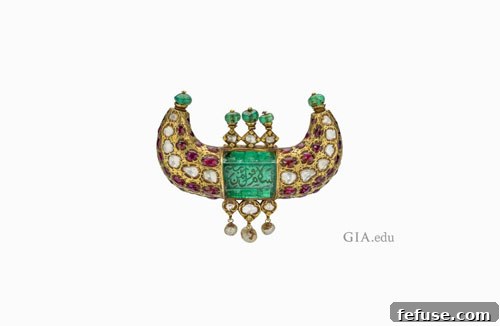
Among the many breathtaking pieces, one particular gold pendant stood out, offering a compelling narrative of exquisite craftsmanship and historical significance. This magnificent piece features a colossal 125-carat Colombian emerald, meticulously engraved in Arabic with salutations of peace. The vibrant green of the emerald is dramatically offset by a dazzling array of diamonds and Burmese rubies, creating a striking contrast of color and sparkle. Further enhancing its elegance, the pendant is adorned with delicate emerald beads and gracefully dangling pearls, adding movement and an ethereal glow.
Crafted specifically for a ruler of the Kingdom of Mysore, this pendant is a prime example of the fusion of international gems with indigenous artistry. It embodies the global connections fostered by Indian nobility, showcasing their access to the world’s most precious stones and their patronage of unparalleled craftsmanship. This single piece, courtesy of a Private Collection and beautifully captured by Robert Weldon/GIA, encapsulates the exhibition’s essence: a blend of immense wealth, profound spirituality, and a rich artistic heritage.
GIA’s Commitment to Education and Discovery
By hosting “Centuries of Opulence: Jewels of India,” the Gemological Institute of America reiterated its unwavering commitment to education, research, and discovery within the field of gemology. The exhibition not only celebrated the aesthetic beauty of these historical artifacts but also provided invaluable insights into their geological origins, cultural contexts, and the human stories behind their creation and trade. It served as an educational cornerstone, deepening understanding of India’s pivotal role in the global history of jewelry and gemstones, and inspiring future generations of gemologists and enthusiasts alike.
The exhibition served as a powerful reminder of the enduring legacy of Indian jewelry, a legacy rich in artistic achievement, profound symbolism, and global historical connections. It offered visitors a unique opportunity to connect with centuries of human endeavor, artistry, and the timeless allure of precious stones.
News Source: gjepc.org