
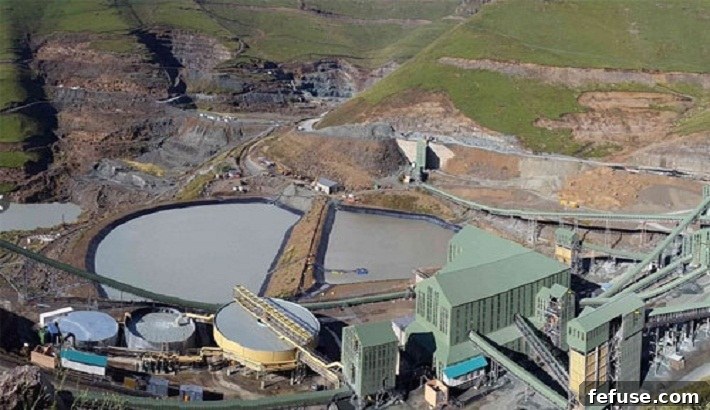
Firestone Diamonds’ Liqhobong Mine Shines with Stronger Recoveries and Special Stone Finds in Q3 FY 2018
Firestone Diamonds plc, a leading diamond mining company with its primary operations centered in the mineral-rich nation of Lesotho, recently unveiled an encouraging performance report for its Liqhobong Diamond Mine. The quarter ending March 31, 2018 (Q3 FY 2018) marked a period of significant progress, characterized by higher rough diamond recoveries and a notable increase in the discovery of “special stones” – diamonds exceeding 10.8 carats. This positive momentum suggests the mine is beginning to tap into the richer potential of its ore body, offering a promising outlook despite prevailing operational challenges.
The consistent efforts at the Liqhobong mine have translated into a tangible increase in carat production. The quarter saw a substantial 6.6% rise in recovered carats compared to the preceding quarter (Q2), pushing the total to an impressive 192,604 carats. This latest figure contributes to a year-to-date (YTD) total of 572,320 carats, underscoring a robust cumulative performance over the financial year. More crucially, the mine achieved a commendable grade of 22.2 carats per hundred tonnes (cpht). This exceeded internal expectations and represented a significant improvement over the 18.8 cpht recorded in Q2 and the YTD average of 20.6 cpht, signaling enhanced efficiency in ore processing and better access to diamond-bearing material. The rising grade is a key indicator of the mine’s improving operational effectiveness and its potential to unlock greater value from its resources.
Enhanced Recovery of Special Stones Bolsters Mine Value
A particularly exciting highlight of the Q3 FY 2018 report was the uptick in the recovery of special stones. During this period, Firestone Diamonds successfully unearthed 93 diamonds weighing more than 10.8 carats, an encouraging increase from the 80 special stones found in Q2. Special stones typically command premium prices in the market due to their rarity, size, and potential for high-value polished diamonds, significantly contributing to a mine’s overall revenue and profitability. While the sheer volume of these large diamonds is a positive sign, the company noted that the overall average quality of the recovered parcels remained “somewhat below expectation.” This nuanced observation suggests that while the quantity of larger stones is increasing, there may still be opportunities to further optimize recovery processes or address specific geological characteristics to enhance the overall quality profile of the diamonds.
Stuart Brown, Chief Executive Officer of Firestone Diamonds, acknowledged the complexities of the quarter, describing the performance as a “solid operational performance” despite persistent environmental hurdles. He elaborated, “Despite experiencing several disruptions during the quarter due to heavy, above average rainfall, the orebody has started to deliver the higher grades we have been expecting and so carats produced increased compared with the previous quarter.” His statement encapsulates the dual narrative of the quarter: overcoming significant external challenges while simultaneously witnessing the long-anticipated geological potential of the Liqhobong orebody begin to materialize. This upward trend in grade is vital for the mine’s economic viability and its long-term strategic objectives.
Stronger Market Conditions Drive Robust Sales Performance
Beyond the mining pit, Firestone Diamonds also reported a healthy sales performance, reflecting a strengthening rough diamond market. The company successfully sold a total of 217,380 carats during Q3, a substantial increase from the 156,942 carats sold in Q2. This surge in sales volume was complemented by a slight improvement in pricing, with the average value achieving US$ 81 per carat, up from US$ 80 per carat in the previous quarter. The combined effect of higher sales volume and a stable-to-improving average value resulted in proceeds of US$ 17.6 million for Q3, a significant jump from US$ 12.5 million in Q2. This strong financial outcome underscores Firestone’s effective sales strategy and the underlying resilience and continued growth in demand within the global rough diamond market. A strengthening market allows producers to realize better prices for their output, directly impacting profitability and investment potential.
The rough diamond market’s continued upward trajectory is a crucial external factor supporting Firestone’s operational efforts. Global demand for diamonds, fueled by resilient luxury consumer spending and robust economies in key markets, provides a favorable environment for diamond producers. As confidence in the market grows, so does the willingness of diamantaires and polishers to purchase rough stones, ensuring a consistent and competitive outlet for mines like Liqhobong. Firestone’s ability to capitalize on these market conditions, evidenced by its improved sales figures and proceeds, reinforces its position as a significant player in the Lesotho diamond mining sector.
Navigating Operational Headwinds: Rainfall and Access Challenges
Despite the positive operational and sales metrics, the quarter was not without its trials. Firestone’s management highlighted the “challenging conditions due to above average rainfall during the wet season.” Lesotho’s mountainous terrain and seasonal weather patterns often present formidable obstacles to mining operations, particularly concerning water management. The persistent heavy rainfall led to “several disruptions” and “higher water levels in the main pit,” as detailed by CEO Stuart Brown. These elevated water levels severely “restricted access to the higher grade ore blocks,” particularly during February and March, the peak of the wet season. Accessing these higher-grade areas is paramount for maintaining profitability and achieving production targets, as they contain a more concentrated distribution of diamonds, leading to better yield and value.
Brown further elucidated the impact of these environmental factors, noting that over the first nine months of the financial year, Liqhobong had recovered fewer carats than originally planned. This shortfall was directly attributed to the adverse weather conditions and the resultant operational limitations. Managing water ingress and ensuring safe and efficient access to the ore body are ongoing challenges in open-pit mining, especially in regions prone to heavy rainfall. Firestone’s experience during this quarter underscores the importance of robust dewatering systems, flexible mine planning, and swift adaptation to unforeseen environmental variables to maintain operational continuity and meet production goals. The company’s resilience in navigating these challenges while still showing an increase in Q3 production speaks volumes about its operational teams’ dedication and expertise.
Strategic Outlook: Optimizing for Future Returns
Looking ahead, Firestone Diamonds remains optimistic about its production guidance, albeit acknowledging the impact of past disruptions. Stuart Brown affirmed, “We still expect to achieve annual production at the lower end of guidance of 800,000 to 850,000 carats, as mining progresses in the higher grade ore.” This projection, while tempered by the earlier challenges, reflects confidence in the mine’s ability to rebound and deliver significant output by the end of the financial year. The emphasis on “mining progresses in the higher grade ore” is key, indicating that the company is actively prioritizing areas of the pit known to contain richer diamond concentrations, thereby maximizing the efficiency and value of its extraction efforts. This strategic focus is essential for achieving the ambitious production targets and ensuring long-term profitability.
In a forward-looking statement, Firestone also reported “good progress on implementation of the revised mine plan.” This updated strategy is meticulously designed to “deliver the best returns in the medium term at low risk.” A revised mine plan typically involves re-evaluating geological models, adjusting extraction sequences, optimizing processing techniques, and potentially re-sequencing capital expenditures to align with new data or market conditions. For Liqhobong, this plan likely incorporates lessons learned from previous operational challenges, aiming to enhance efficiency, reduce operational costs, and mitigate risks associated with factors like adverse weather. By focusing on optimizing returns with a low-risk approach, Firestone is laying the groundwork for sustainable growth and a more resilient operational framework at its Liqhobong Diamond Mine. This strategic foresight is crucial for any long-term mining venture, ensuring that current successes translate into enduring value for stakeholders.