
India’s Diamond Trade: Navigating Russian Sanctions and Global Market Shifts
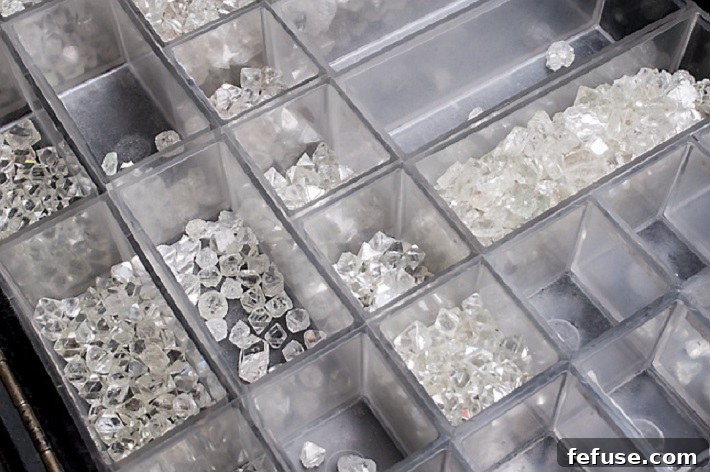
In a significant geopolitical and economic development, India has increased its direct imports of rough diamonds from Russia, even as Western nations maintain stringent sanctions following the invasion of Ukraine. This strategic move, confirmed by the Gems and Jewellery Export Promotion Council (GJEPC), underscores India’s pivotal role in the global diamond industry and its unique approach to securing essential raw materials amidst complex international pressures.
The Unyielding Flow: India’s Rising Russian Diamond Imports
New data from the GJEPC reveals a notable uptick in India’s rough diamond imports from Russia during the fiscal year 2022-23. The total value of these imports reached an impressive $818 million, marking a substantial increase compared to the $758.83 million recorded in the preceding fiscal year 2021-22. This represents an increment of just under eight percent, a statistic that stands out given the widespread sanctions imposed on Russian entities, including the state-owned diamond giant Alrosa.
This surge highlights India’s deep-seated reliance on Russian supplies, particularly for smaller stones that are crucial for its vast diamond cutting and polishing industry. While many traditional buyers and companies in Western markets have either paused or significantly reduced their dealings with Russian diamonds, India has found pragmatic ways to maintain its access, ensuring continuity for its world-leading processing sector.
India: The Indispensable Heart of the Global Diamond Industry
India is undeniably the undisputed global leader in diamond cutting and polishing. With its skilled workforce, advanced technological infrastructure, and competitive pricing, primarily centered in the city of Surat, Gujarat, India is responsible for processing approximately 90% of the world’s rough diamonds by carats. This transforms raw stones into the dazzling gems that populate jewellery stores worldwide, making India an indispensable link in the global diamond supply chain.
The symbiotic relationship between India and Russia is historically significant. Russia, through Alrosa, is one of the world’s largest producers of rough diamonds, offering a consistent supply across various sizes and qualities. This steady inflow of rough stones is vital for India to maintain its operational efficiency and vast employment base. Any significant disruption to this supply chain could have severe repercussions, affecting hundreds of thousands of jobs and billions in export revenue for the Indian economy.
Navigating Sanctions: The Emergence of Rupee Payments and Direct Trade Routes
The imposition of international sanctions on Russia presented immediate challenges for the traditional financial mechanisms of global trade. Western banks, cautious of potential violations and associated penalties, became reluctant to facilitate transactions involving Russian businesses. This necessitated a fundamental shift in how India’s diamond manufacturers conduct their vital business with Russian suppliers.
As Vipul Shah, the esteemed Chairman of the GJEPC, explained to The Times of India, “Banking restrictions are forcing manufacturers to use banks in Russia that accept payments in rupee.” This pivot to rupee-denominated trade is a strategic workaround, allowing Indian buyers to settle transactions directly in their national currency, thereby bypassing the reliance on international currencies like the US dollar and mitigating risks associated with Western financial systems.
Shifting Geographical Patterns of Diamond Imports
Chairman Shah’s observations also shed light on an intriguing reorientation of global diamond trade routes. He noted, “Import of rough from UAE and Belgium has dropped and possibly due to that there is a rise in import of rough from Russia during the last financial year.” This statement suggests that rough diamonds that might have previously transited through established trading hubs such as Dubai (UAE) and Antwerp (Belgium) are now being sourced directly from Russia by Indian entities.
Antwerp, historically the venerable capital of the world’s rough diamond trade, has seen its traditional role challenged by the current geopolitical climate. While official channels may show reduced direct trade with Alrosa from these hubs, the underlying demand for Russian rough diamonds persists. India’s direct engagement could be seen as a pragmatic response to ensure an uninterrupted flow of raw materials, potentially streamlining the supply chain and bypassing intermediaries whose operations might be complicated by sanctions.
Economic Implications and Future Challenges for India’s Diamond Sector
The continued supply of rough diamonds from Russia is paramount for the stability and growth of India’s gem and jewellery industry, a sector that is a significant contributor to the nation’s exports and provides employment for millions. By maintaining access to Russian roughs, India’s cutting and polishing units can continue to operate at capacity, thereby safeguarding livelihoods and sustaining a crucial export-oriented industry.
However, this strategy is not without its inherent challenges and potential risks. The global economic environment is currently characterized by significant uncertainties, with inflation, interest rate hikes, and geopolitical tensions all contributing to a cautious outlook. The luxury goods market, including diamonds, is particularly sensitive to economic downturns and fluctuations in consumer spending. Vipul Shah’s forward-looking caution – “But this year, the situation will be different due to the slowdown” – aptly captures these concerns, suggesting that even with a steady supply, reduced global demand could impact the industry.
The Evolving Landscape of Sanctions and Traceability Demands
Adding another layer of complexity is the intensifying pressure from G7 nations to implement more stringent and effective measures to restrict the flow of Russian-origin diamonds into their markets. Discussions are actively underway to establish robust traceability mechanisms, aimed at preventing Russian diamonds from being processed in third countries, like India, and then re-entering Western consumer markets undetected. Should such G7-led initiatives be successfully implemented, India could face significant dilemmas regarding the sourcing, processing, and subsequent export of polished diamonds that originated from Russia.
Furthermore, there is a growing global consumer demand for ethical sourcing and transparent supply chains. Brands and retailers worldwide are increasingly scrutinizing the origin of their diamonds to ensure they meet stringent ethical and environmental standards. While India has sophisticated systems for certification and quality control, the geopolitical context of sourcing from a sanctioned nation like Russia adds a complex layer to these narratives, potentially affecting market access and consumer perception in some key export destinations.
Diversification and Sustainability: Long-Term Strategies for Resilience
In response to these evolving global dynamics and the inherent risks associated with over-reliance on a single source, the Indian diamond industry is proactively exploring strategies for diversification. While Russian diamonds remain critically important for current operations, fostering stronger trade relationships with other major diamond-producing nations in Africa, Canada, and Australia will be key. Investing in new mining ventures or securing long-term supply agreements from diverse geographical regions could form a crucial part of a resilient, long-term supply chain strategy.
Moreover, the burgeoning market for lab-grown diamonds presents another significant dimension for the industry. While distinct from natural diamonds in origin, this segment offers an alternative supply source and caters to a growing segment of consumers. The increasing acceptance and technological advancements in lab-grown diamonds could potentially ease some of the supply pressures on natural rough diamonds in the future, providing another avenue for growth and diversification for Indian manufacturers.