
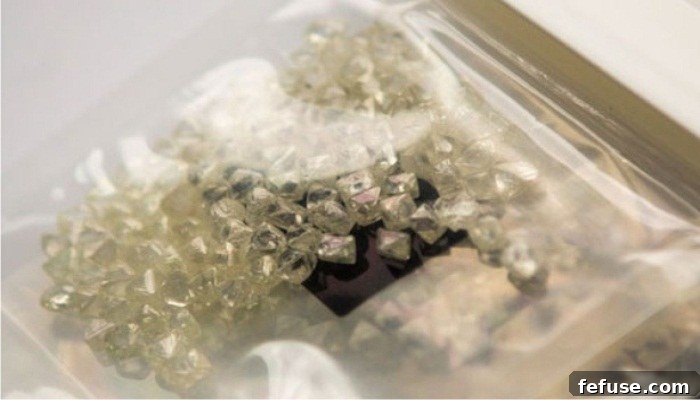
De Beers, a name synonymous with the enduring allure and profound value of diamonds, recently unveiled its provisional rough diamond sales figures for Cycle 6 of 2018. During this pivotal period, the illustrious mining giant reported sales totaling US$530 million. This comprehensive figure encapsulates both its renowned Global Sightholder Sales and its dynamic Auction Sales, reflecting the company’s multifaceted approach to distributing its precious stones to the global market.
Understanding the Sales Landscape: Cycle 6 2018 Figures in Context
While a sum of half a billion dollars is undeniably substantial, the reported US$530 million for Cycle 6 2018 merits a closer examination within the broader context of De Beers’ recent performance. The provisional sales were indeed lower when compared to the actual sales achieved in Cycle 5 of the same year, which stood at a robust US$581 million. Furthermore, the Cycle 6 2018 figures also registered below the sales recorded in the corresponding Cycle 6 of 2017, when the company reported US$576 million in rough diamond sales. This sequential and year-over-year dip might, at first glance, suggest a challenging period. However, De Beers’ official statement painted a different picture, asserting that these results were precisely “in line with expectations.” This seemingly contradictory assessment requires a deeper understanding of the seasonal and operational rhythms inherent to the global diamond industry.
Strategic Perspective: “In Line with Expectations” Explained
The affirmation from De Beers that the Cycle 6 2018 sales were “in line with expectations” underscores a sophisticated understanding of market dynamics and strategic foresight. Bruce Cleaver, CEO of the De Beers Group, elaborated on this point, stating, “In the sixth sales cycle of the year, demand for De Beers rough diamonds was in line with expectations during the seasonally quieter summer period for the industry’s midstream sector.” Cleaver’s statement highlights a crucial aspect of the diamond pipeline: its inherent seasonality. The summer months in many key markets, particularly in the northern hemisphere, often represent a period of reduced activity for the “midstream” segment of the diamond industry. This sector, which bridges the gap between mining and retail, encompasses diamond cutting, polishing, and wholesale distribution. During these quieter periods, demand for rough diamonds typically softens as manufacturers and dealers manage existing inventories and prepare for the stronger buying seasons, such as those leading up to the holiday periods.
The Midstream Sector: The Heartbeat of the Diamond Pipeline
To fully appreciate Cleaver’s comments, it’s essential to understand the pivotal role of the midstream sector. This segment of the diamond industry is responsible for transforming raw, rough diamonds into the polished gems that captivate consumers. It involves intricate processes of planning, cutting, polishing, and grading. The health and activity of the midstream directly influence the demand for rough diamonds from major suppliers like De Beers. When the midstream experiences a “seasonally quieter” period, as it typically does during summer, it naturally translates into a moderated demand for new rough supply. De Beers, with its extensive experience and market intelligence, anticipates these fluctuations and adjusts its sales expectations accordingly. Therefore, the US$530 million figure, while numerically lower than preceding periods, precisely matched the company’s internal projections for what is traditionally a subdued phase in the industry cycle.
De Beers’ Sales Mechanisms: Sightholder Sales vs. Auction Sales
De Beers employs a dual-channel sales strategy to distribute its rough diamonds, catering to different market needs and participants. The Global Sightholder Sales represent the cornerstone of its distribution model. Under this system, a select group of approved clients, known as Sightholders, are invited to purchase parcels of rough diamonds at scheduled “Sights” throughout the year. These Sightholders are typically large-scale manufacturers and dealers with established track records and long-term relationships with De Beers. This model provides stability and consistent supply to key players in the midstream, fostering strong partnerships.
Complementing the Sightholder system are De Beers’ Auction Sales. These auctions offer a more flexible and dynamic sales channel, allowing a broader range of buyers to participate and providing De Beers with an avenue to test market prices for various categories of rough diamonds. Auction Sales can capture demand from non-Sightholders and facilitate the sale of specific or specialized parcels of rough. The inclusion of both Global Sightholder Sales and Auction Sales in the US$530 million figure for Cycle 6 2018 signifies De Beers’ comprehensive approach to market engagement, ensuring efficient distribution across diverse segments of the rough diamond trade.
The Broader Context of 2018 Diamond Market Dynamics
To further contextualize the Cycle 6 2018 sales, it’s important to consider the overall sentiment and trends prevalent in the diamond industry during that year. While the market generally exhibited resilience, it was also characterized by evolving consumer preferences, increasing transparency demands, and geopolitical shifts. The midstream, in particular, faced ongoing pressures related to financing, profitability, and adapting to technological advancements. In such an environment, maintaining stable sales, even if seasonally adjusted, required adept market management. De Beers’ ability to meet its own expectations during a typically slower period demonstrated its robust planning and understanding of global supply and demand dynamics, reaffirming its leadership position in the rough diamond sector.
Financial Reporting Specifics: Transparency and Accuracy
The company also meticulously clarified the financial reporting parameters of these figures. De Beers stated that the reported values represent sales as at July 30, 2018. Crucially, these figures are quoted on a consolidated accounting basis, meaning they reflect the aggregate financial performance across all relevant De Beers entities. Furthermore, the reported sales values are presented before the capitalisation of pre-commercial production revenues at Gahcho Kué. Gahcho Kué, a significant diamond mine in Canada, is a joint venture between De Beers Group and Mountain Province Diamonds Inc. This specific accounting detail indicates that revenues generated before the mine officially reached full commercial production status are treated separately in financial statements, ensuring precise and transparent reporting of operational sales. This level of detail underscores De Beers’ commitment to rigorous financial transparency and adherence to international accounting standards, providing stakeholders with a clear and accurate picture of its sales performance.
The methodology for including Auction Sales within a given cycle was also elucidated: it represents the sum of all sales between the end of the preceding cycle and the end of the noted cycle. This ensures that the reported figures accurately capture all relevant sales activities within the defined period, preventing any overlap or omission in the aggregate reporting.
Looking Ahead: Implications for the Diamond Industry
The Cycle 6 2018 sales figures, despite being provisional and reflecting a seasonally slower period, offered valuable insights into the stability and managed expectations within the rough diamond market. De Beers’ consistent performance, even when adjusted for seasonal fluctuations, serves as a crucial indicator for the entire diamond pipeline. It suggests a market that, while dynamic, is also predictable to a certain extent, allowing for strategic planning by all stakeholders, from miners to retailers. The company’s ability to maintain demand “in line with expectations” during a historically quieter period reinforces the underlying health and enduring appeal of diamonds, setting the stage for anticipated stronger demand in subsequent cycles leading into year-end.
As the global diamond industry continues to evolve, accurate and timely reporting from key players like De Beers remains indispensable. These provisional sales figures not only inform the market about current demand but also help shape future strategies for production, inventory management, and marketing efforts across the entire value chain. The intricate balance between supply and demand, seasonal variations, and the strategic positioning of rough diamond sales ultimately dictates the pulse of this captivating industry.
News Source: gjepc.org