
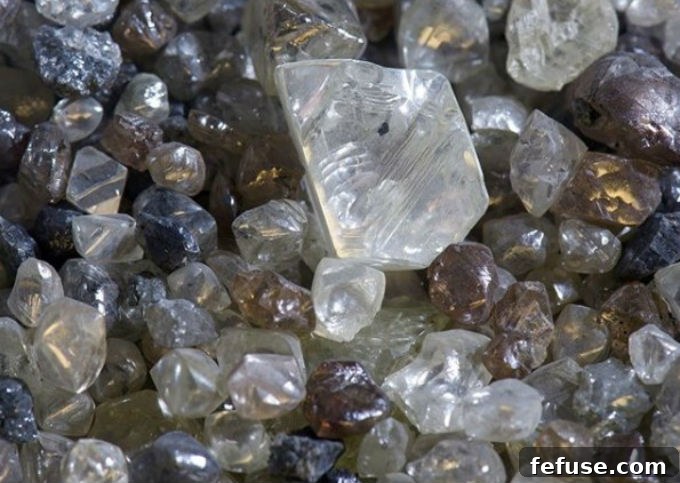
De Beers Navigates Shifting Sands: An In-Depth Look at Rough Diamond Sales in Cycle 9, 2018
As a global titan in the diamond mining sector, De Beers Group’s sales figures offer a crucial barometer for the health and direction of the worldwide diamond industry. In its 9th sales cycle of 2018, De Beers reported rough diamond sales totaling US$440 million. This significant figure, encompassing both its established Sightholder allocation system and open auction sales, provided key insights into the nuanced market dynamics as the industry braced for the pivotal year-end retail season. The performance of De Beers, a company synonymous with diamonds for over a century, is a vital indicator for the entire diamond supply chain, from mining to retail.
The US$440 million reported for Cycle 9, 2018, represented a noteworthy shift when benchmarked against preceding periods. It marked a decline from the US$482 million achieved in Cycle 8 of the same year, indicating a sequential contraction in demand. Furthermore, the sales figure was also lower than the US$466 million recorded in Cycle 9 of 2017, highlighting a year-on-year softening in the rough diamond market. These comparisons prompt a deeper analysis into the specific factors influencing buyer behavior, overall market sentiment, and De Beers’ strategic responses to the evolving landscape of precious stones.
De Beers: A Pillar of the Global Diamond Industry
For decades, De Beers has not just been a diamond miner but a foundational pillar of the global diamond industry. Its extensive operations span exploration, mining, and sales, exerting considerable influence over the supply of natural diamonds worldwide. The company’s unique “Sightholder” system is central to its sales strategy, providing a structured and reliable channel for distributing rough diamonds to a select group of approved buyers. These Sightholders, comprising some of the world’s leading diamantaires, are invited to purchase parcels of rough diamonds approximately ten times a year during exclusive ‘Sights’. These events are critical for ensuring a consistent flow of raw materials into major cutting and polishing centers globally.
Beyond the Sightholder system, De Beers also engages in auction sales, which complement its fixed-price offerings. Auction sales allow for greater flexibility, enabling De Beers to capitalize on real-time market demand and price fluctuations. This dual approach ensures comprehensive market coverage and allows various types of buyers to access De Beers’ rough diamond supply. The transparency and structure of these sales mechanisms are vital for the intricate diamond supply chain, providing predictability and stability for manufacturers and retailers alike. The provisional sales value, such as the one for Cycle 9, 2018, represents sales as at a specific date (November 19, 2018, in this instance) and is quoted on a consolidated accounting basis, integrating all sales channels for a holistic financial overview.
Decoding the Cycle 9, 2018 Figures: Market Expectations and Segment-Specific Challenges
Bruce Cleaver, CEO of the De Beers Group, offered insightful commentary on the Cycle 9 results, framing the rough diamond sales as being “in line with expectations.” This statement is highly significant. It suggests that despite the figures being lower both sequentially and year-on-year, the outcome did not deviate from De Beers’ internal market assessments and projections. Such an alignment often implies a strategic management of supply by De Beers to match anticipated demand, preventing an oversupply situation that could destabilize prices. It speaks to a measured approach in a complex market, rather than a reaction to an unforeseen downturn.
However, Cleaver also highlighted a specific area of concern: “demand for smaller, lower-quality rough diamonds continues to see some challenges.” This segment of the rough diamond market had been under pressure, a trend that can be attributed to a confluence of factors. Globally, economic uncertainties, trade tensions, and fluctuating consumer confidence can lead to reduced discretionary spending, particularly for less expensive, smaller stones which often cater to a broader consumer base sensitive to economic shifts. Furthermore, the rising prominence of laboratory-grown diamonds, which often compete directly in the smaller and lower-quality categories, may have also contributed to the challenges faced by natural rough diamonds in this segment. This dynamic necessitates careful inventory management and targeted marketing efforts by the natural diamond industry.
The challenges for smaller, lower-quality rough diamonds disproportionately affect India’s cutting and polishing industry, which specializes in processing these types of stones. A sustained dip in demand here can lead to inventory build-ups, production cuts, and increased pressure on margins for manufacturers. Therefore, the subsequent observation by Cleaver—that the latest cycle saw “some signs of improvement in this area as factories in India begin to reopen after Diwali”—was a particularly welcome development, signaling a potential turnaround or at least a stabilization in this crucial market segment.
The Impact of Diwali and the End-of-Year Retail Season
Diwali, the auspicious festival of lights, holds immense cultural and economic significance in India. For the Indian diamond industry, it often marks an extended holiday period, during which diamond manufacturing units typically close or operate at reduced capacity. The reopening of these factories post-Diwali is traditionally a pivotal moment, signaling a renewed phase of activity as manufacturers restock their rough diamond inventories and ramp up production. This restocking is driven by the anticipation of heightened global demand for polished diamonds, which will feed into the critical end-of-year retail selling season across Western markets.
The reported improvement in demand for smaller, lower-quality stones immediately after Diwali suggests a strong replenishment cycle. This indicates that Indian manufacturers, having cleared some existing inventory during the pre-Diwali lull or anticipating a robust holiday season, were beginning to place new orders. This re-engagement from India is a positive ripple effect for the entire diamond supply chain, given that India is responsible for cutting and polishing approximately 90% of the world’s diamonds by value. The operational health and purchasing patterns of Indian diamantaires are therefore direct indicators of the market’s underlying strength and its future trajectory.
As Cleaver emphasized, the industry’s collective focus indeed shifts towards the “key end of year retail selling season.” This period, encompassing holidays like Christmas, New Year, Valentine’s Day, and eventually Chinese New Year in early 2019, represents the peak sales opportunity for jewelers worldwide. Consequently, rough diamond sales in the preceding cycles, such as Cycle 9, are absolutely vital. They ensure that there is an adequate supply of polished stones available in the market to meet expected consumer preferences and buying surges during this crucial window. Fluctuations in rough sales during this preparatory phase can therefore have significant ripple effects, influencing pricing, inventory levels, and overall profitability across the entire value chain.
Broader Market Context, Challenges, and De Beers’ Enduring Role
The late 2018 diamond market was navigating a complex and often unpredictable global economic landscape. Geopolitical uncertainties, trade tensions, currency fluctuations, and varying levels of consumer confidence across key markets like the United States, China, and Europe contributed to an environment that demanded cautious optimism from industry players. While the overall luxury market often demonstrates resilience in the face of economic headwinds, specific segments of the diamond sector, particularly those catering to mass-market luxury, can experience heightened sensitivity to these broader economic shifts.
De Beers, as the preeminent market leader, plays an essential role not just in mining but also in strategically managing the supply of rough diamonds to maintain market equilibrium. Their deliberate decisions to adjust sales volumes or pricing based on prevailing demand signals are crucial for preventing an oversupply that could dilute the value of natural diamonds. The observations from Cycle 9, 2018, especially concerning the demand challenges for smaller stones, underscored the ongoing necessity for dynamic inventory management, adaptive sales strategies, and targeted marketing efforts across the entire diamond industry. These efforts are vital to reinforce the desirability and unique value proposition of natural diamonds in an increasingly competitive luxury landscape.
Looking ahead from the vantage point of late 2018, the signs of improvement in India suggested a potential stabilization or even a modest uptick in demand for the upcoming sales cycles, bolstered by the anticipated holiday shopping spree. However, the long-term health and vitality of the natural diamond industry would continue to hinge on several critical factors: sustained consumer interest, innovative marketing campaigns that effectively communicate the unique emotional resonance and rarity of natural diamonds, and unwavering commitment to responsible sourcing practices that align with evolving modern consumer ethics and sustainability expectations. De Beers’ enduring commitment to these principles underpins its leadership.
De Beers’ performance in Cycle 9, 2018, while reflecting a temporary dip in reported figures, painted a picture of a market that was actively adjusting and recalibrating. The comments from CEO Bruce Cleaver projected an image of an industry leader with a clear and pragmatic understanding of the immediate challenges, coupled with a measured optimism for short-term recovery, particularly with the critical year-end retail period on the horizon. The global diamond market remains inherently dynamic, influenced by complex economic cycles, deeply rooted cultural traditions like Diwali, and constantly evolving consumer desires. De Beers meticulously tracks and strategically responds to all these multifaceted influences to maintain its leadership position and drive the industry forward.
News Source: jewellerynet.com