
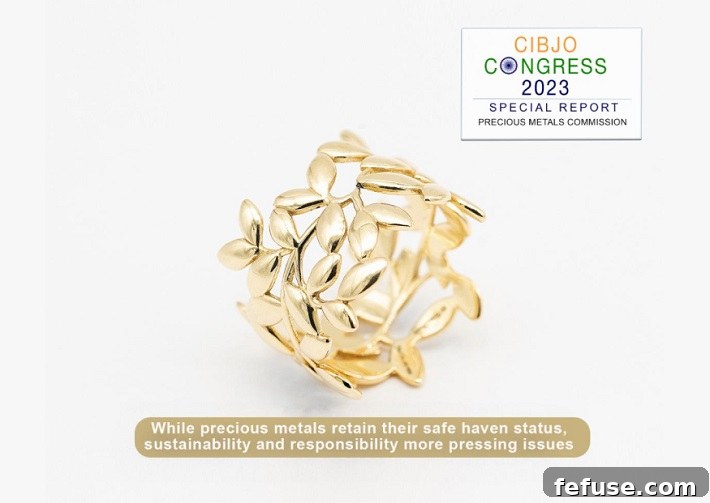
As the highly anticipated 2023 CIBJO Congress in Jaipur, India, draws nearer, set to commence on October 3rd, 2023, the global jewelry and precious metals community has already received a wealth of critical insights. The third in a series of pre-Congress Special Reports has been officially released, offering a comprehensive and timely analysis of the dynamic precious metals markets. Meticulously prepared by the CIBJO Precious Metals Commission, under the esteemed leadership of Huw Daniel, these vital documents present an in-depth overview of the gold, platinum, palladium, and silver markets throughout 2022 and extending into the current year of 2023. Beyond market performance, the reports also meticulously examine significant regulatory developments and challenges within the United States, providing a holistic perspective for industry stakeholders.
The past few years have been marked by unprecedented global volatility, and the precious metals sector has profoundly reflected these shifts. In the insightful report, Huw Daniel elaborates on the profound turmoil that engulfed global markets following Russia’s invasion of Ukraine in early 2022. This geopolitical shockwave sent ripples across economies worldwide, compelling investors to seek stability and security amidst an increasingly unpredictable and risk-averse market environment. The subsequent flight to quality underscored the enduring appeal of precious metals as a reliable hedge against geopolitical and economic uncertainties, reaffirming their long-held status as safe-haven assets.
Indeed, the post-COVID global economy has been buffeted by a confluence of severe shocks over the past two years, extending far beyond the immediate impact of the Russia-Ukraine conflict. Issues such as persistent supply chain disruptions, soaring inflation rates across major economies, and the subsequent aggressive tightening of monetary policies by central banks globally have created a challenging landscape for traditional asset classes. Against this backdrop of widespread economic distress and financial uncertainty, precious metals, particularly gold, steadfastly maintained and even strengthened their revered safe-haven status. Daniel highlights that 2022 witnessed central banks around the world engaging in record levels of gold purchases, signalling a strategic shift towards asset diversification and a hedge against currency devaluation and systemic risks. Concurrently, vigorous retail investor buying underscored a public desire to preserve wealth amidst inflationary pressures. This dual demand surge propelled annual global gold demand by a remarkable 17%, reaching an impressive 4,706 tonnes – a figure almost on par with the strong demand seen in 2012, demonstrating the metal’s robust resilience and sustained investor confidence.
While gold commanded significant attention, other precious metals also exhibited compelling market dynamics. Platinum, for instance, experienced a notable surge in demand, increasing by nearly 11% in 2022, as detailed in the report. This growth, however, occurred despite its annual average price registering lower than 2021 levels, reflecting a complex interplay of supply and demand factors. The report meticulously outlines significant pressures on platinum supply, predominantly stemming from two major global producers. Russia, which holds the position of the world’s second-largest platinum producer, faced operational and logistical challenges exacerbated by geopolitical sanctions and trade disruptions. Concurrently, South Africa, the indisputable largest supplier of platinum globally, grappled with severe operational problems. These issues were largely attributed to the country’s struggling electricity providers, leading to chronic power outages that severely impacted mining operations, reduced output, and increased production costs. Such supply-side constraints, combined with evolving industrial demands, created a unique market environment for platinum.
Technological innovation is increasingly serving as a pivotal catalyst in both the gold and platinum jewelry sectors, transforming traditional craftsmanship into modern artistry and functionality. Huw Daniel emphasizes how the gold jewelry market, in particular, has enthusiastically embraced a new generation of premium products that are redefining consumer expectations and market trends. Cutting-edge advancements such as 3D hard gold, for example, offer enhanced durability and intricate design possibilities, allowing for the creation of lighter yet stronger pieces with complex geometries that were previously unattainable. Similarly, 5G gold represents a leap forward in purity and manufacturing efficiency, often associated with superior luster and a more refined finish. Furthermore, the emergence of heritage gold products celebrates traditional artistry and cultural significance, often incorporating modern techniques to preserve and enhance historical designs. These innovative product categories have collectively sustained the sector’s momentum, capturing increased market share due to their unique design appeal, superior performance characteristics, and the higher profit margins they command for producers and retailers alike. The ability to cater to evolving consumer preferences for both modern aesthetics and timeless value has been a key driver of this success.
Platinum jewelry, too, is undergoing a significant transformation driven by continuous improvements in design and manufacturing technology. As Daniel notes, the future of platinum jewelry hinges on the industry’s capacity to innovate and offer consumers pieces that are not only aesthetically captivating but also functionally superior. This includes the creation of finer, more diversified, and notably lighter platinum pieces, achieved through advanced alloying and precision manufacturing techniques. Developing products that are robust yet remarkably scratch-resistant is another critical area of focus, addressing a common consumer desire for lasting beauty and durability. These advancements are often realized through sophisticated metallurgical processes and computer-aided design (CAD) and manufacturing (CAM) systems that enhance efficiency and significantly reduce material wastage during production. Such technological strides not only elevate the intrinsic value and appeal of platinum jewelry but also contribute to more sustainable manufacturing practices, aligning with growing industry-wide environmental, social, and governance (ESG) considerations. The pursuit of perfection in platinum ensures its continued relevance and desirability in a competitive luxury market.
Beyond gold and platinum, the broader precious metals report also delves into the dynamics of palladium and silver markets, albeit with specific nuances. Palladium, predominantly used in catalytic converters for gasoline-powered vehicles, experienced significant price volatility driven by both industrial demand and supply disruptions, particularly from Russia. The shift towards electric vehicles poses a long-term challenge, but its essential role in existing internal combustion engines continues to dictate its market. Silver, often referred to as ‘poor man’s gold,’ plays a dual role as both an industrial metal and a monetary asset. Its industrial demand is robust across various sectors, including electronics, solar energy, and medical applications, while its investment demand often mirrors that of gold, albeit with higher price sensitivity. The interplay of these factors creates a unique investment profile for silver, making it an attractive yet sometimes more volatile option for investors.
A crucial segment of the CIBJO Precious Metals Commission’s report focuses on the evolving regulatory landscape in the United States, which often sets precedents for global standards. These regulatory issues encompass a wide array of critical areas, including responsible sourcing initiatives aimed at preventing the trade of conflict minerals and ensuring ethical supply chains. Transparency in transactions, robust anti-money laundering (AML) protocols, and stringent disclosure requirements are paramount for maintaining market integrity and consumer trust. Furthermore, the increasing emphasis on Environmental, Social, and Governance (ESG) standards across industries is influencing how precious metals are mined, processed, and traded. Adherence to these regulations is not merely a legal obligation but has become a significant factor in brand reputation and market access, compelling companies to adopt more sustainable and ethical business practices. The report underscores that navigating this complex regulatory environment effectively is vital for businesses operating within the precious metals sector, ensuring compliance, promoting ethical conduct, and fostering long-term industry stability.
Looking ahead, the insights provided by the CIBJO Special Reports are indispensable for stakeholders grappling with an ever-changing global economic and geopolitical landscape. The continued volatility in global markets, coupled with persistent inflationary pressures and evolving monetary policies, suggests that precious metals will likely retain their critical role as safe havens. Furthermore, technological advancements in jewelry manufacturing and broader industrial applications will continue to drive innovation and demand across the sector. The CIBJO Congress in Jaipur serves as a crucial forum for discussing these trends, fostering collaboration, and setting the agenda for responsible and sustainable practices within the international jewelry and precious metals industries. The detailed analysis presented by Huw Daniel and the Precious Metals Commission offers a foundational understanding necessary for navigating the complexities and capitalizing on the opportunities that lie ahead, reinforcing CIBJO’s commitment to transparency, ethical conduct, and market intelligence for the benefit of its global membership.