
GJEPC Charts a Course for Comprehensive Growth in India’s Gems & Jewellery Sector at Signature IIJS 2018
The Gem & Jewellery Export Promotion Council (GJEPC), a pivotal institution fostering the Indian gems and jewellery industry, outlined its ambitious vision for the sector’s holistic advancement during a significant press conference and interactive session. Held on February 10, 2018, at the prestigious Signature IIJS 2018 event, the session brought together industry leaders and members of the national and international press. Chairman Pramod Agarwal, in his inaugural address, emphasized GJEPC’s unwavering commitment to ensuring the all-round growth and sustained prosperity of this vital economic segment.
Driving All-Round Growth: A Strategic Imperative for India’s Jewellery Industry
Agarwal eloquently articulated the multifaceted challenges confronting the Indian gems and jewellery industry, ranging from intricate policy frameworks to the imperative of robust sales growth in an increasingly competitive global market. He underscored the Council’s proactive engagement and close collaboration with the Government of India, a partnership instrumental in identifying and systematically resolving the various impediments hindering the industry’s progress. This collaborative approach aims to cultivate an environment conducive to innovation, efficiency, and expanded market access for Indian jewellery manufacturers and exporters.
Beyond policy advocacy and sales optimization, the GJEPC’s strategic focus extends to several critical development fronts. These include embracing cutting-edge technology, aggressively exploring and expanding into new international markets, elevating the skill sets of the workforce, and championing Corporate Social Responsibility (CSR) initiatives. The Chairman highlighted that the Council already boasts a robust portfolio of existing programs designed to achieve these objectives, with a clear commitment to introducing new, impactful initiatives as the industry evolves. This comprehensive strategy is geared towards fortifying India’s position as a global leader in the gems and jewellery trade.
Addressing Industry Challenges: A Proactive Stance on Policy and Market Dynamics
The Indian gems and jewellery sector, renowned globally for its craftsmanship and vast scale, continually navigates a complex landscape of economic and regulatory factors. GJEPC’s leadership at Signature IIJS 2018 provided an invaluable platform to discuss these intricate issues transparently. Pramod Agarwal’s insights into policy-related challenges underscored the necessity of a responsive regulatory framework that supports trade, encourages investment, and minimizes operational hurdles. This involves ongoing dialogue with policymakers to ensure that regulations like taxation, import/export duties, and compliance standards are not only clear but also foster a competitive advantage for Indian businesses.
Moreover, the drive for enhanced sales growth is not merely about increasing volumes but also about adapting to evolving consumer preferences and market trends. This necessitates strategic marketing, brand building, and fostering trust in an industry where provenance and quality are paramount. The GJEPC’s commitment to working hand-in-hand with the government signals a united front against these challenges, aiming to create a stable and predictable business environment that encourages long-term investment and sustainable expansion for all stakeholders.
Pillars of Progress: Technology, Market Expansion, Skill Upgradation, and CSR
The roadmap for growth, as envisioned by GJEPC, rests on four fundamental pillars, each critical for future success:
- Technology Integration: The industry is at the cusp of a technological revolution. Adopting advanced manufacturing techniques such as Computer-Aided Design (CAD) and Computer-Aided Manufacturing (CAM), 3D printing for rapid prototyping, and sophisticated gemology equipment for enhanced precision and authentication, is crucial. These technological advancements not only boost productivity and reduce costs but also enable the creation of innovative designs that appeal to modern global consumers. GJEPC supports initiatives that facilitate access to and training in these cutting-edge tools.
- New Market Development: While traditional markets like the USA, Europe, and the Middle East remain vital, GJEPC is keenly focused on diversifying its export destinations. Exploring untapped or emerging markets in Southeast Asia, Latin America, and Africa can unlock significant new opportunities. This involves comprehensive market research, participation in international trade fairs, and forging strategic partnerships to understand and cater to the unique demands of these regions, thereby reducing reliance on a few key markets.
- Skill Upgradation: The backbone of India’s jewellery industry is its highly skilled workforce. However, to remain competitive, continuous learning and skill enhancement are imperative. GJEPC actively promotes programs aimed at upgrading skills across the value chain, from traditional karigars (artisans) to modern designers, gemologists, and sales professionals. Institutions like the Indian Institute of Gems & Jewellery (IIGJ), supported by GJEPC, play a critical role in providing state-of-the-art training, ensuring a pipeline of talent equipped with both traditional craftsmanship and contemporary techniques.
- Corporate Social Responsibility (CSR): Embracing ethical practices and sustainability is no longer optional but a fundamental expectation from global consumers and partners. GJEPC encourages its members to integrate robust CSR initiatives, encompassing responsible sourcing of materials, environmentally friendly manufacturing processes, fair labor practices, and community development programs. Promoting transparency and traceability throughout the supply chain enhances the industry’s reputation and builds trust, aligning with global ethical standards.
Industry Leaders Share Insights: A Productive Dialogue
The press conference served as a vibrant forum for interaction, featuring not only Chairman Pramod Agarwal but also Vice Chairman Colin Shah and Convenor of the Exhibitions Sub-Committee, Shailesh Sangani. This triumvirate of leadership engaged in a meaningful and lively exchange with attending journalists, providing comprehensive perspectives on various pertinent topics shaping the future of the Indian gems and jewellery sector. The presence of key decision-makers offered the press an unparalleled opportunity to delve deep into the industry’s strategic direction and current performance.
Optimistic Outlook: Projecting Robust Export Growth for the Indian Gems and Jewellery Sector
Addressing a pivotal question regarding the industry’s future trajectory, Chairman Pramod Agarwal conveyed a confident and optimistic forecast. He projected an impressive year-on-year growth rate of 15% to 20% for India’s gems and jewellery export sector in the ensuing year. This projection underscores the industry’s resilience, its increasing global demand, and the strategic initiatives being implemented to enhance its competitive edge. India’s historical prowess in diamond cutting and polishing, combined with its emerging strength in studded jewellery manufacturing, positions it uniquely to capitalize on global market opportunities.
This anticipated growth is fueled by several factors, including a recovering global economy, increasing consumer spending on luxury goods, and India’s unparalleled manufacturing capabilities that allow for both high volume and intricate, high-value creations. Furthermore, GJEPC’s proactive engagement in international trade promotions and bilateral agreements helps create a conducive environment for expanding India’s export footprint. The Council’s focus on quality, design innovation, and adherence to international standards reinforces buyers’ confidence, paving the way for sustained expansion.
Simplifying Trade: The Positive Impact of GST on Diamonds and Ease of Doing Business
Vice Chairman Colin Shah provided crucial clarity on the recent reduction of the Goods and Services Tax (GST) on rough and polished diamonds, emphasizing its overwhelmingly positive implications for the industry’s performance. Shah explained that this tax rationalization would significantly alleviate the burden of capital tied up in inventory and transactions, a perennial concern for businesses in this capital-intensive sector. The reduction in GST directly translates into improved liquidity for traders and manufacturers, allowing them to redeploy capital more efficiently into production, innovation, and market development.
This policy adjustment is a clear indicator of the government’s commitment to enhancing the “ease of doing business” within the gems and jewellery sector. Reduced capital blockage means faster inventory turnover, lower carrying costs, and greater financial flexibility. It simplifies complex tax structures, making compliance less cumbersome and more transparent. Ultimately, this creates a more attractive environment for investment, stimulates trade, and strengthens the overall financial health of businesses, from small-scale enterprises to large manufacturers, facilitating smoother and more robust commercial operations.
Signature IIJS 2018: A Hub of Thriving Business and Unprecedented Opportunity
Shailesh Sangani, Convenor of the Exhibitions Sub-Committee, offered an enthusiastic account of the commercial vibrancy experienced at Signature IIJS 2018. He confirmed that the exhibition was witnessing “brisk business,” characterized by a significant volume of transactions and the placement of “sizeable orders” by a diverse clientele. This strong performance at the show underscored its importance as a critical marketplace for both domestic and international buyers, solidifying its reputation as a premier platform for sourcing exquisite Indian jewellery and gemstones.
The Pulsating Energy of Onsite Business
The atmosphere at Signature IIJS 2018 was electrifying, reflecting a renewed vigor in the global jewellery market. Exhibitors reported a high footfall of serious buyers from various corners of India and prominent international markets, including the Middle East, Southeast Asia, Europe, and the Americas. The orders placed encompassed a wide spectrum of products, from intricately designed gold and diamond jewellery to bespoke pieces featuring precious gemstones. This strong demand highlights the universal appeal of Indian craftsmanship, design innovation, and the competitive pricing advantage that Indian manufacturers offer. The success of onsite business at Signature IIJS serves as a crucial barometer of the industry’s health and its potential for continued expansion.
Unprecedented Demand for India’s Premier Jewellery Shows
Beyond the immediate commercial success, Sangani also shed light on the extraordinary demand from exhibitors eager to participate in both Signature IIJS and the main India International Jewellery Show (IIJS). He revealed that both events maintained lengthy waiting lists of companies vying for exhibition space, a clear testament to their unparalleled prestige and effectiveness as business generation platforms. These shows offer unparalleled networking opportunities, market exposure, and a chance to showcase the latest collections to a concentrated audience of buyers, making them indispensable for growth-oriented businesses.
Recognizing this overwhelming demand, the GJEPC is actively exploring avenues to expand the Signature show. This expansion is not merely about increasing physical space but also about enhancing the overall exhibitor and visitor experience, perhaps through the introduction of new thematic zones, technological advancements in display, or innovative engagement formats. Such strategic expansion plans aim to accommodate more participants, further stimulate trade, and reinforce India’s position as a global hub for jewellery exhibitions, catering to a wider array of specialized businesses and facilitating even greater market access for the industry.
Conclusion: Paving the Way for a Brighter Future for Indian Gems and Jewellery
The press conference at Signature IIJS 2018, meticulously orchestrated by the GJEPC, painted a vivid picture of an Indian gems and jewellery industry brimming with potential and driven by a clear, forward-looking strategy. The insights shared by Pramod Agarwal, Colin Shah, and Shailesh Sangani collectively underscored the Council’s comprehensive approach to fostering an environment of sustained growth and global competitiveness. From proactive policy engagement with the government and strategic investments in technology and skill development, to aggressive market diversification and a steadfast commitment to ethical practices, GJEPC is positioning the industry for a future characterized by robust exports, enhanced efficiency, and increased global prominence.
The positive impact of recent policy changes like GST reduction, coupled with the thriving business observed at major trade shows like Signature IIJS, provides tangible evidence of the industry’s resilience and dynamic nature. As India continues to leverage its rich heritage of craftsmanship and its innovative spirit, the GJEPC remains at the forefront, guiding the sector towards unprecedented levels of success and ensuring its enduring legacy on the world stage. The vision articulated at this event reaffirms India’s commitment to not just be a manufacturing hub but also a leader in design, innovation, and ethical trade within the global gems and jewellery landscape.
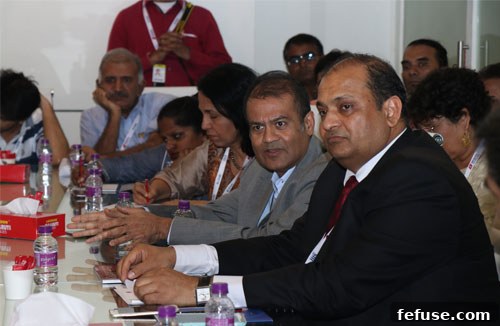
Pic Caption: GJEPC Vice Chairman Colin Shah speaks passionately at the press conference, while GJEPC Chairman Pramod Agarwal (right) listens attentively, embodying the leadership driving the Indian gems and jewellery industry forward.
News Source: gjepc.org