
Richemont, a global leader in luxury goods, navigated a pivotal period marked by strategic transitions and robust consolidation during the fiscal year ending March 31, 2019. This transformative phase, described by chairman Johann Rupert as a year of significant change and strategic alignment, saw the luxury conglomerate not only strengthen its core segments but also expand its reach into burgeoning digital and pre-owned luxury markets. The group’s audited accounts revealed a compelling narrative of growth driven by key acquisitions and the enduring strength of its iconic luxury Maisons. This strategic foresight has positioned Richemont to capitalize on evolving consumer behaviors and market dynamics, reinforcing its leadership in the highly competitive luxury landscape. The emphasis throughout this period was on building a more resilient and future-proof business model, adapting to the shifts within the global luxury retail environment.
A cornerstone of Richemont’s strategy for the fiscal year was the successful integration of strategic acquisitions, which significantly bolstered its financial performance and expanded its digital footprint. The full acquisition of Yoox Net-A-Porter (YNAP), the undisputed global leader in online luxury fashion and retail, marked a decisive step in Richemont’s digital transformation journey. This move underscored the group’s commitment to mastering omnichannel retail and directly addressing the rapidly growing online luxury consumer segment. YNAP’s sophisticated e-commerce platform and extensive reach provided Richemont with unparalleled capabilities to engage with a global audience, offering a seamless luxury shopping experience across digital channels. This strategic integration brought world-class e-commerce expertise and a vast customer base, fundamentally reshaping Richemont’s direct-to-consumer capabilities in the digital realm. The rationale was clear: to capture the accelerating shift towards online luxury purchasing and to ensure Richemont remained at the forefront of digital innovation within its sector.
Complementing this digital expansion was the acquisition of Watchfinder & Co., a prominent omni-channel platform specializing in premium pre-owned timepieces. This acquisition demonstrated Richemont’s proactive approach to the burgeoning pre-owned luxury market, recognizing its importance and potential for sustainable growth. Watchfinder’s expertise in authenticating, curating, and distributing pre-owned watches not only diversifies Richemont’s portfolio but also allows the group to participate actively in a segment that appeals to a new generation of luxury consumers while also catering to seasoned collectors. The pre-owned market represents a significant and growing revenue stream, offering sustainability benefits and attracting a broader demographic. These two strategic acquisitions collectively propelled Richemont’s sales significantly, contributing to an impressive 27% increase in turnover, reaching €14 billion (£12 billion). Stripping out the substantial contribution from YNAP and Watchfinder – collectively referred to as the ‘Online Distributors’ – the organic sales growth remained a respectable 8% at both actual and constant exchange rates, indicating healthy underlying performance across existing operations. This two-pronged approach—embracing digital leadership and the pre-owned market—illustrates Richemont’s forward-thinking strategy to capture new revenue streams and enhance overall market share in an evolving luxury ecosystem.
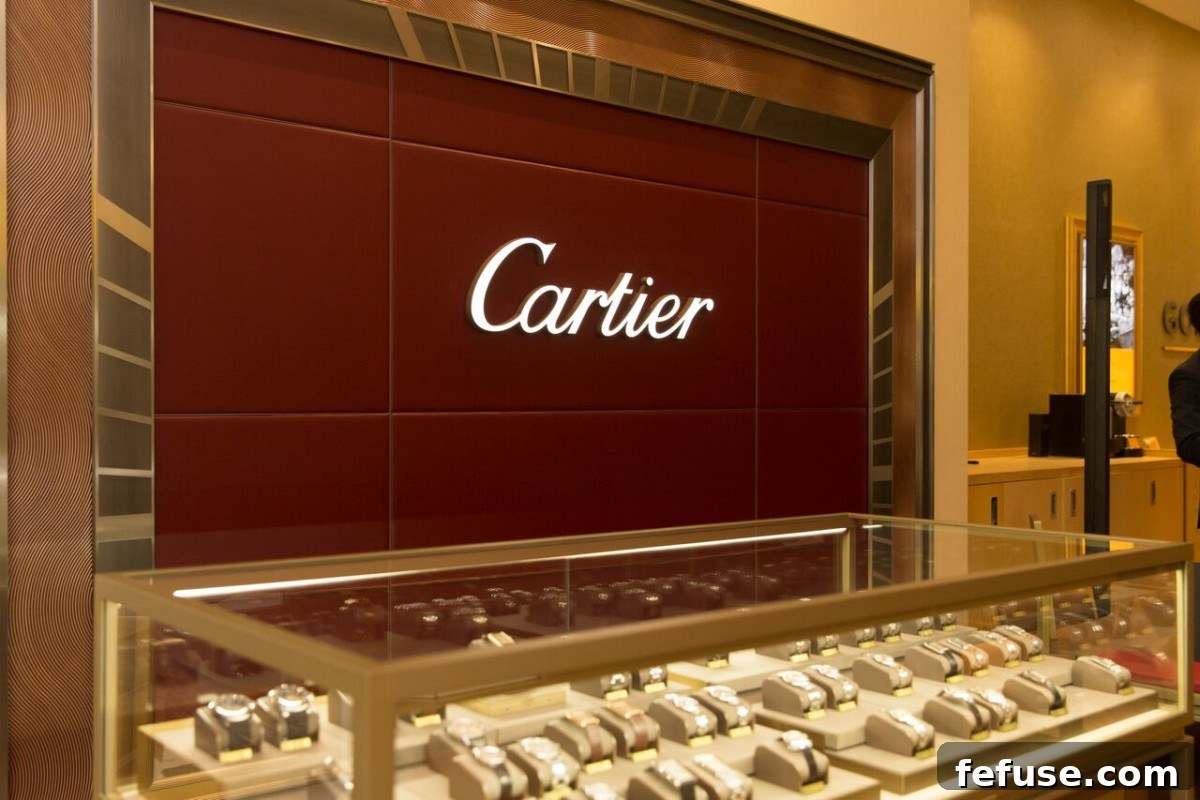
Richemont’s prestigious jewellery Maisons continued to be the bedrock of its success, posting the strongest growth within the group. Cartier, a name synonymous with unparalleled craftsmanship and timeless elegance, demonstrated remarkable vitality throughout the fiscal year. The Maison benefited immensely from the enduring appeal of its iconic jewellery collections, particularly the bold and distinctive ‘Juste un Clou’ line, which consistently captivated luxury aficionados worldwide with its innovative design and modern aesthetic. Furthermore, the successful relaunch and rejuvenation of the legendary ‘Santos de Cartier’ watch line generated significant excitement and consumer demand, reinforcing Cartier’s dual strength in both jewellery and horology. The strategic marketing campaigns and product innovations for these collections ensured their continued relevance and desirability in a competitive market, attracting both established collectors and new clientele. Cartier’s commitment to heritage combined with contemporary appeal proved to be a powerful formula for sustained success.
Similarly, Van Cleef & Arpels, celebrated for its poetic and exquisite creations, enjoyed a highly successful year. The Maison marked a significant milestone with the 50th anniversary celebration of its emblematic ‘Alhambra’ collection. This jubilee was met with widespread acclaim, underscoring the collection’s enduring charm and iconic status in the world of high jewellery. The Alhambra collection, with its distinctive quatrefoil motif, continued to resonate with clients seeking elegance and a touch of enchantment. Van Cleef & Arpels further enriched its jewellery offerings with additional ‘Frivole’ creations, known for their delicate and airy designs inspired by nature, which resonated deeply with discerning customers seeking unique expressions of luxury and sophisticated artistry. This continued innovation and the successful celebration of heritage pieces solidified the Maison’s position at the pinnacle of artisanal excellence and creative design.
Collectively, Cartier and Van Cleef & Arpels delivered a robust 10% sales progression at actual exchange rates. This impressive growth was underpinned by double-digit increases across both their jewellery and watches segments, highlighting the sustained global demand for their exceptional products. The operating results for the jewellery Maisons further underscored this strength, increasing by a remarkable 16% compared to the prior year. This €303 million (£263 million) improvement in operating profit was a direct reflection of higher sales volumes, coupled with stringent cost controls and continuous enhancements in manufacturing efficiency. These luxury powerhouses strategically accelerated investments in both their retail presence and communication initiatives. Notable projects included the extensive renovation of the Cartier flagship store on New Bond Street in London, enhancing the luxury shopping experience in a prime global location and showcasing the Maison’s elevated aesthetic. Van Cleef & Arpels also strategically relocated its IFC Pudong store in Shanghai, optimizing its presence in a key Asian market, known for its rapidly growing luxury consumer base. Simultaneously, new corporate campaigns for Cartier and a dedicated campaign celebrating the Alhambra’s 50th anniversary for Van Cleef & Arpels ensured strong brand visibility and sustained consumer engagement, further solidifying their market dominance and enhancing brand equity.
A critical strategic initiative for Richemont over recent years has been its proactive approach to inventory management, specifically the controversial yet effective policy of buying back unsold stock. This measure was implemented with a clear objective: to better align supply with genuine end-customer demand across its extensive global wholesale network. Chairman Johann Rupert indicated that this re-balancing strategy was indeed proving successful. The rationale behind these significant stock buy-backs stemmed from a broader effort to mitigate the pervasive issue of grey market activity. The grey market, characterized by unauthorized sales channels, often leads to steep discounting of luxury products, which in turn severely undermines the pricing integrity and brand value of Richemont’s Maisons. This discounting also directly impacts authorized dealers who are committed to selling products at full recommended retail prices, creating an unfair competitive landscape and eroding their profitability and loyalty. The integrity of pricing is paramount in luxury, as it reflects the perceived value and exclusivity of the products.
By meticulously managing inventory levels and taking back surplus stock, Richemont aimed to regain control over its distribution channels and pricing strategy, thereby protecting the integrity of its luxury brands and supporting its network of authorized retail partners. This commitment to qualitative distribution over sheer volume marked a significant paradigm shift within the luxury industry, prioritizing long-term brand health over short-term sales. The report for the 2018-19 fiscal year notably stated that no additional stock buy-backs were initiated during this specific period. This suggests that the substantial efforts and investments made in previous years to re-balance inventories had yielded the desired effect, stabilizing the market and reducing the need for further such interventions. However, the report did acknowledge that “The current year’s one-time charges primarily relate to previous year’s inventory buy-backs and portfolio transactions.” This indicates the lingering financial impact of past strategic decisions, underscoring the long-term commitment and investment required to cleanse the market of excess inventory and restore pricing discipline. This strategic move, while costly in the short term, is viewed as essential for safeguarding brand equity and fostering sustainable, long-term growth by ensuring that scarcity and exclusivity, hallmarks of true luxury, are maintained and respected by consumers and partners alike.
Richemont’s strategic focus extended beyond acquisitions and inventory management to a comprehensive overhaul of its distribution network. The group consciously pursued initiatives aimed at the qualitative improvement of its retail presence and partner relationships. This involved meticulously assessing and optimizing its multi-brand retail partnerships, ensuring that only the most reputable and strategically aligned retailers represented its Maisons. A key component of this strategy was the “right-sizing” of watch inventories held by these multi-brand retail partners. This proactive measure helped to prevent overstocking, which historically contributed to grey market issues and discounting. By fine-tuning the supply chain to better match actual end-customer demand, Richemont reinforced its commitment to maintaining brand exclusivity and perceived value. This meticulous approach to distribution ensures that products are available where and when they are truly desired, preserving their allure.
The impact of these initiatives was evident in the group’s robust performance across various geographical markets and distribution channels. The retail channel, encompassing Richemont’s directly operated boutiques, posted particularly strong results, underscoring the success of its direct-to-consumer strategy and investment in flagship stores. This direct engagement allows for greater control over brand presentation and customer experience. Most of the group’s markets recorded positive growth, a testament to the broad appeal of its luxury portfolio. Leading this global expansion were double-digit increases in key strategic regions such as the United States and across all major markets within Asia Pacific. These regions represent critical growth engines for the luxury sector, driven by strong consumer confidence and increasing demand for high-end goods. The refined distribution strategy, coupled with strong market penetration in these lucrative territories, provided a solid foundation for Richemont’s overall sales progression. The ongoing focus on enhancing the customer experience within these refined distribution networks further cemented Richemont’s reputation for unparalleled service and luxury engagement, contributing to brand loyalty and sustained market leadership.
Chairman Johann Rupert’s reflections on the fiscal year emphasized a period of “transition and consolidation,” framing it as a crucial juncture in Richemont’s ongoing transformation journey. He highlighted the successful tender offer for the remaining shares in Yoox Net-A-Porter and the acquisition of Watchfinder & Co. as pivotal steps that fundamentally reshaped the group’s strategic capabilities. Rupert articulated that these moves were instrumental in positioning Richemont at the forefront of the evolving luxury landscape, particularly in the digital and pre-owned segments. Despite a “relatively supportive environment,” the exceptional 27% increase in sales at actual and constant exchange rates underscored the effectiveness of these strategic maneuvers, reflecting broad-based growth across all business areas and distribution channels. Even when isolating the contributions of YNAP and Watchfinder, the underlying 8% growth rate affirmed the health and dynamism of the core luxury Maisons, demonstrating organic strength alongside acquired growth.
Rupert underscored the robust performance of the jewellery Maisons and the retail channel, identifying them as key drivers of success. He also noted the widespread positive market performance, with significant double-digit increases in critical markets like the US and the Asia Pacific region, indicating strong consumer appetite for luxury in these key geographies. Looking ahead, Rupert’s concluding remarks pointed to the tangible benefits now emerging from recent strategic initiatives. These include the qualitative improvement of the distribution network, the deliberate right-sizing of watch inventories at multi-brand retail partners, and the meticulous adjustment of supply to precisely match the true level of end-customer demand. This holistic approach, focused on long-term sustainability and brand integrity rather than short-term volume, exemplifies Richemont’s commitment to navigating the complexities of the modern luxury market with strategic precision. The chairman’s vision is one of a future-ready Richemont, capable of adapting to change, leveraging digital opportunities, and consistently delivering unparalleled luxury experiences while safeguarding the prestige and heritage of its esteemed Maisons for generations to come.
In essence, the fiscal year ending March 31, 2019, solidified Richemont’s reputation as a strategic innovator and a resilient leader in the global luxury market. Under the astute leadership of Johann Rupert, the group successfully navigated a complex economic landscape while executing a bold transformation agenda. The acquisitions of YNAP and Watchfinder were not merely financial transactions but strategic imperatives that propelled Richemont into new dimensions of digital commerce and the burgeoning pre-owned market, diversifying its revenue streams and future-proofing its business model. Simultaneously, the core jewellery Maisons, particularly Cartier and Van Cleef & Arpels, continued their stellar performance, driven by iconic collections, innovative marketing, and significant investments in their global retail footprint. The proactive stance on inventory management, aimed at curbing grey market activities and supporting authorized dealers, demonstrated a deep commitment to maintaining brand integrity and long-term value. These comprehensive strategies, encompassing digital expansion, core brand strength, and disciplined market management, have firmly established Richemont’s trajectory for sustained growth and profitability in the evolving world of luxury. The foundations laid during this transitional period promise a vibrant future for Richemont, characterized by continued excellence, strategic agility, and an unwavering dedication to the art of luxury, ensuring its enduring appeal and market leadership.