
Modern nuptials are no longer confined to traditional ceremonies; they span a vibrant spectrum from rustic woodland vows to lavish destination celebrations. This shift has profoundly influenced the world of engagement and wedding jewelry, making it more diverse, personal, and reflective of individual tastes than ever before.
The New Era of Bridal Jewelry: Celebrating Individuality and Personal Expression
In today’s dynamic bridal market, couples are actively seeking jewelry that tells their unique story, shunning mass-produced designs in favor of pieces that resonate with their personal aesthetic. Retailers are keenly aware of this demand, noting a significant departure from conventional styles. The bridal category, once steeped in rigid traditions, is now embracing creativity and individuality, allowing designers and consumers alike to “let their hair down” and explore uncharted territories in design.
The classic white gold, round-cut diamond solitaire, while still cherished by some, is now challenged by an exciting array of new shapes, vibrant colors, and alternative stones. Settings and designs have become incredibly varied, moving beyond a one-size-fits-all approach. Even men’s wedding jewelry is experiencing a renaissance of personalized options, reflecting a broader trend towards self-expression in all facets of life.
Jennifer Gandia, co-owner of Greenwich St. Jewelers in New York City, perfectly encapsulates this sentiment: “Everyone is looking for something superpersonal. The amount of customization we do today is off the charts.” This highlights a fundamental shift in consumer expectations, where bespoke experiences and uniquely tailored pieces are not just desired, but expected.
Understanding this pervasive desire for unique jewels, savvy retailers are recognizing that generic, run-of-the-mill advertising campaigns no longer capture the attention or loyalty of modern consumers. Instead, they are harnessing the immense power of social media to craft marketing messages that are as precise and unique as the jewelry itself, engaging directly with their audience. Furthermore, with millennials often navigating budget constraints that don’t always align with their grand aspirations, stores are devising innovative ways to communicate value and foster enduring relationships, rather than simply closing a single sale. This forward-thinking approach aims to build a loyal customer base for years to come.
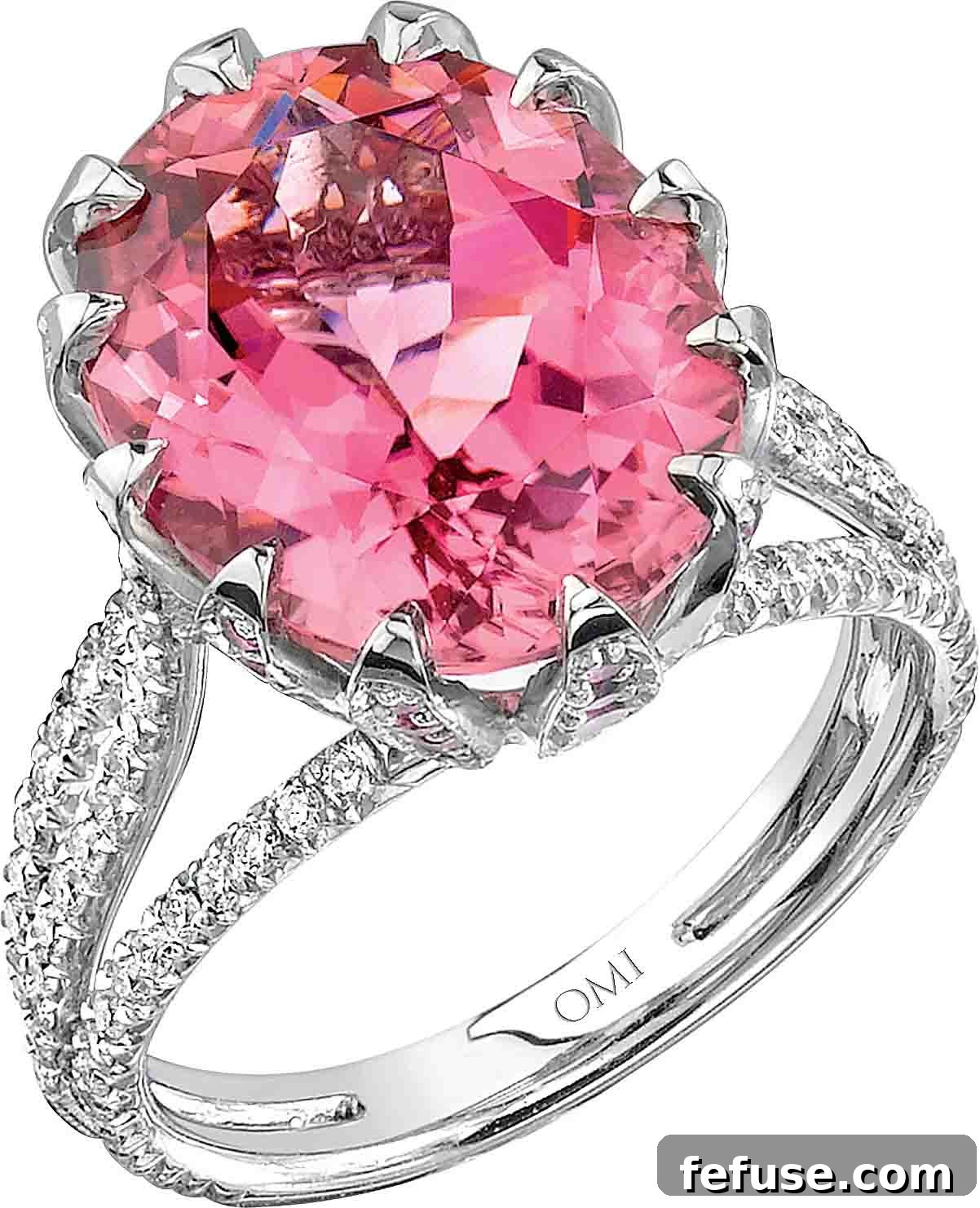
Above: An exquisite ring in 18k white gold featuring a magnificent 7.22 ct. oval-shape pink tourmaline, complemented by 1.3 cts. t.w. diamonds. Price: $8,500. From Omi Privé, West Covina, Calif. Contact: 877-664-4367; omiprive.com
Beyond the Classic: Embrace of Mixed Metals and Modern Shapes
The landscape of bridal jewelry is undergoing a vibrant transformation, moving distinctly away from conventional norms. Jenny Chung, owner of No. 3 in San Francisco, shares her unexpected journey into this niche: “It’s our biggest category and we never intended it to be, but there aren’t a lot of options for brides looking for something that’s not a classic solitaire.” This highlights a significant market gap for non-traditional choices, which her store successfully fills by offering a curated selection that stands apart from mainstream offerings.
A Spectrum of Color: Embracing Gemstones and Unique Diamonds
Color has unequivocally entered the bridal scene, offering couples a chance to express their personality and often, a more accessible price point. Sapphires, in their myriad shades from deep blues to vibrant pinks, yellows, and even greens, are experiencing a surge in demand due to their durability and vast color palette. Beyond traditional white diamonds, unique options like warm champagne, sophisticated gray, and intriguing salt-and-pepper diamonds are gaining immense popularity. These unconventional choices provide a distinct sense of individuality, moving away from the uniformity that once defined engagement rings and allowing for truly unique pieces.
David Iler, co-owner of Alchemy in Portland, Ore., echoes this sentiment: “Everybody wants to be unique. Oftentimes, there are colored stones instead of diamonds being incorporated.” This trend even extends to traditionally fragile stones like opals, chosen for their ethereal beauty, captivating play-of-color, and distinct character, despite requiring more delicate care. Couples are prioritizing aesthetic appeal and personal significance over traditional durability metrics.
Shapes and Settings: A Shift in Preference
When it comes to diamond shapes, jewelers nationwide report a growing fascination with pear-shape center stones. Their elegant, elongated form offers a sophisticated and unique alternative to more common cuts like round or princess. This shape creates a flattering line on the finger and can appear larger than its carat weight. Conversely, the once-ubiquitous halo setting, which encircles a center stone with smaller diamonds, is witnessing a noticeable decline in demand. Modern couples often prefer designs that highlight the inherent beauty of the central stone with simpler, more refined, and minimalist settings, allowing the main gem to truly shine without excessive adornment.
Metals on the Rise: Rose, Yellow, and Industrial Strength
Metal choices are also diversifying dramatically, reflecting both current fashion trends and individual preferences. Rose gold has maintained its strong appeal, captivating many with its warm, romantic hue that complements various skin tones and gemstones. Interestingly, yellow gold is experiencing a notable comeback, particularly for designs that evoke a vintage, antique, or heirloom feel. Scott Udell, vice president of London Jewelers and president of Two by London in Manhasset, N.Y., notes, “Rose gold has been very popular for us lately, and even yellow gold has been making a bit of a comeback.” Jonathan Tran, co-owner of H&Q Jewelers in Orlando, Fla., confirms this, stating, “Maybe 20 percent of my bridal sales are yellow gold. Usually the yellow gold rings that sell are more on the vintage side,” indicating a preference for classic aesthetics.
For men’s wedding bands, there’s a significant trend towards industrial metals, which offer a compelling combination of durability, bold aesthetic, and wallet-friendly price point. Tungsten, known for its exceptional hardness and scratch resistance, has become a top seller. “I sell tungsten at least once a day,” Tran remarks. “When they feel the weight of the tungsten, they fall in love.” This preference reflects a desire for practical, robust, yet stylish options that can withstand the rigors of daily wear while making a strong visual statement.
Beyond material, textural elements are also making waves in men’s jewelry, adding a personalized touch that mass-produced items lack. Jennifer Gandia observes a surge in demand for finishes like hammered textures: “We’ve been selling a lot of texturized men’s bands. We have a couple of designers that are doing a lot of texture on a classic silhouette. It’s all done by hand so it feels unique and different.” These artisanal details add a layer of craftsmanship and individuality, appealing to those who seek a ring that feels distinct and personal.
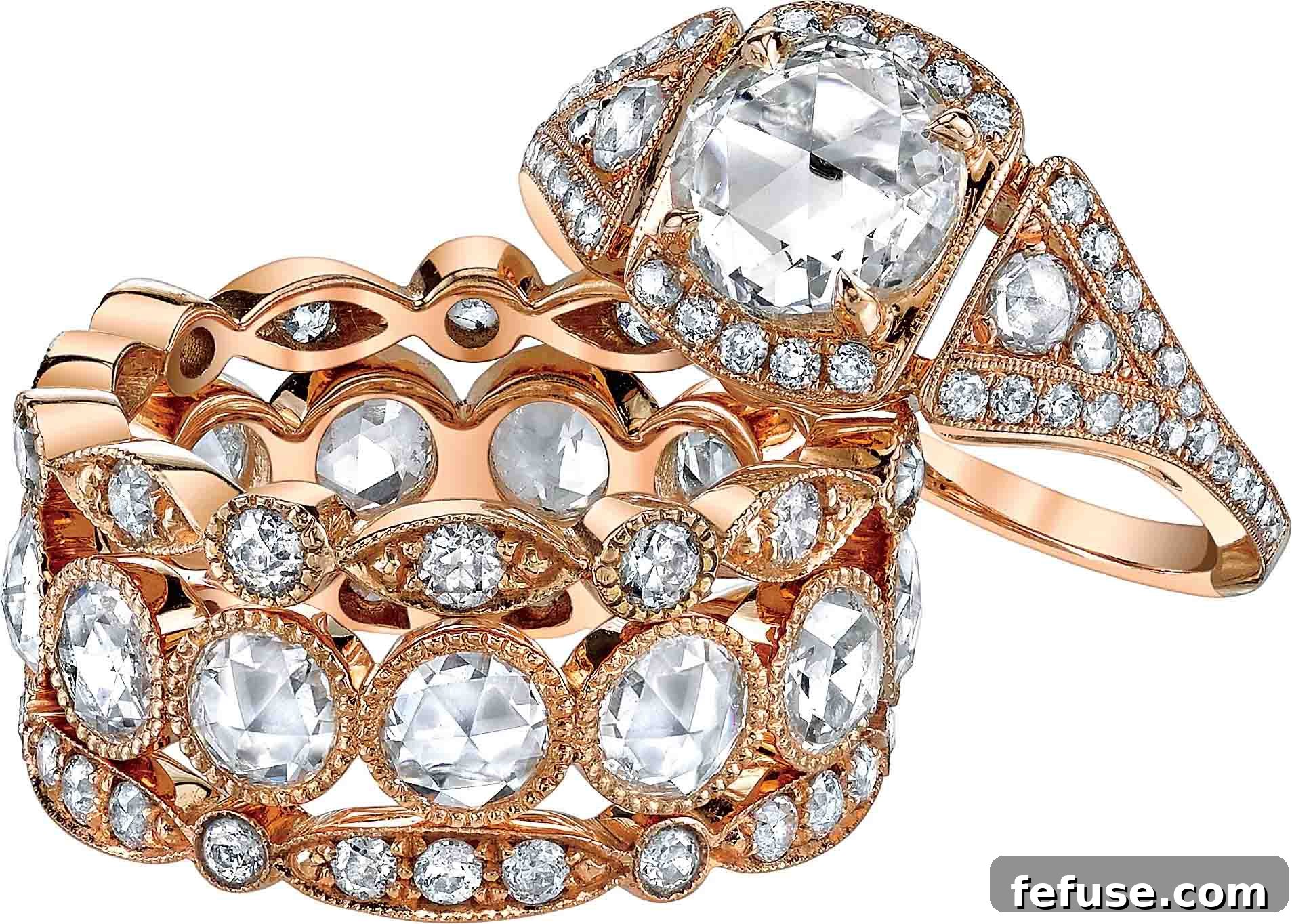
Chelsea ring (sold) and Elizabeth, Gabby, and Sadie bands in 18k rose gold with rose-cut and Old European–cut diamonds; Price: $3,400–$8,000. From Single Stone, Los Angeles. Contact: [email protected]; singlestone.com
Marketing in the Modern Age: Adapting to the Digital Landscape
The strategies jewelers employ to reach their audience have evolved significantly, blending time-honored techniques with cutting-edge digital approaches. While many now heavily lean on digital channels, some traditional marketing methods continue to prove remarkably effective, demonstrating the importance of a diversified strategy.
Blending Tradition with Innovation
Scott Udell from London Jewelers still finds success with traditional advertising, citing a “home run” with ads read by talk-radio hosts in his New York market. This demonstrates that understanding a local audience and leveraging trusted voices can still yield strong results by building familiarity and credibility. Jennifer Gandia also emphasizes the personal element in campaigns, finding giveaways and partnerships with bloggers effective for her business, as they create a more relatable and authentic connection with potential clients, turning advocates into powerful marketing channels.
Events like trunk shows also retain their popularity, offering customers a unique opportunity to view curated collections, interact directly with designers, and experience the jewelry firsthand in a relaxed, experiential setting. However, the shift towards highly targeted digital advertising is undeniable and increasingly dominant. David Iler of Alchemy notes a dramatic transition: “We were very print-ad focused 10 years ago—now it’s almost completely SEO [search engine optimization] focused. I do my own Google AdWords campaigns, and I customize and tweak that to the nth degree.” This showcases a deliberate and highly analytical approach to digital marketing, optimizing for online visibility, specific customer searches, and maximum conversion rates through precise targeting and continuous refinement.
The Enduring Importance of Customer Service in a Digital World
Despite the prevalence of online research and digital tools, old-fashioned, personalized customer service remains an integral, even critical, part of the jewelry buying experience once customers step into a store. Millennials, in particular, present a unique paradox: they arrive armed with a wealth of information gathered online, having extensively researched styles, prices, and reviews, but often seek the reassurance, expert guidance, and personal touch of a real-life professional for significant purchases like engagement rings. They crave figurative, and sometimes literal, handholding through a process that can be both incredibly exciting and daunting due to its emotional and financial weight.
Jewelers understand that their role is to bridge the gap between online exploration and the tactile, emotional reality of purchasing fine jewelry. Jenny Chung elaborates: “People typically want to choose their own stone, and that’s a high-touch element that’s harder to do online. It’s the process—they want to be involved in the making of this ring.” This desire for involvement transforms a mere transaction into a memorable, collaborative, and deeply personal journey, fostering a deeper connection with the piece, the brand, and the jeweler. This human element often becomes the deciding factor in a purchase.
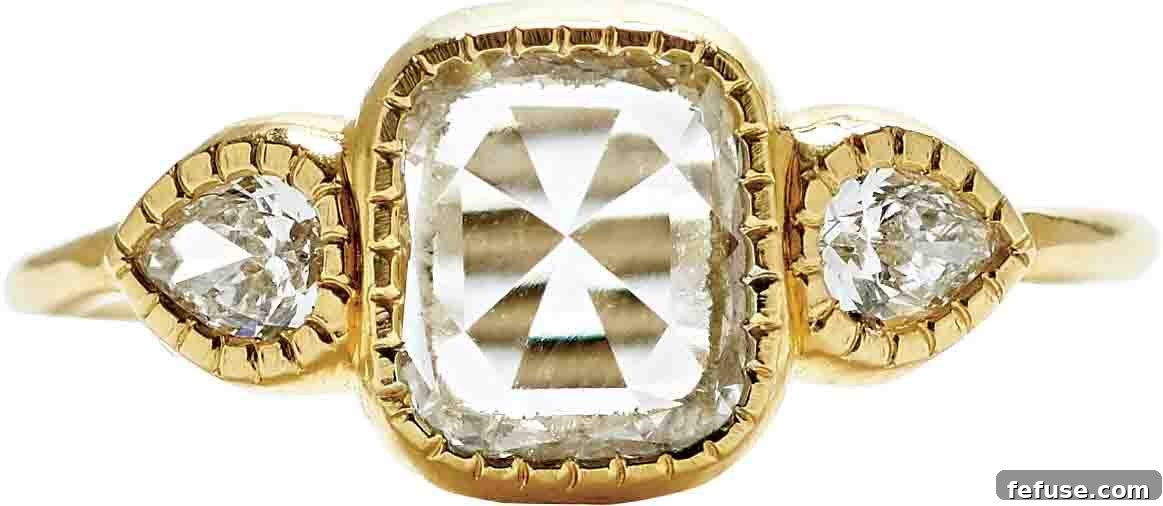
Ring in 14k yellow gold with 0.5 ct. rose-cut diamond and two pear-shape diamonds; Price: $4,460. From Jennie Kwon, Los Angeles. Contact: 213-221-7556; jenniekwoondesigns.com
The Digital Dialogue: Messaging and Social Media Prowess
In the highly visual and interactive digital sphere, effective communication is paramount for jewelers looking to connect with modern consumers. Jonathan Tran of H&Q Jewelers, a millennial himself, intrinsically understands how exceptional real-life customer service translates into powerful digital word-of-mouth. He proudly identifies his store’s numerous positive reviews on Yelp as his “biggest weapon” in his marketing arsenal, underscoring the critical role of online reputation in attracting new clients and building trust within the community.
The Unexpected Power of Repair Services
Interestingly, Tran notes that many of these glowing reviews aren’t necessarily for high-value engagement ring purchases, but often for repair jobs. This observation provides a crucial insight: when customers are considering a significant bridal purchase, stellar service, attention to detail, and attentive staff are often their top priorities. A jeweler who demonstrates care, expertise, and reliability on a smaller repair job builds a foundation of trust and confidence that can lead to larger, more significant sales later on, proving that every interaction is an opportunity to cultivate loyalty.
Visual Storytelling: Video and Instagram Dominance
Video content is rapidly gaining popularity across all social media channels, including Instagram, Facebook, and TikTok. It offers an unparalleled level of interactivity, allowing potential customers to gain a more authentic, dynamic sense of how a ring truly looks on a hand, or to witness the mesmerizing sparkle and fire of stones in motion. This visual engagement is far more impactful than static images alone. While a strong Facebook presence is largely considered essential for most businesses, many jewelers, including Jenny Chung, find that Instagram delivers superior engagement due to its inherent emphasis on stunning, high-quality visuals and its story-driven format.
“All we have is an Instagram and a Facebook page,” Chung states. “We don’t do any paid advertising. All we do is post pictures. That’s how our business was developed.” This exemplifies how organic, visually compelling content, coupled with consistent engagement, can be a highly effective, cost-efficient marketing strategy for jewelry brands, building a loyal following through authentic storytelling.
Authentic Voice: Fostering Connection, Not Just Sales
The tone of voice employed in the social sphere is also critically important. Jennifer Gandia observes a general shift towards a more casual and approachable demeanor: “We’ve all gotten a lot more casual. Social media has a very friendly lingo and vibe to it, so a lot of companies, even the ones that were at one time considered buttoned-up, have kind of relaxed a bit.” This move away from formal, corporate language allows brands to connect on a more personal level.
This relaxed approach enables marketing messages to feel more like a genuine dialogue rather than a hard sales pitch—a strategy particularly appealing to the emotionally-driven millennial demographic. Gandia explains, “They’re very emotionally driven—sometimes something as simple as a funny or heartfelt quote or a story is what they connect with. When we get the most likes in a day or the most comments, we try to replicate that because our followers are telling us they’re engaged with this type of content.” By actively listening to their audience and adapting their content based on feedback, jewelers can cultivate a loyal and engaged community, translating likes and comments into lasting customer relationships and powerful brand advocacy.
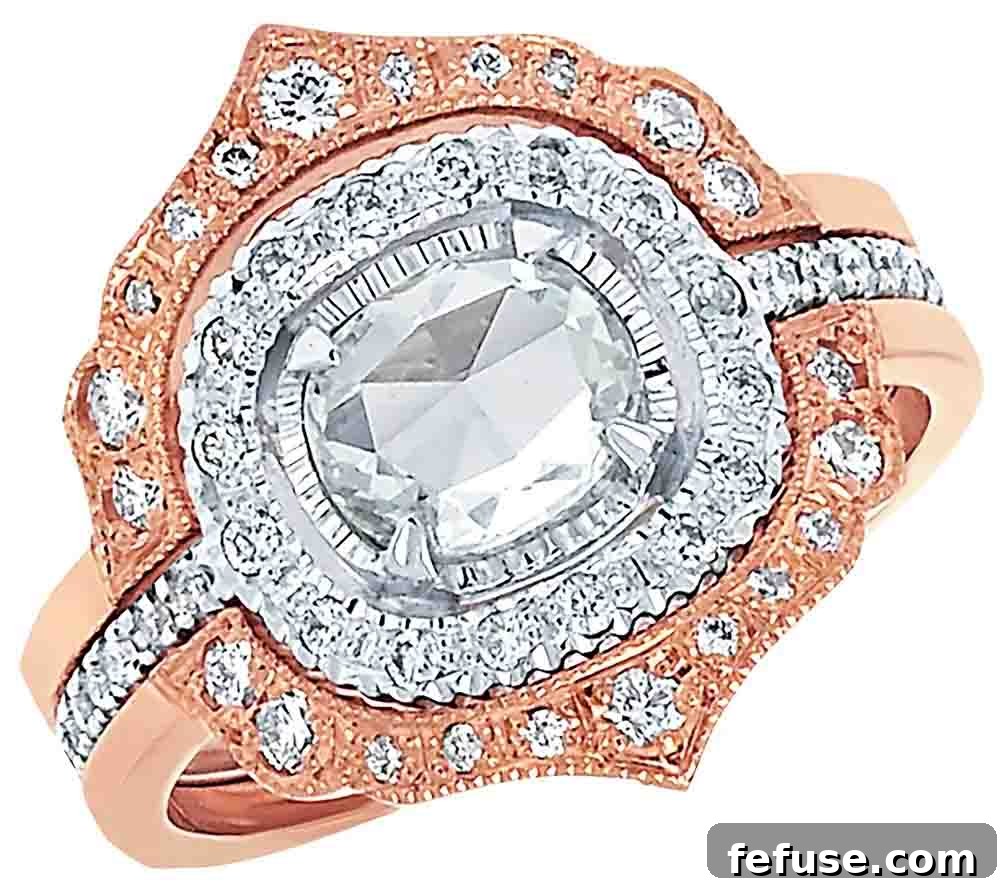
1.25 ct. rose-cut diamond engagement ring in 18k white gold, $7,800, matching bands in 18k rose gold, $960 each; From Suneera, Los Angeles. Contact: [email protected]; suneera.com
Navigating Budgets and Building Lifelong Customer Relationships
For many millennial shoppers, budget considerations are a significant and often primary factor when purchasing engagement and wedding jewelry. Savvy retailers recognize this reality and are playing a “long game,” understanding that working with young adults who may have modest budgets but grand aspirations today can lead to substantial lifelong customer value and repeat business in the future.
Creative Solutions for Budget-Conscious Couples
Scott Udell thoughtfully illustrates this common challenge: “Look, it’s a tough time of your life. I’ve seen millennials who want to spend $5,000 or $6,000 on a setting, but they don’t have money for a center stone.” For such customers, Udell offers a compassionate and strategic compromise: a high-quality, customized setting initially fitted with a cubic zirconia (CZ). This innovative option allows couples to acquire the ring of their dreams within their current budget, with the explicit understanding that they can return later to replace the CZ with a genuine diamond when their finances allow. This approach not only makes millennials feel valued and understood in the present but also lays the groundwork for a long-term relationship built on trust and flexibility.
Udell emphasizes the future potential of this strategy: “Even if they can’t afford it then, what’s better than an anniversary present two or five years down the road? It makes and keeps a special connection there—it’s really a form of marketing.” This creative solution transforms a potential lost sale into an opportunity for sustained engagement and future purchases, fostering loyalty that transcends a single transaction and turns a temporary substitute into a long-term investment in the customer relationship.
Flexible Financing and Exclusive Programs
To further support customers and encourage sales, retailers like Two by London offer a variety of flexible financing options designed to make high-value purchases more accessible and manageable for a wider range of budgets. These include providing their own branded credit card, offering enticing twice-yearly deferred-interest promotions, and traditional layaway plans. Such options alleviate immediate financial pressure, allowing couples to invest in the pieces they truly desire.
Beyond financing, Two by London has also implemented its “Very Important Couple” program, specifically designed to create exceptional value and foster deep loyalty. This program offers engagement-ring customers a generous 20 percent discount on wedding bands, directly incentivizing repeat business for the next crucial purchase. Furthermore, it provides exclusive access to the store’s cases, allowing the bride to borrow a piece or two of fine jewelry to add extra sparkle and sophistication to her wedding outfit. “They obviously see the value in doing that,” Udell comments, noting that such thoughtful, value-added programs effectively convert casual browsers into deeply satisfied, loyal, and repeat customers, solidifying the store’s position as a trusted partner in their bridal journey.
An Inclusive Approach: Catering to All Couples
The modern jewelry market also reflects a growing commitment to inclusivity, particularly in serving gay and lesbian couples. Rather than segmenting their marketing efforts directly to specific groups, many retailers find success by focusing on an eclectic merchandise mix and maintaining high visibility within their local communities. As Alchemy’s David Iler wisely puts it, “I think when you’re trying to cater to a specific style or group, you’re limiting yourself.” This philosophy emphasizes broad appeal, authentic representation, and ensuring all customers feel welcome and represented by the available selection.
While the overall approach remains inclusive, jewelers have observed a few distinct preferences and shopping habits among same-sex couples, leading to a nuanced understanding of their specific needs and desires:
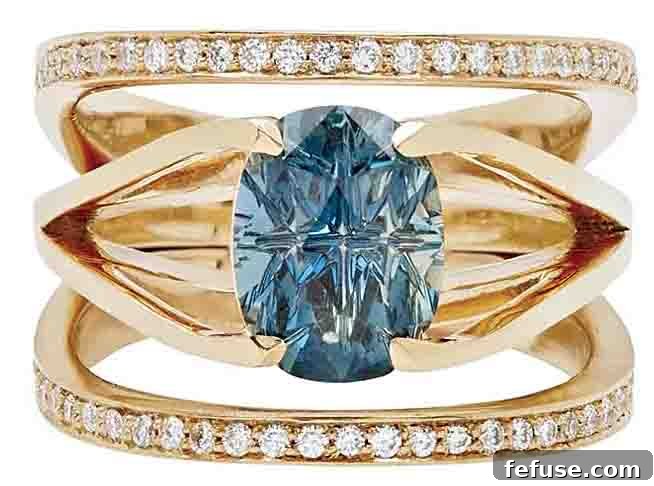
Ring with 1.91 ct. sapphire and 0.25 ct. t.w. pavé diamonds in recycled 18k gold, Price: $9,950, blisslau.com
- Intertwining Bands: Jenny Chung of No. 3 notes that bands designed to intertwine yet be worn separately, such as those by Bliss Lau, are particularly popular with her same-sex clientele. These designs offer symbolic connection and unity while allowing for individual expression and versatility in wear.
- Less Gender Differentiation: Jennifer Gandia of Greenwich St. Jewelers sometimes finds it challenging to label a piece strictly “men’s” or “women’s” when discussing it with customers, indicating a fluid approach to gendered jewelry. This reflects a broader societal trend where traditional gender norms in fashion and personal adornment are increasingly blurred, allowing for more personal choice.
- More Matching: Jewelers frequently observe that same-sex couples are more inclined to opt for matching wedding bands. This preference often signifies a profound sense of unity, shared commitment, and a desire for outwardly symbolizing their bond through coordinated pieces.
- Fewer “Big Rocks”: Jenny Chung points out that her same-sex clients often gravitate towards intricate designs, interesting textures, and unique craftsmanship over large central stones. This preference underscores an appreciation for artistic detail, subtle elegance, and a unique aesthetic rather than overt displays of carat weight or traditional diamond prominence.
- Greater Variety: Given a lesser inclination towards traditional bridal sets that typically feature a diamond solitaire and a plain band, options are paramount for same-sex couples. “For us, it’s more about having a really good selection,” Gandia explains, highlighting the importance of a diverse inventory that offers a broad spectrum of styles, materials, and designs to meet varied individual tastes and preferences.
Ultimately, the bridal jewelry industry is undergoing a profound evolution, driven by a powerful desire for personalization, authenticity, and inclusivity. From unique stone choices and modern metal compositions to innovative marketing strategies and empathetic customer service, jewelers are adapting to meet the sophisticated and diverse demands of today’s couples. By embracing individuality and fostering genuine connections, they are not just selling jewelry, but helping couples craft timeless, meaningful symbols of their unique love stories that resonate for a lifetime.
Credits:
Top: Photograph by Greg Sorensen, styling by Catherine Peridis. Market editor: Jennifer Heebner. Makeup by Alexis Williams for The Brooks Agency. Hair by Gusléne Bubak. Hair provided by Lo Bundles. Manicure by Jasmin Cameron. Dress by Theia.
Drop earrings in 18k gold with moonstones and diamonds, $48,400, Victor Velyan, Los Angeles, 213-955-5950, victorvelyan.com; Celebrations band in 18k yellow gold with colorless diamonds, $9,272, Mattioli, New Rochelle, N.Y., 914-235-6261, mattioligioielli.it; Ellen semi-mount in 18k gold with diamonds, $7,500, Erica Courtney, Los Angeles, 323-938-2373, ericacourtney.com
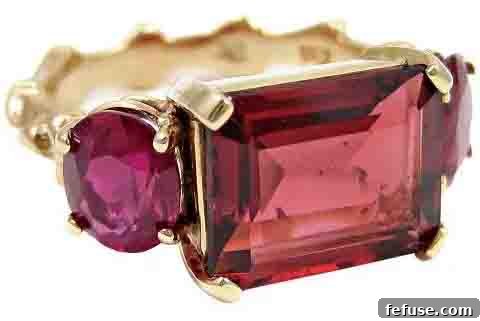
Inset: Petite Vertebrae ring in 18k gold with a 3.56 ct. emerald-cut red spinel and 1.64 cts. t.w. rubies; $37,200; K. Brunini Jewels, Solana Beach, Calif.; 858-259-8779; kbrunini.com
News Source: JCKOnlinecom