
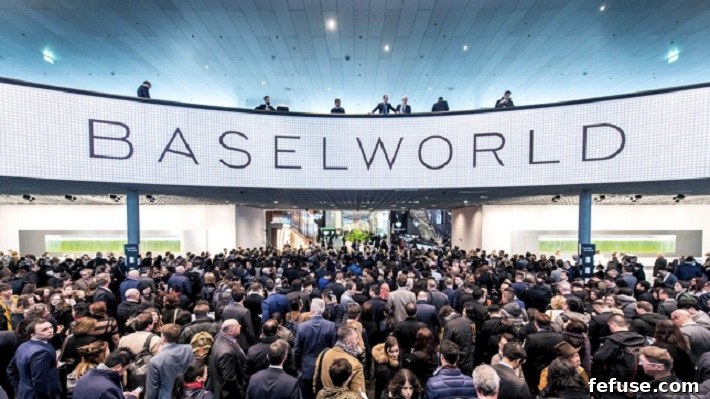
Baselworld 2020 Cancellation & Refund Controversy: A Defining Moment for the Watch & Jewelry Industry
The year 2020 marked an unprecedented period of global disruption, and the luxury watch and jewelry sector was certainly not immune. Among the many high-profile casualties of the unfolding health crisis was Baselworld, traditionally the world’s largest and most significant event for timepieces and precious adornments. What began as a necessary cancellation due to the rapidly escalating COVID-19 pandemic quickly morphed into a contentious debate over refund policies, leaving many exhibitors angered and raising fundamental questions about the future of this iconic Swiss trade show and indeed, the entire industry exhibition model. This article delves into the intricacies of the 2020 cancellation, the ensuing financial disputes, and the long-term implications for Baselworld and its stakeholders.
The Unforeseen Halt: Baselworld 2020 Falls Victim to a Global Pandemic
Scheduled to captivate audiences from April 30 to May 5, 2020, Baselworld was poised to once again be the epicenter of innovation and commerce for the watch and jewelry world. However, the world had other plans. As the novel coronavirus spread rapidly across continents, governments were compelled to implement drastic measures to curb its transmission. In Switzerland, authorities took a decisive step, outlawing gatherings of over 1,000 people. This mandate effectively sealed the fate of Baselworld 2020, forcing its organizers to announce an immediate cancellation.
The news sent ripples of disappointment and concern throughout an industry already grappling with evolving market dynamics. For many, Baselworld represented the culmination of months, if not years, of design, development, and marketing efforts. The event was not merely a showroom; it was a vital platform for networking, forging partnerships, and launching new collections that often dictated market trends for the year ahead. The sudden halt meant not only a loss of opportunity but also significant financial setbacks for brands large and small, who had already invested heavily in participation fees, booth construction, travel arrangements, and promotional materials. The global lockdown brought a stark realization: even the most established and revered events were vulnerable to the sweeping force of a worldwide health crisis.
Rescheduling Amidst Uncertainty: A New Chapter for 2021
In response to the cancellation, Baselworld organizers moved swiftly to establish new dates, hoping to provide continuity and reassurance to their global network of exhibitors and visitors. The rescheduled event was announced for January 28 to February 2, 2021. This decision aimed to offer a new window of opportunity, allowing the industry to convene once the immediate threat of the pandemic was hoped to subside. The intention was clear: to preserve the tradition and importance of Baselworld by offering an alternative at the earliest feasible time.
However, the act of rescheduling a major international event of Baselworld’s scale is a logistical behemoth. It involves coordinating thousands of exhibitors from dozens of countries, securing vast exhibition spaces, aligning with international travel regulations, and managing the intricate web of suppliers and service providers. While the new dates offered a glimmer of hope, they also presented fresh challenges. Many exhibitors found that the January/February timing clashed with other pre-existing commitments, internal production schedules, or even other industry events that might also be seeking new slots. The uncertainty surrounding future travel restrictions and economic recovery also cast a long shadow, making long-term planning incredibly difficult for brands already under immense pressure.
The Core of the Conflict: Baselworld’s Refund Policy Ignites Exhibitor Fury
Perhaps the most contentious aspect arising from the 2020 cancellation was Baselworld’s approach to exhibitor refunds. For brands that had already committed significant financial resources by paying their participation fees, the expectation of a full refund for a canceled event was a natural one. However, the organizers presented options that fell short of a complete reimbursement, triggering widespread anger and frustration across the industry.
Exhibitors were given two primary choices, both requiring them to forgo a substantial portion of their investment:
- Option 1: Carry forward 85 per cent of their paid fees to the rescheduled 2021 event, thereby forfeiting 15 per cent.
- Option 2: Carry forward 40 per cent of their fees to 2021, and receive a 30 per cent refund for the canceled 2020 event. This option implicitly meant a 30 per cent forfeiture, as 40% (carry-forward) + 30% (refund) equals 70%, leaving 30% unaccounted for.
Critically, Baselworld was not offering exhibitors the option of a 100 per cent refund. This decision became the focal point of the dispute. Many brands, particularly smaller and independent businesses, felt unjustly burdened by having to absorb these significant losses for an event that simply did not happen. The deadline of April 30 for exhibitors to make their decision added another layer of pressure, forcing them to commit to a future event under highly uncertain global conditions or accept a partial refund while still incurring substantial losses.
Voices of Discontent: Exhibitors’ Perspective
The absence of a full refund option was met with a chorus of disapproval. For numerous exhibitors, especially the independent watchmakers and emerging jewelry brands, the financial outlay for Baselworld represented a considerable portion of their annual marketing budget. Having to forfeit 15% or 30% of this investment, through no fault of their own, was seen as a severe blow, particularly during a period when global economic activity was grinding to a halt. Many argued that the organizers, having canceled the event, should bear the full financial consequences.
Furthermore, the rescheduled dates presented insurmountable challenges for some. Brands might have had conflicting engagements, production deadlines that couldn’t be shifted, or simply faced ongoing travel restrictions that made participation in January 2021 impractical or impossible. For these exhibitors, the refund options felt punitive: they couldn’t attend the new dates, yet they were still being asked to pay for an event that never materialized. The feeling of a lack of support from an organization meant to champion the industry was palpable, eroding trust and loyalty among many long-standing participants.
Baselworld’s Stance: Navigating Uncharted Waters
Addressing the controversy, Michel Loris-Melikoff, managing director of Baselworld, emphasized the extraordinary circumstances surrounding the decision. He stated, “We are all in this together and that is why we are committed to supporting our exhibitors as best we can in these turbulent times.” This sentiment aimed to frame the situation as a shared challenge, suggesting that all parties needed to make sacrifices to ensure the long-term viability of the event and the industry.
Loris-Melikoff further defended the refund policy by asserting, “We are offering unprecedented conditions, which go far beyond contractual obligations (general terms and conditions) and are much more generous than the vast majority of similar European shows that had to be canceled or postponed.” This statement highlighted the organizers’ position that their contractual agreements would have allowed for even less generous terms and that their offer was, in fact, an act of goodwill in an difficult environment. It also implicitly suggested that the organization itself incurred significant, non-recoverable costs even for a canceled event, including planning, infrastructure setup, staff, and marketing expenditures, which justified the partial retention of fees. This perspective, however, did little to assuage the frustrations of exhibitors who felt their own unprecedented financial burdens were not being adequately acknowledged.
A Legacy Under Scrutiny: Baselworld’s Evolving Challenges
The 2020 cancellation and the subsequent refund dispute did not occur in a vacuum; they were superimposed on an event that had already been navigating a period of significant transformation and challenge. For decades, Baselworld stood as the undisputed titan of watch and jewelry trade shows, a mandatory pilgrimage for industry professionals and enthusiasts alike. Its sprawling halls showcased the pinnacle of horological artistry and gem-setting prowess.
However, in recent years, Baselworld had faced increasing headwinds. Visitor numbers had been in decline, with the 2019 edition attracting 81,000 visitors, down by more than a fifth on the previous year. More significantly, several major luxury brands, including the entire Swatch Group, Breitling, and others, had already announced their departure from Baselworld in the years leading up to 2020, seeking alternative, often more intimate or digitally-focused, platforms. The reasons cited were varied, ranging from the high cost of participation to concerns about the event’s format and its ability to adapt to a rapidly changing retail and media landscape.
The emergence of rival events, most notably Watches and Wonders (formerly SIHH) in Geneva, which adopted a more curated and exclusive approach, further intensified the competitive pressure. The pandemic, and Baselworld’s handling of its consequences, only exacerbated these existing vulnerabilities. In the wake of the 2020 cancellation and refund controversy, even more prominent brands, including Rolex, Patek Philippe, Chopard, Tudor, and Chanel, announced their definitive exit to form a new exhibition in Geneva, signaling a seismic shift in the industry’s exhibition landscape. This mass exodus underscored the profound damage inflicted by the events of 2020 and the deep-seated issues facing Baselworld’s traditional model.
The Road Ahead: Rebuilding Trust and Redefining Value
The events of 2020 presented Baselworld with an existential crisis. The refund controversy not only damaged its immediate financial standing but, more importantly, inflicted a significant blow to its reputation and relationships with its core constituency – the exhibitors. Rebuilding trust and restoring its position as an indispensable industry event will require a profound re-evaluation of its value proposition and operational model.
Looking forward, Baselworld must address several critical areas: transparency in its dealings, flexibility in its policies, and a renewed focus on delivering tangible value to participants. The future of large-scale trade shows, in a post-pandemic world, will likely see a hybrid model emerging, blending physical presence with robust digital engagement. Exhibitors will demand more adaptable terms, lower costs, and innovative formats that cater to diverse brand needs and changing consumer behaviors. The ability to innovate, listen to feedback, and demonstrate genuine partnership with brands will be paramount for any major event seeking to survive and thrive.
Conclusion: A Pivotal Moment for the Global Watch and Jewelry Industry
The cancellation of Baselworld 2020 due to the COVID-19 pandemic and the subsequent controversy over its refund policy stands as a pivotal moment in the history of the global watch and jewelry industry. It exposed the vulnerabilities of traditional large-scale events to unforeseen global crises and highlighted the inherent tensions between event organizers and their exhibitors regarding financial responsibilities.
While the immediate future of Baselworld remains subject to ongoing transformations and market shifts, the events of 2020 served as a harsh lesson and a powerful catalyst for change. The industry is now compelled to re-imagine how it connects, showcases innovation, and conducts business in a world increasingly shaped by digital transformation, economic uncertainties, and evolving expectations. The lessons learned from this challenging period will undoubtedly influence the structure and philosophy of luxury exhibitions for years to come, emphasizing resilience, adaptability, and a genuine commitment to supporting the very brands that give these events their prestige.