
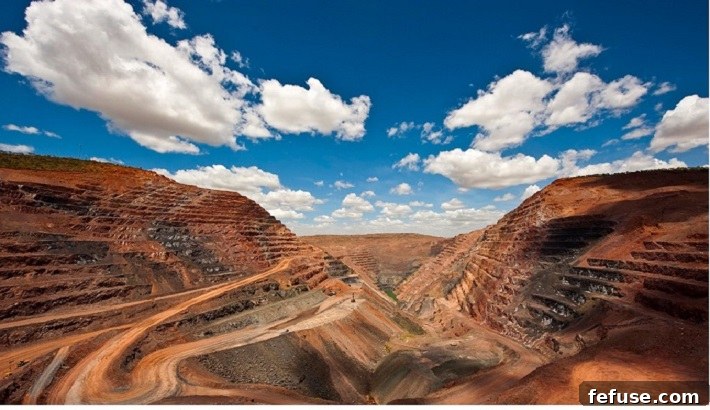
The imminent closure of Rio Tinto’s iconic Argyle mine in 2021 is poised to trigger an unprecedented seismic shift in Australia’s rough diamond output, with expert analyses from GlobalData projecting a staggering 99 percent reduction in national production. This monumental event will see the nation’s annual mining output plummet from a formidable 14.2 million carats to a mere 137,000 carats, marking the definitive end of an era for one of the world’s most significant diamond producers and fundamentally reshaping the global diamond supply chain.
For nearly four decades, the Australian diamond industry has been inextricably linked with the Argyle mine. Its closure signifies not just a reduction in volume but also the departure of a unique source of some of the most coveted diamonds on Earth. The mine, renowned globally for its exquisite pink, red, and blue diamonds, has been a cornerstone of both Australia’s mining prowess and the international luxury market. Its cessation will undoubtedly create a substantial void, particularly within the niche segment of fancy coloured diamonds, where Argyle has held an almost monopolistic position. The economic viability of the mine, facing diminishing reserves and escalating operational costs, ultimately led Rio Tinto to make the difficult decision to conclude its operations, paving the way for extensive rehabilitation efforts.
GlobalData’s findings underscore the profound reliance Australia has placed on the Argyle operation. Following the suspension of the Ellendale mine in 2015, a direct consequence of the collapse of Kimberley Diamond Company in the same year, Argyle effectively became the sole pillar supporting Australia’s rough diamond supply. This singular dependency means that with Argyle’s planned decommissioning, the nation faces an immediate and drastic downturn in its diamond production capacity, prompting urgent discussions about the future viability and strategic direction of its diamond mining sector. The loss of such a dominant producer necessitates a comprehensive re-evaluation of Australia’s role and potential within the highly competitive global diamond market.
The closure of Argyle is not merely an economic event; it represents the culmination of decades of intensive mining, as reserves have progressively dwindled and the economics of continued operation became increasingly challenging. Rio Tinto, the mining giant behind Argyle, has consistently stated its commitment to a responsible and managed closure, including extensive rehabilitation work on the site to restore the land to its natural state. While the decision is driven by commercial realities, its implications reverberate far beyond the confines of the mine, impacting local Indigenous communities, regional employment opportunities, the broader Australian economy, and the intricate dynamics of the global diamond market, especially for specialty stones.
Amidst this significant transition, glimmers of hope and determined efforts to revive Australia’s diamond fortunes are emerging. The Western Australian Government, already actively engaged in rehabilitation work at the now-dormant Ellendale mine site, is proactively seeking a new operator. This strategic move aims to re-ignite mining activities at Ellendale, a location historically recognized for its substantial contribution to global diamond supply, particularly its exquisite fancy yellow diamonds. The successful re-establishment of operations at Ellendale, even if on a smaller scale, could provide a much-needed boost, offering a potential albeit smaller-scale counterpoint to the Argyle closure and helping to stabilize Australia’s position in the niche diamond sector.
Vinneth Bajaj, a senior mining analyst at GlobalData, encapsulates the immediate challenge and long-term optimism perfectly. “In the short term, there are no projects lined up that could replace even part of the output from the Argyle mine,” Bajaj states, highlighting the immediate void that will be felt globally, particularly in the fancy coloured diamond market. However, his analysis quickly pivots to a more encouraging outlook: “However, there are positive signs that the Australian diamond industry could be revived.” This sentiment reflects a broader industry movement towards identifying and developing new diamond prospects across the continent, signaling resilience and a forward-looking approach despite the significant setback.
Indeed, a consortium of ambitious mining companies is already dedicating significant resources to diamond exploration activities across Western Australia and beyond, striving to identify and delineate potential new deposits. Among these key players are Lucapa Diamond Company, Merlin Diamonds, Auteco Minerals, GeoCrystal, and Legend International. Their collective efforts signify a renewed focus on grassroots exploration, driven by the understanding that new discoveries are absolutely crucial for the long-term sustainability and future prosperity of the Australian diamond industry. These companies are investing heavily in advanced geological surveys, geophysical testing, and systematic drilling programs to uncover the next generation of diamond sources.
One particularly promising development comes from Lucapa Diamond Company. The company has already reported encouragingly positive results from its exploration endeavors at the Brooking project. This project holds strategic significance due to its close proximity to the abandoned Ellendale site, suggesting that the geological conditions conducive to diamond formation might extend beyond the former mine’s boundaries. The success at Brooking could pave the way for a more comprehensive understanding of the diamond potential in the region, potentially unlocking new sources of valuable stones, including the highly sought-after fancy yellow varieties for which Ellendale was once famous. This progress provides tangible hope for future diamond production.
The prospect of Ellendale’s revival is particularly tantalizing for the fancy diamond market. Before its suspension, Ellendale was renowned as a premier source of high-quality fancy yellow diamonds, a niche that commands premium prices and caters to an exclusive segment of the luxury jewellery market. Re-establishing Ellendale’s production could not only provide significant economic opportunities for the region and Australia but also effectively re-position Australia as a key player in the specialized fancy coloured diamond sector. This would represent a strategic shift from large-volume production to a focus on high-value, rare diamonds, a segment where Australia can potentially maintain a strong global presence.
The search for new diamond deposits extends beyond former glory sites. Companies are employing advanced geological surveying techniques, remote sensing, and innovative drilling methods to explore vast tracts of the Australian landscape. The geological potential of Western Australia, with its ancient cratons and unique geological history, remains highly prospective for new kimberlite and lamproite discoveries – the primary sources of diamonds. While exploration is inherently high-risk and capital-intensive, the rewards of discovering a new, economically viable diamond deposit are substantial, justifying the significant investment by these forward-thinking companies who are betting on Australia’s enduring mineral wealth.
The Argyle mine’s legacy is immense and indelible. For nearly four decades, it was a global powerhouse, not just in terms of sheer volume but also for introducing unique colour palettes, especially the coveted pink diamonds, to the diamond world. Its closure marks a definitive turning point, shifting Australia from being a dominant volume producer to a nation facing the significant challenge of redefining its role in the global diamond market. This redefinition will likely involve a stronger emphasis on strategic exploration for high-value, niche deposits, rather than the broad-scale, high-volume operations that characterized the Argyle era. This paradigm shift demands innovation and adaptability from the entire industry.
The path forward for the Australian diamond industry is fraught with both challenges and opportunities. The immediate future will undoubtedly be characterized by reduced output and a necessary realignment of market expectations. However, the proactive stance of the Western Australian Government, combined with the aggressive exploration strategies of companies like Lucapa, Merlin, and others, paints a picture of resilience and ambition. The long-term vision involves transforming Australia’s diamond sector into one that, while perhaps smaller in overall carat weight, is strategically stronger in value, focusing on rare and high-quality stones that continue to captivate the world’s most discerning buyers.
The global diamond market will also feel the ripple effects of Argyle’s closure. With a significant portion of rough diamond supply disappearing, particularly the unique pink diamonds which were almost exclusively sourced from Argyle, prices for these rare stones are expected to appreciate further, potentially reaching unprecedented levels due to their extreme scarcity. This scarcity could, in turn, drive renewed interest in alternative sources and enhance the value proposition of any new Australian discoveries, particularly those yielding distinctive colour profiles. The dynamic interplay between this supply shock and intensified exploration efforts will undoubtedly shape the landscape of diamond mining for years to come.
Ultimately, while the farewell to the Argyle mine is a poignant moment for the global diamond industry, it also acts as a powerful catalyst for innovation and renewed exploration efforts across Australia. The aspiration is clear: to transition from the era of a single, dominant producer to a diversified, vibrant industry fuelled by new discoveries and the re-ignition of promising historical sites like Ellendale. Australia’s vast and ancient geological bounty suggests that its diamond story is far from over, but rather entering a new, exciting chapter defined by perseverance, strategic investment, and the relentless pursuit of hidden treasures beneath its ancient landscapes, ensuring a future for Australian diamonds.
The economic impact of the Argyle closure extends far beyond mere carats and revenue figures. It profoundly affects employment in remote regions, impacts numerous support industries that served the mine, and influences the overall perception of Australia as a key player in the global extractive sector. Re-establishing a robust diamond industry, even one focused on smaller, high-value projects, would mitigate some of these socio-economic impacts and preserve specialized skills and knowledge within the workforce. This makes the government’s persistent push to find new operators for promising sites like Ellendale not just an economic imperative but also a significant social responsibility.
In conclusion, the impending closure of the Argyle mine marks a watershed moment for Australia’s rough diamond production. The projected 99 percent drop in output is a stark reminder of the mine’s immense contribution and the significant void it will leave in the global supply chain. However, this profound challenge is being met with significant resolve and proactive measures. The concerted efforts of the Western Australian Government to breathe new life into the Ellendale mine, coupled with the aggressive exploration campaigns by leading diamond companies, signal a strong commitment to reviving and strategically redefining Australia’s presence in the global diamond market. While the short-term outlook presents considerable hurdles, the long-term potential for new discoveries and a re-focused, high-value diamond industry remains a compelling prospect, ensuring Australia’s diamond legacy continues, albeit in a transformed and potentially even more specialized capacity.
News Source: idexonline