
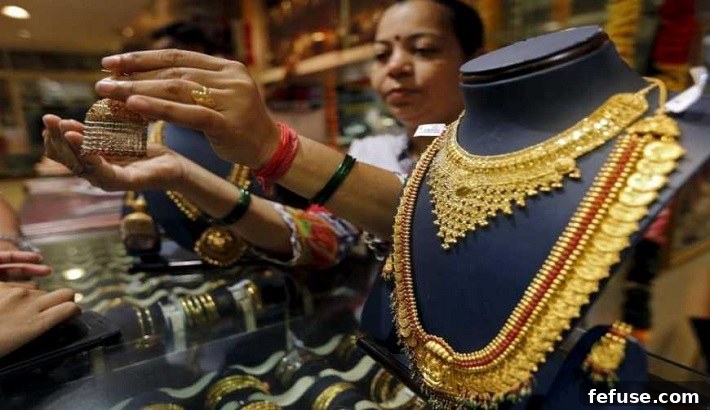
As India gears up for the auspicious occasion of Akshaya Tritiya, a surge in gold sales is anticipated across its vast rural landscape. This optimistic forecast is largely attributed to the successful implementation of targeted farm welfare programs, which are expected to significantly boost the discretionary spending power of rural households. For generations, gold has not merely been a precious metal but a deeply ingrained cultural symbol and the most preferred store of value in the hinterland, making its acquisition on propitious days like Akshaya Tritiya a cherished tradition.
The Enduring Appeal of Gold in Rural India: A Cultural and Economic Mainstay
Akshaya Tritiya, falling on May 7th this year, holds immense cultural and religious significance across India. It is widely considered an exceptionally auspicious day for new beginnings, including investments and purchases, with gold being at the top of the list for many. The very word “Akshaya” means “never diminishing” in Sanskrit, symbolizing prosperity, good fortune, and enduring wealth. Consequently, buying gold on this day is believed to invite everlasting prosperity and good luck, cementing its status as an annual ritual for millions of Indian families, especially in rural areas where cultural traditions are deeply observed.
Beyond its spiritual resonance, gold serves a critical economic function in rural India. In regions where access to formal financial instruments like banks, stocks, or mutual funds may be limited, or trust in them is lower, gold stands as a tangible, liquid, and universally accepted asset. It acts as a powerful hedge against inflation, a reliable source of funds during emergencies, and a crucial component of dowries, signifying social status and security. This intrinsic value, coupled with its cultural importance, makes gold an indispensable asset for rural households, often taking precedence over other forms of investment, including even land in some contexts, due to its liquidity and ease of storage.
Empowering Rural Incomes: Government Programs Fueling Gold Demand
A significant driver behind the expected uptick in rural gold demand is the substantial financial assistance provided under various farm welfare initiatives, most notably the PM Kisan Samman Nidhi program. This flagship scheme directly transfers income to eligible farmer families, aiming to alleviate financial distress and provide a safety net. Analysts are confident that these direct cash infusions will leave farmers with a considerable surplus, which, in line with traditional practices, is likely to be channeled into gold purchases during the festive season. The scheme’s direct benefit transfer (DBT) approach ensures that the aid reaches beneficiaries efficiently, empowering them to make autonomous financial decisions.
The impact of these populist measures by both the central government and various state administrations extends beyond immediate relief. By boosting overall farm and rural income, these programs enhance the purchasing power of a significant segment of the population, fostering economic stability and encouraging discretionary spending. Tapan Patel, a senior analyst (commodities) at HDFC Securities, highlighted this trend, stating, “We can expect higher rural demand for gold because of the recent populist measures by the Centre and various state governments, which have boosted farm and rural income.” This sentiment underscores a broader economic reality where improved agricultural prosperity directly translates into increased demand for precious metals.
The timing of Akshaya Tritiya further amplifies this trend. Rural India typically sees an influx of cash following the sale of winter-sown crops. This period, coinciding with Akshaya Tritiya, naturally becomes a peak season for gold acquisition. Farmers, having monetized their agricultural produce, find themselves in a financially comfortable position to fulfill their traditional obligations and investment goals, with gold topping the list. This symbiotic relationship between agricultural cycles and gold purchases ensures that local gold prices often remain firm or even trend upwards during this auspicious season, reflecting robust demand from the agricultural heartland.
Decoding Gold Price Dynamics: Global Headwinds and Domestic Realities
Global Factors: The US Economy, Interest Rates, and Geopolitical Tensions
The international price of gold is a complex interplay of various global economic and geopolitical factors. A primary determinant is the movement of US interest rates and the overall health of the US economy. When the US Federal Reserve signals a hawkish stance, leading to higher interest rates, the dollar tends to strengthen, making gold — which is priced in dollars — more expensive for international buyers. Conversely, a dovish stance or economic slowdown often weakens the dollar and makes gold more attractive as a safe-haven asset. Shekhar Bhandari, senior vice president and business head (global transaction banking and precious metals) at Kotak Mahindra Bank, noted, “Gold prices could go up depending on the movement of US interest rates and the overall condition of the US economy…. Gold is likely to be priced about $1,300-1,320 per troy ounce in the short term.” This short-term outlook reflects ongoing market assessments of these critical factors.
Beyond monetary policy, global growth concerns stemming from major geopolitical events significantly bolster gold’s appeal as a safe haven. Events like Brexit uncertainties and persistent trade wars between major economic powers inject volatility and risk into global financial markets. Investors often flock to gold during such periods of heightened uncertainty, viewing it as a reliable store of value when other assets, such as equities, become precarious. Patel reiterated this perspective, stating that “global growth concerns on Brexit and the trade war are bullish factors for higher international gold prices, which would limit the downside in India.” This flight to safety during economic and political turmoil acts as a powerful upward force on international gold prices, cushioning potential domestic price dips.
Domestic Realities: The Rupee’s Role in Indian Gold Prices
While international factors set the baseline, domestic gold prices in India are profoundly influenced by the strength of the Indian Rupee against the US Dollar. Since India imports a significant portion of its gold, a weaker rupee makes these imports more expensive in local currency terms, pushing up domestic gold prices. Conversely, a stronger rupee can make imported gold cheaper. This exchange rate volatility adds another layer of complexity to price predictions. Bhandari elaborated on this, explaining, “Also, domestic gold price depends on the level of the rupee. Keeping all these factors in mind, gold may either become dearer or cheaper by Rs 500 per 10 gm.” This illustrates the direct and immediate impact of currency fluctuations on the end consumer price.
In the recent spot market, gold was trading around Rs 32,000 per 10 gram. Prices experienced a slight dip on a particular Wednesday as the dollar firmed against the rupee, a classic example of the currency’s immediate effect on local prices. Despite this minor setback, the metal managed to remain near a two-week peak hit in the previous session, indicating underlying strength. Internationally, spot gold had slightly dipped by 0.1 percent, trading at $1,302.36 per ounce, while US gold futures saw a marginal slip of 0.2 percent to $1,306 an ounce. These minor fluctuations occurred amidst broader market sentiment where equities globally slipped, reflecting mounting concerns over the pace of global economic growth, further reinforcing gold’s role as an alternative investment.
Looking ahead, analysts project continued strength in the medium term for gold prices. Patel’s analysis suggests, “We expect gold prices to trade higher in the medium term, with resistance at Rs 32,800. Above this level, prices may head toward Rs 34,450, with strong support at Rs 31,500.” These technical levels provide a roadmap for investors and consumers, indicating potential ceilings and floors for the precious metal in the domestic market, influenced by both internal and external economic forces.
Akshaya Tritiya 2019: A Confluence of Culture, Economy, and Investment
The upcoming Akshaya Tritiya is poised to be a significant event for India’s gold market, particularly in its rural heartlands. The confluence of deeply rooted cultural traditions, enhanced rural purchasing power through government welfare programs, and the intrinsic appeal of gold as a stable investment amidst global economic uncertainties creates a compelling scenario for increased demand. Despite the daily oscillations influenced by international dollar movements and domestic rupee fluctuations, the underlying sentiment for gold remains robust. This Akshaya Tritiya, the age-old tradition of buying gold is not just an act of faith but also a testament to its enduring economic relevance and resilience as a preferred asset class for millions across rural India, underscoring its pivotal role in both cultural festivities and financial planning.
NewsSource: Economic Times