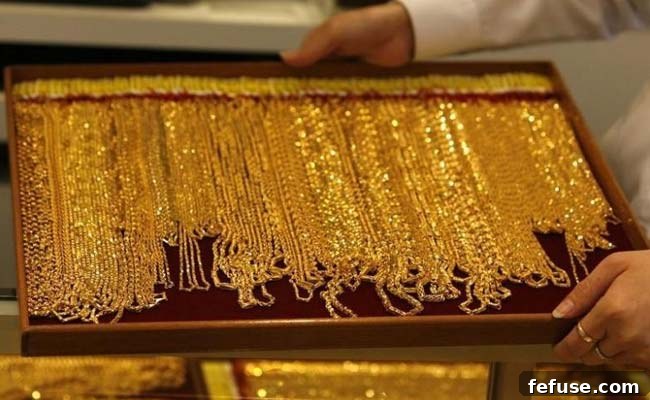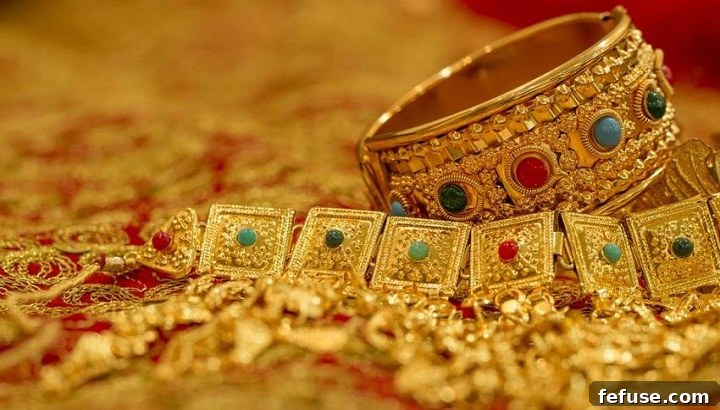
Akshaya Tritiya, also revered as Akha Teej, stands as an annual festival deeply embedded in India’s cultural and spiritual fabric. Celebrated with fervent enthusiasm, this day is widely considered auspicious for embarking on new ventures, making significant purchases, and investing in enduring assets, most notably gold. For countless individuals and families across the nation, acquiring gold on Akshaya Tritiya symbolizes the ushering in of prosperity, never-diminishing wealth, and good fortune. As the festive date draws near, the anticipation within the gold market becomes palpable, with jewelers meticulously preparing for a hopeful surge in customer footfalls and sales.
Reflecting on past trends, those who invested in gold jewellery during Akshaya Tritiya 2017 experienced noteworthy gains. The price of gold, which hovered around Rs. 29,500 per 10 grams in 2017, has since appreciated to approximately Rs. 32,000, illustrating a positive trajectory for gold investors. This performance highlights gold’s consistent appeal as a valuable asset, especially when compared to other investment avenues. In the same period, for instance, the National Stock Exchange (NSE) benchmark equity index Nifty recorded a return of about 12.7 percent, offering a comparative perspective on market dynamics and the diversified benefits of asset allocation.
The Enduring Significance of Akshaya Tritiya for Gold
The practice of purchasing gold on Akshaya Tritiya is steeped in ancient traditions and mythology. The Sanskrit word ‘Akshaya’ literally translates to ‘never diminishing’ or ‘eternal,’ signifying prosperity, hope, and success that is believed to multiply when initiated on this day. It is widely believed that any venture started, or any valuable asset acquired, on Akshaya Tritiya will be blessed with longevity and continued growth. This deeply ingrained belief system makes gold, a symbol of wealth and purity, the preferred choice for many seeking to invoke auspiciousness and secure their financial future. Beyond its cultural resonance, gold also functions as a tangible asset, providing both emotional satisfaction and practical investment value.
Historically, Akshaya Tritiya has been a cornerstone event for the Indian gold market, often dictating short-term demand trends and setting the tone for the industry’s performance. The collective belief in its auspiciousness transforms it into a peak sales period for jewelers, contributing significantly to annual gold consumption figures in India, which is one of the world’s largest gold consumers.
Market Dynamics: Analyzing Gold Demand and Investment Returns
Understanding the demand for gold during Akshaya Tritiya requires a nuanced look at various economic and social factors. While the cultural impetus remains strong, external forces frequently shape consumer behavior and market outcomes. The period surrounding Akshaya Tritiya 2017 presented a unique set of challenges and insights for the gold industry. Despite the festival’s traditional allure, gold demand that year did not entirely meet the optimistic expectations of jewelers, largely attributed to the residual effects of demonetization and the recent implementation of the Goods and Services Tax (GST).
These transformative government policies significantly impacted consumer liquidity and purchasing power. Demonetization, enacted in late 2016, led to a temporary cash crunch and a shift in transaction methods, while the rollout of GST introduced new taxation structures, initially causing some uncertainty and cautious spending among consumers. Abhinav Angirish, founder of www.investonline.in, noted at the time that despite Akshaya Tritiya being imminent, footfalls in jewelry stores were “still significantly lower than usual.” This subdued demand compelled many industry players to offer discounts on jewellery-making charges, a common strategy employed to stimulate sales and attract hesitant buyers during challenging market conditions.
The resilience of gold as an asset class, however, was demonstrated by the gains reaped by investors. Even amidst market fluctuations and policy changes, gold continued to hold its value, offering a safe haven against economic uncertainties. This characteristic reinforces the long-held perception of gold not merely as an ornament but as a crucial component of a balanced investment portfolio.
Current Year Outlook: Navigating Consumer Sentiment
As the current Akshaya Tritiya approaches (referring to the April 18 date mentioned in the original context), industry experts are closely monitoring consumer sentiment. The prevailing opinion among many is that gold demand is indeed expected to pick up, although perhaps not as dramatically as in pre-2017 years. Mr. Angirish, reflecting on the enduring impact of the significant economic shifts, suggested that while an increase from usual purchasing levels is anticipated, it may not reach its full potential. He elaborated, “looks like after the two recent shocks by the government one after the other, i.e demonetisation followed by GST, people are still keeping their wallet tight. It has increased from usual, but not as much as it should have.” This perspective underscores the lingering effects of major policy interventions on consumer spending habits and their overall confidence in the economy.
However, the Indian gold market is multifaceted, influenced by a blend of urban and rural demand, the auspicious wedding season, and evolving consumer preferences. While urban centers might be more sensitive to economic policies and alternative investment opportunities, rural demand often remains steadfast, driven by traditional practices and gold’s role as a primary form of savings and wealth preservation in these regions. Jewelers consistently roll out innovative promotional schemes, including discounts, special collections, and pre-booking offers, to capitalize on the festive spirit and address varying consumer needs.
Gold as an Indispensable Asset Class
Beyond its cultural and aesthetic appeal, gold holds a pivotal position as an investment asset. Mr. Angirish succinctly captured its essence, stating, “Gold always was and will remain a useful asset class as it’s a hedge against inflation and uncertainties.” This statement resonates deeply with economic principles, where gold is often sought after during periods of economic instability, currency devaluation, or geopolitical tensions. Its intrinsic value, unlike paper currency, is not subject to the whims of government policies or central bank decisions, making it a reliable store of wealth.
For individuals building a robust financial portfolio, the strategic inclusion of gold alongside other asset classes like equity is highly recommended. The proportion of gold in one’s portfolio should be carefully determined based on individual financial goals, risk tolerance, and investment horizon. For instance, younger investors with a higher risk appetite and longer investment timelines might allocate a smaller percentage to gold, focusing more on growth-oriented equities. Conversely, those nearing retirement or with a more conservative investment philosophy might opt for a larger allocation to gold to protect their capital from market volatility and inflation.
Modern investment avenues have also diversified how individuals can invest in gold. Beyond traditional physical gold in the form of coins, bars, or jewellery, investors can now choose from gold Exchange Traded Funds (ETFs), which track the price of physical gold, or Sovereign Gold Bonds (SGBs) issued by the government, offering benefits like interest payments and tax advantages. These options provide flexibility and convenience, catering to different investor preferences and allowing for a more strategic approach to gold accumulation.
Conclusion: The Enduring Allure of Gold on Akshaya Tritiya
Akshaya Tritiya remains a deeply significant occasion for gold purchases in India, blending profound cultural tradition with prudent financial investment. While market conditions and government policies can certainly sway short-term demand, gold’s fundamental appeal as a symbol of prosperity and a hedge against economic uncertainties continues unabated. The festival serves as a powerful reminder of gold’s dual role: a cherished ornament passed down through generations and a strategic asset that safeguards wealth.
As jewelers continue to innovate with promotional schemes and new designs, and as consumers gradually adapt to the evolving economic landscape, the spirit of Akshaya Tritiya persists. It underscores the timeless truth that for millions, gold is not just a metal; it is an embodiment of enduring value, cultural heritage, and financial security, making its acquisition on this auspicious day a practice that will continue for generations to come. The delicate balance between cultural impetus and economic reality will forever define the unique dynamics of gold demand during this revered festival.