
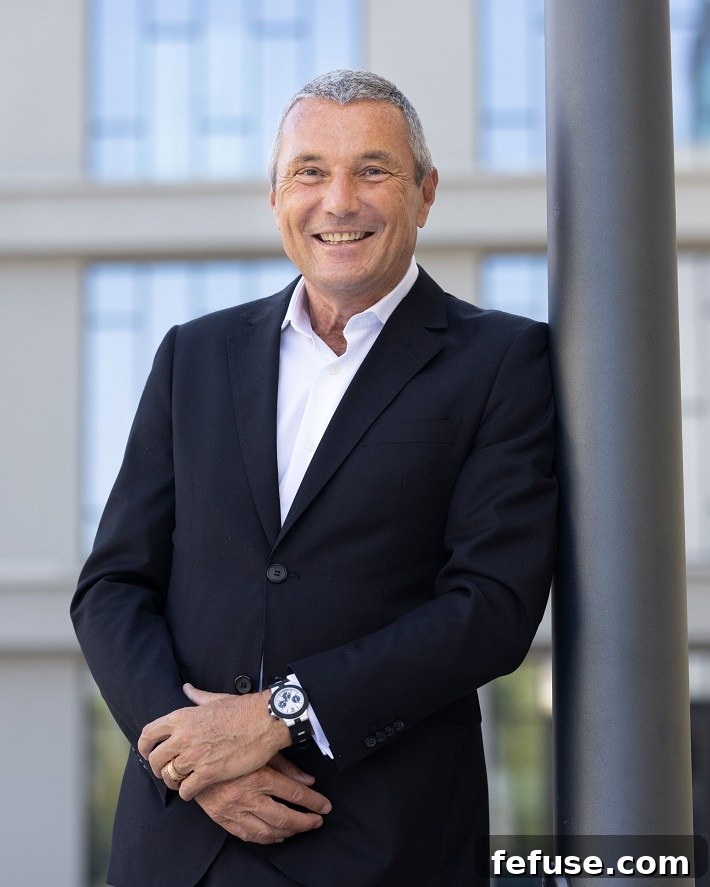
Jean Arnault Tipped as Successor to Lead LVMH’s Watch Division Amid Market Shifts
A significant leadership transition appears to be on the horizon within LVMH’s prestigious watch division. Jean-Christophe Babin, the veteran executive who has guided the division, has signaled his readiness for a phased retirement. In a candid interview, he has named Jean Arnault, the youngest son of LVMH chairman and CEO Bernard Arnault, as his ideal successor to oversee a portfolio of iconic brands including TAG Heuer, Hublot, and Zenith.
This potential appointment marks a pivotal moment, not only for the watch division but also for the broader succession strategy within the world’s largest luxury conglomerate. As the industry grapples with profound changes, the prospect of a new generation of leadership under Jean Arnault brings both anticipation and scrutiny.
A Vision for the Future: Babin Endorses a New Generation
Jean-Christophe Babin, at 67, has been a towering figure in the luxury sector, most notably spending the last 13 years revitalizing Bulgari. His decision to step back is a personal one, driven by a desire for a different life balance after decades of relentless travel and high-stakes management. “I no longer necessarily dream of flying 150 days a year,” Babin shared, expressing a wish to shift away from the demanding pace he has maintained for so long.
In looking toward the future of the division, Babin’s endorsement of Jean Arnault is unequivocal. He described the 27-year-old as “the perfect person to take over that division,” praising him as a “very clever” individual who genuinely “loves” and “understands watches.” This is not merely a passing comment; it is a strong vote of confidence from an industry titan in the capabilities of the next-generation leader. Babin’s support suggests that Jean Arnault possesses not just the family name, but the requisite passion and acumen to navigate the complexities of modern horology.
This transition is already in motion. LVMH previously announced that Laura Burdese will take the helm as CEO of Bulgari on July 1, succeeding Babin in that specific role. This move, along with other recent management changes at brands like TAG Heuer, indicates a period of strategic renewal across the entire watch and jewelry segment of the luxury giant.
Who is Jean Arnault? The Engineer with a Passion for Horology
While he may be the youngest of Bernard Arnault’s five children, Jean Arnault has rapidly carved out a formidable reputation within the industry. He is not simply an heir waiting in the wings; he is an active and influential force, particularly in the watch category of LVMH’s flagship brand, Louis Vuitton, where he has served as the director of marketing and development for the past five years.
His background is unique for a luxury executive. Jean Arnault is an engineer by training, holding advanced degrees from two of the world’s most prestigious institutions: Imperial College London and the Massachusetts Institute of Technology (MIT). This technical foundation gives him a deep and analytical understanding of the mechanics and craftsmanship that are the heart and soul of high-end watchmaking. It is a perspective that complements the marketing and brand-building expertise typically found in luxury leadership.
His passion for timepieces is widely recognized. He has been instrumental in elevating Louis Vuitton’s horological profile, moving it beyond a fashion-accessory perception to that of a serious contender in fine watchmaking. A testament to his commitment is the establishment of the Louis Vuitton Watch Prize for Independent Creators, an initiative designed to foster and celebrate innovative talent within the independent watchmaking scene. This move demonstrates a genuine appreciation for the art and a strategic vision for nurturing the future of the industry.
Navigating a Challenging Landscape: The Task Ahead
Should Jean Arnault step into the role, he will inherit a division at a critical juncture. The global watch market is facing a confluence of significant headwinds that are testing the resilience of even the most established brands. Babin himself acknowledged the difficulties, stating, “The game is tougher,” especially for brands positioned in the mid-market segment.
The industry has been impacted by a perfect storm of macroeconomic and technological challenges:
- The Smartwatch Revolution: The meteoric rise of devices like the Apple Watch has fundamentally altered the entry-level and mid-range markets. Babin noted that the Swiss watch industry has seen annual production volumes plummet from around 25 million to 15 million units over the last decade, a decline primarily triggered by smartwatches cannibalizing sales of timepieces priced below $1,500.
- Economic Pressures: Geopolitical instability, including the war in the Middle East, coupled with tariff turmoil, has created an unpredictable sales environment. A strong Swiss franc makes Swiss-made watches more expensive for international buyers, adding another layer of pressure on profit margins.
- Shifting Consumer Demand: A slowdown in demand from China, historically a critical engine of growth for the luxury sector, has forced brands to re-evaluate their global strategies. Today’s consumers are also more discerning, demanding innovation, authenticity, and value.
These challenges are particularly acute for brands like TAG Heuer and Zenith, which operate in the competitive mid-range luxury segment and often rely on third-party wholesale networks. Babin explained that these wholesale partners are becoming “more cautious” in the current climate, leading to tighter inventory management and reduced orders.
Strategy, Synergy, and Financial Realities
In response to these market pressures, LVMH is not planning a major restructuring of its brand portfolio. Instead, the focus is on fostering greater industrial synergies between its watchmaking houses. This strategy involves sharing resources, such as certain base movements and manufacturing technologies, to improve efficiency and reduce costs. Crucially, this collaboration is being managed carefully to ensure that each brand retains its unique identity and exclusive signature components, preserving the heritage and brand equity that customers value.
The latest financial results from LVMH highlight the division’s current reality. In the first quarter, the Watches & Jewelry unit reported a 7% organic revenue growth. However, this growth was driven almost entirely by the stellar performance of jewelry brands like Tiffany & Co. and Bulgari. LVMH’s Chief Financial Officer, Cecile Cabanis, confirmed that the watch category itself experienced negative growth during this period, underscoring the specific challenges facing the horology segment.
Even at Louis Vuitton, where Jean Arnault has been making his mark, watches remain a relatively small part of the brand’s vast empire. A Morgan Stanley report estimated Louis Vuitton’s watch sales at approximately 165 million Swiss Francs last year, representing less than 1% of the brand’s total revenue. This context highlights both the scale of the opportunity for growth and the challenge of making watches a more significant contributor to the group’s bottom line.
A Piece of the Broader Succession Puzzle
The potential promotion of Jean Arnault is a fascinating development within the larger narrative of succession at LVMH. With Bernard Arnault turning 77, the question of who will eventually lead the luxury empire is a constant topic of discussion in the business world. He has masterfully placed all five of his children in key leadership roles across the group, creating a real-life “Succession” drama that is both a family affair and a corporate masterclass.
Each of the Arnault siblings holds a strategic position: Delphine at Christian Dior, Antoine overseeing the family holding company and LVMH’s image, Alexandre at Tiffany & Co., and Frédéric, who recently moved from CEO of TAG Heuer to lead the newly formed LVMH Watches entity, overseeing Hublot, TAG Heuer, and Zenith. Jean’s potential elevation to lead the entire division would be another significant step in this carefully orchestrated plan.
Bernard Arnault himself remains tight-lipped about the ultimate plan. At a recent shareholders’ meeting, when asked directly about the succession, he skillfully dodged the question, pointing out that shareholders had recently approved raising the CEO age limit to 85, giving him plenty more time at the helm. Nonetheless, each strategic move involving his children is analyzed as a clue to the future configuration of LVMH’s leadership. Jean Arnault’s ascent would demonstrate his father’s confidence in his ability to handle one of the group’s more technically demanding and challenging divisions.