
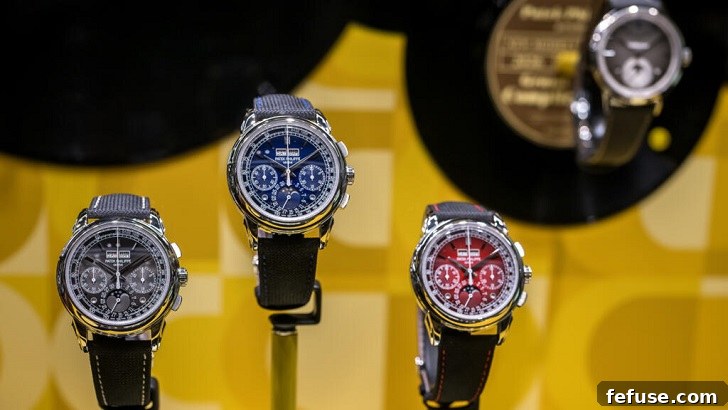
The Swiss Watch Industry Navigates Geopolitical Storms: Resilience in the Face of Middle East Tensions
The Swiss watch industry, a beacon of precision and luxury, has long stood as a testament to enduring craftsmanship and unwavering resilience. This storied sector, with roots stretching back centuries, has consistently navigated global upheavals, from economic downturns to technological shifts. However, the escalating geopolitical tensions in the Middle East have introduced a complex new layer of uncertainty, posing a unique challenge to an industry renowned for its stability amidst disruption. The delicate balance of supply chains, consumer confidence, and market access is now under intense scrutiny, as watch executives ponder the ripple effects of a rapidly evolving international landscape.
Watches and Wonders Geneva: A Forum for Critical Dialogue
The annual Watches and Wonders Geneva exhibition, the industry’s most prestigious gathering, typically buzzes with excitement over groundbreaking innovations and exquisite new collections. This year, however, while the brilliance of horological artistry was on full display, a more somber tone permeated the halls. Conversations among executives and brand leaders extended beyond product launches, delving into strategic discussions about the potential fallout from the ongoing conflict in the Middle East. Industry veterans, accustomed to weathering storms, acknowledged the distinct unpredictability of the current situation, recognizing it as a formidable test for the sector’s adaptability. The consensus was clear: while past crises have been overcome, the volatile nature of present events demands unprecedented vigilance and strategic foresight from all stakeholders.
A Legacy of Resilience: Overcoming Past Crises
The Swiss watch industry’s narrative is replete with instances of remarkable resilience and an impressive ability to adapt. Executives like Elie Bernheim of Raymond Weil frequently recall how the sector has successfully navigated a myriad of global disruptions. Consider the profound impact of the 2008 global financial crisis, which sent shockwaves through luxury markets worldwide. Despite a temporary downturn in consumer spending and exports, Swiss watch exports rebounded with considerable strength, demonstrating the enduring allure and investment value of these mechanical masterpieces, even in times of economic austerity.
The advent of smartwatches presented another significant challenge, with many questioning the relevance of traditional timepieces in a rapidly digitizing world. Yet, the industry deftly responded by emphasizing the heritage, intricate craftsmanship, and intrinsic value of mechanical watches, repositioning them as symbols of timeless elegance, personal expression, and enduring legacy rather than mere utility devices. This strategic pivot not only fended off the challenge from new technologies but also reinforced the unique appeal and enduring status of luxury mechanical watches.
More recently, the COVID-19 pandemic brought unprecedented lockdowns, severe supply chain disruptions, and a near halt to international travel, severely impacting retail operations and tourism-dependent sales channels. Brands rapidly adapted by accelerating their digital presence, enhancing e-commerce platforms, and fostering direct-to-consumer relationships through innovative online experiences. Similarly, the industry absorbed the impact of US trade tariffs, responding by diversifying markets and optimizing distribution channels to mitigate adverse effects and maintain global reach. Over the past two decades, this consistent ability to innovate and adapt has seen Swiss watch exports more than double, underscoring a powerful and consistent capacity for long-term growth and market expansion.
The Middle East: A Pivotal Market Under Pressure
For the Swiss watch industry, the Middle East is far more than just a sales region; it is a critical hub within the global luxury ecosystem, characterized by a sophisticated clientele and burgeoning luxury retail landscapes. According to Yves Bugmann of the Federation of the Swiss Watch Industry, the region accounts for approximately 10% of total Swiss watch exports, a substantial figure that underscores its strategic importance despite being smaller than the United States, which currently leads as the largest market with around 17%. The Middle East boasts a discerning clientele with a deep appreciation for high horology, intricate craftsmanship, and exclusive timepieces. Cities like Dubai and Abu Dhabi have emerged as global luxury retail destinations, attracting affluent consumers and international tourists alike, making the region a significant showcase for top-tier brands.
The current geopolitical instability, however, poses a direct and immediate threat to this vital market. Bertrand Meylan of H. Moser & Cie voiced significant concern at Watches and Wonders, highlighting how prolonged uncertainty invariably dampens global spending. Luxury purchases, by their very nature, are discretionary and often among the first expenditures to be postponed or reconsidered during periods of economic or political instability. Brands with a heavy reliance on tourism, a cornerstone of the Middle Eastern luxury market, are already feeling the pinch. Reduced international travel, coupled with a cautious consumer sentiment among local populations, can lead to a noticeable decline in sales figures and significantly impact profitability across the region.
Impact on Consumer Sentiment and Global Spending
The correlation between geopolitical stability and consumer confidence is well-established, particularly within the sensitive luxury sector. When headlines are dominated by conflict, humanitarian crises, and broader economic uncertainty, consumers tend to retract, prioritizing essential spending and deferring non-essential, high-value purchases. This psychological shift can have far-reaching implications, extending significantly beyond the immediate region of conflict. A ripple effect can be observed globally, as overall economic sentiment sours, and a pervasive sense of apprehension permeates markets, influencing purchasing decisions even in seemingly unaffected areas.
For luxury watches, which are often seen as significant investments, celebratory purchases, or heirlooms, this pervasive hesitancy is acutely felt. The decision to acquire a high-end timepiece is rarely impulsive; it typically involves careful consideration, often undertaken during periods of personal and economic optimism and stability. When that optimism is eroded by external events, even affluent buyers may choose to hold back, impacting sales volumes across various price points within the luxury segment. This broader dampening of global spending is a primary concern for watch industry leaders, as it can negate positive momentum gained in other markets and complicate strategic planning for the coming quarters and years, making future projections particularly challenging.
Brand Strategies and Future Outlook
In the face of these formidable challenges, major brands such as Rolex, Patek Philippe, and Cartier, who were among the 65 exhibitors showcasing their exquisite new collections at the recent Geneva fair, are compelled to revisit and potentially overhaul their existing strategies. While the industry has demonstrated remarkable resilience in the past, the unique and rapidly evolving volatility of the current Middle East conflict makes precise long-term forecasting exceedingly difficult. Companies are likely focusing on a multi-pronged approach to navigate these turbulent waters:
- Market Diversification: Reducing over-reliance on any single market by strengthening presence and investing in other stable or growing regions, thereby spreading risk.
- Enhanced Digital Engagement: Doubling down on sophisticated e-commerce platforms, offering immersive virtual experiences, and leveraging targeted digital marketing to reach consumers directly, bypassing some of the physical retail hurdles and travel restrictions.
- Customer Relationship Management: Fostering deeper, more personalized relationships with existing loyal clients to build enduring loyalty and ensure repeat business, emphasizing the community aspect of luxury ownership.
- Agile Supply Chains: Building more flexible, resilient, and diversified supply chains to mitigate potential disruptions in manufacturing, component sourcing, and logistics, ensuring continuity of production.
- Strategic Inventory Management: Adjusting production volumes and inventory levels with greater agility to match fluctuating demand and reduce exposure to market volatility, avoiding overstocking or shortages.
The industry has just emerged from two particularly challenging years, marked by weaker demand in the crucial Chinese market and the sustained impact of US tariffs, which contributed to consecutive declines in Swiss watch exports for 2024 and 2025. Early expectations for 2026 were cautiously optimistic, buoyed by nascent signs of economic recovery in some key economies. However, industry leaders now universally view the Middle East conflict as a critical turning point, potentially reshaping the economic trajectory of the sector for years to come. The immediate and mid-term outlook for Swiss watchmaking, therefore, remains inextricably linked to the geopolitical landscape, with executives agreeing that the sector’s performance will largely depend on how the situation unfolds in the coming months and the extent of its broader global economic and political ramifications.
The Enduring Spirit of Swiss Horology
The Swiss watch industry stands at a critical juncture, balancing its inherent resilience with the profound uncertainties of global geopolitics. While the challenges posed by the Middle East conflict are undeniable and unprecedented in their volatility, the sector’s rich history suggests an enduring capacity to adapt, innovate, and thrive. The spirit of Swiss horology, characterized by unparalleled precision, uncompromising quality, and a relentless pursuit of mechanical excellence, will undoubtedly guide brands through these turbulent waters. As discussions continue to evolve from mere product launches to strategic survival and future-proofing at events like Watches and Wonders, one thing remains abundantly clear: the quest for timeless elegance, mechanical mastery, and artistic expression will persist. The true measure of the industry’s strength will be its ability to emerge from this current period of instability not just intact, but potentially stronger, more strategically agile, and even more deeply rooted in the values that define its global appeal.