
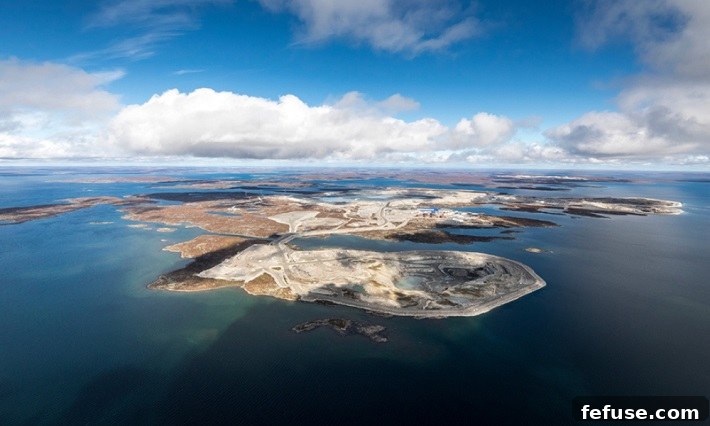
Diavik Diamond Mine Closes: A Landmark Chapter for Canadian Diamonds Concludes
After an impressive 23-year run, Rio Tinto has officially ceased production operations at the iconic Diavik Diamond Mine, marking the conclusion of a remarkable era in the global diamond industry. This pivotal moment signifies the end of a project that significantly propelled Canada onto the world stage as a premier source of high-quality diamonds. Over its operational lifespan, Diavik yielded an astounding bounty of more than 150 million carats of rough diamonds, forever etching its legacy into the economic and social fabric of Canada’s North and the international diamond market.
The Diavik mine, nestled beneath the pristine waters of Lac de Gras, approximately 220 kilometers south of the Arctic Circle in Canada’s remote Northwest Territories, represents a triumph of engineering and human resilience. The initial discovery of this rich kimberlite field occurred in 1991, following extensive exploration efforts in one of the world’s most challenging environments. Construction and development swiftly followed, culminating in the commencement of full-scale operations in 2003. Throughout its history, Diavik masterfully developed four distinct kimberlite pipes, employing a sophisticated blend of both open-pit mining techniques in its earlier years and transitioning to advanced underground mining as operations deepened. This strategic approach allowed for the efficient extraction of predominantly high-quality white diamonds, renowned for their brilliance and purity, alongside a limited, yet highly sought-after, collection of rare yellow diamonds.
A Visionary Endeavor in the Arctic Frontier
Operating a mine of Diavik’s scale in such an extreme northern latitude presented unique and formidable challenges. The harsh Arctic climate, characterized by prolonged periods of intense cold, permafrost, and logistical complexities stemming from its remoteness, demanded unparalleled innovation, meticulous planning, and an unwavering commitment to operational excellence. Rio Tinto, along with its partners, invested heavily in cutting-edge technology and infrastructure, including an ice road system vital for annual resupply, to overcome these hurdles. The successful and sustained operation of Diavik under these conditions stands as a testament to the ingenuity of its engineers, the dedication of its workforce, and the long-term strategic vision of Rio Tinto.
Sophie Bergeron, Managing Director for Rio Tinto’s diamonds business, reflected profoundly on this momentous milestone, emphasizing that the Diavik project was more than just a mining operation; it was an exercise in long-term vision, strategic foresight, and immense resilience. She highlighted the immense effort required to not only establish but also successfully operate a world-class mine in one of the planet’s most remote and environmentally sensitive regions. Bergeron underscored Diavik’s far-reaching impact, extending well beyond the sheer volume of diamonds produced. She noted that the mine significantly shaped and elevated global perceptions of Canadian diamonds, positioning them as a symbol of ethical sourcing, environmental responsibility, and socio-economic benefit for local communities.
Forging Strong Partnerships and Delivering Lasting Benefits
The official closure ceremony was a poignant and significant event, drawing together a diverse array of stakeholders including esteemed Indigenous leaders, representatives from various levels of government, and key industry figures. This gathering underscored the spirit of collaboration and mutual respect that formed the bedrock of the Diavik project’s success. Throughout its operational life, Diavik was defined by its robust and exemplary partnerships, particularly with the Indigenous communities of the North. These collaborations went far beyond mere consultation, evolving into genuine frameworks that ensured shared benefits and meaningful engagement.
Matthew Breen, a prominent figure recognizing the mine’s impact, eloquently described Diavik as a defining success story for Canada’s North. He specifically lauded its instrumental role in delivering substantial and enduring socio-economic benefits through its proactive and equitable partnerships with Indigenous communities. These benefits manifested in numerous ways: creating stable, high-paying employment opportunities for local residents, fostering comprehensive training and skills development programs, stimulating local Indigenous businesses through procurement contracts, and contributing significant revenues that supported community development initiatives. Diavik’s approach to engagement set a new standard for resource development in the region, demonstrating that large-scale industrial projects could indeed coexist harmoniously with traditional land uses and contribute positively to the well-being and self-determination of Indigenous peoples.
An Exemplary Commitment to Environmental Stewardship: The Closure and Rehabilitation Plan
With the cessation of diamond extraction, Rio Tinto’s immediate focus will now pivot entirely towards the meticulous and comprehensive process of site rehabilitation and environmental restoration. This critical phase is not an afterthought; rather, closure planning for Diavik has been an integral component of the project’s lifecycle, initiated even before the mine began operations. This proactive approach ensures that every aspect of the site’s eventual return to a natural state has been carefully considered and strategized.
The extensive closure plan addresses a multitude of crucial areas, reflecting a deep commitment to environmental stewardship. These include the careful management of land use, ensuring that the post-mining landscape integrates seamlessly with the surrounding Arctic environment. Water management is a paramount concern, involving sophisticated strategies to maintain the pristine quality of Lac de Gras and the regional hydrology. Biodiversity initiatives are central to the plan, aiming to restore habitats and support the return of local flora and fauna. Furthermore, the plan encompasses crucial aspects of community transition, working closely with local stakeholders to mitigate any potential adverse impacts of closure and support sustainable post-mining economies.
The rehabilitation efforts at Diavik are projected to continue rigorously through 2029, a testament to the scale and complexity of restoring such a significant industrial footprint in a sensitive Arctic ecosystem. Following this intensive period, an extended phase of environmental monitoring will commence, ensuring the long-term effectiveness of the restoration work and the ongoing health of the ecosystem. This long-term commitment underscores Rio Tinto’s dedication to leaving a positive and enduring environmental legacy.
The Future of Diavik Diamonds and Canada’s Diamond Market
Even though the physical act of mining has concluded, the influence of Diavik’s output will continue to ripple through the global market for several years to come. Rough diamonds already extracted and held in inventory will steadily enter the market, undergoing the intricate processes of sorting, cutting, and polishing. These exquisite stones are anticipated to be sold through 2026 and potentially beyond, distributed via Rio Tinto’s extensive and well-established global customer network. This phased market release ensures a stable supply of high-quality Canadian diamonds and allows for an orderly transition for the industry.
The closure of the Diavik Diamond Mine undeniably marks the culmination of a significant and transformative era for both Rio Tinto and the Canadian diamond industry. Its legacy, however, is far from over. It leaves behind an indelible mark of innovation, particularly in pioneering sustainable mining practices in one of the world’s most challenging and pristine environments. Diavik’s operational success, coupled with its exemplary record of strong partnerships with Indigenous communities and its unwavering commitment to environmental responsibility, has set a new benchmark for responsible resource development globally. The mine’s story will continue to inspire future generations in the mining sector, demonstrating that economic prosperity can indeed go hand-in-hand with robust environmental stewardship and meaningful social engagement.