
The Enduring Allure of Gold: Navigating Market Turbulence and Unlocking Future Potential in 2026
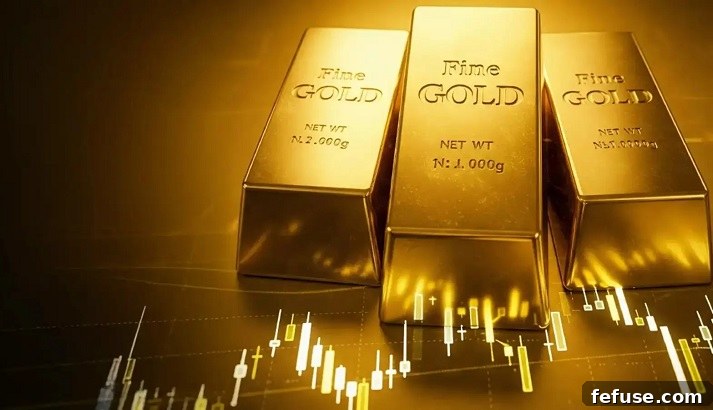
After a period marked by considerable volatility and a turbulent start to 2026, the global gold market is showing nascent signs of stabilization. This precious metal, revered for centuries as a store of value and a beacon of security, appears poised to regain significant momentum later in the year. Investors and analysts alike are closely monitoring a complex interplay of economic indicators, geopolitical developments, and central bank policies that continue to shape gold’s trajectory, reinforcing its critical role in diversified portfolios.
Understanding Gold’s Recent Market Dynamics: The 2025 Rally and Subsequent Correction
The stabilization observed in early 2026 follows an extraordinary performance in 2025, a year that saw gold prices deliver record returns and capture headlines across financial markets. This exceptional rally was fueled by a confluence of factors, including persistent inflation concerns, increased geopolitical instability across various regions, and shifting expectations regarding global monetary policies. As central banks navigated a delicate balance between curbing inflation and supporting economic growth, gold’s appeal as a tangible asset without counterparty risk intensified, driving demand to unprecedented levels.
However, the exuberance of 2025 inevitably gave way to a market correction phase in early 2026. Prices recently pulled back from their earlier highs, a natural and often healthy phenomenon in commodity markets following substantial gains. This correction has been influenced by a multifaceted mix of factors. Firstly, renewed geopolitical tensions, while initially supportive of gold, have also introduced periods of heightened uncertainty, leading to profit-taking by some investors. Secondly, evolving interest rate expectations, particularly concerning the Federal Reserve’s stance, have played a significant role. And thirdly, a crucial element in any market correction is profit booking, where investors strategically cash in on previous gains, temporarily increasing supply and putting downward pressure on prices.
Expert Insights into Gold’s Cyclical Nature
For seasoned market observers, such pullbacks are not an anomaly but rather a characteristic feature of gold’s long-term market cycles. According to David N. Meger, Director of Metals Trading at High Ridge Futures, these consolidation phases are a common precursor to renewed upward trends. Meger emphasizes that gold often undergoes a period of horizontal price movement or a modest decline after a significant rally, allowing the market to digest previous gains, re-evaluate fundamentals, and build a stronger base for its next leg up. This perspective suggests that the recent decline might be better understood as part of a broader market reset and realignment, rather than an outright reversal of gold’s underlying bullish trend. Historically, gold has demonstrated remarkable resilience, often using these periods of consolidation to gather strength before resuming its ascent, especially when macroeconomic uncertainties persist.
Gold as a Strategic Imperative: The Enduring Role of a Safe-Haven Asset
The inherent value and perceived safety of gold mean that market participants consistently view it as an indispensable hedge during periods of economic uncertainty and market turbulence. This foundational role underscores its enduring appeal, making it a critical component of portfolio diversification strategies. Leading financial institutions, such as Pictet Wealth Management, maintain a constructive and optimistic outlook on gold. They consistently highlight its long-standing appeal as a defensive asset, particularly in an economic environment characterized by slowing global growth and persistent, if not rising, inflationary pressures. In such conditions, traditional investments like equities can become more volatile, and fiat currencies may lose purchasing power, making gold an attractive alternative for wealth preservation. Its unique properties – being a finite resource, universally accepted, and independent of any government or financial institution’s creditworthiness – solidify its status as a premier safe-haven asset capable of shielding wealth from economic shocks.
The Critical Influence of Interest Rates and Monetary Policy on Gold Prices
Despite gold’s intrinsic appeal, its near-term performance remains inextricably linked to global interest rate dynamics and the monetary policy decisions of major central banks, most notably the Federal Reserve. Recent surges in energy prices, coupled with broader inflation concerns, have reinforced expectations that the Federal Reserve may opt to keep interest rates elevated for a longer duration than previously anticipated. This hawkish stance, aimed at curbing inflation, typically exerts downward pressure on gold prices. The reason lies in the concept of opportunity cost: gold is a non-yielding asset, meaning it does not pay dividends or interest. When interest rates on alternative, interest-bearing assets (like bonds or savings accounts) are high, the opportunity cost of holding gold increases, as investors forego higher returns elsewhere. This makes gold relatively less attractive in a high-interest-rate environment, leading some investors to temporarily shift capital towards assets that offer a yield.
However, this dynamic is not static. Analysts widely suggest that if economic growth in the United States shows further signs of weakening or if inflationary pressures begin to recede more significantly, the Federal Reserve’s policy could shift towards a more accommodative stance. A more dovish approach, characterized by lower interest rates or even quantitative easing, would substantially reduce the opportunity cost of holding gold. Such a policy pivot would likely inject renewed vigor into gold prices, stimulating investor interest and demand as the relative attractiveness of non-yielding assets improves. Therefore, continuous monitoring of economic data, inflation reports, and central bank communications is paramount for understanding gold’s short to medium-term trajectory.
Geopolitical Developments: A Persistent Catalyst for Gold Demand
Beyond economic fundamentals, geopolitical developments continue to play a critically important and often unpredictable role in shaping gold market sentiment and pricing. Ongoing tensions in key strategic regions, particularly those involving nations like Iran and Israel, alongside inherent strategic risks around vital energy routes (such as the Suez Canal or the Strait of Hormuz), continue to inject significant uncertainty into global financial markets. These geopolitical flashpoints have the potential to disrupt global trade, trigger inflationary spikes through commodity price volatility, and undermine investor confidence across various asset classes.
According to analysts at ING, such geopolitical factors are highly likely to keep gold exceptionally sensitive to external shocks. These shocks can manifest as sudden escalations, unforeseen conflicts, or even shifts in international alliances, all of which can prompt a rapid “flight to safety” among investors seeking to protect their capital. Moreover, gold’s responsiveness to currency movements – particularly the U.S. dollar – and pivotal policy decisions by governments and international bodies further highlights its role as a barometer for global stability. In times of heightened risk, gold’s status as a universally accepted safe haven asset often sees increased demand, driving prices upward as investors seek refuge from broader market instability.
Anticipating Future Trends: Bullish Forecasts for the Precious Metal
Despite the recent periods of volatility and corrective price action, the long-term outlook for gold remains remarkably bullish in the eyes of many prominent market strategists. Frank Nikolic of CRU Group, a highly respected authority in commodity analysis, has put forth an intriguing forecast, suggesting that gold could potentially approach the staggering $6,000 mark in the coming market cycle before eventually stabilizing at a new, higher baseline. This ambitious prediction is underpinned by a belief in gold’s sustained appeal in a world grappling with persistent inflationary pressures, geopolitical fragmentation, and evolving monetary paradigms. Factors that could drive such a substantial rally include continued central bank buying, as nations diversify their reserves away from traditional fiat currencies, alongside increasing retail and institutional investor demand for a reliable store of wealth. Furthermore, the limited supply of newly mined gold globally and the increasing costs of extraction could also contribute to upward price pressure over the long term, cementing gold’s position as a premium asset.
Conclusion: Gold’s Enduring Resilience Amidst Global Volatility
In conclusion, while short-term price fluctuations are an inherent characteristic of the dynamic gold market and are likely to persist, the broader outlook for the precious metal remains fundamentally robust and well-supported. Its enduring strength is rooted in a powerful combination of macroeconomic uncertainty, the omnipresent threat of inflation, and ongoing geopolitical instability across the globe. These formidable factors collectively serve to continually reinforce gold’s unparalleled role as a key safe-haven asset. As global economies navigate complex transitions, and as investors seek reliable instruments for wealth preservation and portfolio diversification, gold’s intrinsic value and its proven ability to perform during turbulent times ensure its continued prominence in the global financial landscape. Its journey through 2026 and beyond promises to be a compelling reflection of the evolving challenges and opportunities in the global economy.