
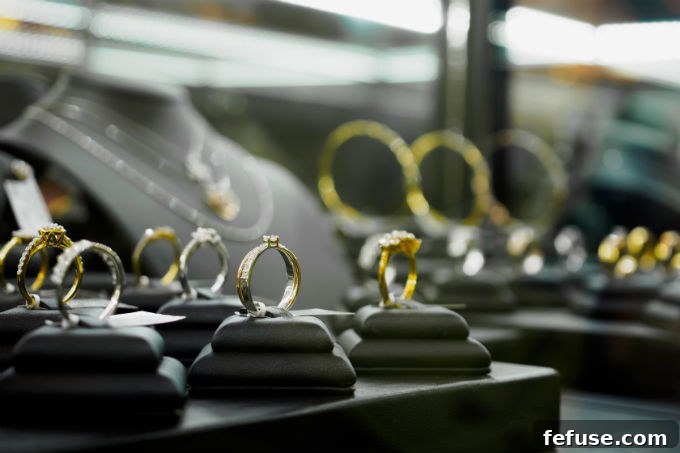
Hong Kong, a vibrant global hub renowned for its sophisticated financial services and bustling trade, continues to solidify its position as a leading center for the international jewellery industry. Recent government data from 2018 underscored this prominence, revealing a robust performance in the sector. From January to June of that year, Hong Kong-based jewellers significantly increased their overseas sales, marking an impressive 20.1 percent surge in jewellery product exports compared to the corresponding period in 2017. This substantial growth highlights the resilience and enduring appeal of Hong Kong’s jewellery offerings on the global stage, reflecting a period of heightened demand and strategic market engagement by local businesses.
A Glimmering Performance: Hong Kong’s Jewellery Exports Shine in Early 2018
The momentum in Hong Kong’s jewellery export sector was not merely a first-half phenomenon; specific monthly figures further corroborated this upward trend. The Census and Statistics Department of Hong Kong reported that exports of jewellery, goldsmiths’, and silversmiths’ wares experienced a noteworthy 7.3 percent increase in June 2018 alone. This consistent positive trajectory, starting from the beginning of the year, painted a picture of a flourishing industry. Such figures are not only indicative of strong external demand but also reflect the adaptive strategies and high-quality craftsmanship characteristic of Hong Kong’s jewellery manufacturers and traders. The city’s reputation as a purveyor of excellence in fine jewellery clearly resonated with international buyers, driving these encouraging export volumes.
While exports garnered significant attention, the import side of the equation also showed promising signs of activity. Slight improvements in jewellery imports were recorded, with the first-half figures registering a modest but significant 0.9 percent increase. More acutely, jewellery imports for June alone were 2.7 percent higher year-on-year. These import figures are crucial as they often precede manufacturing and re-export activities, suggesting a healthy supply chain and an ongoing demand for raw materials, semi-finished goods, and diverse product ranges to meet varied consumer tastes globally. The interplay of strong exports and steady imports paints a comprehensive picture of a dynamic and interconnected market.
Decoding the Growth Drivers: Gold, Diamonds, and Global Prosperity
The remarkable growth observed in Hong Kong’s fine jewellery exports during the initial months of 2018, particularly the approximately 20 percent surge in the first four months—the highest among all major sectors—was not accidental. As detailed in the 2018 Mid-Year Export Review published by the Hong Kong Trade Development Council (HKTDC), this robust expansion was primarily fueled by a confluence of factors, chief among them being the sustained global demand for gold jewellery and a broader boost in the appetite for high-end accessories such as diamonds, driven by robust global economic growth.
The Enduring Allure of Gold Jewellery
Gold has always held a special place in various cultures, particularly in Asia, as both a symbol of wealth and an investment. The demand for gold jewellery remained exceptionally strong, acting as a primary catalyst for Hong Kong’s export growth. This demand is often linked to cultural festivals, weddings, and a growing middle class in emerging markets seeking tangible assets and luxury items. Hong Kong, with its efficient supply chain, advanced manufacturing capabilities, and strategic proximity to the Chinese mainland and other Asian markets, is uniquely positioned to capitalize on this enduring fascination with gold. Jewellers in Hong Kong are adept at creating a diverse range of gold products, from intricate traditional designs to contemporary pieces, catering to a wide spectrum of international consumers. This versatility, coupled with a reputation for quality and authenticity, ensures that Hong Kong remains a preferred sourcing destination for gold jewellery.
Diamonds and High-End Accessories: A Sign of Economic Health
Beyond gold, the global economic uplift experienced in early 2018 significantly bolstered the demand for high-end accessories, including diamonds. Diamonds, being a quintessential luxury item, often serve as an indicator of consumer confidence and disposable income levels. As global economies strengthened, particularly in key consumer markets, there was a renewed willingness among consumers to invest in premium jewellery. Hong Kong’s role as a major trading and re-export hub for diamonds meant that it directly benefited from this surge. The city hosts numerous diamond dealers, cutters, and setters, offering a vast array of polished diamonds and diamond-set jewellery to international buyers. The HKTDC accurately pointed out that this demand for high-end items reflects a positive sentiment in global markets, where consumers are increasingly seeking out aspirational products that signify status and celebrate special occasions.
Beyond Exports: A Look at Jewellery Imports and Market Dynamics
The health of Hong Kong’s jewellery industry isn’t solely defined by its export prowess; its import activities also tell a vital story of its role in the global supply chain. The slight increase in overall jewellery imports during the first half of 2018, and the more pronounced 2.7% rise in June, are not just numbers. They signify Hong Kong’s ongoing function as a critical intermediary in the international jewellery trade. Many precious stones, raw materials, and semi-finished jewellery pieces are imported into Hong Kong, where they undergo further processing, design enhancement, or assembly before being re-exported to markets worldwide. This intricate process of value addition underscores the sophistication of Hong Kong’s manufacturing base and its capacity to transform global inputs into high-value finished products. The consistent flow of imports ensures that Hong Kong’s jewellers have access to a diverse range of materials, allowing them to remain at the forefront of design and innovation, thereby sustaining its competitive edge.
Hong Kong’s Strategic Edge in the Global Jewellery Trade
Hong Kong’s continued success in the jewellery sector is deeply rooted in its unique strategic advantages, which collectively create an unparalleled environment for trade and innovation. These advantages extend beyond mere geographical location, encompassing a robust infrastructure, a skilled workforce, and a business-friendly regulatory framework.
A Free Port with Unrivaled Connectivity
At the heart of Hong Kong’s trading success is its status as a free port. This means minimal tariffs and customs barriers, facilitating the smooth and efficient movement of goods, including high-value items like jewellery. Coupled with one of the world’s busiest container ports and an extremely efficient international airport, Hong Kong offers unparalleled logistical connectivity. This infrastructure ensures that precious materials can be quickly and securely imported, processed, and then dispatched to markets around the globe. Such logistical excellence is a critical factor for an industry where speed, security, and reliability are paramount.
Expertise, Innovation, and Design Prowess
Hong Kong boasts a highly skilled workforce with generations of expertise in jewellery craftsmanship, design, and manufacturing. This deep pool of talent allows local jewellers to produce items of exceptional quality and intricate design, ranging from bespoke high jewellery pieces to mass-market collections. The industry also actively embraces innovation, incorporating new technologies in manufacturing processes, such as 3D printing and advanced gem-setting techniques. Furthermore, Hong Kong serves as a melting pot of global design trends, with local designers often collaborating with international counterparts, leading to unique and highly sought-after collections. This blend of tradition and innovation keeps Hong Kong at the cutting edge of global jewellery fashion.
Gateway to Mainland China and Beyond
Perhaps one of Hong Kong’s most significant advantages is its strategic position as the gateway to Mainland China. The vast and growing consumer market in China, coupled with its burgeoning middle class, represents an immense opportunity for luxury goods, including jewellery. Hong Kong serves as a crucial bridge, allowing international brands to access the Chinese market and enabling Chinese jewellers to tap into global supply chains and markets. The ongoing development of the Greater Bay Area initiative further integrates Hong Kong with the vibrant economic powerhouse of southern China, promising even greater synergistic opportunities for the jewellery trade. Moreover, Hong Kong’s connections extend far beyond China, serving as a primary conduit for trade with other rapidly developing Asian economies and established Western markets, reinforcing its indispensable role in the global jewellery ecosystem.
Navigating Headwinds: Challenges and the Outlook for the Remainder of 2018
Despite the sterling performance in the first half of 2018, the Hong Kong Trade Development Council (HKTDC) sounded a note of caution. The Mid-Year Export Review pointed out that while potential growth was evident, it was “overshadowed by looming trade disputes,” and projections indicated a potential slowdown in fine jewellery exports for the latter part of the year. This forward-looking assessment highlighted critical challenges that the industry needed to address.
The Shadow of High Gold Prices
One of the primary concerns was the sustained high price of gold since the second half of 2017. While demand for gold jewellery remained strong, consistently elevated gold prices can exert pressure on various fronts. For consumers, higher prices might lead to reduced purchasing power or a shift towards less expensive alternatives. For jewellers, it impacts manufacturing costs, potentially squeezing profit margins and making it challenging to maintain competitive pricing in international markets. The delicate balance between perceived value, investment appeal, and affordability becomes crucial when precious metal prices remain high, necessitating strategic adjustments in product offerings and pricing strategies.
Looming Trade Disputes and Global Economic Uncertainty
The HKTDC’s warning about “looming trade disputes” primarily referred to the escalating trade tensions between major global economic powers, particularly the US and China, which began to cast a long shadow over global trade in 2018. Such disputes introduce significant uncertainty into the global economic landscape, affecting consumer confidence, supply chain stability, and overall market demand. For an industry heavily reliant on international trade, tariffs, import restrictions, and geopolitical instability can directly impact export volumes and business profitability. Hong Kong, as a key trading hub, is particularly sensitive to these global shifts, necessitating a proactive approach to risk management and market diversification.
Evolving Consumer Preferences and Digital Transformation
Beyond macroeconomic factors, the jewellery industry also faced the ongoing challenge of evolving consumer preferences. Younger generations, in particular, were showing a greater interest in ethical sourcing, sustainability, and personalized experiences. This demanded transparency in supply chains and a greater emphasis on corporate social responsibility. Furthermore, the rapid pace of digital transformation meant that e-commerce was becoming an increasingly vital sales channel. Jewellers needed to invest in robust online platforms, digital marketing strategies, and innovative virtual try-on technologies to capture a growing segment of online buyers, adapting to a retail landscape that was increasingly blending physical and digital experiences.
Charting a Course for Continued Success: Strategies for Hong Kong Jewellers
To navigate these challenges and sustain its impressive growth trajectory, Hong Kong’s jewellery industry needs to proactively embrace a multi-faceted approach, focusing on innovation, diversification, and digital integration. The ability to adapt will be key to maintaining its competitive edge in a rapidly changing global market.
Diversification and Market Expansion
While traditional markets remain important, Hong Kong jewellers can explore new geographical territories and consumer segments. This includes deepening engagement with emerging economies in Southeast Asia, the Middle East, and Latin America, where disposable incomes are rising. Product diversification is also crucial; this could involve expanding into lifestyle accessories, smart jewellery, or customizable pieces that appeal to a younger, tech-savvy demographic. Creating collections that cater to specific cultural nuances or personal values can also unlock new market opportunities.
Embracing Technology and E-commerce
Digital transformation is no longer optional but a necessity. Investing in advanced e-commerce platforms, enhancing online customer experience, and leveraging social media for brand building and direct sales will be paramount. Technologies like augmented reality (AR) for virtual try-ons, blockchain for supply chain transparency, and big data analytics for understanding consumer behavior can provide significant competitive advantages. Automation in manufacturing can also improve efficiency and reduce costs, helping mitigate the impact of high raw material prices.
Innovation in Design and Craftsmanship
To stand out in a crowded market, continuous innovation in design and craftsmanship is essential. This means fostering creativity, nurturing young talent, and exploring new materials or sustainable sourcing practices. Collaborations with international designers, art institutions, or technology firms can lead to groundbreaking collections that resonate with global trends. Highlighting the unique artistry and storytelling behind each piece can elevate its perceived value and appeal, moving beyond mere material worth to emotional significance.
Conclusion: A Resilient Industry Adapting to Change
Hong Kong’s jewellery industry showcased remarkable strength and dynamism in the first half of 2018, with robust export growth driven by strong demand for gold and high-end accessories. This performance underscored the city’s critical role as a global jewellery hub, bolstered by its free port status, logistical excellence, skilled craftsmanship, and strategic access to vast consumer markets. While the latter half of the year brought into focus challenges such as elevated gold prices and the specter of global trade disputes, Hong Kong’s industry has a proven track record of resilience and adaptability. By strategically focusing on market diversification, embracing digital innovation, and continuously pushing the boundaries of design and craftsmanship, Hong Kong jewellers are well-positioned to navigate future headwinds and continue their gleaming contribution to the global luxury market. The city remains a beacon of excellence, promising continued sparkle and innovation in the world of fine jewellery.
News Source : jewellerynet.com