
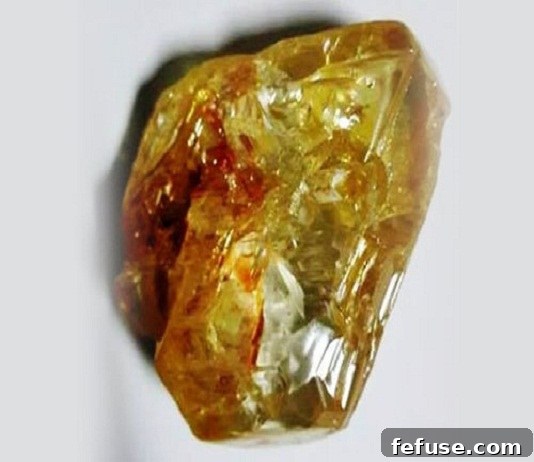
In a momentous announcement that sent ripples of joy and hope across Sierra Leone, Pastor Emmanuel Momoh, a humble artisanal miner, unearthed an extraordinary 709.41-carat diamond in March 2017. This colossal discovery, which immediately captured national and international attention, was not kept for personal gain. Demonstrating remarkable integrity and patriotism, Pastor Momoh promptly handed the magnificent gemstone over to the government of Sierra Leone, signaling a new era of transparency and ethical resource management in a nation historically plagued by the shadows of ‘blood diamonds’.
The formal presentation of this monumental find took place on Wednesday, March 15th, 2017, when the massive diamond was proudly showcased to the then President, Dr. Ernest Bai Koroma. The event was held with significant pomp and ceremony, as Paramount Chief Paul N. Saquee The 5 of Tankoro Chiefdom in the Kono district – the very region where the diamond was discovered – presented the stone to the head of state. He was accompanied by the Minister of Mines and Mineral Resources, Honourable Alhaji Minkailu Mansaray, underscoring the national importance of the discovery. This act was not merely a handover; it was a powerful statement of intent from both the finder and the government to ensure that the wealth derived from Sierra Leone’s natural resources would benefit all its citizens, particularly in the realm of economic development.
Immediately recognized for its exceptional size and purity, the 709.41-carat diamond was quickly touted as one of the 20 largest diamonds ever found globally. Its sheer magnitude and potential quality fueled immense speculation about its market value, with experts and enthusiasts alike anticipating a staggering price tag. Such a discovery promised not only to rewrite the history of diamond mining in Sierra Leone but also to inject much-needed capital into the nation’s economy, offering a beacon of hope for sustainable growth and improved living standards.
However, the journey to realize its full market potential has not been without its challenges. An initial auction held in Freetown in May 2017 saw the top bid of US$ 7.7 million being firmly rejected by the government. This decision reflected a collective belief that the bid significantly undervalued the gemstone, which had already been dubbed the ‘Peace Diamond’ in stark contrast to the infamous ‘Blood Diamonds’ that fueled Sierra Leone’s devastating civil war. Determined to secure a fair and equitable price that would truly benefit the nation, the government made the strategic decision to take the diamond to Antwerp, Belgium – the undisputed global capital of the diamond trade – for a more comprehensive and competitive international auction.
While the Sierra Leone Government maintained a cautious silence regarding an official valuation of the diamond prior to the Antwerp auction, media reports and expert opinions painted a picture of much higher expectations. The Anadolu Agency, a reputable international news source, reported that industry experts had valued the precious stone at over US$ 50 million. Adding weight to these projections, Pastor Emmanuel Momoh himself, who became an integral part of the sales team and delegation that traveled to Antwerp with the stone, publicly expressed his strong conviction, stating, “I’m not expecting less than US$ 50 million.” This significant disparity between the initial bid and expert valuations highlighted the high stakes involved and the government’s unwavering commitment to maximizing the economic benefit for the people of Sierra Leone.
The Discovery of a Lifetime: A Symbol of Hope
The story of the 709.41-carat Sierra Leone diamond, often referred to as the ‘Peace Diamond’, begins in the rich, alluvial plains of the Kono district. This region, known historically as a significant diamond mining area, has seen its share of both prosperity and conflict. Pastor Emmanuel Momoh’s discovery was not just a lucky find; it was an act that resonated deeply with the nation’s aspirations for a brighter future. His immediate decision to surrender the stone to the government, foregoing potential personal riches, set a precedent for ethical conduct and community responsibility. This selfless act was lauded internationally and became a cornerstone of the diamond’s new narrative, transforming it from a mere commodity into a powerful symbol of national integrity and ethical sourcing.
The intrinsic value of this particular diamond goes beyond its carat weight and potential financial yield. For Sierra Leone, a country still rebuilding after a brutal civil war largely funded by illicit diamond trade, this discovery offered a chance to redefine its relationship with its natural resources. The government’s transparent handling of the diamond, from its initial registration to its global marketing, aimed to demonstrate a clear departure from past practices. By ensuring that every stage of the process was open and accountable, the government sought to establish the ‘Peace Diamond’ as a benchmark for how resource-rich nations can manage their assets for the collective good, fostering trust among international buyers and investors.
From Freetown to Antwerp: Seeking Fair Value on the Global Stage
The journey of the 709.41-carat diamond from the heart of Sierra Leone to the bustling diamond bourses of Antwerp was a strategic move dictated by economic prudence and a desire for global reach. The initial Freetown auction, while symbolic of national ownership, served to underline the gap between local market perceptions and international valuations. The rejection of the US$ 7.7 million bid was a bold statement, signaling that Sierra Leone would not settle for anything less than what the diamond truly deserved on the world stage. This decision showcased a sophisticated understanding of the global diamond market and a determination to extract maximum value for national development.
Antwerp, with its centuries-old reputation as the world’s leading diamond trading center, offered the ideal platform for such a magnificent stone. Its specialized infrastructure, vast network of experienced buyers, and transparent auction mechanisms provided the perfect environment for the ‘Peace Diamond’ to be showcased and bid upon. The move to Antwerp was not merely about securing a higher price; it was about positioning Sierra Leone as a responsible player in the global diamond industry, one committed to best practices and equitable trade. The presence of Pastor Momoh himself as part of the delegation in Antwerp further amplified the narrative of integrity and direct community involvement, adding a unique human element to a high-stakes commercial transaction.
The Promise of Prosperity: Transforming Sierra Leone’s Future
The successful sale of the 709.41-carat Sierra Leone diamond holds the potential for profound socio-economic transformation within the nation. The funds generated from its sale are earmarked for vital development projects, promising to touch the lives of countless Sierra Leoneans. Key areas targeted for investment include crucial infrastructure improvements, such as the construction and repair of roads, bridges, and public buildings, which are essential for economic growth and connectivity. Furthermore, a significant portion of the proceeds is intended for enhancing social services, particularly in education and healthcare. This means building new schools, providing better educational resources, improving medical facilities, and ensuring access to quality healthcare for remote communities.
Beyond national projects, there is a strong commitment to directly benefit the Kono district, the specific region where the diamond was discovered. This localized investment aims to address historical grievances and ensure that the communities closest to the source of such wealth see tangible improvements in their daily lives. Such initiatives might include improved water and sanitation systems, reliable electricity supply, and support for local entrepreneurship, fostering sustainable economic activities beyond mining. This direct benefit approach is crucial for building trust between the government and its citizens, demonstrating that natural resources can be a blessing rather than a source of conflict and disparity.
Sierra Leone’s Diamond Legacy: A New Chapter
The history of diamonds in Sierra Leone is a complex tapestry woven with threads of immense wealth, colonial exploitation, and devastating conflict. From the discovery of the ‘Star of Sierra Leone’ in 1972, a 968.9-carat diamond that remains one of the largest ever found, to the ‘Blood Diamond’ era of the 1990s, these precious stones have profoundly shaped the nation’s trajectory. The ongoing efforts to implement the Kimberley Process, designed to prevent conflict diamonds from entering the legitimate trade, have been crucial in rehabilitating Sierra Leone’s image in the global market. The discovery and ethical handling of the 709.41-carat ‘Peace Diamond’ represent a pivotal moment in this ongoing journey.
It symbolizes a nation striving to break free from its troubled past, demonstrating a clear commitment to transparency, accountability, and the responsible management of its natural endowments. This single diamond, found by a man of faith and integrity, has become a powerful narrative for the entire country, showcasing its potential for ethical mining practices and sustainable development. The global diamond industry, keenly aware of consumer demand for ethically sourced gems, watches closely as Sierra Leone writes this new chapter, hoping that the ‘Peace Diamond’ will inspire similar practices across other resource-rich nations. The successful sale and judicious application of its proceeds will undoubtedly serve as a testament to Sierra Leone’s renewed promise and its dedication to building a prosperous and equitable future for all its people.
News Source: gjepc.org