
Lucara Diamond Corp. Unearths Another Colossal Diamond: Karowe Mine Solidifies Its Reign as a Source of Extraordinary Gems
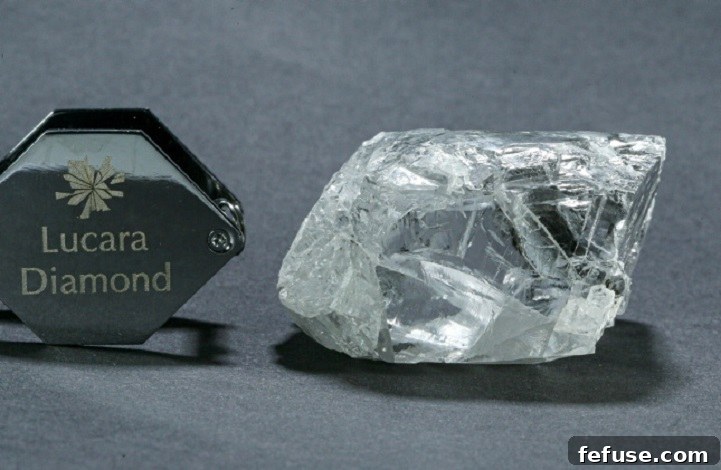
In an announcement that has once again sent ripples through the global diamond industry, Lucara Diamond Corp. has revealed the recovery of a breathtaking 692.3-carat Type IIa high white gem-quality diamond. This extraordinary find, made at its prolific Karowe mine in Botswana, comes less than two weeks after the company celebrated the extraction of an astonishing 1,080-carat stone from the very same site. These consecutive discoveries underscore Karowe’s unparalleled potential and cement Lucara’s position at the forefront of large diamond producers worldwide.
The Karowe mine, located in the diamond-rich nation of Botswana, has been a flagship operation for the Canadian miner since 2012. Over the past decade, it has consistently delivered some of the most significant and valuable diamonds ever found, captivating both industry experts and the public imagination. The latest 692.3-carat marvel measures an impressive 46.5mm x 40.7mm x 28.4 mm, indicating its substantial size and potentially flawless characteristics. This exceptional gem marks the fourth diamond exceeding 300 carats recovered by Lucara this year alone, and an astounding twentieth stone weighing over 100 carats, further highlighting the remarkable frequency of large diamond finds at Karowe.
A Season of Unprecedented Discoveries at Karowe
The Karowe mine’s reputation for yielding monumental diamonds is unrivaled. Earlier this month, the mine added to its illustrious legacy by recovering its fourth diamond exceeding the 1,000-carat mark. This particular achievement is remarkable, placing Karowe in an exclusive club of mines capable of consistently producing stones of such colossal size. These recent recoveries are not isolated incidents but rather a continuation of a pattern that has defined Karowe since its inception.
The 692.3-carat diamond, a testament to the mine’s rich geology, was recovered through the direct milling of ore sourced from the EM/PK(S) unit of the South Lobe at Karowe. This specific geological unit is known for its distinctive kimberlite characteristics and has proven to be an incredibly fertile source of exceptional diamonds. Understanding and targeting these geological structures are critical for Lucara’s ongoing success and future development plans.
Leadership’s Vision and Geological Promise
William Lamb, who recently assumed the role of CEO, succeeding Eira Thomas, shared his enthusiasm regarding the latest recovery. “The successful track record of delivering some of the world’s largest diamonds continues with the recent recovery of a 692.3-carat diamond,” Lamb stated. His comments reflect not only pride in the company’s operational excellence but also a strategic outlook on the mine’s future.
Lamb further emphasized the significance of the geological source: “The recovery of large diamonds from the EM/PK(S) lithology of the South Lobe strongly supports our expectations for the underground project where the majority of material mined will constitute this phase of kimberlite during the first years of underground production.” This statement is crucial, as it links current successes directly to the long-term vision for the Karowe mine. The EM/PK(S) unit is anticipated to be a primary source of kimberlite during the initial phases of the underground expansion, making these surface discoveries valuable indicators of the rich deposits awaiting deeper extraction.
Karowe’s Enduring Legacy: Giants of the Diamond World
The Karowe mine is not merely a source of large diamonds; it is a producer of truly iconic gems. It is famously known for unearthing the “Lesedi La Rona,” a magnificent 1,109-carat diamond discovered in 2015, which was the second-largest gem-quality diamond ever recovered. Following this, the “Sewelo” diamond, a massive 1,758-carat stone, was found in 2019, further cementing Karowe’s legendary status. These historical discoveries, combined with the recent string of finds, paint a clear picture of a mine that is consistently redefining the boundaries of diamond exploration and recovery.
The consistent recovery of multi-hundred and even multi-thousand carat diamonds from Karowe speaks volumes about the unique geological conditions present in its kimberlite pipe. These Type IIa diamonds, like the 692.3-carat gem, are chemically pure and often exhibit exceptional optical transparency, making them highly coveted in the luxury market. Such purity is rare, accounting for less than 2% of all natural diamonds, which elevates their value and desirability significantly.
Navigating the Path to the Future: The Karowe Underground Expansion
To sustain this remarkable rate of discovery and maximize the value of the Karowe resource, Lucara Diamond Corp. is undertaking a substantial underground expansion project. This ambitious undertaking is designed to extend the mine’s life until at least 2040, securing a long-term future for the company, its shareholders, and the local communities in Botswana. The transition from open-pit to underground mining is a complex and capital-intensive endeavor, but one deemed essential to access the deeper, high-grade kimberlite reserves.
While the long-term benefits are clear, the project has not been without its challenges. The original forecast for the underground expansion costs, estimated at $547 million, has seen an increase of approximately 25 percent, now projected to reach $683 million. This revision is attributed to various technical challenges inherent in such a large-scale mining project, which can include complex geotechnical conditions, unexpected ground stability issues, and the general inflationary pressures affecting global mining projects. Furthermore, the anticipated start date for underground production has been adjusted. Initially slated for the second half of 2026, production is now expected to commence in the first half of 2028. These adjustments reflect a cautious and pragmatic approach to ensure the project’s long-term success and safety, rather than rushing through critical development phases.
Economic and Social Impact on Botswana
The continued success of the Karowe mine, particularly with its impressive diamond recoveries and the commitment to an extended mine life through the underground expansion, holds significant economic and social implications for Botswana. As one of the world’s leading diamond-producing nations, Botswana relies heavily on the mining sector for employment, foreign exchange earnings, and national development. Lucara’s operations contribute substantially to these aspects, providing direct employment, supporting local businesses, and contributing royalties and taxes to the national treasury.
The extension of Karowe’s mine life until 2040 means sustained economic activity and stability for communities surrounding the mine for decades to come. This long-term commitment allows for strategic planning in education, infrastructure, and healthcare initiatives, further solidifying the symbiotic relationship between Lucara Diamond Corp. and the nation of Botswana. The responsible development of these precious resources ensures that the wealth generated benefits both the company and the citizens of Botswana.
Conclusion: A Bright Future for Lucara and Karowe
Lucara Diamond Corp.’s recent recovery of the 692.3-carat Type IIa diamond, hot on the heels of a 1,080-carat find, reinforces the extraordinary nature of the Karowe mine. These discoveries not only add to Lucara’s impressive track record but also fuel optimism for the future, especially concerning the ongoing underground expansion project. While facing revised timelines and increased costs, the strategic investment in the underground operation promises to unlock further significant value from the EM/PK(S) lithology, ensuring Karowe remains a prolific source of the world’s most exceptional diamonds for decades to come. Lucara’s commitment to operational excellence, coupled with the rich geological endowment of the Karowe mine, positions the company for continued success and a lasting legacy in the global diamond industry.