
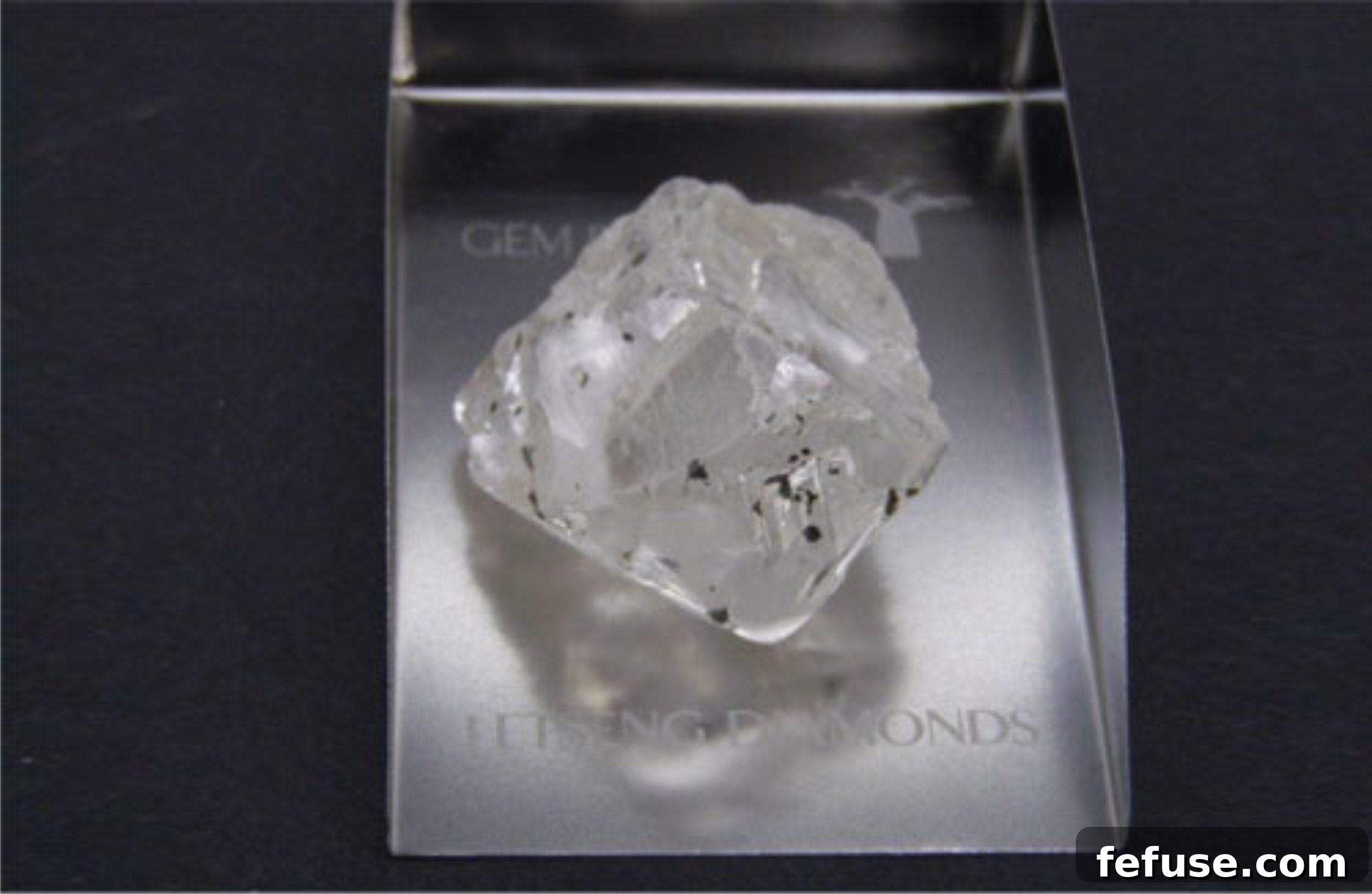
Gem Diamonds Limited has recently announced the recovery of an extraordinary 202-carat, D colour, Type IIa diamond from its renowned Letšeng mine in Lesotho. This monumental find further solidifies Letšeng’s reputation as the world’s leading source of large, high-quality diamonds, reinforcing its status as the “highest dollar per carat kimberlite diamond mine.” The discovery marks a significant achievement for Gem Diamonds and the Kingdom of Lesotho, adding another illustrious gem to the mine’s legendary output.
Letšeng Mine Unearths a 202-Carat D Colour Type IIa Diamond, Cementing Its Elite Status
In a world where natural treasures are increasingly rare, the Letšeng mine continues to defy expectations. The latest recovery of a 202-carat, D colour, Type IIa diamond is not merely a number; it represents a pinnacle of geological marvel and expert mining. For context, ‘D colour’ signifies absolute colourlessness, the highest grade a diamond can achieve, making it exceptionally rare and desirable. Coupled with its ‘Type IIa’ classification, which indicates a diamond with virtually no nitrogen impurities, this gem exhibits extraordinary optical transparency and purity. These attributes collectively position the 202-carat find as one of the most valuable and sought-after diamonds globally.
The consistent discovery of such remarkable stones is a testament to the unique geology of the Letšeng kimberlite pipes and the advanced recovery techniques employed by Gem Diamonds. This particular diamond is the seventh stone exceeding 100 carats recovered by the company from Letšeng in 2017 alone, underscoring the mine’s unparalleled productivity of super-sized gems. Each such discovery sends ripples of excitement through the diamond industry, from investors and collectors to master cutters and fine jewellery designers, eager to transform these natural wonders into breathtaking pieces of art.
Letšeng: The Pinnacle of Kimberlite Diamond Mining
The Letšeng mine, situated in the Maluti Mountains of Lesotho at an altitude of 3,100 metres (10,000 feet) above sea level, is not just any diamond mine. It holds the prestigious title of being the “highest dollar per carat kimberlite diamond mine in the world.” This distinction is earned through its consistent production of large, exceptional quality diamonds that command premium prices on the international market. Unlike many other diamond mines that yield a high volume of smaller stones, Letšeng’s value lies in the rarity and size of its finds, which collectively contribute to its remarkable average dollar per carat.
Gem Diamonds acquired a 70% interest in the Letšeng mine in 2006, with the Government of the Kingdom of Lesotho holding the remaining 30%. This partnership has been immensely fruitful, fostering a symbiotic relationship that benefits both the company and the nation. Since the acquisition, Gem Diamonds has invested significantly in advanced mining and recovery technologies, specifically designed to protect the integrity of large diamonds during extraction. This meticulous approach minimises breakage and ensures that the precious gems are recovered in their pristine state, thereby maximising their value. The challenging mountainous terrain and extreme weather conditions present operational hurdles, yet the rewards consistently prove worth the effort.
A Storied History: Letšeng’s Legacy of Giants
The 202-carat diamond joins an illustrious lineage of colossal gems unearthed from Letšeng. Since Gem Diamonds took over operations, the mine has yielded an astonishing 100 diamonds exceeding 100 carats. This unparalleled track record highlights the mine’s unique geological endowment and its consistent ability to produce extraordinary finds that reshape the global diamond landscape.
Among these hundred-carat-plus diamonds are some of the most famous and historically significant stones ever discovered. These include:
- The 603-carat Lesotho Promise: Unearthed in 2006, this magnificent diamond was one of the largest gem-quality diamonds ever found and sparked global fascination. Its subsequent sale and cutting into a collection of stunning smaller diamonds captivated the industry.
- The 550-carat Letšeng Star: Discovered in 2011, this gem continued Letšeng’s tradition of yielding massive, high-quality diamonds, further solidifying the mine’s reputation.
- The 493-carat Letšeng Legacy: Found in 2007, this diamond also contributed significantly to the mine’s growing legend, demonstrating its potential for recurring large finds.
- The 357-carat Letšeng Dynasty: Another spectacular discovery that underscored the consistent output of extraordinary stones from the mine.
- The 314-carat Letšeng Destiny: This find further added to the mine’s impressive tally of over 300-carat diamonds, each a testament to Letšeng’s geological richness.
Beyond these iconic white diamonds, Letšeng has also surprised the world with rare pink and blue diamonds, which are among the most coveted coloured diamonds due to their extreme scarcity and vibrant hues. These unique discoveries demonstrate the mine’s diverse mineralogical profile and its capacity to produce gems that appeal to the most discerning collectors.
The recent 202-carat recovery follows another notable find announced in September of the same year: a magnificent 115-carat diamond. This continuous stream of significant discoveries reinforces the belief that Letšeng holds many more secrets within its depths, promising a future filled with glittering possibilities for Gem Diamonds and the diamond world at large.
Understanding Diamond Quality: The 4 Cs and Type IIa Classification
To fully appreciate the significance of the 202-carat, D colour, Type IIa diamond, it’s essential to understand the criteria by which diamonds are judged. The industry standard “4 Cs” – Carat, Colour, Clarity, and Cut – are fundamental to evaluating a diamond’s quality and value:
- Carat: Refers to the diamond’s weight. One carat equals 200 milligrams. Larger diamonds are inherently rarer and, assuming other factors are equal, more valuable. The 202-carat weight of the latest find places it in an elite category.
- Colour: Graded on a scale from D (colourless) to Z (light yellow or brown). D colour is the highest grade, indicating a complete absence of colour, which allows maximum light to pass through and reflect, creating exceptional brilliance.
- Clarity: Measures the absence of inclusions (internal flaws) and blemishes (external imperfections). Graded from Flawless (FL) to Included (I). High clarity levels are crucial for large diamonds, as any imperfections would be more visible.
- Cut: Refers to how well a diamond’s facets interact with light. A superior cut maximizes a diamond’s brilliance, fire, and scintillation. While this 202-carat stone is still in its rough state, its inherent quality suggests it will yield exceptionally cut polished diamonds.
Beyond the 4 Cs, the ‘Type IIa’ classification further elevates the rarity and value of this diamond. Type IIa diamonds constitute less than 2% of all natural diamonds. They are chemically the purest of all diamond types, containing virtually no nitrogen atoms in their crystal structure. This purity results in exceptional transparency and often a superior lustre, making them highly prized by gemologists and connoisseurs alike. Many famous diamonds, such as the Cullinan and Koh-i-Noor, are Type IIa, placing the Letšeng 202-carat stone in truly royal company.
Economic Impact: Diamonds and the Prosperity of Lesotho
The diamond industry, and particularly the Letšeng mine, plays a pivotal role in the economy of the Kingdom of Lesotho. As a landlocked country surrounded by South Africa, Lesotho benefits immensely from the revenue generated by its natural resources. The 30% stake held by the Government of Lesotho in the Letšeng mine ensures that a significant portion of the profits directly contributes to national development. This revenue supports crucial public services such as education, healthcare, infrastructure development, and poverty alleviation programs.
Furthermore, the mine provides substantial employment opportunities for local Basotho citizens, offering stable jobs and skills development in a challenging economic landscape. The presence of a major mining operation also spurs growth in ancillary industries, from logistics and catering to security and maintenance, creating a broader positive economic ripple effect. The successful partnership between Gem Diamonds and the Government of Lesotho serves as a model for responsible resource management and sustainable economic development in the region, demonstrating how natural wealth can be leveraged for the benefit of an entire nation.
Gem Diamonds’ Strategic Footprint: Beyond Letšeng
While Letšeng remains the jewel in Gem Diamonds’ crown, the company’s strategic operations extend beyond Lesotho. Gem Diamonds also has a presence in Botswana, another diamond-rich nation, where it operates the Ghaghoo mine. However, unlike the booming success of Letšeng, the Ghaghoo mine has faced operational challenges, leading to its placement under care and maintenance since March 2017.
The decision to put Ghaghoo under care and maintenance was a strategic move aimed at preserving the asset while mitigating ongoing operational costs amidst a challenging market for smaller, lower-value diamonds that Ghaghoo typically produced. Earlier in the year, Gem Diamonds announced that it had received a conditional offer to acquire the Ghaghoo mine, for which a process of due diligence is currently underway. This potential sale or partnership indicates Gem Diamonds’ commitment to optimising its asset portfolio and focusing its resources on its most profitable ventures, primarily the high-value production from Letšeng. The ongoing evaluation of Ghaghoo highlights the dynamic nature of the global mining industry and the need for companies to adapt swiftly to market conditions and operational realities.
The Global Diamond Market: Demand for Extraordinary Gems Endures
The global diamond market, while subject to various economic fluctuations, consistently demonstrates a robust demand for large, high-quality, D colour, Type IIa diamonds. These exceptional stones are not merely commodities; they are considered rare assets, often appreciating in value, making them attractive investments for ultra-high-net-worth individuals and collectors. Their scarcity ensures their enduring appeal and premium pricing.
The meticulous process of transforming a rough diamond like the 202-carat Letšeng find into a polished masterpiece involves world-renowned cutters and master craftsmen. Their expertise is crucial in unlocking the full potential of such a stone, balancing size retention with optimal brilliance and fire. The journey from mine to market for these elite diamonds is often shrouded in mystique and exclusivity, culminating in their placement in bespoke jewellery pieces or as standalone investment assets, continuing their story for generations to come.
A Shining Future for Gem Diamonds and Letšeng
The discovery of the 202-carat, D colour, Type IIa diamond is more than just a mining success; it’s a reaffirmation of the unparalleled potential of the Letšeng mine and the strategic acumen of Gem Diamonds Limited. As the company continues its mission to responsibly extract the earth’s most precious treasures, the world watches with anticipation for what new wonders Letšeng will reveal next. The ongoing flow of exceptional stones from this unique mine ensures Gem Diamonds’ prominent position in the luxury goods market and contributes significantly to the economic well-being of the Kingdom of Lesotho. The future, much like the diamonds themselves, looks exceptionally bright.
Pic Cap: The high quality 202 carat, D colour Type IIa diamond from the Letšeng mine in Lesotho.
News Source: gjepc.org