
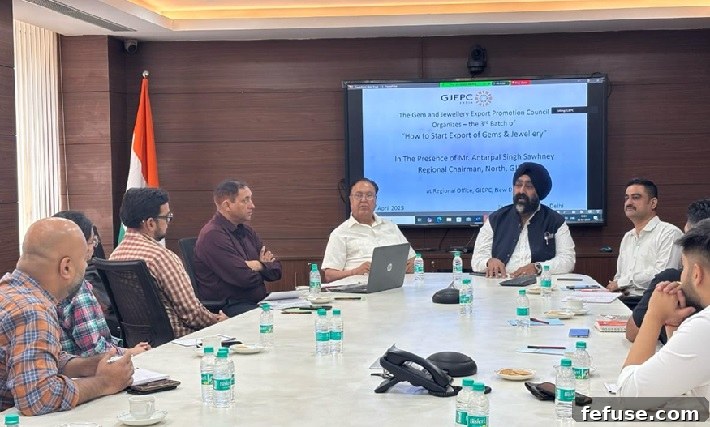
The Gem & Jewellery Export Promotion Council (GJEPC), through its proactive Northern Regional Office, has proudly inaugurated the third successful edition of its highly acclaimed training initiative: “How to Start Exports of Gems and Jewellery.” This comprehensive program is meticulously designed to empower and equip emerging exporters within India’s vibrant gems and jewellery sector, providing them with the essential tools and knowledge required to confidently venture into the global marketplace. Recognizing the diverse needs and schedules of its participants, the initiative employs a flexible hybrid format, offering both intensive one-day and more elaborate three-day modules. This strategic approach ensures that participants gain practical, actionable knowledge, enabling them to effectively navigate the intricate landscape and inherent complexities of international trade in this specialized industry.
The launch of this third batch marked a significant milestone, welcoming a total of 13 eager and enthusiastic learners. Demonstrating the efficacy of the hybrid model, seven participants actively engaged in person at the GJEPC’s Northern Regional Office, fostering a dynamic environment for direct interaction and networking. Concurrently, six participants seamlessly joined the program virtually, highlighting the initiative’s commitment to accessibility and broader outreach. The event was graced by the esteemed presence of Shri Antarpal Singh Sawhney, the Regional Chairman (North) of GJEPC. Shri Sawhney directly addressed the attendees, sharing invaluable insights drawn from his extensive and rich experience within the industry. His inspiring address served to motivate the budding exporters, encouraging them to embrace challenges and take decisive, confident steps towards establishing and expanding their global business footprint.
GJEPC’s Vision: Cultivating Global Leaders in Gems & Jewellery Exports
The Gem & Jewellery Export Promotion Council (GJEPC) stands as the apex body for India’s gems and jewellery industry, operating under the aegis of the Ministry of Commerce & Industry, Government of India. Its fundamental mission is to promote, support, and grow India’s exports of gems and jewellery globally. Programs like “How to Start Exports of Gems and Jewellery” are central to this mission, addressing a critical need for structured training in a sector that is not only a significant foreign exchange earner but also a powerhouse of employment. The third edition signifies the program’s growing relevance and success, building on the foundations laid by its predecessors. It underscores GJEPC’s commitment to nurturing a new generation of exporters who are well-versed in global trade practices, regulatory frameworks, and market dynamics, thereby strengthening India’s position as a world leader in the gems and jewellery domain.
Unpacking the Hybrid Learning Model: Flexibility Meets Effectiveness
The decision to implement a hybrid learning model – offering both one-day and three-day modules – is a testament to GJEPC’s understanding of the diverse requirements of its target audience. New and emerging exporters often juggle multiple responsibilities, and a one-day intensive module offers a concise yet impactful overview for those seeking a quick foundational understanding or a refresher course. This format is ideal for entrepreneurs who need to grasp core concepts efficiently before delving deeper. Conversely, the three-day module provides a more profound, immersive experience. It allows for a more extensive exploration of complex topics, interactive workshops, detailed case studies, and enhanced opportunities for question-and-answer sessions with industry experts. This dual approach ensures that whether a participant needs a rapid introduction or an in-depth dive, the program caters to their specific learning objectives and time constraints, maximizing knowledge retention and practical application.
Core Curriculum: Actionable Knowledge for Global Success
The “How to Start Exports of Gems and Jewellery” program is meticulously curated to provide participants with truly actionable knowledge across a spectrum of crucial export-related topics. The curriculum is designed to demystify the often-intimidating world of international trade. Key areas typically covered include, but are not limited to:
- Understanding Global Market Dynamics: Participants learn to identify promising international markets, conduct comprehensive market research, and analyze consumer trends and preferences in various regions. This includes insights into specific demand for different types of gems, diamonds, and jewellery designs across continents.
- Export Documentation and Compliance: This module is critical, focusing on the myriad of documents required for export, such as invoices, packing lists, shipping bills, certificates of origin, and GSP certificates. It also covers adherence to international trade regulations, customs procedures, and country-specific import requirements, ensuring smooth and compliant cross-border transactions.
- Logistics and Supply Chain Management: Effective management of the supply chain is paramount in the high-value gems and jewellery sector. Participants gain knowledge on secure transportation methods, insurance coverage, freight forwarding, warehousing, and optimizing logistics for fragile and valuable goods.
- Payment Mechanisms and Financial Aspects: Understanding international payment terms (e.g., L/C, CAD, wire transfers), managing foreign exchange risks, availing export credit facilities, and navigating export credit insurance are vital components covered to safeguard financial transactions.
- Marketing and Branding for International Markets: Strategies for effective international marketing, brand positioning, participating in international trade fairs, digital marketing techniques, and building a compelling online presence tailored for global buyers are explored.
- Government Policies and Export Incentives: An in-depth look into various government schemes, incentives, and policies designed to boost exports, such as Remission of Duties and Taxes on Exported Products (RoDTEP) and other supportive measures for the gems and jewellery sector.
- Ethical Sourcing and Sustainability: With growing global demand for responsibly sourced products, the program emphasizes the importance of ethical practices, traceability, conflict-free sourcing, and sustainable business models in enhancing market competitiveness and brand reputation.
- Risk Management in International Trade: Identifying and mitigating various risks associated with international trade, including political risks, commercial risks, currency fluctuations, and operational risks.
The Impact of Shri Antarpal Singh Sawhney’s Engagement
The direct engagement of industry stalwarts like Shri Antarpal Singh Sawhney is an invaluable asset to the program. As the Regional Chairman (North), his presence not only lends credibility but also provides participants with a rare opportunity to glean practical wisdom from an experienced leader. His insights go beyond theoretical knowledge, offering real-world perspectives on challenges and opportunities within the gems and jewellery export landscape. His encouragement to “take confident steps toward building a global business footprint” resonates deeply with aspiring exporters, instilling the self-belief and strategic thinking necessary to transform ambitious visions into tangible successes. Such direct mentorship bridges the gap between classroom learning and practical application, providing a significant head start for those new to the export arena.
Why International Trade Matters for India’s Gems & Jewellery Sector
India’s gems and jewellery sector is a cornerstone of its economy, contributing substantially to GDP, employment generation, and foreign exchange earnings. The industry boasts a rich heritage of craftsmanship and a robust manufacturing base, making it a significant global player. However, to sustain and accelerate this growth, continuous expansion into international markets is imperative. Export initiatives like GJEPC’s training program are vital for:
- Economic Growth: Boosting exports directly translates to higher economic growth, creating more jobs across the value chain – from mining and manufacturing to design and marketing.
- Global Competitiveness: By equipping exporters with the latest knowledge and skills, India maintains and enhances its competitive edge in a highly dynamic global market.
- Diversification of Markets: Training enables exporters to explore new geographical markets, reducing reliance on traditional ones and mitigating risks associated with market concentration.
- Value Addition: Encouraging the export of finished and designer jewellery, rather than just raw materials, significantly increases value addition and brand recognition for “Made in India” products.
- Technological Upgradation: Engaging with international buyers often necessitates adopting global best practices, advanced technologies, and innovative designs, driving overall industry modernization.
Testimonials and Future Outlook
The consistent demand for the “How to Start Exports of Gems and Jewellery” program, leading to its third edition, speaks volumes about its success and perceived value. Previous participants have often cited the program as a pivotal stepping stone in their export journey, praising its practical content, expert faculty, and invaluable networking opportunities. The GJEPC remains committed to evolving this program, incorporating feedback and adapting the curriculum to address new challenges and opportunities in the ever-changing global trade environment. As the Indian gems and jewellery sector continues its trajectory of growth, such initiatives will play an increasingly crucial role in fostering a resilient, knowledgeable, and globally competitive exporting community. The ultimate goal is to empower countless more emerging entrepreneurs to transform their aspirations into thriving international businesses, securing India’s pre-eminence in the global gems and jewellery market for years to come.