
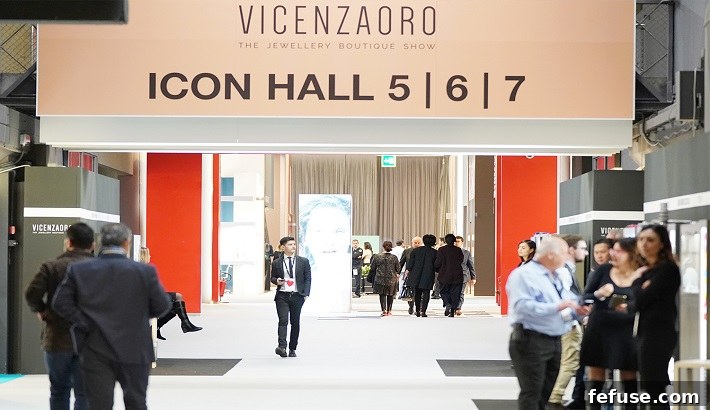
VicenzaOro January 2020: Charting the Future of the Global Jewelry and Diamond Industry
VicenzaOro, one of the most prestigious international exhibitions for the gold and jewelry sector, commenced its January 2020 edition on January 17th, setting the stage for a critical examination of the industry’s trajectory. The grand opening ceremony brought together a distinguished assembly of international and Italian dignitaries, underscoring the event’s significant global standing. Among the prominent figures participating in the inaugural ribbon-cutting ceremony was Pramod Kumar Agrawal, Chairman of the Gem & Jewellery Export Promotion Council (GJEPC), highlighting the strong ties and collaborative spirit within the global jewelry trade. Following the ceremonial opening, the focus immediately shifted to substantive discussions, featuring two pivotal panel debates that delved into the evolving landscape and future prospects of both the jewelry and diamond sectors. Agrawal, a leading voice in the industry, also contributed his expertise as a panellist, offering valuable insights during the discussion dedicated to the ‘Future of Diamonds.’
A Gathering of Global Leaders and Visionaries
The significance of VicenzaOro was further amplified by the presence of an impressive lineup of esteemed individuals at its inaugural ceremony. Presiding over the event were Lorenzo Cagnoni, President of the Italian Exhibition Group, and Francesco Rucco, the Mayor of Vicenza, symbolizing the strong local and regional support for this international event. They were joined by Cristina Franco, Vice President of the Province of Vicenza, and Elena Donazzan, Veneto Region’s Councillor for Education, Training, Work and Equal Opportunities, representing governmental and regional interests crucial for economic development. Industry leadership was robustly represented by Ivana Ciabatti, President of Federorafi, and Carlo Maria Ferro, President of Agenzia ICE, both instrumental in promoting Italian excellence globally. The broad spectrum of representation, extending even to national security with Achille Variati, Undersecretary of State for the Ministry of the Interior, underscored the multifaceted impact and importance of the jewelry industry beyond mere commerce. This diverse group of dignitaries collectively acknowledged VicenzaOro’s vital role as a hub for innovation, trade, and strategic dialogue in the luxury goods market.
Visio.Next: Pioneering Discussions on Industry Evolution
Central to the VicenzaOro January 2020 experience were the two thought-provoking panel discussions hosted under the acclaimed Visio.Next banner. These sessions served as a vital platform for industry leaders to dissect and deliberate on the ‘Future for Jewellery’ and the ‘Future for Diamonds.’ A compelling common thread woven through both discussions was the resounding emphasis on the imperative of integrating core values such as transparency, inclusion, and individuality into the very fabric of the industry. Panellists widely acknowledged that new narratives and innovative approaches are essential to effectively engage with an increasingly younger and highly informed global consumer base. This demographic places significant importance on ethical practices, authentic storytelling, and products that resonate with their personal values, demanding more than just luxury; they seek meaning and purpose behind their purchases. The consensus was clear: the industry must evolve its communication strategies to align with these contemporary consumer expectations, moving beyond traditional marketing to foster deeper connections.
The Evolving Landscape of Jewellery: From Occasion to Personal Expression
During the ‘Future for Jewellery’ panel, a significant point of discussion revolved around a noticeable shift in consumer perception and purchasing habits. While jewelry has historically been linked to significant milestones and special occasions, panellists observed its transformation into a more personal item. This evolution signifies a consistent break from its traditional relational dimension, where it was primarily gifted or purchased for specific ceremonial events. Today, jewelry is increasingly viewed as an extension of personal style, self-expression, and individual identity. Stephen Lussier, Executive Vice-President Consumer and Brands at De Beers Group, eloquently articulated this paradigm shift, stating, “The concept of luxury, which once, besides quality, evoked exclusiveness and social status… now continues to speak of quality but the artisan kind, one that must inspire inclusiveness and a social purpose.” His words highlighted a powerful transition: modern luxury is less about overt status symbols and more about bespoke craftsmanship, ethical provenance, and a brand’s commitment to broader societal well-being. Echoing this sentiment, Eleonora Rizzuto, Sustainable Development Manager at Bulgari & LVMH Italia, strongly underlined the critical necessity of acknowledging and integrating the coexistence of economic, social, and environmental aspects in every product and throughout the industry’s entire value chain. This holistic perspective is non-negotiable for brands aiming for long-term relevance and consumer trust in today’s conscientious marketplace. The discussions underscored that successful jewellery brands of the future will not only craft beautiful objects but also embody responsible practices and resonate with consumers’ desire for meaningful, ethically-produced luxury.
The Diamond Industry’s Path Forward: Competing, Contributing, and Connecting
The ‘Future for Diamonds’ panel, skillfully introduced by Gaetano Cavalieri, President of CIBJO, and moderated by Paola De Luca, Founder and Creative Director of Trendvision Jewellery + Forecasting, provided a rigorous examination of the diamond sector’s opportunities and challenges. Cavalieri commenced by emphasizing the profound and often overlooked contributions of the diamond industry to the countries where it operates. He highlighted its significant positive impact in terms of human rights and quality of life, particularly for women and children in mining communities, underscoring the industry’s role in economic development, education, and healthcare infrastructure. However, Pramod Kumar Agrawal, Chairman of GJEPC, articulated a pressing concern: the diamond industry must exert greater efforts to expand its market share, which faces increasing competition from a diverse array of other luxury goods and experiential purchases, such as high-end travel, designer fashion, and cutting-edge technology. This strategic observation resonated strongly with both Thierry Silber, CEO and Founder of Madestones, a key European supplier of synthetic diamonds, and Stephen Lussier, Executive Vice President Consumer & Brands at De Beers Group. Their agreement signaled a cross-sectoral consensus on the urgent need for the industry to innovate its approach to consumer engagement.
The collective invitation extended to the entire industry was clear: to transcend the confines of traditional sectoral debates and proactively engage a broader public. This involves a strategic shift from simply marketing products to crafting true, coherent, and compelling stories that offer aspirational lifestyles rather than merely accessories. The message was to connect diamonds with deeper human emotions, celebrations, and personal narratives. Designer Tomasz Donocik eloquently encapsulated the essence of the future diamond, defining it through four pivotal keywords: “experience, design, uniqueness and individuality.” These terms are not just buzzwords; they represent a fundamental reimagining of how diamonds are perceived and valued. ‘Experience’ speaks to the emotional journey and memories associated with a diamond; ‘design’ emphasizes innovative craftsmanship and aesthetic appeal beyond traditional cuts; ‘uniqueness’ highlights personalization and rarity; and ‘individuality’ underscores the diamond as a symbol of personal identity and expression. This holistic vision calls for the industry to embrace creative marketing, ethical transparency, and a renewed focus on what makes diamonds truly special in a competitive luxury landscape. By telling authentic stories that resonate with contemporary values, and by presenting diamonds as integral to an aspirational lifestyle, the industry can reaffirm its relevance and enduring appeal to a new generation of consumers.
Key Takeaways: A Call for Innovation, Ethics, and Connection
The January 2020 edition of VicenzaOro proved to be far more than just a trade show; it served as a pivotal forum for profound introspection and forward-looking strategy development for the global jewelry and diamond industries. The overarching themes that emerged consistently from the Visio.Next panels underscored a fundamental shift in consumer expectations and market dynamics. Industry leaders recognized the undeniable urgency for greater transparency across the supply chain, ensuring ethical sourcing and responsible practices are not just buzzwords but verifiable realities. The call for inclusion highlighted the need for the industry to reflect and cater to a broader spectrum of global consumers, moving away from an elitist image towards one of universal appeal and personal connection. Furthermore, the emphasis on individuality demonstrated a clear understanding that modern luxury consumers seek products that resonate deeply with their unique identities and values, rather than mass-market conformity. The insightful discussions at VicenzaOro January 2020 served as a powerful reminder that the future success of the jewelry and diamond industries hinges on their collective ability to adapt, innovate, embrace sustainability, and consistently tell compelling stories that articulate their profound cultural, emotional, and economic value in an ever-evolving world.