
India and Belgium Unite for Ethical Diamonds: A Royal Roundtable on Sustainable Development
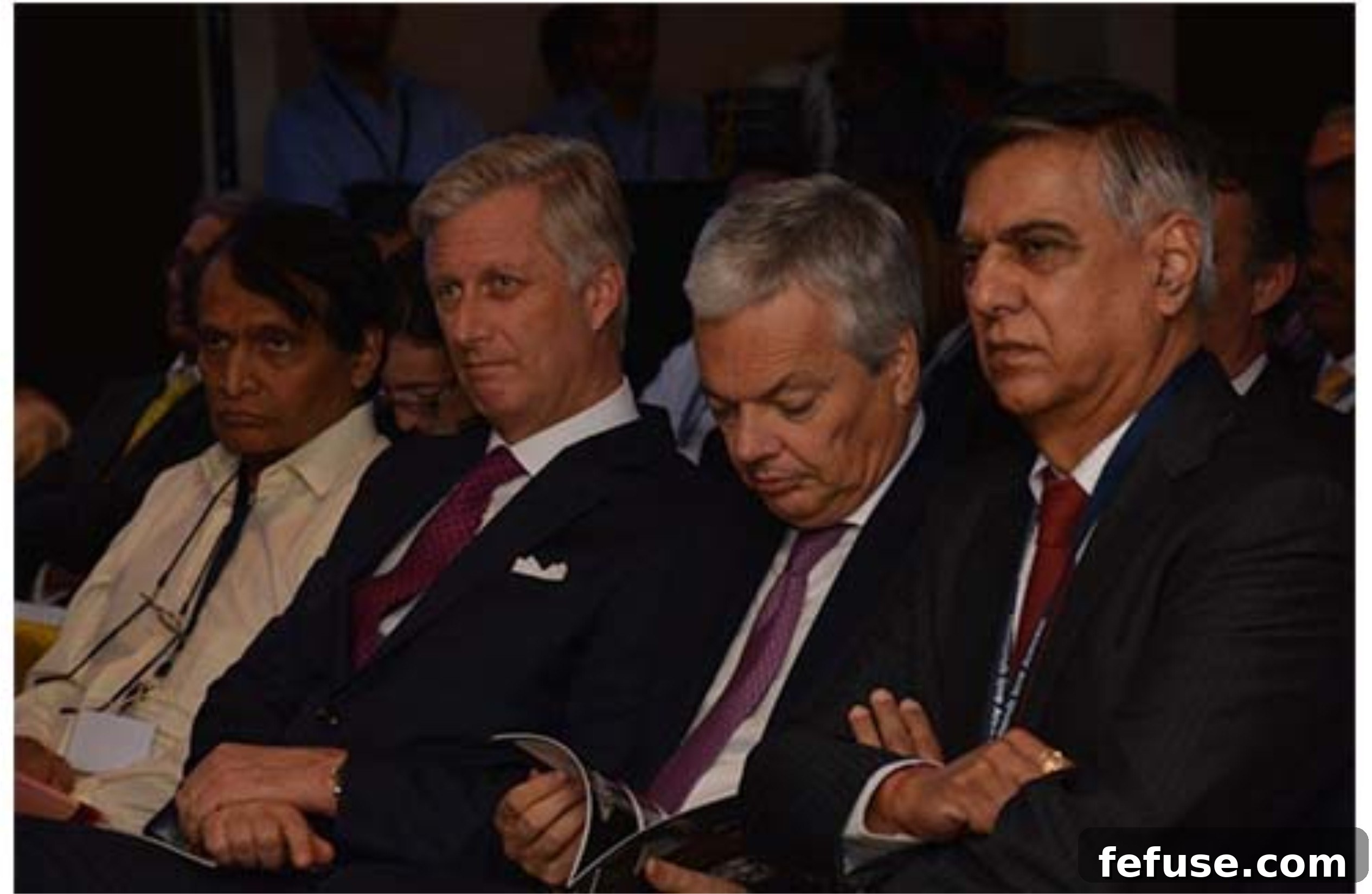
In a significant demonstration of commitment to responsible trade and socio-economic advancement, His Majesty King Philippe of Belgium undertook an official visit to India, during which he graced a pivotal Round Table discussion in Mumbai on November 9, 2017. This high-profile event, titled “Best Practices from the Diamond Business to Foster Socio-Economic Development,” was meticulously co-organized by two giants of the global diamond industry: The Gem & Jewellery Export Promotion Council (GJEPC) of India and the Antwerp World Diamond Centre (AWDC) of Belgium. The King’s presence underscored the deep and enduring ties between the two nations, particularly within the dynamic diamond sector, emphasizing a shared vision for a future defined by ethical practices and sustainable growth.
The esteemed gathering brought together a distinguished array of political and industry leaders, highlighting the strategic importance of the discussions. Alongside King Philippe, key figures included His Excellency Didier Reynders, the Belgian Deputy Prime Minister and Minister of Foreign Affairs and European Affairs, and the Honourable Shri Suresh Prabhu, India’s then Minister of Commerce & Industry. Their participation signaled a united front from both governments, committed to fostering an environment where the diamond industry not only thrives economically but also positively impacts society and adheres to the highest standards of integrity.
Challenging Perceptions: The Diamond Industry’s Commitment to Responsibility
The proceedings commenced with an insightful address from Stephane Fischler, then President of the AWDC. Fischler candidly acknowledged a persistent challenge facing the global diamond industry: a lingering public perception that often fails to reflect its substantial advancements in corporate social responsibility (CSR) and responsible sourcing. He emphasized that while the ideals of ethical conduct and sustainable practices are deeply embedded within the industry’s operations, the public image has not sufficiently evolved to mirror these realities. “Many people remain sceptical, people feel we do not walk the talk,” Fischler observed, highlighting the critical need to bridge this perception gap. He stressed the imperative for the industry to actively combat such misconceptions, ensuring that its genuine efforts toward transparency and ethical supply chains are widely recognized and understood.
Fischler proceeded to detail the comprehensive measures undertaken by the diamond industry globally, as well as the specific initiatives spearheaded by Antwerp, a leading hub for diamond trade. He spotlighted the establishment of critical frameworks such as the Kimberley Process Certification Scheme (KPCS) and the World Diamond Council (WDC), which have been instrumental in preventing conflict diamonds from entering the mainstream market. Furthermore, he elaborated on the stringent processes employed by the Antwerp Diamond Office, a unique public-private partnership between the Belgian government and its diamond industry. This office plays a meticulous role in ensuring that every diamond entering or leaving Belgium is “clean,” meticulously tracked, and transparently sourced, thereby reinforcing confidence in the integrity of the supply chain. Beyond these safeguards, Fischler proudly mentioned Belgium’s proactive “Sustainability Master Plan 2020” and the AWDC’s affiliation with the Responsible Jewellery Council (RJC) since 2014, a collaboration that has already yielded joint sustainability reports, showcasing a collective drive towards environmental and social stewardship.
India’s Leadership in Social Development and Ethical Practices
Representing the Indian perspective, Praveenshankar Pandya, Chairman of the GJEPC, highlighted India’s long-standing commitment to social welfare, often exceeding regulatory mandates. Pandya pointed out that Indian diamond companies were actively engaged in charitable and social development initiatives long before CSR requirements were made compulsory for corporate entities by the government. This tradition reflects a deeply ingrained ethos of giving back to society, which is a cornerstone of India’s business culture.
Pandya also celebrated India’s formidable position as a global leader in diamond manufacturing, particularly noting that some of the world’s most advanced and ethically compliant diamond factories are located in Surat. He underscored the profound transformation in the work environment within the Indian diamond industry, which has moved significantly towards safer, more equitable, and highly sophisticated operational standards. While the Indian government mandates that companies allocate 2% of their profits to CSR activities, Pandya revealed that many companies within the diamond sector voluntarily dedicate approximately 10% towards welfare work and broader social development projects. This exemplary commitment demonstrates an industry that consistently goes above and beyond, investing significantly in the well-being of its workforce and the communities it operates within.
Furthermore, Pandya addressed historical challenges with commendable transparency, recounting a period several years prior when allegations of child labor surfaced concerning the Indian diamond industry. Rather than shying away, the GJEPC proactively commissioned A. F. Fergusson, a renowned independent consultancy, to conduct a comprehensive survey. The findings conclusively indicated that child labor was negligible and primarily confined to small-scale cottage industries. In response, the GJEPC launched extensive awareness-raising seminars and meetings across the small-town manufacturing centers in Gujarat, effectively eradicating this practice through education and stringent oversight. This decisive action underscored the industry’s unwavering commitment to tackling issues head-on, promoting transparency, and ensuring ethical labor practices across its extensive value chain.
Strengthening Global Governance and Bilateral Trade
HE Didier Reynders, Belgium’s Deputy Prime Minister, shifted the focus to the critical importance of protecting natural resources, a key aspect of sustainable development. He detailed the collaborative efforts of the Belgian government and its diamond industry in various African countries, emphasizing their role in promoting responsible mining practices and contributing to local economic development. Reynders reiterated the indispensable role of the Kimberley Process Certification Scheme (KPCS) in ensuring that diamonds are free from conflict financing. However, he also candidly acknowledged the need for strategic reforms within the KPCS to address evolving challenges and strengthen its effectiveness in the modern global landscape.
Looking ahead, Reynders expressed optimism for the next two crucial years for KPCS reforms. He highlighted that the European Union would assume the KPCS Chairmanship in 2018, with India serving as Vice Chair, setting the stage for significant policy advancements. Following this, India was slated to take the Chair in 2019, further cementing its leadership role in global diamond governance. “These two years are going to be crucial for the reforms, but we will do it together,” he affirmed, emphasizing the collaborative spirit and shared responsibility between Europe and India in shaping the future of ethical diamond trade.
The Honourable Shri Suresh Prabhu, India’s Minister of Commerce & Industry, eloquently spoke of the deep-rooted and robust traditional ties between Belgium and India, specifically highlighting the mutually beneficial relationship between their respective diamond industries. He also underscored India’s broader strong relationship with the European Union and the ongoing vigorous efforts to finalize a Free Trade Agreement (FTA) between India and the EU. Prabhu stressed the imperative for both Belgium and India to actively renew and refresh their relationship within the contemporary global context, striving for interactions that are not only more flourishing but also more valuable and future-oriented. He passionately exhorted both nations to “work towards doubling the trade between the two countries,” setting an ambitious goal for enhanced economic cooperation and mutual prosperity. This call to action highlighted the immense untapped potential for growth and collaboration that exists beyond the already strong diamond sector.
The Path to Sustainable Development: Insights from Industry Leaders
Following the departure of the official delegation, including the King’s entourage, the Round Table Discussion transitioned into a deeper exploration of sustainability, providing a platform for expert insights and practical case studies. Peter Wollaert, a distinguished UNITAR Fellow and Managing Director of CIFAL Flanders, delivered a comprehensive and illuminating presentation titled “The Sustainable Development Goals: A Global Vision for Policy and Business Action.” His presentation provided a crucial framework, linking global policy objectives with actionable business strategies. The CIFAL Global Network, an integral part of the United Nations Institute for Training and Research (UNITAR), serves as a vital platform for capacity-building for government authorities and civil society leaders. It focuses on critical topics related to sustainable development and the broader mandates and goals of the United Nations, underscoring the universal relevance of these discussions to the diamond industry.
The event then featured a series of engaging presentations from leading industry participants, each articulating how their respective companies were actively contributing to the overarching goals of sustainability and transparency. These included Amit Bhansali, Managing Director of Rosy Blue NV, a globally recognized diamond manufacturer and jewelry company, who shared insights into their ethical sourcing and community engagement initiatives. Marie d’Huart, Founding Executive Director of “My Fair Diamond,” presented on innovative approaches to ethical branding and consumer trust in the diamond supply chain. Vijay Iyer, Managing Director of Rio Tinto India, offered a perspective from the mining sector, detailing efforts in environmental stewardship and responsible resource management. Finally, Geert Van Reisen, Global Head of Strategy & Portfolio Management for Diamond & Jewellery Clients at ABN AMRO, discussed the crucial role of responsible finance in promoting sustainable practices across the entire diamond and jewelry value chain. Collectively, these presentations painted a holistic picture of an industry striving for excellence in ethical conduct, environmental protection, and social responsibility, demonstrating a widespread commitment to not just meeting, but exceeding, global standards for sustainable development.