
David & Sybil Yurman: Crafting an Icon – Lessons from the Legendary Founders of a Global Jewelry Empire
In a rare public appearance, David and Sybil Yurman, the visionary founders behind the eponymous luxury jewelry brand renowned globally for its distinctive cable motif, recently offered an intimate glimpse into their remarkable journey. Held on a serene, shaded patio at the JW Marriott Starr Pass Resort & Spa in Tucson, Arizona, during the JCK Tucson show, the exclusive, invitation-only event drew a captivated audience eager to glean wisdom from these industry legends. The power couple shared invaluable insights into the profound evolution of their brand and their enduring strategies for remaining relevant and thriving in the ever-changing contemporary retail landscape.
Their story began over five decades ago, not in the bustling halls of commerce, but in the vibrant, experimental world of emerging artists. David, a sculptor whose hands were accustomed to shaping metal and stone into expressive forms, often created pieces for Sybil. It was during this period of artistic exploration that a pivotal request from Sybil subtly redirected their creative path, unknowingly setting the stage for one of the most recognized names in luxury jewelry.
“The sculptures are beautiful,” Sybil recalled telling David, “but I’d like to be able to wear one.” This simple yet profound desire for wearable art ignited a new direction. David obliged, transforming his sculptural vision into a piece of jewelry for Sybil, a personal gift that would soon garner unexpected attention and spark a revelation.
The Serendipitous Genesis: From Art to Accidental Enterprise
The piece that started it all was a necklace, a unique creation featuring human figures culminating in an interlocking clasp of hands – a testament to David’s sculptural prowess and Sybil’s aesthetic sensibility. While adorning Sybil, this remarkable necklace caught the discerning eye of a Madison Avenue gallery owner. Impressed by its originality and craftsmanship, the owner inquired about purchasing it. David, initially hesitant to part with such a personal creation, eventually yielded to Sybil’s persuasive encouragement. Little did they know, this would be the first step in a journey from artistic passion to entrepreneurial success.
Within a mere 20 minutes of the sale, the phone rang again. It was the gallery owner, not with a complaint, but an urgent request: she needed more pieces, and quickly. She had already sold four. This immediate, overwhelming demand was a powerful awakening for the aspiring artists, forcing them to confront the nascent realities of supply and demand, and the fundamental principles of business.
“If you sell too many too fast then your margin is too low,” David sagely observed, reflecting on their swift lesson in business economics. This rapid success, while exhilarating, brought with it the realization that artistic creation, when paired with market demand, required strategic thinking and sound financial management to truly flourish. With this nascent business acumen and a modest $500 loan—a sum for which their parents graciously had to co-sign, as Sybil shared—from the Hebrew Free Loan Society, their remarkable business was officially born.
Sybil emphasized their initial motivations: “We didn’t set out to create a business. We just wanted to make things.” This foundational philosophy – a genuine passion for creation rather than pure profit – has remained a cornerstone of the David Yurman brand, underpinning its authenticity and artistic integrity even as it grew into a global empire. David, ever the pragmatist and inspirer, added, “If we could do it with $500, you can do it, too,” a testament to their humble beginnings and the belief that passion and persistence can overcome financial limitations.
The session in Tucson culminated in David and Sybil sharing six profound professional takeaways, offering invaluable guidance for aspiring designers and entrepreneurs seeking to forge a rich and meaningful career in the competitive world of luxury jewelry and beyond. These insights transcend the specifics of their industry, offering timeless lessons in branding, partnership, team-building, and customer understanding.
Key Strategies from David and Sybil Yurman: Building an Enduring Brand
1. Cultivating Name Recognition in Early Retail Environments
In the nascent stages of their brand, David and Sybil faced a unique challenge: establishing their identity in a market saturated with imported jewelry. David recounted, “When we started, everyone was buying jewelry from another country, but our hook was American-made.” This emphasis on domestic craftsmanship became a powerful differentiator. Customers, weary of repetitive designs, were receptive to the fresh perspective offered by the burgeoning American craft movement. However, securing recognition within traditional jewelry showcases was an uphill battle. David had to assert his authorship: “‘I made this, so it’s a lie for you to say you did.’ At that time, jewelers didn’t want the customers to know that they could buy from anyone else.” This struggle highlights the shift in the jewelry industry from anonymous craftsmanship to designer-driven branding, where the creator’s name became as important as the piece itself. For today’s designers, this underscores the critical importance of personal branding and transparent storytelling, building direct connections with consumers who increasingly seek authenticity and a unique narrative behind their purchases.
2. Mastering Retailer Relationships, Contracts, and Case Space
Establishing wholesale relationships required a distinctive approach. David insisted on collections that told a cohesive story: “I would say ‘We’ll only allow you to take the collection if you buy enough pieces to tell a story, to show our point of view.’” This wasn’t merely about sales volume but about preserving the integrity of their artistic vision. Sybil clarified, “We didn’t do it out of arrogance. We had just never done it before, so we didn’t realize how regimented it was. We had to figure out how to do this tricky combination of art and commerce.” This led them to craft a groundbreaking retailer agreement – a contract that, at the time, was revolutionary for its emphasis on brand storytelling and mutual respect. Beyond the legal framework, the Yurmans stressed the human element: “You also had to like the people you were dealing with because you had to believe they would pay you and could help sell your product.” This principle of trust and partnership remains vital, demonstrating that strong, long-term collaborations are built on shared values and belief in each other’s success, a critical lesson for any brand navigating distribution and sales channels.
3. The Imperative of Hiring Good Help
While the aesthetic vision might come naturally to artists, David readily admitted the operational complexities: “The aesthetic is easy; it’s the whole organizational part of the business that is a fight.” Building a successful business requires more than just creative genius; it demands robust infrastructure and a skilled team. Their advice is clear and actionable: “Hire people who are like-minded. Hire the people who complement your strengths to fill in the gaps and listen.” This insight highlights the importance of strategic hiring, seeking individuals whose skills and perspectives enhance the founders’ own, covering areas where they may not excel. It’s about building a diverse, yet cohesive, team that shares the core values and mission of the brand, creating a synergistic environment where listening and collaboration are paramount to overcoming organizational challenges.
4. Balancing Innovation with Familiar Designs and Market Awareness
Maintaining brand identity while staying fresh is a perennial challenge. David emphasized the role of a keen merchandiser: “You need a good merchandiser to remind you what you made two years ago and to decipher demand while keeping true to aesthetic.” This professional acts as a brand guardian, ensuring consistency and preventing inadvertent duplication or deviation. The advice extends to external awareness: “You need someone to say, ‘Take that out of the collection because that was in someone else’s collection’ or ‘By the way, I bought that last year from John Hardy.’ You have to see other people’s lines to know what is out in the world.” This doesn’t suggest copying, but rather an informed awareness of market trends and competitors to ensure originality and a distinct brand voice. While observing the “flow of things” at shows, David also noted the importance of knowing “what I don’t want to make,” reinforcing the imperative to “Follow your own way of doing things.” This delicate balance between market awareness and unwavering originality is crucial for long-term design relevance and brand integrity.
5. Understanding and Responding to Market Need
David shared a pivotal lesson about market demand: “I made two belt buckles that sold quickly. I didn’t want to make anymore, but a friend said, ‘You’re in the market, so you’ve got to take your pigs to market.’” This colorful analogy underscores a fundamental business principle: while creative passion drives innovation, market demand dictates longevity and commercial success. He continued, “Ask customers what they want, and fill a market need. So many people now think they know everything. No one wants to listen. Listen to your retailers and customers.” In an age often characterized by data-driven decisions, the Yurmans’ advice harks back to the foundational importance of active listening and genuine customer engagement. Retailers and direct consumers offer invaluable feedback that can guide product development, ensuring that designs resonate with the target audience and fulfill an actual desire, rather than merely reflecting an internal creative whim.
6. The Enduring Story Behind the Iconic Cable Motif
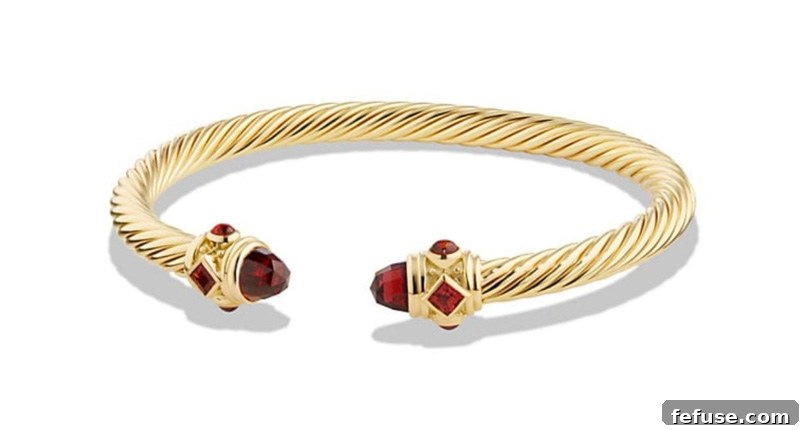
Perhaps the most defining characteristic of the David Yurman brand is its iconic cable motif, a design element recognized worldwide. David revealed its humble, yet inspired, origins: “The inspiration came from brazing rods. I bundled up this material to solder.” This simple, utilitarian material sparked a moment of creative genius. “I said, ‘Let’s do cable. Let’s use that as our river.’ I found a classic form and stuck with it.” This profound commitment to a singular, classic form allowed the cable to become more than just a design element; it became a signature, a universal symbol of the brand’s aesthetic. The remarkable success of this dedication is evident today: “Today, 70 percent of what we sell is cable, and many of our best-selling designs were made 20 years ago.” This longevity speaks volumes about the power of finding a unique, timeless identifier and consistently evolving it while maintaining its core essence, creating a legacy that transcends fleeting trends.
The Enduring Legacy of David and Sybil Yurman
The journey of David and Sybil Yurman is a powerful narrative of art meeting commerce, driven by passion, intuition, and an unwavering commitment to quality and originality. From a $500 loan and a desire “to make things,” they forged a global luxury brand, proving that authentic artistic vision, coupled with astute business strategy and a deep understanding of the market, can create an enduring legacy. Their insights continue to inspire not only the jewelry industry but anyone aspiring to build a brand that resonates with integrity, innovation, and timeless appeal. Their story is a testament to the idea that by following one’s own way, listening to the world, and consistently delivering a unique point of view, it is possible to transform artistic dreams into an iconic reality.