
Pioneering Gemological Advancements: Insights from GIA’s Annual Research Meeting
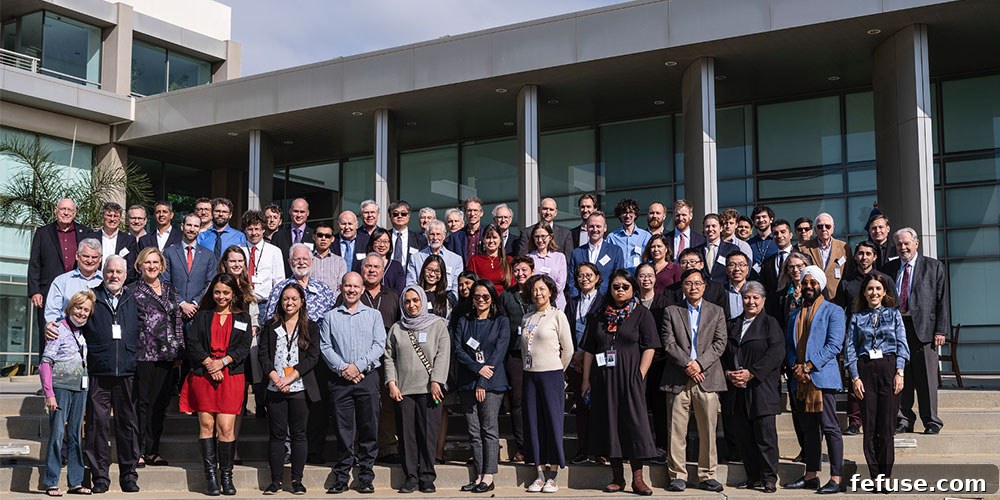
The Gemological Institute of America (GIA) recently convened its 16th annual research meeting, a pivotal event that brought together a formidable assembly of over one hundred distinguished researchers, leading academics, independent industry experts, and GIA Governors and executives. Held both in person at GIA’s global headquarters in Carlsbad, California, and virtually from November 1-3, this gathering served as a crucible for innovation and knowledge exchange in the field of gemology. Participants, collectively representing centuries of invaluable expertise, engaged in rigorous review and discussion of the latest scientific breakthroughs. The comprehensive agenda spanned a broad spectrum of critical topics, including sophisticated methods for determining the geographic origin of coveted colored stones and pearls, the continuous evolution of techniques for identifying laboratory-grown diamonds, the detection of new and increasingly complex gem treatments, significant advancements in automated diamond grading systems, and the ongoing development of specialized gemmological instrumentation and advanced analytical techniques designed to enhance accuracy and efficiency across the industry.
GIA’s Enduring Commitment to Consumer Protection and Industry Trust
At the heart of GIA’s mission lies an unwavering dedication to consumer protection, a principle eloquently articulated by Susan Jacques, GIA President and CEO. She emphasized the profound importance of expanding the world’s collective knowledge of gemology, stating, “Extending the world’s knowledge of gemmology is at the core of our important consumer protection mission. GIA is unique in having a talented team of remarkable scientific experts, world-renowned outside advisors and the advanced technology, scientific instrumentation and other resources to support such important work that yields concrete benefits for the public and the trade.” This statement underscores GIA’s unique position, leveraging a formidable combination of human capital – its expert scientific team and esteemed external advisors – alongside cutting-edge technology and unparalleled resources. These assets are critical enablers for conducting the essential research that not only pushes the boundaries of gemological science but also delivers tangible, concrete benefits directly to the global public and the wider gem and jewelry trade. The intricate balance of scientific rigor and practical application ensures that GIA’s research translates into actionable insights that safeguard consumer confidence and maintain the integrity of the market.
Echoing this sentiment, Tom Moses, GIA Executive Vice President and Chief Laboratory and Research Officer, further elaborated on the foundational role of GIA’s extensive research programs. He stated, “GIA’s comprehensive research programs are fundamental to our work to ensure and preserve the public trust in gems and jewellery. That trust is threatened by the increasingly sophisticated treatments we see in our identification and grading laboratories. This is why we devote so much effort to advancing and sharing our research.” Moses highlighted the growing challenge posed by increasingly sophisticated gem treatments, which continually emerge and present significant hurdles for accurate identification within GIA’s advanced laboratories. These treatments, often designed to mimic natural characteristics or enhance perceived value, directly jeopardize public trust in the authenticity and declared characteristics of gems and jewelry. Consequently, GIA’s sustained and substantial investment in advancing and openly sharing its research findings becomes not just an academic pursuit but a vital defense mechanism against potential deception, ensuring that consumers can confidently purchase gems with accurate information about their quality and origin.
The Collaborative Powerhouse: GIA’s Research Team and Global Impact
The intellectual engine driving GIA’s profound contributions to gemology is its exceptional 60-person research team. This formidable group comprises more than 20 individuals holding advanced academic degrees, a testament to the depth of scientific expertise within the Institute. Supplementing this core team were four esteemed members of the GIA Board of Governors, GIA executives, and a select group of prominent independent research consultants, all contributing their diverse perspectives and specialized knowledge. This collaborative synergy ensures a holistic approach to complex gemological challenges. During the meeting, this collective presented and engaged in robust discussions concerning an extensive array of research findings and groundbreaking discoveries. These insights are not merely theoretical; they form the indispensable scientific bedrock upon which GIA constructs its world-renowned education programs, delivers its authoritative laboratory services, and innovates its cutting-edge instrument development. Every certificate issued, every educational course taught, and every instrument designed by GIA is directly informed and fortified by the rigorous scientific inquiry undertaken by this dedicated team, thereby cementing GIA’s position as a global leader in gemological research and standards.
Key Research Areas Driving the Future of Gemology
The presentations at the 16th annual research meeting showcased pivotal advancements across several critical domains, each holding significant implications for the gem and jewelry industry and consumer confidence. These areas represent GIA’s proactive response to evolving market needs and emerging challenges in gem identification and authentication.
Geographic Origin Determination for Colored Stones and Pearls
One of the most keenly anticipated research discussions focused on leveraging data science and machine learning to develop robust statistical methods for determining the geographic origin of colored stones and pearls. The origin of a gem can profoundly influence its rarity, desirability, and market value, often impacting ethical sourcing considerations. However, establishing origin definitively is an exceedingly complex task, requiring the analysis of subtle geological signatures. GIA’s innovative approach utilizes vast datasets encompassing trace element analysis, inclusion characteristics, and advanced spectroscopic data from known deposits worldwide. By employing sophisticated machine learning algorithms, researchers are able to identify intricate patterns and correlations that are imperceptible to the human eye. This allows for more precise and consistent origin determination, mitigating ambiguity and providing greater transparency to both trade professionals and consumers. This technology not only enhances GIA’s ability to issue accurate origin reports but also contributes significantly to provenance tracking and the verification of ethical supply chains within the industry.
Cutting-Edge Identification of Laboratory-Grown Diamonds
With the increasing prevalence and sophistication of laboratory-grown diamonds in the market, the development of new, reliable methods for their identification remains a top priority. The presentations detailed GIA’s continuous efforts to stay ahead of manufacturing advancements, ensuring clear and accurate differentiation from natural diamonds. Research highlighted novel spectroscopic techniques, advanced microscopy, and sophisticated analytical protocols that can detect the subtle yet distinct growth patterns, impurity profiles, and physical properties characteristic of lab-grown diamonds. These methods are crucial for maintaining the integrity of the diamond market, preventing misrepresentation, and upholding consumer trust. GIA’s commitment to this research means that its laboratories are equipped with the most advanced tools and methodologies to accurately identify and disclose all types of diamonds, providing critical assurance to buyers and sellers worldwide. The ability to distinguish natural from laboratory-grown diamonds swiftly and definitively is paramount for fair trade and informed purchasing decisions, especially as production techniques for synthetic diamonds continue to evolve rapidly.
Detection of New Gem Treatments and Enhancements
Another critical area of ongoing research presented at the meeting involved the detection of new and emerging treatments applied to natural gemstones. Gemstone treatments, ranging from heat enhancement and fracture filling to irradiation and dyeing, are designed to improve a gem’s appearance, often impacting its value and requiring full disclosure. As treatment technologies become more sophisticated, they present growing challenges for gemological laboratories seeking to identify them. GIA researchers showcased breakthroughs in identifying these subtle enhancements, often involving non-destructive analytical techniques such as Raman spectroscopy, FTIR spectroscopy, and photoluminescence. These advanced methods allow GIA to discern even the most elusive treatments, which might otherwise go unnoticed. The relentless pursuit of new detection methods is vital for protecting the integrity of the gem trade and ensuring that all material is accurately described, allowing consumers to make informed choices based on complete and transparent information about the gems they acquire.
Advancements in Automated Diamond Grading Systems
The meeting also featured significant discussions on the advancements in developing a laboratory-based automated diamond grading system. This represents a transformative step towards enhancing consistency, objectivity, and efficiency in diamond grading. Current grading relies on human expertise, which, while highly skilled, can introduce subtle variations. Automated systems leverage state-of-the-art imaging, artificial intelligence (AI), and machine learning algorithms to objectively assess characteristics such as cut, clarity, and color. By removing subjective elements, these systems aim to provide unprecedented levels of consistency and reproducibility in grading results. The research presented focused on perfecting the algorithms and developing robust hardware capable of precisely capturing and analyzing minute details of a diamond. This innovation holds the potential to standardize grading further, streamline laboratory operations, and ultimately provide even greater confidence in GIA’s diamond grading reports. The integration of AI and automation into this traditionally manual process signifies a major leap forward in gemological science and service delivery.
The Broader Impact of GIA’s Research on the Gem and Jewelry Industry
The extensive research and discoveries presented at GIA’s 16th annual research meeting extend far beyond academic interest; they are foundational to the operational excellence and forward momentum of the entire gem and jewelry industry. The insights gained directly inform the curricula of GIA’s educational programs, ensuring that future gemologists are equipped with the most current scientific knowledge and identification techniques. This continuous refreshment of educational content helps maintain a highly skilled workforce capable of addressing modern gemological challenges. Furthermore, the findings are immediately integrated into GIA’s laboratory services, enhancing the precision and reliability of its grading and identification reports, which are trusted globally as benchmarks of quality and authenticity. The development of new and improved instruments, a direct outcome of this research, provides the tools necessary for laboratories and trade members to conduct their own assessments with greater accuracy and efficiency. In essence, GIA’s research fosters a cycle of innovation, education, and application that elevates industry standards, fortifies consumer confidence, and ensures the long-term health and integrity of the global gem and jewelry market. The collaborative spirit and commitment to sharing knowledge demonstrated at this meeting are vital for navigating the evolving landscape of gemological science and commerce, ensuring that GIA remains at the forefront of protecting public trust and advancing the art and science of gemology.