
Lightbox Jewellery Expands to Canada: De Beers’ Lab-Grown Diamond Brand Makes Its First International Move
In a significant strategic move, Lightbox Jewellery, the innovative lab-grown diamond brand backed by global diamond titan De Beers, has officially expanded its operations beyond the borders of the United States for the very first time. This marks a pivotal moment for the brand, which has successfully cultivated a loyal customer base within the US market since its launch. The exciting announcement, shared via the brand’s official Twitter channels, confirms Canada as the chosen destination for this inaugural international foray, signaling a new chapter in Lightbox’s mission to make beautiful, accessible lab-grown diamonds available to a wider audience.
While Canada may be geographically close to the United States, this expansion represents far more than just a convenient adjacent market; it signifies a deliberate and carefully considered step in Lightbox’s global growth strategy. For a brand that has meticulously built its presence in the highly competitive US jewelry landscape, branching out internationally requires careful planning, market analysis, and a deep understanding of consumer demand. This initial international launch underscores a growing confidence in the brand’s unique value proposition and the increasing global appetite for high-quality, ethically produced, and accessibly priced lab-grown diamonds.
A Strategic Leap Beyond US Borders Driven by Consumer Demand
The decision to expand into Canada was not made lightly but was rather a direct response to a clear and demonstrable demand from Canadian consumers. Steve Coe, Chief Executive Officer of Lightbox Jewellery, articulated the brand’s rationale in a statement to JCK, highlighting the strong interest observed even before the official launch. “Since we first announced Lightbox, we’ve had strong interest from Canadian consumers,” Coe remarked. This interest was quantifiable, with a significant 13 percent of consumers who signed up for Lightbox email updates originating from Canada. This compelling data point served as a powerful indicator of a receptive market waiting to embrace the brand.
“We see it as a significant market,” Coe affirmed, underscoring the strategic importance of Canada to Lightbox’s long-term vision. This perceived significance extends beyond mere proximity, encompassing Canada’s robust economy, its discerning consumer base, and a growing trend towards conscious consumption. The Canadian market, known for its appreciation of quality and its increasing focus on ethical sourcing and sustainability, aligns perfectly with the core values and product offerings of Lightbox Jewellery. This expansion, therefore, is not merely about increasing reach but about tapping into a demographic that resonates deeply with the brand’s ethos.
The Evolving Landscape of Lab-Grown Diamonds and Consumer Preferences
The global diamond industry is undergoing a transformative period, largely driven by the ascendance of lab-grown diamonds. These technologically advanced gems, chemically, physically, and optically identical to their mined counterparts, offer a compelling alternative that resonates with a modern consumer base. Factors such as affordability, guaranteed ethical origin, and a minimal environmental footprint have propelled lab-grown diamonds into the mainstream, challenging traditional perceptions and opening new avenues for diamond jewelry.
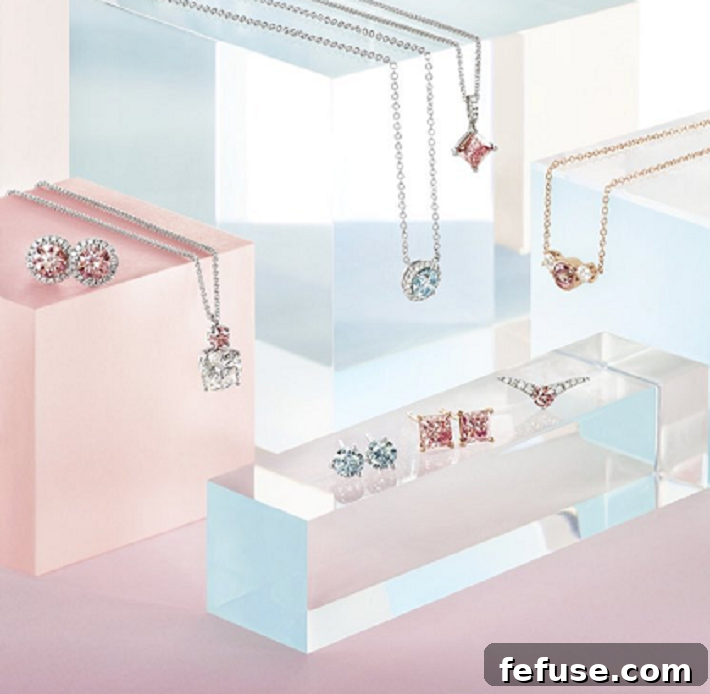
De Beers, historically the most dominant player in the natural diamond market, made waves across the industry when it launched Lightbox Jewellery in 2018. This move was a strategic diversification, recognizing the evolving market dynamics and the irreversible trend towards lab-grown alternatives. Lightbox was positioned as a fashion-forward, accessible brand, clearly differentiating its lab-grown diamonds from natural diamonds in both pricing and marketing. The brand’s direct-to-consumer model and transparent pricing strategy, offering all white, pink, and blue lab-grown diamonds at $800 per carat, plus the cost of the setting, democratized access to diamond jewelry, making it attainable for everyday wear and gifting occasions.
Understanding the Appeal to Canadian Consumers
The impressive statistic of 13% of email sign-ups coming from Canada speaks volumes about the latent demand and awareness for Lightbox Jewellery within the country. This strong interest can be attributed to several factors inherent to the Canadian consumer market. Canadians generally possess a high disposable income and an appreciation for quality goods. Furthermore, there is a pronounced and growing emphasis on ethical consumerism and sustainability in Canada. Consumers are increasingly seeking products that align with their values, prioritizing transparency, environmental responsibility, and fair labor practices.
Lab-grown diamonds, with their traceable origins and controlled production environments, naturally appeal to this value-driven segment. Lightbox’s clear communication about its product and pricing structure likely resonated with Canadians who value transparency and seek high-quality products without the premium price often associated with natural diamonds. The brand’s focus on contemporary designs and accessible luxury also taps into a broader demographic, moving beyond traditional engagement ring purchases to include self-gifting and fashion statements. This confluence of economic capability, ethical considerations, and evolving fashion sensibilities makes Canada an exceptionally fertile ground for Lightbox’s expansion.
Navigating Capacity Constraints and Future Growth
Despite the evident enthusiasm for international expansion, Lightbox Jewellery is exercising a pragmatic approach to its growth trajectory. Steve Coe clarified that while Canada marks the first international step, there are no immediate plans for further global expansion beyond this market. The primary reason for this measured pace is directly linked to production capacity. “At the moment, we are capacity constrained until the new production facility comes online,” Coe explained, underscoring the importance of scaling operations responsibly to meet anticipated demand.
This commitment to controlled growth is a testament to Lightbox’s dedication to maintaining product quality and ensuring a consistent supply. The brand’s new, state-of-the-art production facility is a critical component of its long-term strategy. This advanced factory is scheduled to commence production in the first quarter of 2020, representing a significant investment in the future of lab-grown diamond manufacturing. Once fully operational, the facility is projected to achieve an impressive annual output of 500,000 carats of rough lab-grown diamonds. This substantial increase in production capacity will be instrumental in alleviating current constraints, enabling Lightbox to fulfill growing demand and, crucially, to contemplate future international market entries with confidence.
The ability to produce half a million carats of rough diamonds annually will not only secure Lightbox’s supply chain but also reinforce its position as a major player in the lab-grown segment. This scale of production could potentially influence market pricing, increase availability, and drive further innovation in diamond growing technologies. For consumers, it means greater access to high-quality, attractively priced lab-grown diamonds, further solidifying the category’s presence in the mainstream jewelry market.
De Beers’ Evolving Strategy in the Diamond Landscape
De Beers’ venture into the lab-grown diamond space with Lightbox Jewellery was initially met with a mix of surprise and apprehension within the traditional diamond industry. For over a century, De Beers had been synonymous with natural diamonds, meticulously crafting their image as rare, precious, and enduring. The launch of Lightbox represented a bold acknowledgment of market evolution and a strategic pivot to address a growing consumer segment that values affordability and transparency in diamond purchases.
The strategy behind Lightbox was clear: to create a distinct brand and product offering for lab-grown diamonds, differentiating them explicitly from natural diamonds primarily through price and marketing. By positioning lab-grown diamonds as a fun, fashion-oriented, and accessible luxury, De Beers sought to prevent market confusion and ensure that the perception of natural diamonds as rare heirlooms remained intact. This dual-brand strategy allows De Beers to participate in both segments of the diamond market, catering to different consumer needs and preferences while maintaining its legacy in the natural diamond sector. The success of Lightbox, particularly its expansion into new territories like Canada, validates this innovative and forward-thinking approach, demonstrating that a multi-faceted strategy can effectively navigate the complexities of the modern diamond market.
The Future of Lightbox Jewellery and the Global Lab-Grown Market
The Canadian expansion marks a crucial milestone for Lightbox Jewellery, paving the way for future international growth once production capabilities are fully optimized. With the new factory set to significantly boost output in 2020, the brand will be better equipped to assess and enter other promising global markets. Potential future expansions could target regions with high disposable incomes, strong e-commerce penetration, and a growing consumer interest in sustainable and ethically sourced products. The success in Canada will provide invaluable insights into international market dynamics, consumer behavior outside the US, and logistical challenges, informing future strategic decisions.
The broader lab-grown diamond market is poised for continued robust growth. Innovations in growing technology, coupled with increasing consumer acceptance and awareness, are fueling this expansion. Major players like De Beers, through brands like Lightbox, lend significant credibility and investment to the sector, accelerating its maturation. While challenges such as ongoing debates with the natural diamond industry and the need for clear consumer education persist, the opportunities for growth are substantial. Lightbox Jewellery, with its clear brand identity, accessible pricing, and now a proven track record of expansion, is well-positioned to capitalize on these trends and further solidify its standing as a leader in the accessible diamond fashion segment.
Conclusion: A New Chapter for Accessible Diamond Fashion
Lightbox Jewellery’s expansion into Canada is more than just a geographical move; it’s a testament to the undeniable appeal of lab-grown diamonds and a strategic affirmation of De Beers’ innovative approach to the evolving jewelry market. By responding to strong consumer demand and carefully managing its growth, Lightbox is setting a precedent for how a major player can successfully integrate accessible, fashion-forward lab-grown diamonds into its portfolio.
This new chapter brings beautiful, high-quality lab-grown diamond jewelry closer to Canadian consumers, offering them choices that align with contemporary values of affordability, ethics, and sustainability. As the new production facility comes online, enabling greater global reach, Lightbox Jewellery is poised to further disrupt and redefine the landscape of accessible luxury, making diamond sparkle a joy for even more individuals around the world.
News Source: professionaljeweller