

Discover Earth’s Masterpieces: An Exquisite Collection of Unique Mineral and Gemstone Specimens
Delve into the fascinating world of geology with this captivating showcase of rare and distinctive mineral and gemstone specimens. From colossal crystals to naturally sculpted formations, each piece tells a unique story of Earth’s incredible artistry and geological processes. Whether you’re a seasoned collector, a budding enthusiast, or simply captivated by natural beauty, prepare to be amazed by these remarkable treasures, each highlighting the diverse wonders hidden beneath our planet’s surface. This curated selection exemplifies nature’s boundless creativity, presenting specimens valued for their rarity, size, unique crystal habits, and the mesmerizing colors they display. Join us on a journey through these geological marvels, exploring their origins, characteristics, and the stories they tell about our planet’s dynamic history.
Blade Calcite: A Giant Among Crystals from the USA
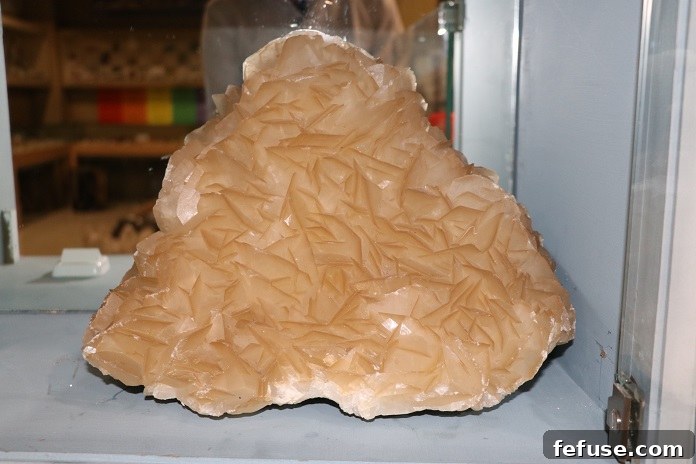
While calcite is recognized as one of the most abundant minerals on Earth, forming significant portions of limestones and marbles, its presence in such magnificent proportions elevates this particular specimen from common to truly extraordinary. Calcite, a carbonate mineral and the most stable polymorph of calcium carbonate, typically crystallizes in a rhombohedral form, characterized by six rhomb-shaped faces, a crystal habit familiar to many. However, this striking example showcases what is known as the ‘scalenohedron’ crystal habit, distinguished by its sharp, angular, and often elongated faces, giving it a distinctive appearance. It is this unique morphology, reminiscent of sharp edges or blades, coupled with its impressive size, that earned it the captivating moniker “Blade Calcite.” Such well-defined scalenohedral crystals, especially at this grand scale, are a testament to specific, often turbulent, growth conditions within the geological environment, where temperature, pressure, and solution chemistry played a critical role. Collectors highly value these specimens not only for their exceptional aesthetic appeal but also for the insight they offer into the diverse crystallography and formation processes of minerals. This particular treasure, weighing an astounding 90,000 carats, originates from the USA, a region renowned for its rich mineral deposits and significant geological finds, particularly in areas with extensive limestone formations. The sheer mass and the uncommon crystal form make it a truly exceptional piece for any discerning mineral collection, embodying the grandeur and intricate diversity of natural mineral formation.
Multi Color Jasper: Nature’s Painted Canvas from Mexico
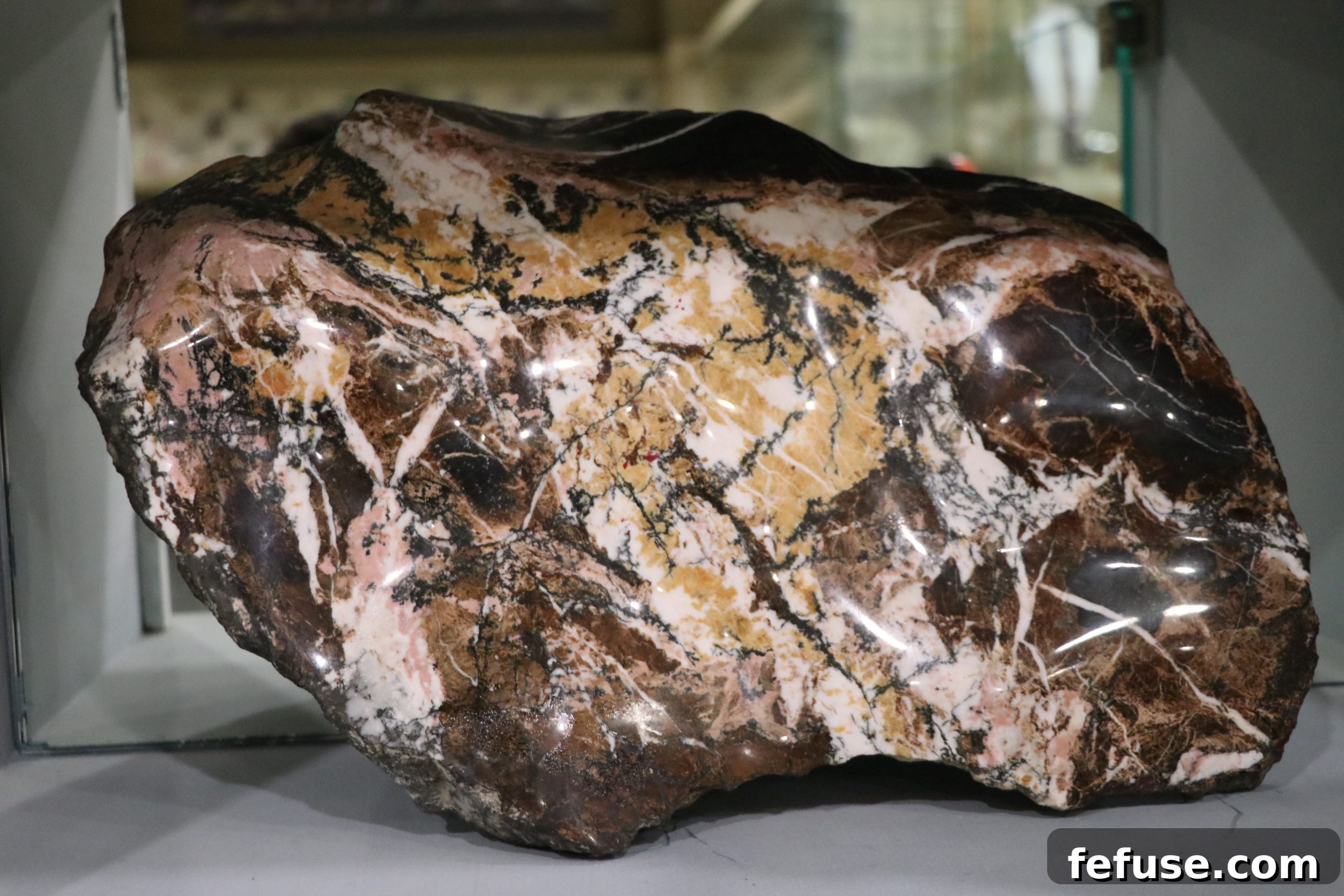
This breathtaking multi-colored jasper specimen is a vivid illustration of nature’s unparalleled artistry, showcasing a spectrum of geological wonders in a single piece. Jasper, a microcrystalline variety of quartz, is celebrated for its dense, opaque formations and a kaleidoscopic array of colors, often attributed to varying mineral impurities. Unlike transparent quartz, jasper’s opaque quality results from finely disseminated mineral inclusions. What makes this particular gem so remarkable is its substantial size combined with an extraordinary palette of variable hues and tones, ranging from earthy reds and yellows to subtle greens and grays. These vibrant color variations are intricately caused by the presence of different chemical impurities, predominantly iron oxides in various oxidation states, as well as manganese and clay minerals, which were incorporated during the stone’s formation through hydrothermal processes or sedimentary deposition. Such a spectacle of natural pigmentation in a single, large specimen is truly a treat for both seasoned collectors and new enthusiasts, offering endless visual exploration. Adding to its unique charm is the presence of exquisite dendrites – fascinating, fern-like or tree-branch-like patterns formed by manganese oxide inclusions, which permeate the jasper, enhancing its visual depth, complexity, and organic appeal. Weighing an impressive 67,100 carats, this magnificent example hails from Mexico, a country rich in geological diversity and renowned for producing some of the world’s most beautiful ornamental stones, including stunning jaspers. Its intricate patterns and vibrant colors make it a stellar example of how geological processes can produce incomparable works of natural art, highly sought after for both display and lapidary applications.
The ‘Shoe-shaped’ Agate: A Whimsical Geological Formation from Brazil
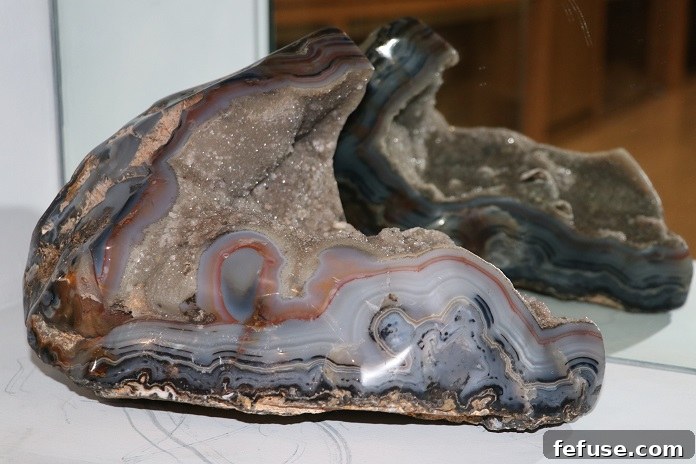
Occasionally, nature transcends conventional beauty to craft forms that ignite the imagination, creating patterns and shapes that resonate with familiar objects. This extraordinary agate specimen is a prime example of such geological whimsy. This fascinating grey and brown agate has naturally formed into a distinctive shoe-like shape within its original matrix, inviting observers to engage their imagination and appreciate the playful and surprising side of Earth’s artistic processes. Agate, a cryptocrystalline variety of silica, is widely known for its characteristic banding, which typically forms in concentric layers within cavities of volcanic rocks as silica-rich fluids slowly deposit mineral matter. What makes this piece particularly intriguing is not only its unusual, anthropomorphic silhouette but also the intricate details visible upon closer inspection. Within the outer ‘banded’ agate rim, small, sparkling crystals of crystalline quartz (often referred to as druzy quartz) are clearly visible, adding a delicate touch of brilliance and textural contrast to the specimen. These tiny crystals highlight the complex depositional history of the agate, as successive pulses of silica-laden solutions gradually filled the void, culminating in these sparkling formations. This exceptional natural sculpture, weighing 63,300 carats, originates from Brazil, a country globally celebrated for its vast deposits of agates, geodes, and other quartz varieties. It stands as a testament to the unexpected and delightful shapes that geological forces can produce, truly a conversation starter and a unique centerpiece for any collection that values natural artistry and the power of perception.
Rhodochrosite: A Rare Brown Beauty from Japan
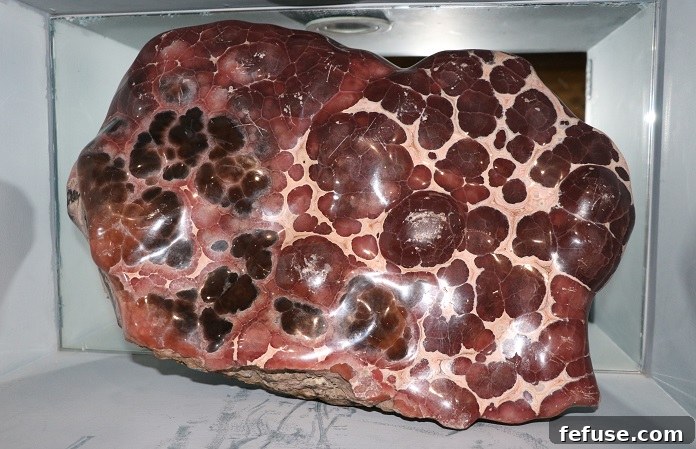
Rhodochrosite is universally cherished for its vibrant, characteristic pink to reddish-pink hues, a captivating color derived from its manganese carbonate composition (MnCO3). This brilliant coloration is what typically makes rhodochrosite a highly sought-after mineral for both collectors and jewelry designers. Yet, it is the unexpected, rich brown coloration of this particular rhodochrosite specimen that transforms it into an exceptionally rare and coveted collector’s item. This unique coloring is generally a result of specific impurities, such as iron, or oxidation processes that occur during its formation, causing a significant deviation from the mineral’s classic aesthetic. This remarkable specimen was meticulously mined in 1960 in Japan, a country not widely known for rhodochrosite deposits in general, making its origin even more significant and adding a layer of historical intrigue. Since that time, mining operations in the area, likely specific veins or deposits, have ceased, further enhancing the rarity and historical value of this exquisite piece. Beyond its unusual color and historical provenance, the specimen exhibits a ‘spherulitic’ growth pattern, where crystals radiate outwards from a central point, forming spherical or botryoidal aggregates. This particular growth habit beautifully reminisces a delicate ‘flower bouquet,’ adding an element of organic elegance and artistic flair to its geological charm. Weighing an impressive 140,700 carats, this rhodochrosite stands as a testament to the diverse expressions of nature and the profound impact of geological history on mineral availability, making it an irreplaceable addition to any serious collection that values uniqueness, provenance, and aesthetic beauty.
‘Honey’ Fluorite: Golden Cubes from China
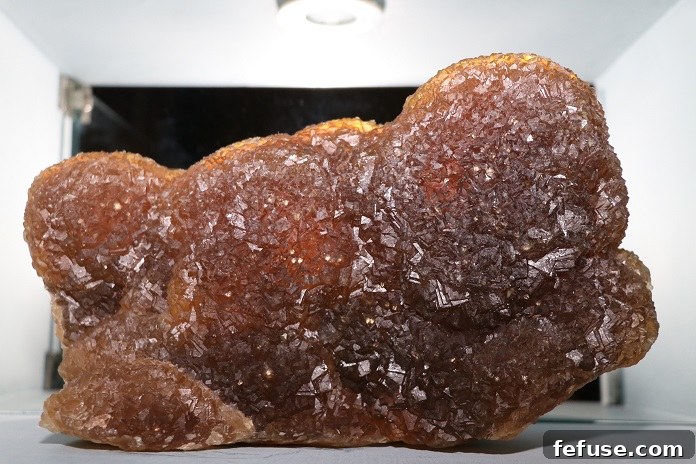
Fluorite, a calcium fluoride mineral (CaF2), is celebrated for its stunning array of colors, perfect octahedral cleavage, and often cubic crystal habit. However, it is this particular variety, with its warm and inviting honey color, that captures significant attention and highlights the mineral’s incredible diversity. This beautiful specimen is composed of numerous smaller, perfectly formed and intergrown cubic crystals, a classic and instantly recognizable crystal habit for fluorite. What sets this specific piece apart is its distinctive aesthetic, featuring a captivating camel hump pattern adorned with three prominent elevations, creating a natural sculpture that demonstrates the dynamic growth processes within a geological cavity. The harmonious intergrowth and arrangement of these smaller cubic crystals add immense visual texture and beauty, making the specimen highly appealing to the eye and to the touch. Such well-formed and aesthetically pleasing aggregates are often considered prime examples of natural crystallography and are therefore highly sought after by collectors who appreciate the intricate details of mineral growth and the sheer complexity of natural formations. It is truly remarkable to observe how nature can engineer stones with such a wide spectrum of shapes, designs, and color palettes, each a unique geological fingerprint resulting from specific trace elements or radiation during formation. This magnificent ‘Honey’ Fluorite, with a substantial weight of 90,600 carats, originates from China, a country recognized globally for its extensive and diverse fluorite deposits, often yielding specimens of exceptional clarity, color, and crystal habit. Its rich color, intricate form, and impressive size make it a prized specimen for any mineral enthusiast.
Onyx Marble: Banded Beauty from Argentina
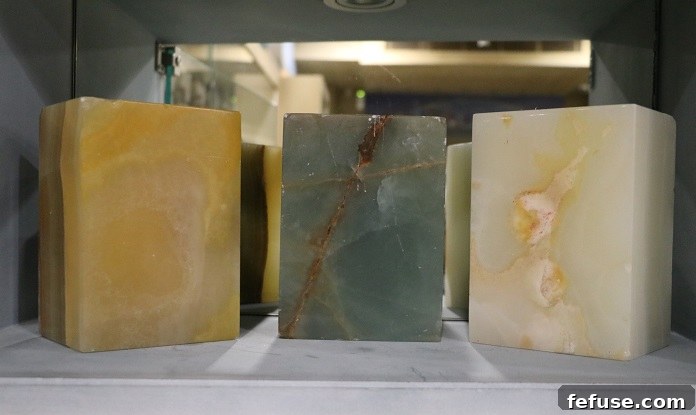
These captivating specimens are known as onyx marble, a distinct variety of calcite or aragonite, both calcium carbonate minerals (CaCO3). It is crucial to distinguish this material from true onyx, which is a specific form of chalcedony, a microcrystalline quartz. The term ‘onyx’ is bestowed upon these marbles due to their characteristic, well-defined banding, which visually resembles the layering found in genuine onyx gemstones. This banding in onyx marble is typically a result of rhythmic deposition from mineral-rich hot springs or groundwater, forming a type of travertine or cave deposit (speleothem). The variations in color and translucency within the bands are caused by slight changes in mineral impurities, water flow, and temperature during formation over thousands of years. Unlike many other minerals showcased in this collection, onyx marble is not typically employed as a precious gem in jewelry due to its relative softness and opaque nature compared to other gemstones. Instead, its unique aesthetic qualities, durability, and excellent workability make it an exceptionally important material for crafting exquisite artifacts, sculptures, and decorative architectural elements, such as intricate carvings, tabletops, or wall panels. Its beautiful translucent qualities, when polished, allow for stunning light play in finished pieces, creating a warm glow. Sourced from Argentina, a region known for its rich and varied mineral resources, these onyx marble specimens exemplify how geological formations, even those not classified as traditional gemstones, hold immense value and beauty in the world of art and design. They represent the Earth’s ability to create both delicate and robust materials for human appreciation and utility, showcasing the grandeur of geological processes.
Fluorite ‘Hill’: A Verdant Cluster from Mali
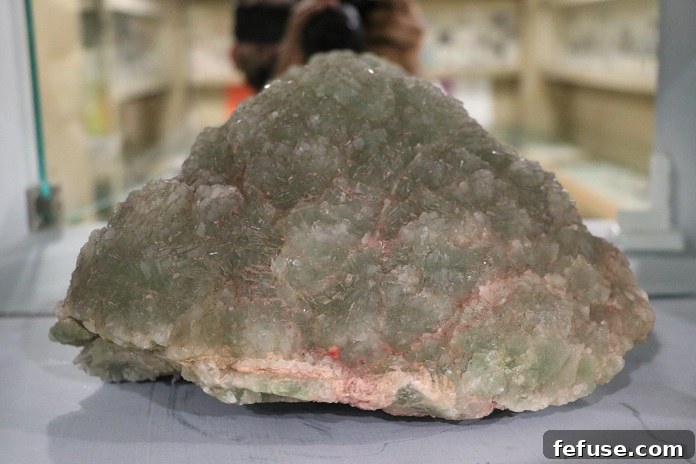
This magnificent specimen presents itself as a captivating “hill” composed of countless intergrown cubic crystals of a pleasant green fluorite. Fluorite, known for its wide spectrum of colors ranging from clear to blue, purple, yellow, and green, often acquires its green hues from trace elements such as rare earth elements, or hydrocarbon inclusions, which are incorporated into its crystal lattice during its formation. The sheer volume and intricate arrangement of these individual cubes create a stunning, undulating landscape that mimics a miniature verdant terrain, showcasing the mineral’s classic crystal habit in a grand aggregate form. Considering the substantial size of this crystalline heap and the relatively smaller, yet perfectly formed, individual crystals that comprise it, such specimens are typically not chosen for faceting or traditional gem-cutting. Instead, their true value and aesthetic appeal lie in their natural, untouched form, preserving the integrity and beauty of the geological growth process. Consequently, these specimens are highly prized and often reserved for serious mineral collectors who appreciate the raw, unadulterated beauty and crystallographic complexity of nature, seeing them as natural sculptures. This remarkable ‘Fluorite Hill,’ weighing 74,150 carats, proudly hails from Mali, a country gaining significant recognition in the mineral world for its superb mineralogical finds, particularly its vibrant and well-formed fluorite crystals. It serves as a breathtaking reminder of the intricate and large-scale natural formations our Earth can produce, a testament to the quiet power of geological processes over millennia.
Bi-Colour Jasper: A Madagascar Marvel of Contrast
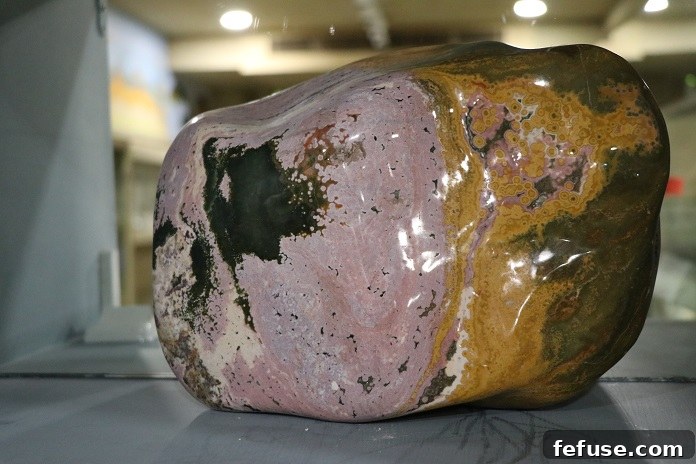
This exquisite jasper specimen showcases a mesmerizing combination of two primary colors: a delicate lavender and a rich, earthy brown, forming an exceptional and harmonious color palette. Jasper, a dense, opaque variety of chalcedony (microcrystalline quartz), is renowned for its diverse patterns and striking color combinations, often influenced by the inclusion of various minerals like iron oxides and manganese during its formation. The lavender hue typically suggests the presence of manganese or specific iron compounds in trace amounts, while the brown is clearly indicative of iron oxides. Observe closely how nature has meticulously crafted intricate ‘spherical’ designs across this specimen, suggesting an orbicular or nodular growth pattern, where concentric bands form around a central nucleus, adding profound depth and character. These unique patterns are a geological fingerprint, reflecting the dynamic processes that shaped the stone over geological epochs. The inherent beauty of such bi-colored jasper extends wonderfully into lapidary applications. Depending on which portion of the rough material is utilized, fashioned stones will exhibit distinct colors and patterns, ensuring that no two finished pieces will ever be exactly alike. This intrinsic variability makes each cut gem a singular work of art, highly prized by those seeking unique jewelry or ornamental pieces. Weighing 47,220 carats, this captivating Bi-Colour Jasper originates from Madagascar, an island nation celebrated for its unparalleled biodiversity and its rich geological bounty, yielding some of the world’s most visually stunning jaspers and other decorative stones. It stands as a testament to nature’s boundless creativity and the individuality found within its mineral creations.
Fluorite: Emerald Green Octahedral Cluster from China
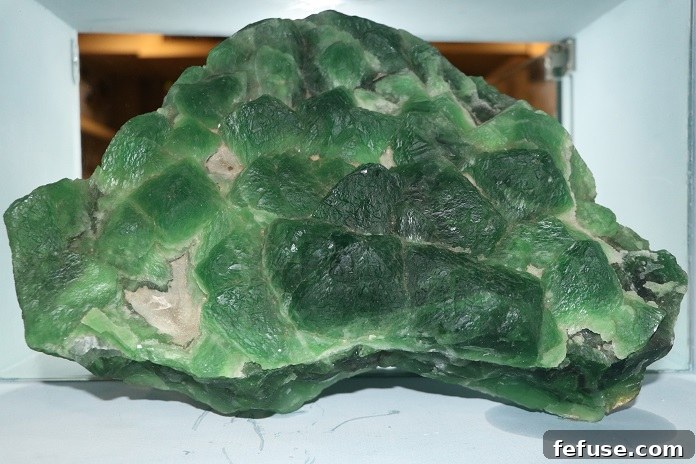
This colossal cluster of ‘octahedral’ fluorite crystals is truly unique, not just for its impressive size but for its rare and captivating ’emerald’ green color. While fluorite is commonly found in cubic forms, its octahedral habit, characterized by eight perfectly symmetrical pyramid-like faces, is another classic crystallographic expression, often a result of twinning or specific growth conditions within a particular geological environment. The rich, vibrant green hue of these crystals is particularly striking, reminiscent of precious emeralds, and is likely due to trace elements, such as rare earth elements, or slight natural irradiation within the geological environment during the mineral’s formation. Numerous individual pyramids, each displaying complex surface features and exceptional clarity, seemingly emerge from the matrix, forming a spectacular, multi-faceted landscape that is a marvel to behold. This intricate arrangement and the subtle, yet discernible, color variation from crystal to crystal further enhance the specimen’s visual depth and appeal, making it an exceptional collector’s item. Such large, well-formed, and vividly colored crystal clusters are highly sought after by mineral enthusiasts worldwide for their aesthetic beauty and scientific interest. Weighing a substantial 96,500 carats, this magnificent fluorite cluster originates from China, a country that has emerged as a powerhouse for producing some of the finest and most diverse fluorite specimens globally, celebrated for their size, color, and crystalline perfection. It exemplifies the stunning beauty and crystallographic precision that nature can achieve, making it a centerpiece in any serious mineral collection.
Malachite ‘Ash-tray’: Craftsmanship from the Democratic Republic of Congo
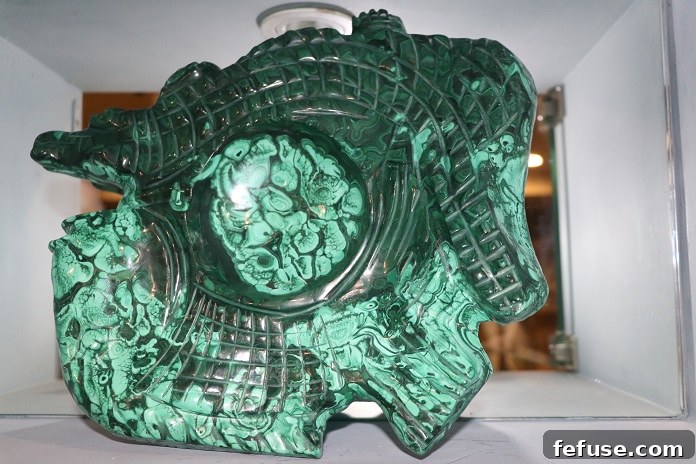
This unique malachite plate, thoughtfully fashioned into an ‘ash-tray,’ is not merely a decorative item but a profound testament to remarkable craftsmanship born out of necessity and local enterprise. Its creation is a direct result of export bans on rough stones implemented by the mining country, which compelled local artisans to innovate and transform raw materials into finished art pieces for global markets, thereby adding significant value locally. Malachite, a copper carbonate hydroxide mineral, is celebrated for its vibrant green color and characteristic concentric or banded patterns, often forming in botryoidal or stalactitic masses in the oxidized zones of copper deposits. This particular ash-tray beautifully displays the exquisite banding typical of high-quality malachite, showcasing the mineral’s natural beauty and intricate growth patterns. Adding to its distinctiveness, the piece is intricately carved with a graceful crocodile at the top and a fish with an open mouth at the bottom, showcasing the incredible skill, artistic vision, and cultural heritage of the local craftsmen. These carvings not only enhance the aesthetic appeal but also imbue the object with rich cultural significance and narrative. Weighing 45,100 carats, this splendid piece originates from the Democratic Republic of Congo (formerly Zaire), a region globally recognized as a primary source for some of the finest malachite in the world, known for its deep green hues and complex patterns. It stands as a powerful example of how human ingenuity and natural geological beauty can converge to create enduring works of art and commerce, transforming raw minerals into treasured artifacts.
Agate: Concentric Perfection from Brazil
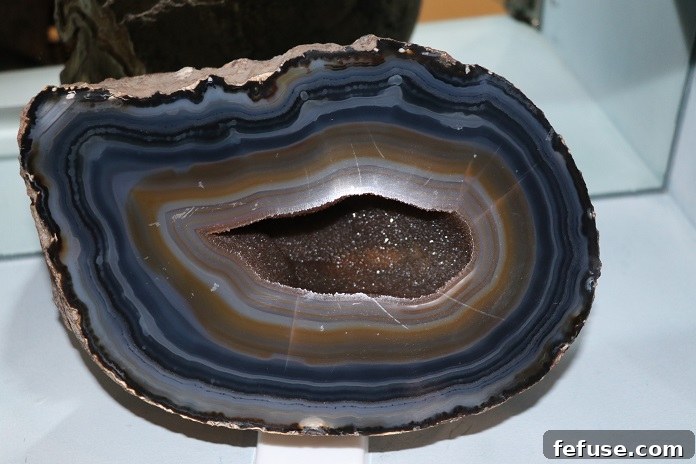
This stunning agate specimen captivatingly displays sharp, multi-colored concentric lining, or bands, meticulously arranged around a central cavity. This intricate pattern is a magnificent illustration of the precise symmetry and methodical processes at which nature operates within the Earth’s geological systems. Agate, a variety of chalcedony, which is a cryptocrystalline form of silica, typically forms within voids or cavities in host rocks, often volcanic, through the rhythmic deposition of silica-rich solutions. This process, often involving Liesegang rings, leads to its characteristic layered structure, with each band representing a distinct phase of growth. The distinct bands, often varying in color due to minute chemical impurities like iron oxides, manganese, or other trace elements, tell a detailed geological story of successive deposition and crystallization. Furthermore, within the central cavity, fine, transparent crystals of crystalline quartz (commonly known as druzy quartz) are clearly visible, adding a sparkling dimension and textural contrast to the piece. These delicate crystals form as the final stage of mineralization within the geode as the silica solutions become more concentrated. Observing such a perfectly formed natural creation, one cannot help but feel a profound sense of admiration for nature’s unparalleled artistic capabilities and its capacity for geological perfection in creating such intricate beauty. Weighing 54,000 carats, this exquisite agate specimen originates from Brazil, a country globally celebrated for its abundant and high-quality agate deposits, particularly those forming beautiful geodes and nodules with exceptional banding. It serves as a powerful reminder of the hidden beauty and intricate patterns that lie beneath our planet’s surface, waiting to be discovered and appreciated.
‘Native’ Copper: Raw Metallic Beauty from the USA
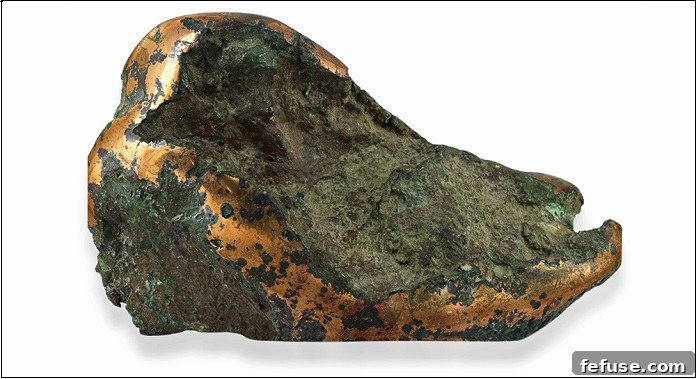
Copper stands as one of the select few metallic elements that can occur naturally in its ‘native’ form, meaning it is found uncombined with other elements, though it is far more commonly encountered as part of various mineral ores (like chalcopyrite or bornite). This rarity makes native copper specimens particularly fascinating for mineral collectors and geologists. When found natively, as illustrated by this striking specimen, it typically manifests as irregular masses, dendritic formations (branching tree-like patterns), or sometimes as twisted wires or sheets, all reflecting the conditions of its deposition from hydrothermal fluids. This particular specimen is associated with its original matrix, offering a valuable glimpse into its geological context and how it formed within the host rock, often in basaltic lava flows or sedimentary formations. Despite this association, the majority of the specimen proudly displays its characteristic metallic ‘copper’ color – a warm, reddish-brown hue that is instantly recognizable and, when exposed to the elements over time, oxidizes to a familiar green patina (like that seen on old copper roofs). Native copper specimens are highly valued by collectors not only for their intrinsic beauty and metallic luster but also for their significance in understanding Earth’s geological processes and the history of metallurgy, as copper was one of the first metals used by ancient civilizations. Weighing 39,900 carats, this impressive piece originates from the USA, a country with historically significant native copper deposits, particularly in the Upper Peninsula of Michigan, where massive native copper formations were once extensively mined. It embodies the raw, unadulterated beauty and elemental purity of a fundamental component of our planet.
Sugilite: The Tortoise Gem from South Africa
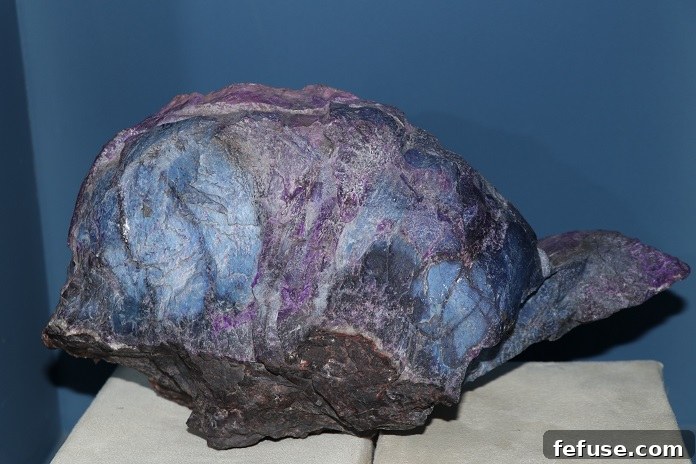
Sugilite remains one of the more obscure yet profoundly captivating gemstones, often unknown to the general public, but highly prized by connoisseurs for its exquisite purplish-pink to deep purple hues. This distinctive coloration is primarily caused by the presence of manganese within its complex cyclosilicate structure. However, when specimens like this appear, naturally resembling the distinct shape of a tortoise, they become an extraordinary delight for collectors and enthusiasts alike, transcending mere mineralogical interest. With just a touch of imagination, one can clearly discern the tortoise’s shell, complete with its head gently projecting out, a truly remarkable natural sculpture. This phenomenon of recognizing familiar shapes in natural objects, known as pareidolia, adds a whimsical and deeply personal connection to the mineral world, making such pieces unique conversation starters. Sugilite frequently forms in association with other minerals, such as pectolite, a sodium calcium inosilicate mineral, which is visibly present in this specimen as distinct blue areas. These contrasting blue hues create a beautiful interplay against the sugilite’s rich purple, and these mineral associations provide valuable insights into the complex geological environments where such rare minerals form, typically in manganese-rich metamorphic rocks. Weighing 26,975 carats, this unique sugilite specimen originates from South Africa, specifically from the Wessels Mine in the Kalahari Manganese Field, one of the world’s most significant sources for this rare and sought-after mineral. It beautifully illustrates how geological formations can mirror the organic world, creating pieces that are both scientifically interesting and deeply enchanting, appealing to both mineralogists and art lovers alike.
Pyrite: Nature’s Interwoven ‘Fool’s Gold’ from Spain
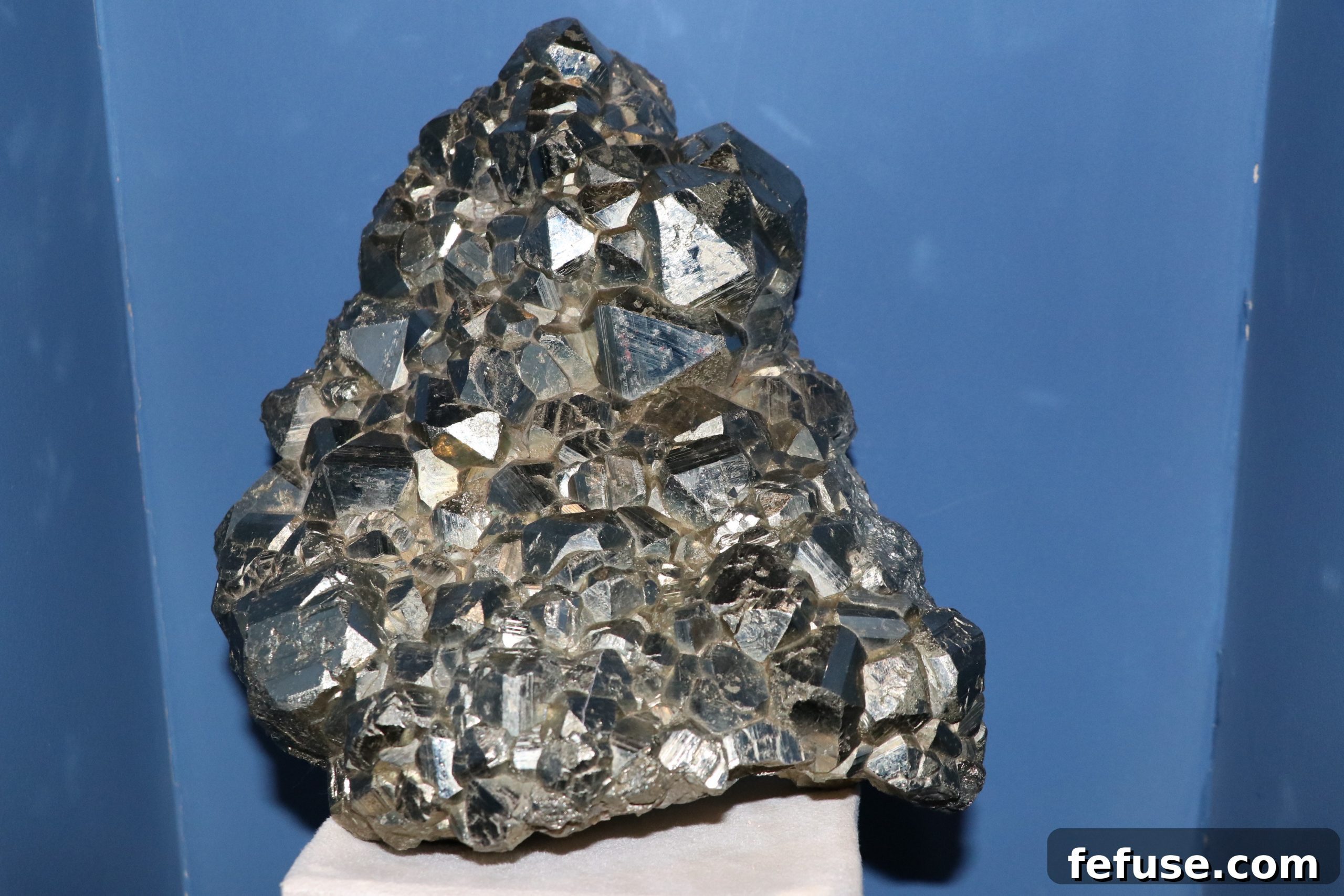
This impressive specimen showcases a dynamic heap of metallic pyrite crystals, intricately interwoven and structured entirely by the forces of nature – a profound testament to geological processes untouched by human hands. Pyrite, an iron sulfide mineral (FeS2), is widely recognized for its striking metallic luster and brassy yellow hue, which often causes it to be mistaken for gold. This deceiving resemblance led to its common and enduring nickname, ‘fool’s gold.’ Despite its historical misidentification, pyrite is a significant and fascinating mineral in its own right, forming in a wide variety of geological environments, from sedimentary rocks and metamorphic rocks to hydrothermal veins, and even in coal seams. The interlocking crystals in this cluster highlight the mineral’s characteristic crystal habits, which commonly include cubes, octahedra, and pyritohedra, though here they form a complex, three-dimensional aggregate that showcases natural growth. Such large, naturally formed clusters are highly prized by mineral collectors who appreciate the raw, sparkling beauty and crystallographic complexity, offering a mesmerizing display of nature’s geometrical prowess. Weighing 48,500 carats, this magnificent pyrite specimen originates from Spain, a country historically renowned for its world-class pyrite deposits, particularly those from localities like Navajún, famous for producing exceptionally perfect cubic crystals. This specimen embodies the captivating allure of metallic minerals, their diverse geological origins, and the intricate patterns that form deep within the Earth, reminding us that even “fool’s gold” holds incredible scientific and aesthetic value.
Opal with ‘Fossilized’ Shell: Ancient History from India
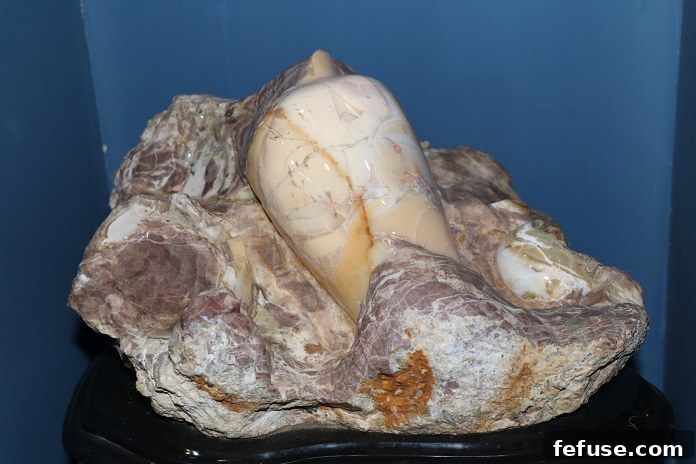
The discovery of multiple and substantial pieces of fossilized shells intricately embedded within their original matrix, alongside significant opalization, is an exceptionally unusual and scientifically valuable occurrence. Opal, a hydrated amorphous silica, forms over millions of years as silica-rich water seeps into crevices and voids, slowly depositing microscopic silica spheres. When this process occurs in conjunction with the preservation of ancient organic matter, such as mollusk shells, it results in stunning ‘opalized fossils’ or pseudomorphs, where the original organic material has been replaced by opal while retaining its original form. Such an extraordinary combination provides a wealth of information, not only about the specific geological history of their formation, including the specific conditions that allowed for both fossilization and opalization, but also about the ancient ecosystem and environmental conditions of the region where they were discovered. These specimens serve as invaluable natural archives, illustrating with breathtaking clarity how nature preserves extinct species, thereby greatly assisting scientists and paleontologists in understanding Earth’s evolutionary timeline, past biodiversity, and paleoclimate. Weighing 72,500 carats, this remarkable specimen originates from India, a country with a diverse geological heritage and significant sedimentary basins. It stands as a profound link to prehistoric life and a testament to the Earth’s enduring capacity to record and preserve its own long and complex history through the medium of minerals, offering a unique window into ancient worlds.
Chalcedony ‘Helmet’: A Sparkling Surprise from Brazil
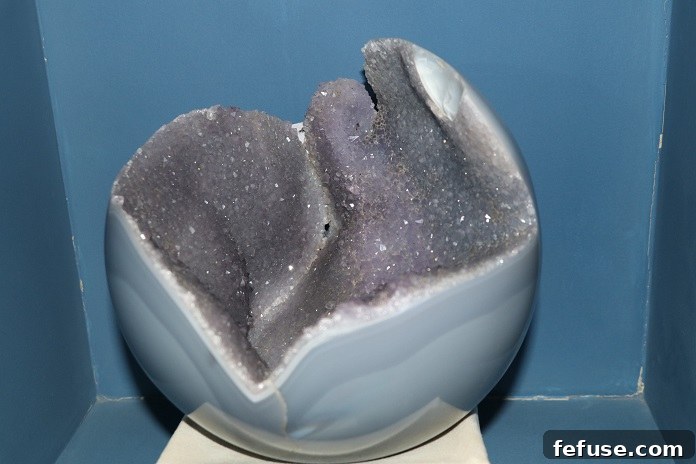
This captivating chalcedony specimen is a true marvel, naturally forming a shape that distinctly resembles a helmet, showcasing nature’s boundless creativity and geological sculptural abilities. Chalcedony, a cryptocrystalline form of silica (quartz), often creates geodes and nodules with unique external forms in volcanic or sedimentary rocks. While the outer surface of this intriguing piece has been polished to reveal the smooth, subtle beauty of the chalcedony’s translucent layers, its true magic is unveiled when one gazes into its interior. Inside the ‘helmet,’ the inner surface is adorned with numerous shining pieces, sparkling like a miniature galaxy of stars. These small, brilliant pieces are, in fact, crystals of amethyst, a purple variety of quartz. This druzy amethyst lining the inner cavity gives the impression of a meticulously polished surface, yet it is entirely a natural formation, a dazzling contrast to the exterior. The formation of such geodes involves a multi-stage process where silica-rich fluids deposit successive layers of chalcedony on the cavity walls, followed by the growth of larger quartz crystals (like amethyst) within the remaining void as conditions change. Weighing 37,650 carats, this exquisite specimen originates from Brazil, a country legendary for its vast deposits of amethyst geodes and other stunning quartz formations, making it a prime source for such unique natural treasures. It stands as a magnificent example of nature’s ability to create both artistic shapes and dazzling internal wonders, offering a delightful surprise and a profound aesthetic experience for any observer.
Agate ‘Bowl’: Nature’s Functional Art from Brazil
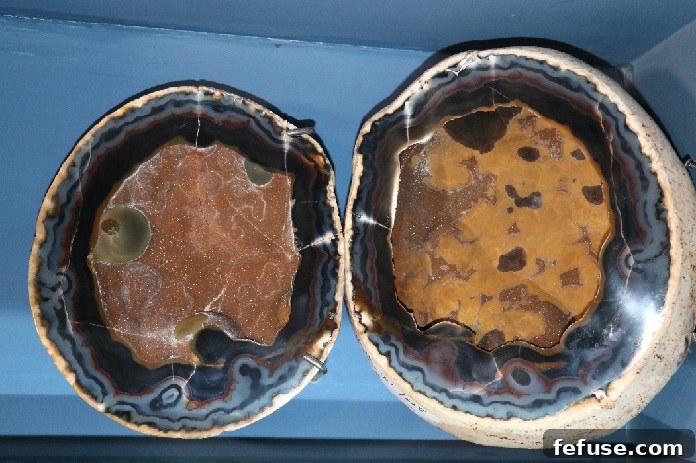
This extraordinary agate specimen has been artfully presented as a functional bowl complete with its lid, demonstrating how human ingenuity and craftsmanship can beautifully complement and enhance natural formations. Originally, this was a single piece of rough agate featuring a central cavity, a common characteristic of geodes where agate forms within the empty spaces of volcanic or sedimentary rocks through gradual mineral deposition. Through careful and precise cutting, this single geological wonder has been transformed into two distinct parts – one serving as an elegant bowl and the other as its perfectly fitting lid, revealing its hidden interior beauty. The interior of the central cavity is further enhanced by smaller, sparkling crystals of crystalline quartz, commonly known as druzy quartz, which glitter against a backdrop often lined with iron oxide, imparting warm, earthy tones and adding to the piece’s visual depth. This combination of finely banded agate, sparkling druzy, and rich coloration showcases the layered beauty formed over immense geological time. The transformation of a raw geode into such an aesthetic and functional art piece highlights the versatility of agate and the significant skill required by artisans to reveal its hidden splendor and make it usable. Weighing 51,275 carats, this impressive Agate ‘Bowl’ originates from Brazil, a country renowned globally for its abundant and high-quality agate deposits, which are frequently used to create not only decorative specimens but also artistic and functional items. It serves as a stunning example of the harmonious blend between geological wonders and human craftsmanship, celebrating both natural processes and artistic endeavor.
Brown Jasper: A ‘Caramel Candy’ from Madagascar
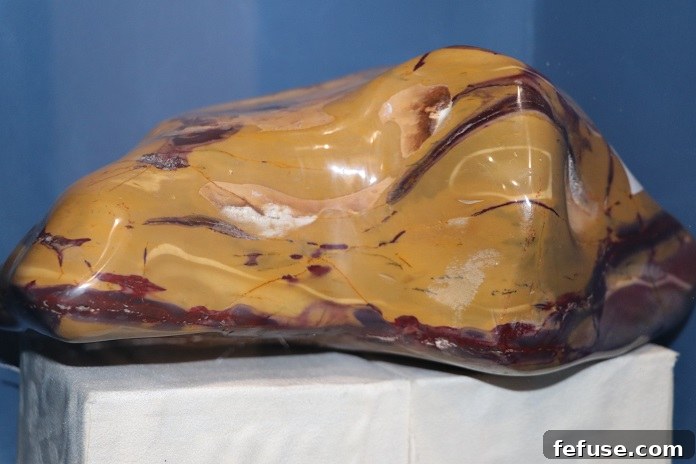
This captivating jasper specimen, with its exquisite two distinct shades of brown, remarkably evokes the inviting appearance of a caramel candy, showcasing nature’s delightful and often delicious-looking color palette within the mineral kingdom. Jasper, a microcrystalline variety of quartz, derives its rich and varied coloration from various mineral inclusions that become entrapped during its formation. In this particular instance, the distinct shades of brown are attributed to the presence of iron oxide in two different mineralogical forms: hematite, which is responsible for the darker, richer, and often reddish-brown tones, and goethite, an iron oxyhydroxide, responsible for the lighter, more subtle, and yellowish-brown hues. The intricate interplay between these iron minerals creates a nuanced and visually appealing depth within the stone, forming subtle patterns and transitions that are a feast for the eyes. When fashioned into cabochons, beads, or other ornamental pieces, stones cut from such material frequently display unique and unpredictable patterns and color distributions in individual pieces, ensuring that each finished gem is a singular work of art. This inherent variability makes brown jasper highly desirable for jewelry designers and collectors seeking one-of-a-kind items that possess organic beauty. Weighing 53,800 carats, this beautiful Brown Jasper originates from Madagascar, an island celebrated for its extraordinary geological diversity and its prolific production of a wide array of high-quality jaspers and other decorative stones. It stands as a testament to the subtle yet profound beauty found within Earth’s geological treasures, proving that even monochromatic hues can hold immense depth and character.
These magnificent specimens offer just a glimpse into the boundless beauty and geological complexity that Earth continually creates. Each stone, with its unique characteristics, formation story, and geographical origin, serves as a natural masterpiece, inviting us to appreciate the intricate processes that shape our world over millions of years. From rare crystal habits and striking color variations to artistic natural sculptures and historical artifacts that blend geological wonder with human ingenuity, this collection truly embodies the wonder of unique minerals and gemstones. We hope this journey through these exceptional pieces has deepened your appreciation for the Earth’s hidden treasures and the fascinating science behind their formation.
For more information, please visit: www.mgjjaipur.com