
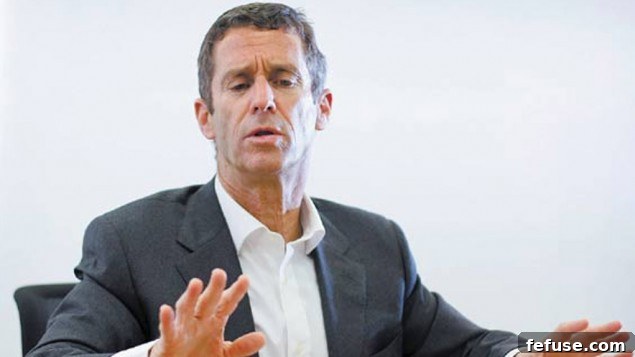
Beny Steinmetz Convicted: Unraveling the Simandou Bribery Scandal
In a landmark judgment that has sent ripples across the international business landscape and anti-corruption circles, diamond billionaire Beny Steinmetz has been handed a five-year prison sentence by a Swiss court. The conviction stems from charges of orchestrating the bribery of Guinean government officials to illicitly acquire highly coveted mining rights in the West African nation. This high-profile case underscores the intense scrutiny now facing corporate dealings in resource-rich developing countries and highlights the global effort to combat corruption at its highest levels.
The Heart of the Matter: Simandou’s Coveted Iron Ore
At the core of the Geneva Criminal Court’s ruling lies the highly sought-after Simandou iron ore deposit in south-eastern Guinea. Widely regarded as one of the world’s largest and most valuable untapped reserves, Simandou holds immense strategic importance for the global steel industry. For Guinea, a nation rich in minerals yet grappling with profound poverty, Simandou represents a potential economic lifeline, capable of transforming its national finances and infrastructure. However, its immense value has also made it a magnet for corruption and fierce competition among international mining giants.
The Swiss prosecution meticulously detailed how Beny Steinmetz, a 64-year-old businessman holding French and Israeli citizenship, through his company BSGR Group (Beny Steinmetz Group Resources), allegedly engaged in a complex scheme to secure these lucrative rights. The court found him guilty of bribing Mamadie Touré, one of the ex-wives of the late Guinean President Lansana Conté. This alleged influence peddling took place between 2006 and 2010, at a crucial juncture when the Guinean government was making critical decisions about the future of its mineral assets.
The Anatomy of the Bribery Scheme
The investigation revealed that an estimated $8.5 million in bribes was channeled to Mamadie Touré. Prosecutors argued that these payments were not isolated incidents but part of a calculated strategy to ensure BSGR’s favorable positioning in the race for the Simandou blocks. Touré, during her husband’s presidency, was perceived to wield significant informal power and access, making her a critical conduit for those seeking to influence government decisions. The funds, according to court documents, were routed through a web of offshore accounts and intermediaries, a common tactic used to obscure the true beneficiaries and the illicit nature of transactions.
This elaborate financial maneuvering culminated in BSGR controversially being granted the rights to Simandou Blocks 1 and 2 in 2008. These blocks had previously been held by the Anglo-Australian mining giant Rio Tinto, whose concession was abruptly revoked by the Guinean government shortly before BSGR’s acquisition. This swift transfer of rights, coupled with BSGR’s relatively nascent presence in large-scale iron ore mining, immediately raised suspicions and triggered a cascade of international inquiries that would eventually lead to the Geneva trial.
The ‘Jackpot’ Deal and Its Unraveling
The deal secured by BSGR with one of the world’s poorest nations was, for Beny Steinmetz, nothing short of a “jackpot.” BSGR’s initial investment in securing the exploration and mining rights was a reported $160 million. However, the true financial scale of the alleged corruption became dramatically clear when, just over a year later, BSGR sold half of its acquired Simandou stake to Vale S.A., the Brazilian multinational mining company, for a staggering $2.5 billion. This astonishing return on investment – more than 15 times the initial outlay in a short period – became a central piece of evidence for the prosecution, suggesting that the value derived from the rights far outstripped any legitimate development costs or market appreciation.
This rapid and massive profit margin became a focal point of international anti-corruption efforts. Investigators from several countries, including the United States, France, and Switzerland, began to probe the circumstances surrounding BSGR’s acquisition and subsequent sale of the Simandou rights. The investigation sought to determine whether the extraordinary financial gains were a result of legitimate business acumen or, as the Swiss court ultimately found, a payoff from illicit dealings designed to bypass fair competition and due process. The scrutiny intensified as reports surfaced of former Guinean officials cooperating with international probes, shedding light on the mechanics of the alleged corrupt practices.
The Geneva Trial: A Battle of Narratives
The trial in Geneva, lasting several weeks, was a high-stakes legal battle. Prosecutors, led by Yves Bertossa, argued that Steinmetz, along with two co-defendants, orchestrated a “pact of corruption” with Mamadie Touré. They presented evidence, including witness testimonies and financial records, to demonstrate that the payments were directly linked to BSGR’s acquisition of the Simandou rights. The prosecution emphasized the detrimental impact of such bribery on Guinea’s national development and the integrity of international commerce.
The defense, on the other hand, vehemently denied the charges, maintaining Beny Steinmetz’s innocence. His legal team asserted that he was unaware of any corrupt payments and that BSGR’s acquisition of the mining concessions was entirely legitimate, based on robust negotiations and a sound investment strategy. They argued that Steinmetz was merely an investor and not directly involved in the day-to-day dealings on the ground, attempting to distance him from the alleged bribery. Despite these arguments, the court concluded that Steinmetz played a central role in the scheme, demonstrating a clear intent to corrupt Guinean officials to secure the valuable assets.
The Verdict and Its Immediate Aftermath
Following weeks of intense proceedings, the Geneva Criminal Court delivered its verdict, finding Beny Steinmetz guilty of bribery of foreign public officials and forgery. Alongside the five-year prison sentence, the court also ordered him to pay a substantial fine of $56 million. This financial penalty is intended as compensation to the Guinean state, acknowledging the economic harm inflicted by the corrupt deal. The verdict represents a significant victory for anti-corruption advocates and a stark warning to corporate executives operating in challenging jurisdictions.
Despite the conviction, Beny Steinmetz, who maintains both French and Israeli citizenship, currently remains at liberty. He has unequivocally stated his intention to appeal the Swiss court’s decision, signaling that this legal saga is far from over. His legal team continues to argue that the trial was flawed and politically motivated, vowing to pursue all available legal avenues to clear his name. The appeal process is expected to be lengthy and will be closely watched by the global business community.
Beny Steinmetz: A Billionaire’s Diverse Empire and Mounting Legal Troubles
Beny Steinmetz’s personal fortune, once estimated to exceed $1 billion, positioned him among Israel’s wealthiest individuals. His business journey began in Antwerp as a diamond trader, where he co-founded SDG (Steinmetz Diamonds Group) with his brother Daniel. From being a prominent diamond supplier and manufacturer, his empire diversified rapidly, encompassing significant investments in real estate, various mining projects, mineral resources, financing, and the oil and gas sectors. His entrepreneurial drive and ability to identify high-value opportunities were widely recognized, yet his methods have increasingly come under international legal scrutiny.
The Swiss conviction is not an isolated incident in Steinmetz’s recent history of legal challenges. In a separate and unrelated case just a month prior to the Geneva verdict, a court in Romania also sentenced him to five years in prison for land fraud. These successive legal blows have severely impacted his public image and financial standing, revealing a pattern of complex legal entanglements across different continents. These simultaneous legal battles highlight the persistent difficulties faced by international authorities in prosecuting high-profile individuals involved in intricate cross-border financial crimes.
Global Implications: Corporate Accountability and African Development
The Simandou bribery case and Beny Steinmetz’s conviction carry far-reaching implications that extend beyond the individual. For Guinea and other resource-rich African nations, the verdict serves as a powerful testament to the possibility of achieving justice against powerful foreign entities involved in illicit dealings. These countries often grapple with the “resource curse,” where vast natural wealth ironically fuels corruption, instability, and hinders genuine economic development. This ruling could embolden governments to adopt more stringent measures against corporate malfeasance and demand greater transparency in their natural resource sectors.
On a global scale, the case reinforces the increasing assertiveness of jurisdictions like Switzerland in prosecuting international bribery and corruption. It sends a strong message that even powerful figures, operating through complex offshore structures, are not beyond the reach of the law. This trend signals a harsher operating environment for corporate executives who might have previously felt immune from prosecution when conducting business in challenging international markets. The Simandou saga underscores the critical need for enhanced corporate governance, rigorous ethical due diligence, and transparent practices throughout the global mining and natural resource sectors. It serves as a potent reminder that the pursuit of extraordinary profits must never come at the expense of integrity, legality, and the developmental aspirations of host countries.