
De Beers’ Diamond Production Shines Bright Amidst Evolving Market Dynamics
De Beers, a global leader in diamond mining and sales, has once again demonstrated its robust operational capabilities and strategic market navigation. The company recently reported impressive figures for its total rough diamond production in the fourth quarter of 2022 and for the entire year, showcasing resilience despite an increasingly cautious global economic outlook. These results not only highlight De Beers’ pivotal role in the global diamond supply chain but also offer valuable insights into the broader health and future trajectory of the luxury diamond market. This comprehensive analysis delves into the detailed production statistics, financial performance, regional operational achievements, and the overarching market forces influencing the diamond industry.
Unpacking De Beers’ Robust Production Performance
Strong Q4 and Full-Year 2022 Results
De Beers concluded 2022 with a strong operational showing, reporting a significant increase in its rough diamond output. During the fourth quarter of 2022, total rough production reached an impressive 8.2 million carats, marking an almost six per cent increase compared to the same period in the previous year. This quarterly performance set a positive tone for the annual results, underscoring consistent operational efficiency across its key mining assets. For the full year of 2022, De Beers achieved a total output of 34.6 million carats. This figure represents a notable seven per cent increase over the 32.3 million carats produced in 2021, and critically, it slightly exceeded the company’s own production guidance, which ranged between 32 million and 34 million carats. Such consistent outperformance speaks volumes about De Beers’ disciplined approach to mining and its ability to optimize production in response to market demand while adhering to its strategic objectives. These strong production numbers are a testament to the hard work and technological advancements implemented across their operations, ensuring a steady supply of high-quality rough diamonds to the global market.
Looking Ahead: 2023 Production Guidance and Strategic Adjustments
As De Beers looks towards the future, the company has provided a clear outlook for its 2023 production. The guidance for the upcoming year is set between 30 million and 33 million carats, with an average production cost anticipated to be around $80 per carat. This forecast, while slightly lower than the 2022 actual production, reflects a considered approach to market dynamics and strategic operational planning. The anticipated average production cost per carat is a critical metric, indicating the company’s focus on cost efficiency and sustainable mining practices. Factors such as energy prices, labor costs, and ongoing investment in mining technologies significantly influence this figure. De Beers continually strives to optimize these costs without compromising safety or environmental standards, ensuring long-term viability. The slight adjustment in production guidance for 2023 can be interpreted as a proactive measure to align supply with anticipated demand fluctuations, particularly in light of broader economic uncertainties that could impact consumer spending on luxury items. This strategic flexibility allows De Beers to maintain market stability and value for its products.
Financial Strength and Market Value
Soaring Realized Prices Amidst Market Fluctuations
Beyond sheer volume, the financial performance indicators for De Beers in 2022 further underscored its market strength. The consolidated average realized price per carat during 2022 stood at an impressive $197. This figure represents a significant 35 per cent increase compared to the average realized price in 2021, as detailed in the Anglo American Production Report Q4 2022. This substantial rise in per-carat value is a critical measure of the company’s success and reflects several underlying factors. Primarily, it points to a robust underlying demand for rough diamonds throughout much of 2022, especially for higher-quality and larger stones. Furthermore, inflationary pressures across the globe, coupled with a relatively constrained supply of new rough diamond discoveries, contributed to upward pressure on prices. De Beers’ ability to command such premium prices also highlights the intrinsic value and desirability of its diamonds, reinforcing its position as a preferred supplier in the industry. This strong pricing power is crucial for revenue generation and sustained profitability, enabling further investment in exploration, technology, and community development.
Geographic Contributions and Operational Highlights
Botswana: The Powerhouse of De Beers’ Operations
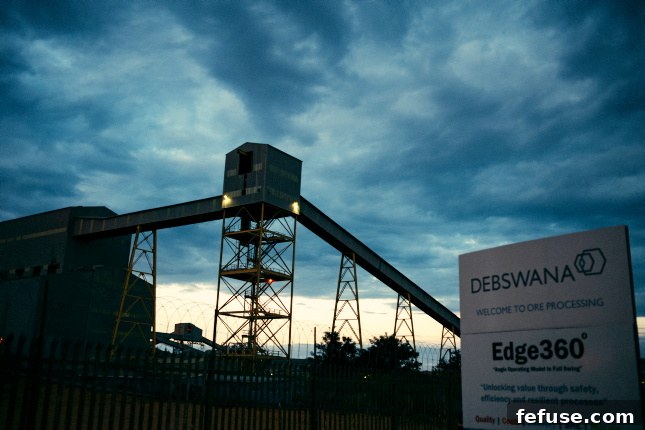
Botswana continues to be the cornerstone of De Beers’ global mining operations, playing an overwhelmingly significant role in its overall production. In 2022, De Beers’ mines in Botswana contributed a remarkable 5.8 million carats, accounting for well over half of the company’s total production. This represents an impressive year-on-year increase of 11 per cent, showcasing the continued strength and growth potential of these operations. The primary driver behind this surge was the exceptionally strong plant performance at the Jwaneng mine, often referred to as the ‘Prince of Mines’ due to its immense value and consistent output. Jwaneng, operated through Debswana – a highly successful 50/50 joint venture between De Beers and the Government of the Republic of Botswana – is renowned as one of the world’s richest diamond mines by value. The operational excellence at Jwaneng, coupled with other significant mines like Orapa, underscores the effectiveness of the partnership and Botswana’s critical importance to the global diamond supply. This collaboration not only secures a significant portion of the world’s rough diamond supply but also contributes immensely to Botswana’s economic development, employment, and social programs, reinforcing the positive impact of responsible mining.
South Africa: Navigating the Transition to Underground Mining
While Botswana’s production surged, South Africa’s contribution to De Beers’ total output saw a decrease of 27 per cent in 2022, reaching 0.9 million carats. This reduction is not indicative of a decline in the country’s diamond potential but rather a strategic and necessary transition from open-pit mining to underground operations. The primary reason for this shift is the increasing depth of the Venetia mine, De Beers’ last remaining diamond mine in South Africa. As open-pit operations reach their economic and physical limits, transitioning to underground mining becomes essential to access the deeper diamondiferous kimberlite pipe. This is a complex, capital-intensive, and multi-year undertaking that typically involves significant investment in infrastructure, specialized equipment, and advanced mining techniques. While such a transition can temporarily impact production volumes and increase operational costs in the short term, it secures the long-term viability and extends the life of the mine for decades. De Beers’ commitment to this transition reflects its long-term vision for South Africa and its belief in the continued potential of its rich geological resources, ensuring future supply and sustained economic contribution to the region.
Navigating the Global Diamond Market Landscape
Midstream Dynamics: Inventory Build-up and Polished Price Pressure
The fourth quarter of 2022 brought notable shifts in the midstream segment of the diamond pipeline, which encompasses cutters, polishers, and manufacturers. The Anglo American Production Report highlighted a continued build-up of polished diamond inventories within this segment. This accumulation was largely a consequence of retailers adopting a more cautious approach to restocking, influenced by growing global economic uncertainty. As inflation remained high, interest rates rose, and recessionary fears loomed, consumer discretionary spending on luxury goods, including diamonds, became more unpredictable. Retailers, therefore, became hesitant to commit to large orders, leading to slower movement of polished stones from the midstream. This situation inevitably led to downward pressure on wholesale polished prices. The midstream, caught between steady rough diamond prices and softer polished prices, faced squeezed margins. This delicate balance within the diamond supply chain underscores the interconnectedness of its various segments and the immediate impact of macroeconomic forces on market sentiment and profitability.
Resilient Demand for De Beers’ Rough Diamonds
Despite the challenges faced by the midstream and the downward pressure on wholesale polished prices, demand for De Beers’ rough diamonds remained remarkably steady throughout the period. This resilience can be attributed to several factors. Firstly, De Beers maintains a strong brand reputation and a consistent supply of high-quality rough diamonds, making it a reliable partner for its sightholders (long-term contract clients). Even in cautious markets, manufacturers often prioritize securing supply from trusted sources to meet existing orders and prepare for future demand upticks. Secondly, the long-term fundamentals of diamond demand, particularly from key markets like the US and increasingly Asia, remain robust, supported by cultural traditions and the enduring appeal of diamonds as symbols of love and commitment. De Beers’ strategic marketing efforts, such as the “Diamonds Do Good” campaign, also help sustain consumer desire. The steady demand for rough diamonds, even as polished prices softened, indicates a fundamental confidence in the long-term value and desirability of natural diamonds, positioning De Beers favorably within the industry’s complex dynamics.
Economic Headwinds and Consumer Sentiment
The phrase “growing economic uncertainty” encapsulates a broad range of global challenges that began to intensify in late 2022. This includes persistent inflation, aggressive interest rate hikes by central banks, geopolitical tensions, and fears of a looming global recession. Such factors directly impact consumer confidence and purchasing power, particularly for luxury items. While essential goods remain a priority, discretionary spending on high-value products like diamonds often sees a slowdown during periods of economic apprehension. Consumers may delay purchases or opt for less expensive alternatives, affecting retail sales. The diamond industry, while historically resilient, is not entirely immune to these cycles. De Beers and other industry players must navigate this environment by focusing on value, unique product offerings, and compelling marketing that reinforces the emotional significance of diamonds. Adapting to evolving consumer behavior and economic realities will be crucial for maintaining growth and stability in the years to come, emphasizing the need for agile business strategies and responsive market engagement.
The Future of Diamond Mining and Sustainability
Innovation and Technology Driving Efficiency
De Beers’ strategic vision extends beyond immediate production figures, deeply embedding innovation and technology into its core operations. The pursuit of an average production cost of $80 per carat, as guided for 2023, is a testament to the company’s continuous efforts in this area. Advanced technologies such as automation, artificial intelligence, and data analytics are increasingly being employed across its mines to enhance operational efficiency, improve safety, and optimize resource utilization. For instance, sophisticated geological modeling and remote-controlled machinery reduce human exposure to hazardous environments while maximizing extraction rates. Furthermore, process optimization in processing plants leads to better recovery of diamonds, minimizing waste. These technological advancements not only contribute to cost reduction but also play a crucial role in making mining operations more sustainable and environmentally responsible. By embracing cutting-edge solutions, De Beers aims to unlock greater value from its assets, ensuring that its diamond production remains efficient, competitive, and aligns with modern industry standards for responsible resource management.
Commitment to Sustainability and Ethical Sourcing
In an era of increasing consumer awareness, sustainability and ethical sourcing have become paramount for the diamond industry. De Beers has proactively positioned itself at the forefront of these efforts through its “Building Forever” sustainability framework, encompassing a wide range of commitments from protecting the natural world and accelerating equal opportunity to forging strong partnerships and being a leader in ethical practices. The company places a strong emphasis on transparent supply chains, ensuring that all diamonds are ethically sourced and conflict-free, often leveraging technologies like blockchain for traceability. Beyond compliance, De Beers invests significantly in community development programs in the regions where it operates, providing education, healthcare, and economic empowerment initiatives. Environmental stewardship is another key pillar, with efforts focused on reducing carbon footprint, conserving biodiversity, and managing water resources responsibly. This holistic approach to sustainability not only meets the expectations of modern consumers but also builds long-term value for the business, its stakeholders, and the communities that host its operations, solidifying the positive impact of every diamond from source to sparkle.
In conclusion, De Beers’ performance in 2022 stands as a testament to its operational strength, strategic foresight, and adaptability in a constantly evolving global market. The robust production figures, combined with significantly higher realized prices, underscore the company’s strong foundational position. While the diamond industry faces ongoing challenges from economic uncertainties and shifting consumer behaviors, De Beers’ sustained demand for rough diamonds, coupled with its strategic transitions in mining operations and unwavering commitment to sustainability, positions it for continued leadership. As it navigates the complexities of the global economy, De Beers remains a critical pillar of the diamond industry, shaping its future through innovation, responsible practices, and a deep understanding of market dynamics.