
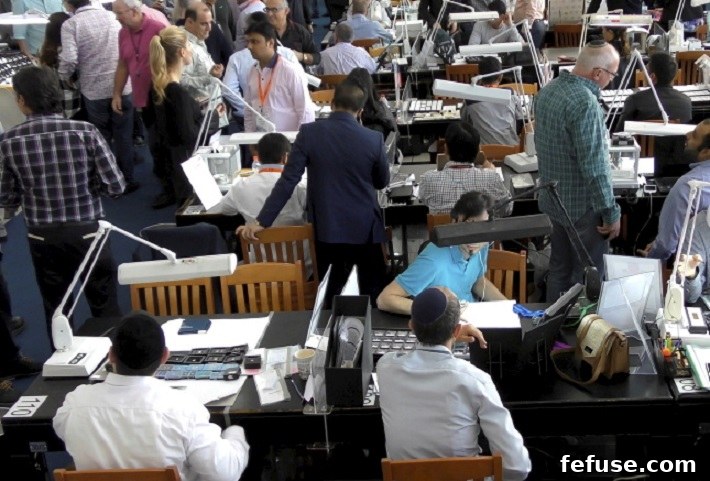
Israel’s Diamond Trade Faces Significant Headwinds in H1 2023 Amidst Global Slowdown
The illustrious diamond industry, a cornerstone of Israel’s economy and a symbol of its global trade prowess, experienced a challenging first half of 2023. New government figures reveal a sharp contraction in the nation’s trade of rough diamonds, with net imports and exports plummeting by nearly half. This downturn is largely attributed to a broader global economic slowdown, impacting consumer demand and trade flows across the luxury goods sector. While the polished diamond segment also felt the pinch, its decline was less severe, offering a glimmer of hope amidst the challenging landscape.
A Deep Dive into Rough Diamond Performance
The rough diamond sector bore the brunt of the downturn during the initial six months of the year. According to data released by the Ministry of Economy and Industry, Israel’s net imports of rough diamonds saw a substantial decrease of 45 percent compared to the first half of 2022, settling at $555 million. The export side painted an even starker picture, with net exports falling by a dramatic 54 percent to $444 million. These figures underscore a significant reduction in both the sourcing and onward trading of uncut diamonds, reflecting cautious market sentiment and reduced operational activity within the industry.
The steep decline in rough diamond trade can be attributed to several interconnected factors. Globally, high inflation rates, rising interest rates, and geopolitical uncertainties have collectively eroded consumer confidence and discretionary spending. As a result, demand for luxury items, including diamonds, has softened. This ripple effect extends to the midstream of the diamond pipeline – the cutters and polishers – who have become more conservative in their rough diamond purchases to manage inventory levels and mitigate financial risks. The Israeli diamond industry, a major hub for rough diamond sorting, cutting, and polishing, is intricately linked to these global dynamics, making it particularly vulnerable to shifts in international demand and supply.
Polished Diamonds Show Greater Resilience
While not immune to the prevailing market conditions, the trade in polished diamonds demonstrated a comparatively stronger performance. Net imports of polished goods in the first half of 2023 amounted to $1.38 billion, representing a 22 percent year-on-year decrease. Similarly, net polished exports declined by 24 percent, reaching $1.7 billion. Although these figures still represent significant contractions, they are less severe than those observed in the rough diamond segment, indicating a degree of resilience in the market for finished diamond products.
This disparity between rough and polished diamond performance is noteworthy. It suggests that while the pipeline for raw materials is experiencing significant slowdowns, there is still sustained, albeit reduced, demand for ready-to-wear diamond jewelry. Consumers might be more inclined to purchase polished diamonds for immediate consumption or investment purposes, even as the broader economic climate tightens. Furthermore, the polished diamond market is often characterized by different pricing structures and consumer-facing marketing efforts that can help buffer against extreme volatility seen in the speculative rough diamond market.
The Global Context and Israel’s Position
Ofir Gur, supervisor of diamonds at the Ministry of Economy and Industry, encapsulated the prevailing sentiment, stating, “The continuation of the global trend of a decrease in the diamond trade is evident in the figures for the first half of the year, which are negative in terms of the industry in the world and in Israel.” His remarks highlight that Israel’s situation is not isolated but rather a reflection of a broader, worldwide trend impacting the diamond industry as a whole. Major diamond trading centers, from Antwerp to Mumbai, have reported similar challenges, emphasizing the interconnectedness of this globalized sector.
Israel has historically played a pivotal role in the global diamond trade, particularly in the polishing and trading of larger, high-value stones. Its expertise in cutting-edge technology and skilled craftsmanship has cemented its reputation as a premier destination for diamond refinement. However, in an environment of reduced demand and increased competition, even established players like Israel feel the pressure. The industry faces the dual challenge of navigating current economic headwinds while simultaneously adapting to evolving consumer preferences and supply chain dynamics.
Strategic Partnerships: The UAE’s Growing Role
Amidst the broader decline, specific trade relationships continue to evolve. During June, the United Arab Emirates (UAE) emerged as a significant partner for Israel’s rough diamond imports, accounting for over a quarter (26 percent) of the total, valued at $21 million. This figure underscores the growing importance of the UAE, particularly Dubai, as a burgeoning diamond trading hub and a critical gateway for rough diamond supplies to Israel.
The strengthened trade ties between Israel and the UAE, especially following the Abraham Accords, have opened new avenues for collaboration in various sectors, including diamonds. Dubai’s strategic geographical location, coupled with its robust infrastructure and supportive regulatory environment, makes it an attractive platform for diamond transactions. For Israel, diversifying its sources of rough diamonds and leveraging established regional hubs like Dubai can enhance supply chain resilience and potentially open up new market opportunities in the future.
Looking Ahead: The Crucial Role of the Chinese Market
Despite the current challenges, there is cautious optimism for a turnaround. Ofir Gur noted, “However, a certain moderation of the declines can be seen, especially in the field of polished diamonds. It is estimated that towards the end of the year the negative trend will be reversed, due to the recovery in sales in the Chinese market.” This forward-looking assessment hinges significantly on the resurgence of the Chinese consumer market, which is widely considered a powerhouse for luxury goods, including diamonds.
China’s importance to the global diamond industry cannot be overstated. With its vast and growing middle class, China has become a primary driver of demand for diamond jewelry over the past decade. Following periods of stringent COVID-19 lockdowns and economic slowdowns, signs of a gradual recovery in Chinese consumer spending are emerging. A robust rebound in Chinese demand could act as a vital catalyst, injecting much-needed vitality into the entire diamond pipeline, from rough diamond sales to polished diamond exports. Industry players are closely monitoring economic indicators and consumer sentiment in China, recognizing its pivotal role in shaping the trajectory of the market in the latter half of 2023 and into 2024.
Factors Influencing the Diamond Market Recovery
The potential recovery of the diamond market, especially as predicted for the end of the year, will depend on a confluence of factors:
- Global Economic Stabilization: A moderation of inflation, stabilization of interest rates, and overall improvement in macroeconomic conditions worldwide would boost consumer confidence and discretionary spending.
- Chinese Consumer Resurgence: The speed and strength of economic recovery and consumer demand in China will be critical. Festivals and key gifting seasons could provide significant boosts.
- Inventory Management: Effective inventory management by retailers and manufacturers will prevent market saturation and help stabilize prices.
- Marketing and Innovation: Continued investment in compelling marketing campaigns, particularly those highlighting the enduring value and emotional significance of diamonds, will be essential. Innovation in design and sustainable sourcing also plays a role.
- Geopolitical Stability: A reduction in global geopolitical tensions would foster a more stable environment for international trade and investment, benefiting the diamond sector.
Conclusion: Navigating Challenges Towards Future Growth
The first half of 2023 presented significant challenges for Israel’s diamond trade, mirroring a broader slowdown across the global industry. The sharp declines in rough diamond imports and exports underscore the immediate pressures faced by the sector. However, the relatively milder impact on polished diamond trade, coupled with optimistic projections regarding the recovery of the Chinese market, offers a beacon of hope.
As Israel’s diamond industry navigates these turbulent waters, its ability to adapt to changing global dynamics, foster strong international partnerships like that with the UAE, and strategically position itself for future growth will be paramount. The long-term allure of diamonds, combined with the industry’s inherent resilience and a potential resurgence in key consumer markets, suggests that while the path ahead may be challenging, a reversal of the negative trend by year-end is a tangible prospect, promising a brighter outlook for this vital sector.