
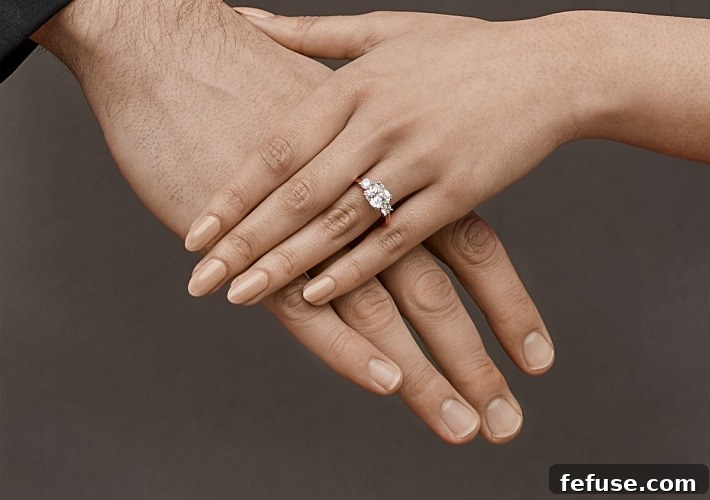
The time-honored tradition of the surprise engagement proposal is undergoing a significant transformation in the United Kingdom, as a recent study by fashion jewelry brand Buckley London reveals a compelling shift in preferences. While the romantic ideal of a partner selecting the perfect engagement ring still holds sway for many, a notable and growing segment of Brits now desires a more active role in choosing the symbol of their eternal commitment. This fascinating insight into modern relationships and consumer preferences underscores a move towards greater personalization and shared decision-making, even in the most romantic of gestures.
To thoroughly understand the nation’s evolving sentiments towards engagement rings, Buckley London conducted a comprehensive survey among UK-based adults currently in a committed relationship. The findings paint a nuanced picture: while a substantial majority, 64% of Brits, continue to wish for their partner to take on the sole responsibility of selecting their engagement ring, a significant 36% express a clear preference to have a direct say in the choice of the piece they intend to wear for a lifetime. This statistic, though representing a minority, indicates a powerful and potentially influential emerging trend that could reshape how proposals are approached across the country.
The Rise of the Placeholder Ring: A Modern Compromise
One of the most intriguing discoveries of the study is the increasing acceptance and preference for “placeholder rings.” For many, the desire to be involved in the ring selection process doesn’t necessarily mean sacrificing the element of surprise during the proposal itself. The survey revealed that a considerable number of Brits would be perfectly content for their partner to pop the all-important question with a temporary, symbolic ring. This allows the romance and spontaneity of the proposal to remain intact, while deferring the significant decision of the “forever” ring to a joint discussion and selection process.
The concept of a placeholder ring offers a brilliant solution for couples navigating these evolving preferences. It acknowledges the emotional weight of the proposal moment while also recognizing the personal significance and financial investment associated with the engagement ring itself. The study even went as far as to pinpoint an average spending expectation for such a placeholder piece, with respondents quoting approximately £400. This suggests that the placeholder ring is seen as a meaningful token, rather than a significant investment, allowing the couple to save for or co-select a more substantial and personally resonant final ring together.
Geographical differences also emerged, highlighting varying attitudes across the UK. Residents of London, known for often being at the forefront of new social trends, exhibited an even stronger inclination towards this modern approach. Nearly half of the respondents in the capital, a significant 46%, expressed a preference for a placeholder ring. This elevated figure in London could be attributed to a variety of factors, including greater exposure to diverse cultural influences, a faster pace of lifestyle, or perhaps a higher emphasis on individual choice and bespoke items in a cosmopolitan environment.
Expert Insights: Adrian Buckley on Emerging Trends
Adrian Buckley, the esteemed founder of Buckley London, offered his expert commentary on these compelling findings, emphasizing the brand’s commitment to staying abreast of new and emerging consumer trends. “At Buckley London, we are always keen to see what the new and emerging trends are,” Buckley noted, “and we found it particularly interesting to see such a rise in Brits wanting a placeholder ring, so they can be a part of the decision-making process.” This observation from a leader in the fashion jewelry industry underscores the genuine impact of this shift, indicating it’s not merely a fleeting fad but a significant behavioral change.
Buckley firmly believes that this trend towards shared ring selection, facilitated by placeholder rings, is set to gain even more traction. He commented, “We believe this trend will undoubtedly prosper, due to the research revealing that a large proportion of women would also feel comfortable airing their disappointment if they weren’t happy with the forever engagement ring their partner proposed with.” This statement points to a crucial underlying factor: modern relationships are increasingly built on open communication and mutual understanding, where honesty, even about potentially sensitive topics, is valued. The desire to avoid a lifetime of wearing a ring that doesn’t resonate personally is a powerful motivator driving this trend.
The Power of Honest Communication: Voicing Disappointment
Indeed, the study delved further into the willingness of individuals to express dissatisfaction with their engagement ring. The results starkly highlight a significant gender disparity in communication styles regarding this monumental purchase. A striking nearly two-thirds (65%) of women surveyed indicated they would not hesitate to communicate their displeasure if they disliked the engagement ring their partner had chosen. This statistic speaks volumes about evolving female assertiveness and the importance women place on personal style and the symbolic value of the ring.
In stark contrast, a mere 33% of men reported that they would be brave enough to voice their dissatisfaction to their significant other if they found themselves in a similar situation. This substantial difference suggests that men might feel more pressure to accept the chosen ring, perhaps out of a desire to avoid conflict, a lack of confidence in expressing such an opinion, or simply a different prioritization of the ring’s aesthetic value versus the gesture itself. This gender gap in communication regarding such a significant item highlights an opportunity for couples to foster even greater openness and understanding from the very beginning of their engagement journey.
The implications of these findings extend beyond just the moment of proposal. An engagement ring is not merely a piece of jewelry; it is a profound symbol of love, commitment, and a shared future. Wearing a ring that doesn’t truly reflect one’s style or preferences can lead to subtle, long-term dissatisfaction. The willingness of women to articulate their feelings, and the growing preference for joint decision-making, ultimately contribute to stronger, more communicative partnerships where both individuals feel truly seen and heard. This open dialogue helps ensure that the chosen ring is a source of joy and pride for many years to come, truly embodying the couple’s unique bond.
Implications for the Jewelry Industry and Future Trends
These evolving consumer preferences present both challenges and exciting opportunities for the jewelry industry. Retailers and designers will need to adapt their strategies to cater to this emerging demand for personalization and shared selection. This could involve offering a wider range of customizable options, developing clear consultation services for couples, and even actively promoting the concept of placeholder rings as a viable and romantic alternative to the traditional surprise. Jewelers might find success in creating dedicated “proposal collections” that feature elegant yet affordably priced placeholder rings, alongside extensive selections of customizable “forever” rings.
Furthermore, the increased emphasis on communication within relationships will likely translate into a greater demand for an educational and collaborative shopping experience. Couples may seek out jewelers who can guide them through the process, explain different diamond cuts, metals, and settings, and help them design a ring that genuinely represents their shared aesthetic and values. This shift could lead to more interactive in-store experiences, online configurators, and virtual consultations, all designed to empower couples in their decision-making process.
Ultimately, the Buckley London study illuminates a fascinating evolution in how modern couples approach one of life’s most significant milestones. While the romance of the traditional proposal endures, there is an undeniable movement towards greater partnership, personalization, and open communication. This blend of tradition and modernity is setting a new standard for engagement, ensuring that the ring chosen is not just beautiful, but also a deeply personal and mutually cherished symbol of a lifelong commitment.