
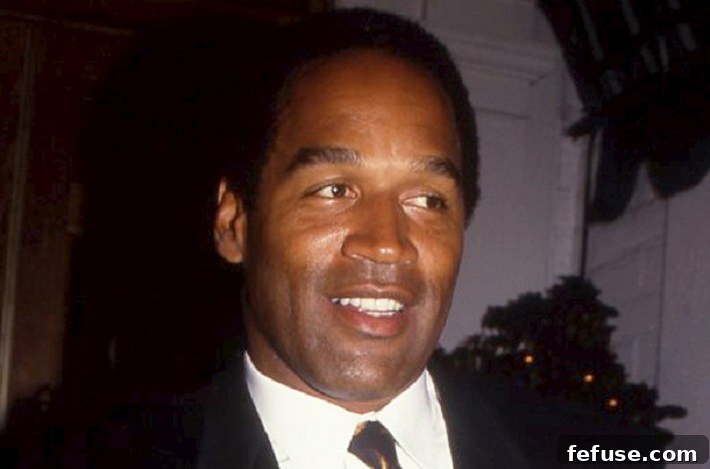
OJ Simpson’s Enduring Legacy: Transformed into Lab-Grown Memorial Gems for His Children
In a modern and deeply personal act of remembrance, the remains of O.J. Simpson, the polarizing figure whose life spanned the pinnacles of sports stardom and the depths of legal controversy, have been transformed into lab-grown gems. These unique and enduring keepsakes have been distributed among his four children: Arnelle, Jason, Sydney, and Justin, offering each a tangible piece of their father to cherish.
This innovative method of memorialization was confirmed by Simpson’s attorney and executor, Malcolm LaVergne, who noted the significance of these items. Each sibling now possesses a distinctive jewelry piece, serving as a constant, intimate reminder of their father. While the specific details of these jewelry items remain private, LaVergne confirmed to People magazine that the total cost for this unique tribute amounted to just over $4,000, underscoring the accessibility of such personalized memorials in today’s market.
The Science Behind the Sparkle: How Human Ashes Become Precious Gems
The concept of transforming human remains into precious gemstones might sound like something from a futuristic novel, but it is a sophisticated reality made possible by advancements in material science. The process primarily involves extracting carbon from cremated ashes, which is then used as the fundamental building block for lab-grown diamonds or other synthetic gems. Human ashes are surprisingly rich in carbon, a key element essential for diamond formation.
Once the carbon is meticulously isolated and purified from the ashes, it undergoes a highly specialized process, typically either High-Pressure/High-Temperature (HPHT) or Chemical Vapor Deposition (CVD). In the HPHT method, the carbon is placed in an environment that mimics the natural conditions deep within the Earth’s mantle – immense pressure (up to 60,000 atmospheres) and extreme temperatures (around 2,500°F or 1,370°C). With the aid of a metal catalyst, the carbon atoms recrystallize over several weeks into a unique, authentic diamond structure.
The resulting diamond is indistinguishable from a naturally mined diamond in terms of its chemical composition, physical properties, and optical characteristics. The only difference lies in its origin. These “memorial diamonds” or “remembrance gems” are not mere imitations; they are genuine diamonds, imbued with a deeply personal and symbolic connection to the individual they represent. This scientific marvel allows families to create a beautiful and everlasting tribute, far removed from traditional urns or burial plots.
Why Choose Memorial Gems? A Growing Trend in Personalized Tributes
-
Permanence and Durability: Diamonds are renowned for being the hardest natural substance, symbolizing everlasting love and memory. A memorial gem offers an incredibly durable and long-lasting tribute that can be passed down through generations.
-
Uniqueness and Personalization: Each gem is a unique representation of an individual, with its specific carbon signature. Families can often choose the cut, clarity, and even color of the gem, creating a truly personalized artifact that reflects their loved one’s spirit.
-
Portability and Intimacy: Unlike a burial site, a memorial gem can be worn daily, keeping the loved one physically close. This portability provides immense comfort and a continuous sense of connection.
-
Eco-Friendliness: Compared to traditional mining, lab-grown diamonds have a significantly smaller environmental footprint. For those concerned about sustainability, this offers a more environmentally conscious choice for memorialization.
-
A Modern Alternative: As societal views on death and remembrance evolve, many families seek alternatives to conventional burial or cremation. Memorial gems provide a contemporary, beautiful, and meaningful way to honor a life lived.
A Life of Contrasts: Reflecting on O.J. Simpson’s Legacy
O.J. Simpson, who passed away from cancer at the age of 76 in April, lived a life marked by extraordinary highs and devastating lows. Born Orenthal James Simpson, he first rose to national prominence as an electrifying American football player. His unparalleled talent on the field earned him the Heisman Trophy in 1968 and a place in the Pro Football Hall of Fame. After his illustrious sports career, Simpson transitioned seamlessly into entertainment, becoming a beloved actor and media personality, charming audiences with his charisma and recognizable smile.
However, his public image irrevocably fractured in 1994 when he was accused of the brutal murders of his ex-wife, Nicole Brown Simpson, and her friend, Ronald Goldman. The subsequent criminal trial, often dubbed the “Trial of the Century,” captivated the nation and the world, transforming into a cultural phenomenon that highlighted deep divisions along racial and socio-economic lines. Despite being famously acquitted of all criminal charges in 1995, a civil court jury later found him liable for wrongful death and battery, resulting in a staggering $33.5 million judgment against him.
Simpson’s legal troubles did not end there. Years later, in 2007, he was arrested in Las Vegas on charges of armed robbery and kidnapping. He was subsequently convicted and served nine years in prison before being released on parole in 2017. His life story, fraught with such dramatic turns, has left an indelible, complex mark on American popular culture and legal history.
The decision by his children to transform his remains into memorial gems adds another unique chapter to this narrative. It’s a testament to the private grief and familial bonds that persist beyond public perception and legal outcomes. For his children, these gems transcend the controversies of his public life, offering a quiet, personal memento of the man who was, above all else, their father.
The Evolving Landscape of Memorialization: Beyond Tradition
The choice to create memorial gems from O.J. Simpson’s ashes is indicative of a broader societal shift in how individuals and families approach death and remembrance. Traditional burial and cremation remain prevalent, but there is a growing demand for more personalized, meaningful, and often environmentally conscious ways to honor a loved one’s memory. This evolution reflects a desire to create tributes that are as unique as the lives they commemorate.
Increasingly, people are seeking alternatives that offer a more intimate connection or provide a lasting, tangible presence. The idea of a loved one’s essence continuing in a new, beautiful form resonates deeply with many. This trend is fueled by technological innovation, artistic creativity, and a changing cultural perspective that embraces diverse forms of grief expression and remembrance.
Modern Memorial Options Beyond Diamonds: A Spectrum of Tributes
While memorial diamonds are a prominent example, the landscape of modern memorialization offers a fascinating array of options:
-
Living Urns and Tree Pods: Ashes can be placed in biodegradable urns that nourish the growth of a tree, transforming loss into new life.
-
Ocean Reefs: Ashes can be incorporated into artificial reef structures, contributing to marine ecosystems and creating living memorials underwater.
-
Space Burial: For those with a love for the cosmos, a portion of ashes can be launched into space or orbit around the Earth, or even sent to the moon.
-
Vinyl Records: Some companies offer to press ashes into a vinyl record, allowing families to literally keep their loved one’s “record” and play their favorite music or recorded messages.
-
Tattoo Ink: A small amount of ashes can be sterilized and mixed with tattoo ink, creating a permanent, intimate memorial worn on the skin.
-
Glass Art: Ashes can be fused into beautiful glass sculptures, paperweights, or jewelry, creating unique artistic keepsakes.
These options, much like the lab-grown gems for O.J. Simpson’s children, highlight a powerful desire to keep the memory of loved ones vibrant and integrated into daily life, moving beyond static monuments to dynamic, personal expressions of love and remembrance.
The Enduring Power of Keepsakes in the Digital Age
In an increasingly digital world, where memories are often stored on screens and in the cloud, the human desire for tangible keepsakes remains profoundly strong. A physical object, especially one imbued with such deep personal significance as a memorial gem, offers a different kind of connection—one that can be held, touched, and worn. It serves as a grounding presence, a physical link to a person who is no longer with us in body, but very much alive in memory.
These gems represent an intersection of advanced technology and timeless human emotion. They provide a unique way to navigate grief, offering solace through beauty and permanence. For the Simpson children, these gems are more than just jewelry; they are miniature monuments, deeply personal totems that encapsulate memories, love, and a complex family history.
Conclusion: A Modern Tribute for a Complex Legacy
The transformation of O.J. Simpson’s remains into lab-grown gems for his children is a powerful illustration of how personal memorialization is evolving. It underscores a growing trend where families are embracing innovative technologies to create deeply personal, enduring, and meaningful tributes that transcend traditional forms. For Simpson’s children, these gems offer a private and intimate way to remember their father, removed from the public spectacle that defined so much of his life.
This unique act of remembrance not only provides his family with cherished keepsakes but also contributes to the ongoing conversation about how we honor the departed in the 21st century. It exemplifies the blend of scientific ingenuity and human emotion, offering a path for loved ones to remain close, not just in heart, but in a beautifully rendered, everlasting form.