
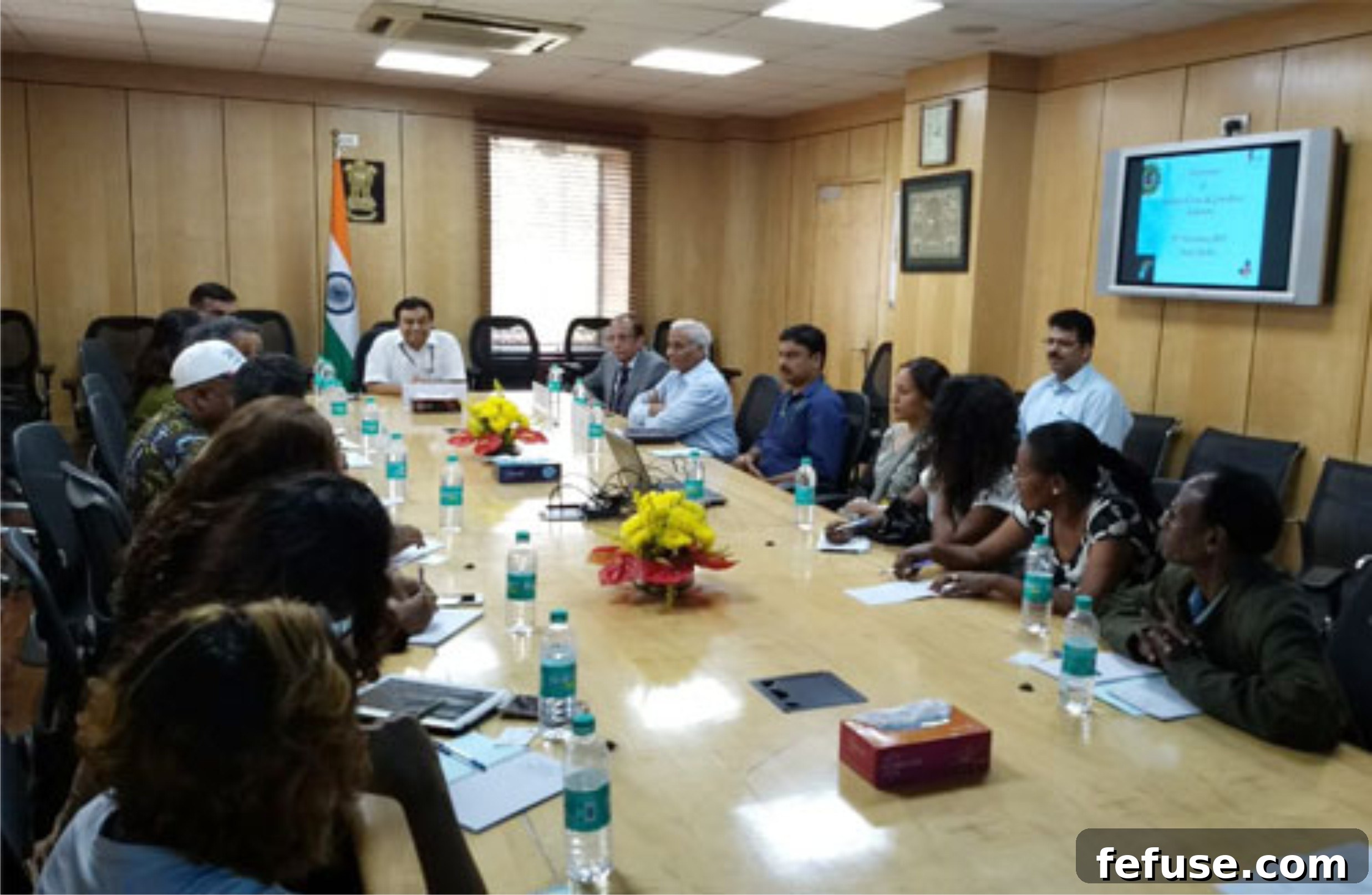
In a landmark move set to redefine bilateral economic ties, a distinguished 12-member delegation representing Ethiopia’s burgeoning gemstone sector recently concluded a pivotal visit to India. This high-profile exposure visit, meticulously orchestrated by the Ministry of External Affairs, Government of India, and expertly coordinated on their behalf by the Gem & Jewellery Export Promotion Council (GJEPC), facilitated crucial interactions with key stakeholders in the Indian gem and jewellery industry, alongside senior central government officials. The week-long visit, spanning major hubs like Delhi and Jaipur, marked a significant step towards fostering a robust partnership, aiming to unlock the immense potential within Ethiopia’s rich gemstone resources through India’s unparalleled expertise and market reach.
Forging Gemstone Futures: Ethiopia-India Collaboration in the Global Gem & Jewellery Sector
The global gem and jewellery industry thrives on intricate networks of supply, demand, and technological innovation. In this dynamic landscape, international collaborations are not just beneficial but essential for sustainable growth and shared prosperity. The recent visit by an Ethiopian delegation to India exemplifies this principle, highlighting a strategic initiative to bridge emerging markets with established industry powerhouses. This article delves into the details of this significant interaction, exploring its implications for both nations and the broader gemstone sector.
Ethiopia’s Emerging Gemstone Potential: A Rich Tapestry Awaiting Refinement
Ethiopia, a nation often celebrated for its ancient history and diverse landscapes, is increasingly gaining recognition for its promising gemstone potential. The country boasts significant deposits of various precious and semi-precious stones, including opals, emeralds, sapphires, and garnets, among others. While the sector is still in its nascent stages, it holds immense promise for economic diversification, job creation, and export revenue. However, unlocking this potential requires considerable investment in infrastructure, skill development, technological upgrades, and improved market access.
For Ethiopia, collaboration with a global leader like India offers a direct pathway to overcome these challenges. The Ethiopian government and its industry stakeholders are keen to learn from India’s centuries-old legacy and modern advancements in gem cutting, polishing, and jewellery manufacturing. This partnership seeks not only to enhance the value addition of Ethiopian rough stones domestically but also to integrate them more effectively into the global supply chain, ensuring fair returns and sustainable development for local communities.
India: A Global Powerhouse in Gem & Jewellery
India stands as an undisputed leader in the global gem and jewellery industry, commanding a significant share of the world market across various segments. From being the world’s largest cutting and polishing center for diamonds to its expertise in crafting intricate gold, silver, and studded jewellery, India’s prowess is multifaceted. The sector is a cornerstone of the Indian economy, renowned for its highly skilled workforce, advanced manufacturing capabilities, and a vibrant ecosystem that supports everything from mining and sourcing to design, retail, and export.
The Gem & Jewellery Export Promotion Council (GJEPC), an apex body established by the Ministry of Commerce & Industry, Government of India, plays a pivotal role in promoting India’s gem and jewellery exports. Through various initiatives, trade shows, skill development programs, and policy advocacy, GJEPC has been instrumental in positioning India at the forefront of the global industry. India’s vast network of manufacturers, designers, and traders, coupled with its robust domestic consumption, makes it an ideal partner for countries looking to develop their own gemstone sectors.
Strategic Dialogues in Delhi: Laying the Foundation for Collaboration
The Ethiopian delegation’s visit commenced in the nation’s capital, Delhi, with a series of high-level meetings designed to establish a foundational understanding and explore strategic avenues for cooperation. A crucial engagement took place on October 11, 2017, at Udyog Bhawan, where the delegation engaged in substantive discussions with Shri Manoj Dwivedi, Joint Secretary, Ministry of Commerce & Industry. Shri Dwivedi underscored the strategic importance of the gem and jewellery sector to India’s economy, particularly highlighting its highly labour-intensive nature and its immense potential for job creation across various skill levels.
During the meeting, Shri Dwivedi extended a warm welcome for enhanced coordination and collaboration between the industries of the two countries. He emphasized that such partnerships could lead to mutual growth, knowledge exchange, and the development of sustainable business models. Following this, representatives from the GJEPC delivered a comprehensive presentation, offering the Ethiopian delegates an in-depth overview of the Indian gem and jewellery industry. This presentation likely covered key aspects such as India’s manufacturing capabilities, technological advancements, export performance, policy frameworks supporting the industry, and the various segments from diamond processing to colored gemstones and intricate jewellery design. Understanding India’s success story provides a valuable blueprint for Ethiopia’s own sector development.
Insights from the GJEPC Delhi Regional Office
Following their discussions with government officials, the Ethiopian delegation also undertook a visit to the GJEPC’s Delhi Regional Office. This visit provided a practical understanding of the Council’s operations and its role in supporting the industry. Regional offices often serve as vital hubs for member services, trade facilitation, and dissemination of industry information. For the Ethiopian delegates, it was an opportunity to observe firsthand how GJEPC manages its diverse activities, from facilitating trade missions to providing educational resources and regulatory guidance. Such exposure is invaluable for countries looking to establish similar support structures for their emerging industries.
Jaipur: The Heart of Coloured Gemstones and Technical Expertise
A significant highlight of the delegation’s itinerary was their visit to Jaipur on October 13. Known globally as the “Pink City” and the epicentre of India’s coloured gemstone industry, Jaipur offered the Ethiopian delegates a specialized perspective into this vibrant segment. The visit included an essential stop at the GJEPC’s Regional Office in Jaipur, a hub of activity for the local gem and jewellery trade.
Crucially, the delegation was also given a tour of the city’s esteemed Gem Testing Laboratory. These laboratories play a critical role in ensuring the authenticity, quality, and accurate identification of gemstones, building consumer trust and upholding industry standards. Understanding the sophisticated processes of gemological testing, certification, and research is vital for any nation aiming to develop a credible and globally recognized gemstone sector. The delegates likely gained insights into modern testing techniques, equipment, and the importance of stringent quality control.
Engaging with Industry Leaders and Experts
During their time in Jaipur, the Ethiopian delegates engaged in productive meetings with key committees associated with GJEPC. They met members of the GJEPC’s Regional Committee, who provided insights into local industry dynamics, challenges, and opportunities. More specifically, their interaction with the Coloured Gemstone Panel Committee was particularly pertinent, given Ethiopia’s rich deposits of various coloured stones. Discussions likely revolved around sourcing, cutting and polishing techniques for specific coloured gemstones, market trends, and strategies for adding value. Furthermore, meeting with the Technical & Education Sub-committee offered a direct avenue to explore potential collaborations in skill development, training programs, and technology transfer – areas where India has a wealth of experience and established institutions.
Pathways to Bilateral Collaboration: A Blueprint for Mutual Growth
The exchanges during the Ethiopian delegation’s visit have laid a strong foundation for multifaceted collaboration. Several key areas emerge as promising avenues for a robust partnership:
- Skill Development and Training: India’s well-established training institutes and vocational programs in gem cutting, polishing, and jewellery manufacturing can provide crucial expertise to Ethiopian artisans and technicians, elevating local skills and production quality.
- Technology Transfer: Introduction of modern machinery and processing techniques from India can significantly enhance the efficiency and output of Ethiopia’s gemstone industry, moving beyond traditional methods.
- Market Access and Promotion: Leveraging India’s extensive global network and participation in international trade shows, Ethiopian gemstones can gain wider market access and increased visibility on the world stage.
- Ethical Sourcing and Sustainability: Both nations can collaborate on establishing best practices for responsible mining and sourcing, ensuring fair trade, environmental protection, and community benefit, aligning with global industry standards.
- Policy and Regulatory Frameworks: Ethiopia can benefit from India’s experience in developing robust regulatory frameworks, export promotion policies, and investment incentives to foster a stable and attractive environment for its gemstone sector.
- Investment Opportunities: Indian companies, with their vast experience and capital, could explore investment opportunities in Ethiopia’s mining and processing sectors, creating joint ventures and strengthening economic ties.
A Future of Shared Prosperity and Global Recognition
This strategic engagement between Ethiopia and India marks the beginning of a promising chapter for both nations. For Ethiopia, it represents a significant opportunity to transform its nascent gemstone sector into a globally competitive industry, generating employment and economic growth. For India, it strengthens its position as a leading global partner, fostering new supply chains, expanding market influence, and contributing to its commitment to South-South cooperation. By combining Ethiopia’s natural wealth with India’s industrial prowess and technical expertise, this collaboration is poised to create a powerful synergy that will not only benefit their respective economies but also contribute significantly to the evolution of the global gem and jewellery landscape.
The delegation at its meeting with Shri Manoj Dwivedi highlighted the essence of this collaborative spirit, setting the stage for future dialogues and concrete action plans.
News Source: GJEPC.org provided initial insights into this significant visit.