
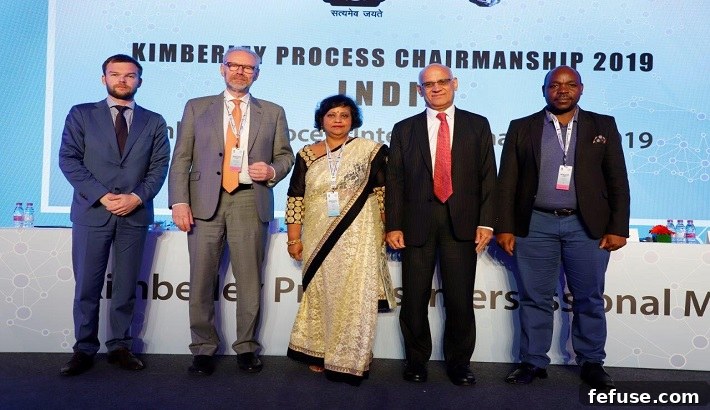
India’s Pivotal Role: Driving Progress at the 2019 Kimberley Process Intersessional Meeting
The global diamond industry relies heavily on trust and transparency. At the heart of maintaining this integrity is the Kimberley Process Certification Scheme (KPCS), an international initiative designed to prevent the flow of conflict diamonds. In 2019, India proudly assumed the Chairmanship of the Kimberley Process, demonstrating its commitment to ethical practices and sustainable development within the diamond sector. This significant responsibility culminated in India successfully hosting the Kimberley Process Intersessional Meeting in Mumbai, a landmark event that brought together stakeholders from across the globe to shape the future of responsible diamond trade.
Understanding the Kimberley Process: A Foundation for Ethical Trade
To truly appreciate the significance of India’s role, it’s essential to understand the Kimberley Process. Established in 2003, the KPCS is a tripartite mechanism comprising participating governments, the diamond industry, and civil society organizations. Its primary mandate, endorsed by the United Nations, is to curb the trade in “conflict diamonds” – rough diamonds used by rebel movements to finance wars against legitimate governments. Before the KPCS, the illicit trade of these diamonds fueled devastating conflicts in various parts of Africa, causing immense human suffering and instability.
The KPCS operates through a system of warranties and certification, ensuring that only diamonds certified as conflict-free can be legally traded among member countries. This robust framework helps to bolster consumer confidence in diamonds, assuring them that their purchase does not contribute to human rights abuses or armed conflict. By uniting diverse entities – sovereign nations, powerful corporations, and advocacy groups – the Kimberley Process stands as a unique model of international cooperation aimed at fostering peace and ethical commerce.
India’s Leadership as KP Chair 2019
As one of the world’s largest diamond cutting and polishing centers, India holds a crucial position in the global diamond value chain. Its assumption of the Kimberley Process Chairmanship for 2019 underscored its dedication not just to economic growth, but also to responsible business practices. The Chairmanship presented an opportunity for India to guide international discussions, propose innovative solutions, and ensure the continued relevance and effectiveness of the KPCS in a dynamic global landscape.
The Union Ministry of Commerce & Industry, Government of India, played a leading role in organizing the Kimberley Process Chairmanship 2019 India events, working in close collaboration with the Gem & Jewellery Export Promotion Council (GJEPC). This partnership between government and industry was instrumental in ensuring the smooth execution and successful outcomes of India’s tenure as KP Chair.
The Mumbai Intersessional Meeting: A Nexus of Global Dialogue
From June 17th to June 21st, 2019, Mumbai, India’s bustling financial capital, became the epicentre of global diamond policy as it hosted the Kimberley Process Certification Scheme Intersessional Meeting. This annual mid-year gathering is a critical juncture for KPCS participants to review progress, address emerging challenges, and deliberate on the scheme’s future trajectory. The event was a testament to India’s organizational capabilities and its role as a significant convener in international trade diplomacy.
The meeting witnessed an impressive turnout, with over 200 delegates from 82 countries participating. This broad representation included key players from major diamond-producing, trading, and consuming nations. Delegates hailed from the United States, the Russian Federation, the European Union, Canada, China, Israel, Australia, the UAE, and a substantial contingent from African diamond-producing countries such as Sierra Leone, DR Congo, Angola, Ghana, Zimbabwe, Central African Republic, Botswana, Cameroon, Republic of Congo, Eswatini, Gabon, Guinea, Ivory Coast, Mali, Namibia, South Africa, Togo, and Lesotho. This diverse attendance underscored the global reach and collective commitment to the Kimberley Process’s objectives.
Mr. Alok Vardhan Chaturvedi, serving as the KP Chair for 2019 and Director General of Foreign Trade (DGFT), masterfully hosted and addressed the distinguished assembly. His leadership set the tone for productive discussions and collaborative problem-solving, emphasizing the spirit of shared responsibility that defines the Kimberley Process.
Key Outcomes and Discussions Driving Forward Momentum
The Intersessional Meeting in Mumbai proved to be a fertile ground for substantive progress across various fronts. In his concluding remarks, Mr. Chaturvedi articulated the success of the gathering, stating, “There has been a good exchange of ideas, discussions and deliberations, listening & learning, debates, dialogues in the true KP tradition of productive sharing of ideas to forge the way forward for KP. We are grateful to the global diamond community and the representatives of the civil society coalition for their presence and active participation. The knowledge, experience and expertise that each one of you brings to the table is phenomenal and so is your collective effort. The commitment and contribution to usher in transformational change has been of the highest order.”
Among the significant highlights of the Intersessional were specialized forums designed to tackle specific challenges and opportunities within the diamond sector:
- Diamond Terminology: A dedicated forum focused on standardizing diamond terminology. This initiative is crucial for enhancing transparency, preventing misrepresentation, and ensuring clear communication across the complex diamond supply chain, from mining to retail. Clear and consistent terminology aids in accurate valuation, trade facilitation, and consumer protection.
- Artisanal Mining – Small Steps to Larger Outcomes: This forum addressed the critical issue of artisanal and small-scale mining (ASM). Artisanal miners often operate in informal settings, facing challenges related to safety, environmental impact, and market access. The “Small Steps to Larger Outcomes” approach emphasized the importance of empowering local communities, formalizing the sector, and ensuring sustainable livelihoods. It recognized that even incremental improvements in practices and governance within ASM can lead to significant positive changes for millions of miners and their families.
- GemFair Session: This session showcased innovative approaches to transparency and traceability within artisanal mining. GemFair, an initiative by the World Diamond Council and other partners, utilizes technology to create a verifiable supply chain for ethically sourced artisanal diamonds, thereby empowering local communities and enhancing their participation in the formal market.
- Indian Government’s Common Facility Centres (CFCs): Presentations highlighted India’s successful model of CFCs, which enable small and medium jewellery enterprises to pool resources, access advanced technology, and receive training. These centers are vital for boosting competitiveness, quality, and compliance among smaller players in the diamond and jewellery manufacturing sector.
- Insights into Chain of Custody: India offered unique perspectives on trusted delivery and robust chain of custody. Delegates learned from the legendary efficiency of Mumbai’s Dabbawalas – a lunchbox delivery system renowned for its precision and reliability – and the Angadias, a traditional, trusted network for secure and confidential delivery of valuables within the diamond trade. These examples provided practical lessons in integrity and traceability for the global diamond supply chain.
- Workforce Welfare Initiatives: The meeting also featured presentations on India’s initiatives for worker welfare, including the ‘Parichay ID card’ for mapping the workforce and the ‘Swathya-Rathna’ health insurance scheme. These programs exemplify India’s commitment to social responsibility, ensuring that those working in the diamond industry have formal identification and access to essential healthcare, thereby promoting a secure and dignified workforce.
Broader Progress and the Path Ahead
Beyond these specific forums, the KP Intersessional Meeting 2019 saw considerable progress in refining the operational aspects of the KPCS. Discussions deepened on several key areas, including the ongoing dialogue regarding the ‘scope’ of the Kimberley Process itself – a critical debate on whether the definition of “conflict diamonds” should be expanded to encompass broader issues of human rights abuses. Further advancements were made towards the finalization of Terms of Reference for a Permanent Secretariat, which would provide greater institutional stability and continuity for the KPCS.
Other significant developments included discussions on a draft Administrative Decision (AD) on the Peer Review Mechanism, aimed at strengthening oversight and compliance among participant countries. Work continued on a reconciliation guidance document and improved methodologies for capturing data specific to Artisanal Mining. The appointment of a new independent observer and clearer directions for the Multi-Donor Trust Fund (MDTF) were also addressed, alongside the consolidation of the Core Document, which underpins the foundational principles of the KPCS.
The closing session featured addresses from prominent figures such as Mr. Stephane Fischler, President of the World Diamond Council, representing the industry’s commitment to ethical sourcing, and Mr. Shamiso Mtisi, Coordinator of the KP Civil Society Coalition, who voiced the perspectives and concerns of civil society organizations. Ms. Rupa Dutta, Economic Advisor, Union Ministry of Commerce & Industry, Government of India, delivered the vote of thanks, acknowledging the collaborative spirit and hard work of all delegates.
Looking Forward: The Plenary Session in New Delhi
The Mumbai Intersessional Meeting served as a crucial stepping stone towards the final KP event of India’s Chairmanship year. KP delegates were scheduled to reconvene in New Delhi for the Plenary session in November 2019. The Plenary, as the ultimate decision-making body of the KPCS, was expected to formalize the resolutions and recommendations emerging from the Intersessional, setting the agenda for the future work of the Kimberley Process and ensuring its continued effectiveness in safeguarding the integrity of the global diamond supply chain.
Conclusion: India’s Enduring Legacy for Ethical Diamonds
India’s Chairmanship of the Kimberley Process in 2019, highlighted by the successful Mumbai Intersessional Meeting, marks a significant chapter in the ongoing global effort to foster ethical diamond trade. By facilitating robust discussions, showcasing national best practices, and driving progress on key policy issues, India demonstrated its unwavering commitment to preventing conflict diamonds and promoting sustainable development within the industry. The collaborative spirit, insightful deliberations, and tangible advancements achieved during this period underscore the enduring relevance of the Kimberley Process and the collective responsibility of all stakeholders to ensure that diamonds truly remain symbols of love and purity, free from conflict and exploitation. India’s leadership continues to inspire greater transparency, accountability, and social responsibility across the entire diamond value chain.