
GJEPC Chairman Engages Union Minister: Strategic Dialogue to Propel India’s Gems & Jewellery Exports
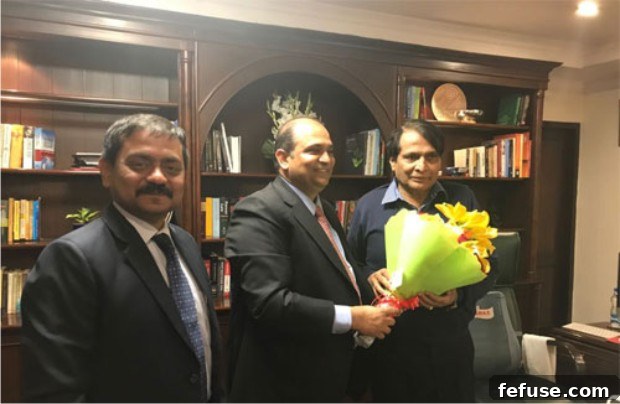
In a significant step towards reinforcing India’s dominant position in the global gems and jewellery landscape, Shri Pramod Agarwal, the newly elected Chairman of The Gem & Jewellery Export Promotion Council (GJEPC), recently held a crucial courtesy meeting with the Hon’ble Union Minister for Commerce & Industry, Shri Suresh Prabhu. This high-level interaction underscored the government’s unwavering commitment to fostering growth in this vital sector and the industry’s proactive approach to navigating global market dynamics. Chairman Agarwal was accompanied by Shri Sabyasachi Ray, the Chief Executive Director (CED) of the GJEPC, presenting a unified front for the council’s agenda.
Charting a Course for Sustainable Growth: The One-Year Action Plan
The central theme of the discussions revolved around an ambitious blueprint for accelerated expansion. The Hon’ble Minister, Shri Suresh Prabhu, specifically tasked Chairman Agarwal with the preparation and presentation of a comprehensive one-year Action Plan. This strategic document is intended to serve as a roadmap for the robust growth of India’s gems and jewellery export sector, aligning with the government’s broader economic objectives and export targets.
Such an action plan is anticipated to be multi-faceted, addressing several key areas critical for sustainable progress. Firstly, it will likely focus on enhancing product diversification and design innovation. This includes exploring new segments beyond traditional offerings, such as bespoke jewellery, heritage collections, and technologically advanced products, to cater to evolving global consumer tastes. Secondly, significant emphasis is expected on skill development and technological upgradation across the entire value chain, from raw material sourcing and manufacturing to cutting-edge design and effective marketing. Integrating advanced machinery, artificial intelligence, and digital tools can boost efficiency, reduce costs, and improve the quality of Indian gems and jewellery, making them more competitive internationally. Thirdly, the plan is expected to champion ethical sourcing and sustainable practices, which are increasingly non-negotiable for global buyers and conscious consumers. This includes ensuring transparent supply chains and adherence to international environmental and labor standards. Finally, a robust strategy for market penetration and brand building, involving participation in international trade fairs, digital marketing campaigns, and collaborative promotions, would aim to elevate ‘Brand India’ on the global stage. By meticulously outlining these initiatives, the action plan seeks to not only consolidate India’s existing market share but also unlock new avenues for growth, significantly contributing to the nation’s foreign exchange earnings and generating substantial employment opportunities.
Forging a Future for Gold: Deliberations on the Proposed Gold Board
Another pivotal subject on the agenda was the much-discussed formation of a dedicated Gold Board for India. Building upon insights and recommendations from the recently held Gold Summit in New Delhi, Minister Prabhu specifically sought detailed suggestions from the GJEPC Chairman regarding the proposed board’s structure, operational framework, and overarching mandate. The establishment of such a board is widely regarded as a transformative step for India, a country deeply intertwined with gold through its rich cultural heritage and significant economic engagement.
The envisioned Gold Board is designed to bring greater transparency, regulation, and developmental impetus to India’s vast and complex gold sector. Its potential functions are extensive and critical for modernization. These could include standardizing gold transactions, developing a credible gold exchange to facilitate efficient trading, and reinforcing quality assurance mechanisms through stringent hallmarking and certification processes. Furthermore, the board could play a crucial role in promoting responsible sourcing of gold, both domestically and internationally, ensuring compliance with global best practices. By creating a unified regulatory and developmental authority, the Gold Board could streamline policies related to gold imports, exports, and domestic trade, thereby reducing ambiguities, fostering investor confidence, and creating a more predictable business environment. It could also facilitate the monetization of India’s substantial idle gold reserves and encourage the integration of the informal gold economy into formal financial channels. This comprehensive approach aims to unlock significant economic value, enhance consumer trust, and solidify India’s position as a global hub for gold trade, manufacturing, and innovation, ensuring a resilient and ethical supply chain for future growth.
Global Outreach and Market Expansion: New Horizons for Indian Jewellery
Shri Prabhu also articulated a forward-looking strategy for expanding India’s international market footprint. He specifically proposed sending an exploratory delegation of the Indian gems and jewellery industry to China. This strategic initiative acknowledges China’s immense and continually expanding luxury market, which presents significant untapped potential for Indian jewellery, particularly in unique designs, intricate craftsmanship, and high-quality gemstones. A dedicated delegation would aim to conduct in-depth market research, establish direct connections with key Chinese buyers, retailers, and distributors, and identify specific niche markets where Indian products can excel.
In parallel, the Minister suggested dispatching another high-level delegation to Latin American countries. This move signifies a broader strategic vision for market diversification, targeting emerging economies that exhibit a growing middle class and an increasing demand for distinctive, high-quality jewellery. While perhaps less explored by Indian exporters compared to traditional Western markets, Latin American nations offer considerable promise for unique gemstone jewellery, handcrafted silver items, and bespoke designs that resonate with diverse cultural preferences and evolving fashion trends. Such trade delegations are invaluable instruments for gathering crucial market intelligence, fostering direct business-to-business relationships, showcasing the unparalleled artistry and skill of Indian artisans, and proactively addressing any potential trade barriers through direct engagement and diplomacy. These exploratory missions are vital for identifying new growth avenues, mitigating over-reliance on established markets, and strategically positioning India as a versatile, reliable, and innovative supplier on the global stage, ultimately contributing substantially to the nation’s ambitious export targets and enhancing its economic resilience.
Addressing Industry Challenges: The Angadias Issue and Regulatory Compliance
During the productive meeting, Chairman Agarwal seized the opportunity to highlight a pressing concern affecting a significant segment of the industry: the recent seizure of stocks belonging to “angadias” in Mumbai. Angadias are traditional couriers and informal financiers who have historically played an indispensable, trust-based role in the movement of diamonds, precious stones, and finished jewellery within India, particularly between major manufacturing centers like Surat and trade hubs such as Mumbai. Their deep roots in the historical fabric of the Indian gems and jewellery trade underscore their importance, often facilitating rapid and secure transactions based on long-standing relationships and mutual trust.
The reported seizure of their stocks, likely stemming from enhanced regulatory scrutiny or compliance issues, has caused considerable operational disruption and widespread concern throughout the trade community. This incident brings to the forefront the ongoing challenges associated with formalizing segments of a historically informal sector and ensuring seamless compliance with evolving taxation frameworks, such as the Goods and Services Tax (GST), and anti-money laundering (AML) norms. It underscores the delicate balance the government must strike between enforcing robust regulatory frameworks and facilitating the smooth and efficient functioning of an industry that is a significant contributor to the national economy and employment.
Recognizing the gravity of the situation and its potential to impact trade confidence and market liquidity, the Hon’ble Minister, Shri Suresh Prabhu, provided a vital assurance to the GJEPC representatives that he would personally delve into the matter. This commitment from the highest levels of government offers a much-needed sense of reassurance and signifies the administration’s willingness to actively engage with industry stakeholders to understand practical challenges and explore equitable solutions. It is widely anticipated that this high-level intervention will lead to a clearer understanding of the regulatory landscape impacting angadias and potentially pave the way for refined policies that judiciously balance oversight with the operational realities and historical customs of this unique segment within the broader jewellery ecosystem, thereby ensuring continuity, fairness, and stability for the entire sector.
GJEPC’s Commitment and Forward Momentum for India’s Gems & Jewellery Exports
In a strong affirmation of the industry’s dedication, Chairman Pramod Agarwal responded positively to the Minister’s directives and suggestions, reiterating GJEPC’s unwavering commitment to immediate action. He pledged to prioritize the swift development and submission of the comprehensive one-year Action Plan and to expedite the consultative process necessary for the effective formation of the proposed Gold Board. Furthermore, the GJEPC will promptly initiate planning and execution for the suggested trade delegations to China and Latin American countries, leveraging its extensive global network, industry expertise, and promotional capabilities to ensure their success.
This pivotal interaction between the GJEPC leadership and the Union Minister for Commerce & Industry marks a significant moment for India’s entire gems and jewellery sector. It exemplifies a robust collaborative spirit and a shared, ambitious vision for achieving sustained growth, enhancing global competitiveness, and establishing robust policy frameworks that support a vibrant industry. The anticipated outcomes of these forward-looking initiatives are poised to make substantial contributions to India’s economic prosperity, significantly enhance its global trade footprint, and ensure a dynamic, resilient, and globally leading future for one of its most cherished and economically vital industries.
Meeting Snapshot
Hon’ble Minister for Commerce & Industry Shri Suresh Prabhu (extreme right) seen with Chairman GJEPC Pramod Agarwal (centre) and CED GJEPC, Sabyasachi Ray, during their strategic discussion aimed at boosting India’s gems and jewellery exports.
News Source: gjepc.org